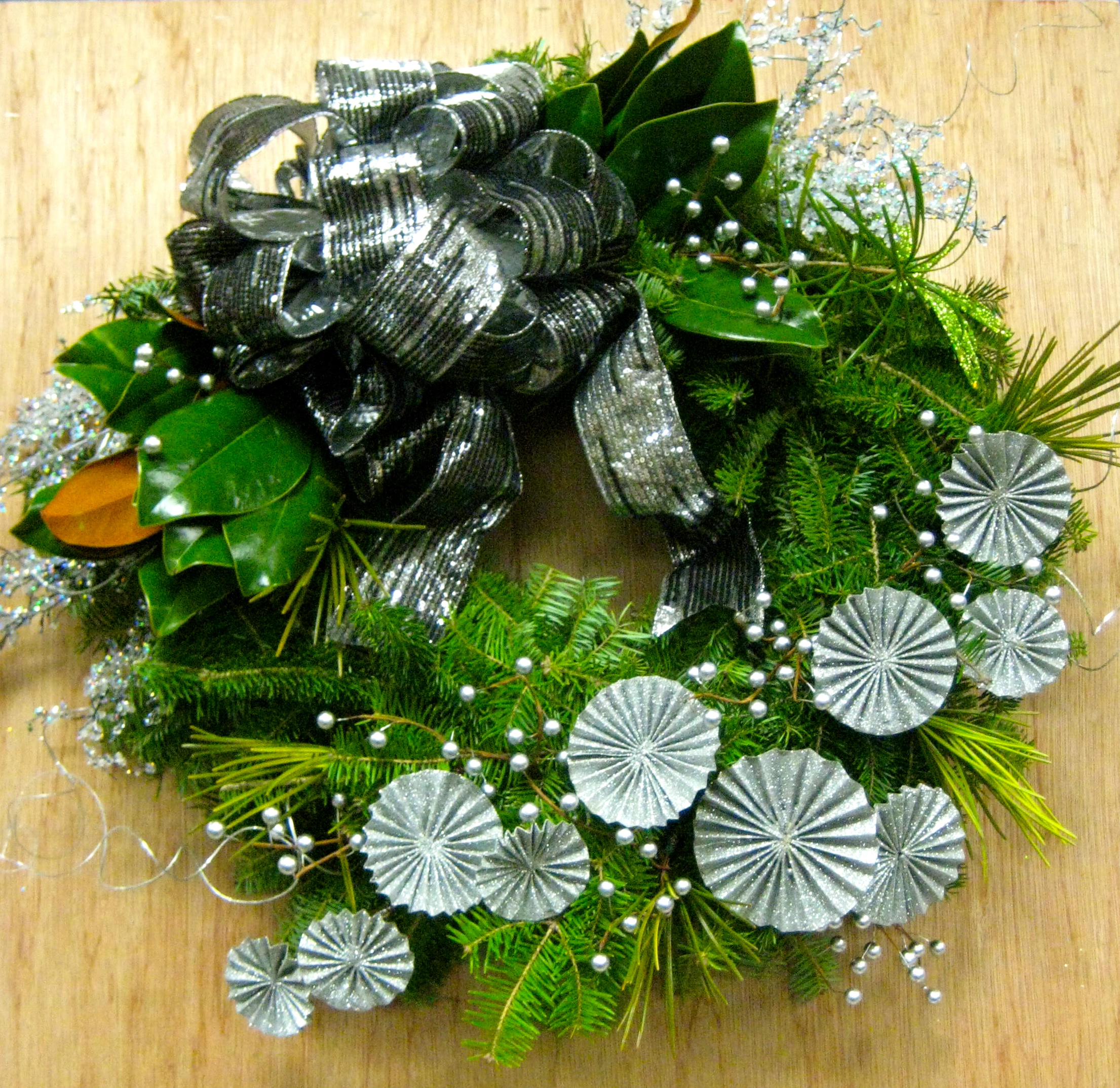
We showcase today one of this year’s favorites, a silver, crystal and green wreath which evolved from the designer’s off season purchase of the silver paper parasols seen on the wreath. They were originally attached to sticks but were disassembled and strung on to the greenery. The shiny silver and black ribbon, luminescent pearls, icy crystal sprigs, magnolia leaves, and silver glitter swirly sticks add to the drama. Our designer (with a background in fashion design, we should add) went on to make two more variations on this theme, some with green sparkling dragonflies. We may never have these materials again, but we’re happy to have the photographs.
Month: December 2013
-
Saturday, January 25, 10:00 am – 2:00 pm – Naked Shrubs
No leaves? No problem! Use a combination of branching patterns, bud and bark characteristics, habitat, persistent fruits, galls and marcescent leaves to identify shrubs in winter. The New England Wild Flower Society program begins with a short session indoors on Saturday, January 25, beginning at 10 am, then we travel to a nearby site for a close look at 15-20 native New England shrubs plus a couple of non-native invasives. Return indoors for a twig or slide quiz and a cup of something hot. This course serves as a good introduction to shrub identification in winter or a good review for those who have taken “Native New England Shrubs.†Bring lunch and a hand lens if you have one, and dress for the weather. Co-sponsored with Mass Audubon, and led by Roland “Boot” Boutwell, the course fee is $20 for members of the sponsoring organizations, and $25 for nonmembers. Register online at www.newfs.org/learn/catalog/fdt1114.

-

Wreath of the Day – Welcome Visitors
We always enjoy visits from neighbors and customers during Wreath Week. Sometimes people picking up orders will venture downstairs to the workroom to see wreaths being made, and often stay for a cup of coffee and a chat. We especially love visits from grandchildren, and one adorable little girl, pictured below, watched her grandmother decorate some beautiful wreaths. Her mom was nearby since our hands were coated with pine tar and paint.
-
Saturdays, January 11 and January 25, 10:00 am – 3:00 pm – Conservation Biology: Saving Biodiversity in Today’s Climate
The core mission of conservation organizations is to preserve plants, animals, and their habitats. How do we best go about this essential work at the level of your interest: state; local; or your own backyard? Participants in this New England Wild Flower Society course, to be led by Nancy Eyster-Smith, PhD, at Garden in Woods, Framingham, discuss the definition of biodiversity, why we care about it as a society, the pervasive threats, and on-the-ground solutions. Using power-point presentations and case studies, we cover protection strategies and stewardship tools and discuss how climate change alters our thinking about traditional conservation approaches. The intention is to provide a background in the principles of conservation biology in order to help you to become a more effective conservation advocate and/or steward of your own land. A series of articles and web links are provided to aid in the discussion. Fee $154 for NEWFS members, $182 for nonmembers. Dates are Saturday, January 11 and Saturday, January 25, from 10 – 3. Register at www.newfs.org/learn/catalog/bot5103.

-

Wreath of the Day – Magnificent Excess
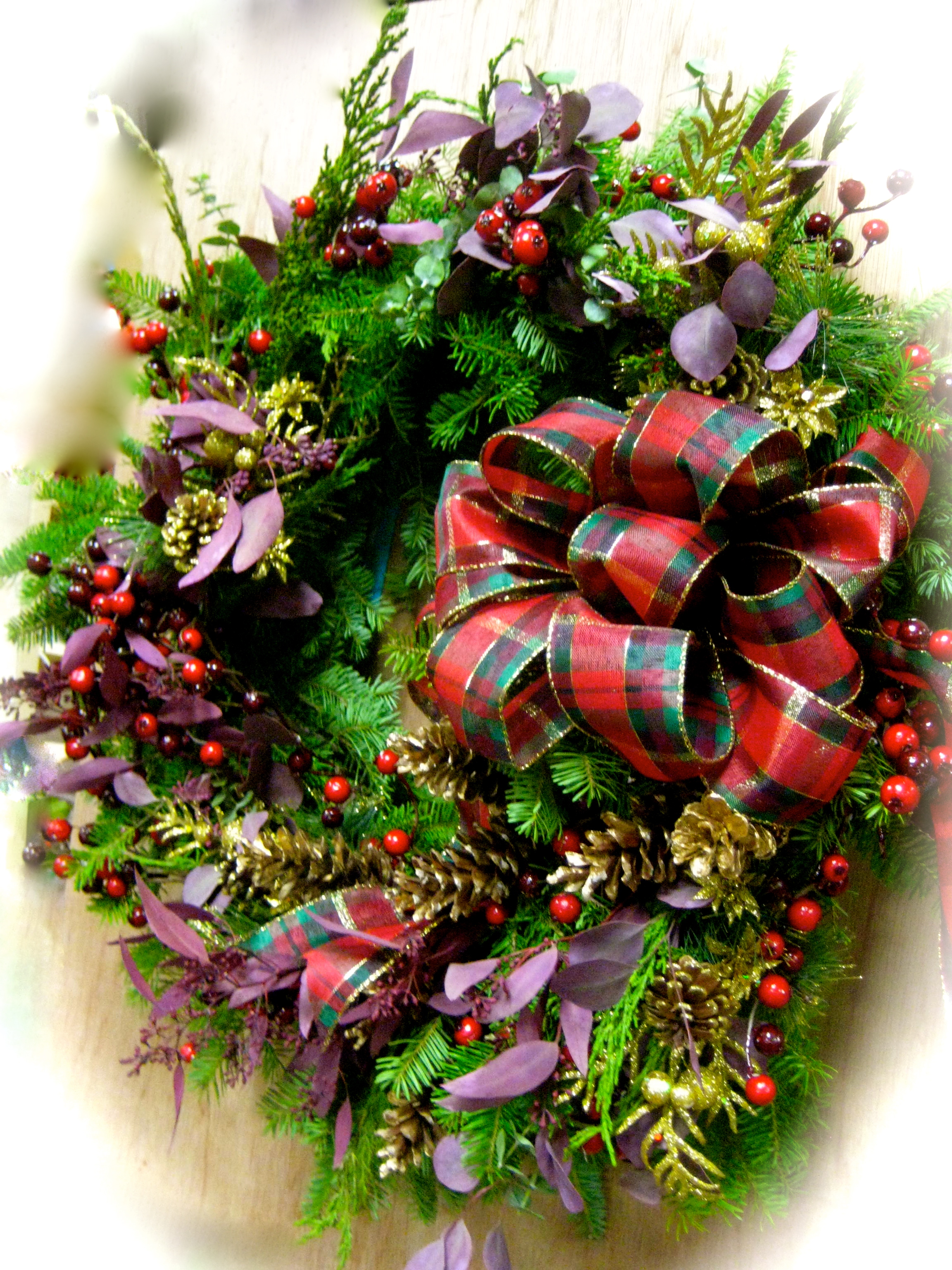
This wreath, destined for Newburyport, is standard size, but is so filled with berries, pine cones, eucalyptus, and greens that it seems twice the size. When a customer asks for a plaid bow with designer’s choice accents, the decorator has freedom to interpret, and this wreath is a typical result of such freedom. “Designer’s Choice” is our favorite type of order.
-
Tuesday, January 14, 6:00 pm – The Last Days of the Great Labrador Cod Fishery
“Salt cod†had major impacts on the social and political history of the Atlantic Ocean and its ports. Abundant in number, flavor, and protein, as well as relatively easy to catch, produce, store, and distribute, cod was a welcome addition to the human food supply of early modern Europe. Cod not only contributed greatly to the economic development of New England, but the fish also reduced the risk of famine, and helped revolutionize maritime exploration, travel, and warfare; effectively allowing the large-scale development of many Caribbean islands and their corresponding sugar production platforms. This Boston University Culinary Arts Program Pepin Lecture Series presentation will examine the history of this remarkable food, its underlying chemistry, and the methods used to produce it. By way of a tasting, we will also compare some of the strategies different cultures used to make the cod an intensely popular food. Bart Higgins, independent history scholar, will speak on Tuesday, January 14 beginning at 6 pm at 808 Commonwealth Avenue, Demonstration Room 117. Fee is $10, and you may register online by clicking HERE.

-

Wreath of the Day – Bright Bling
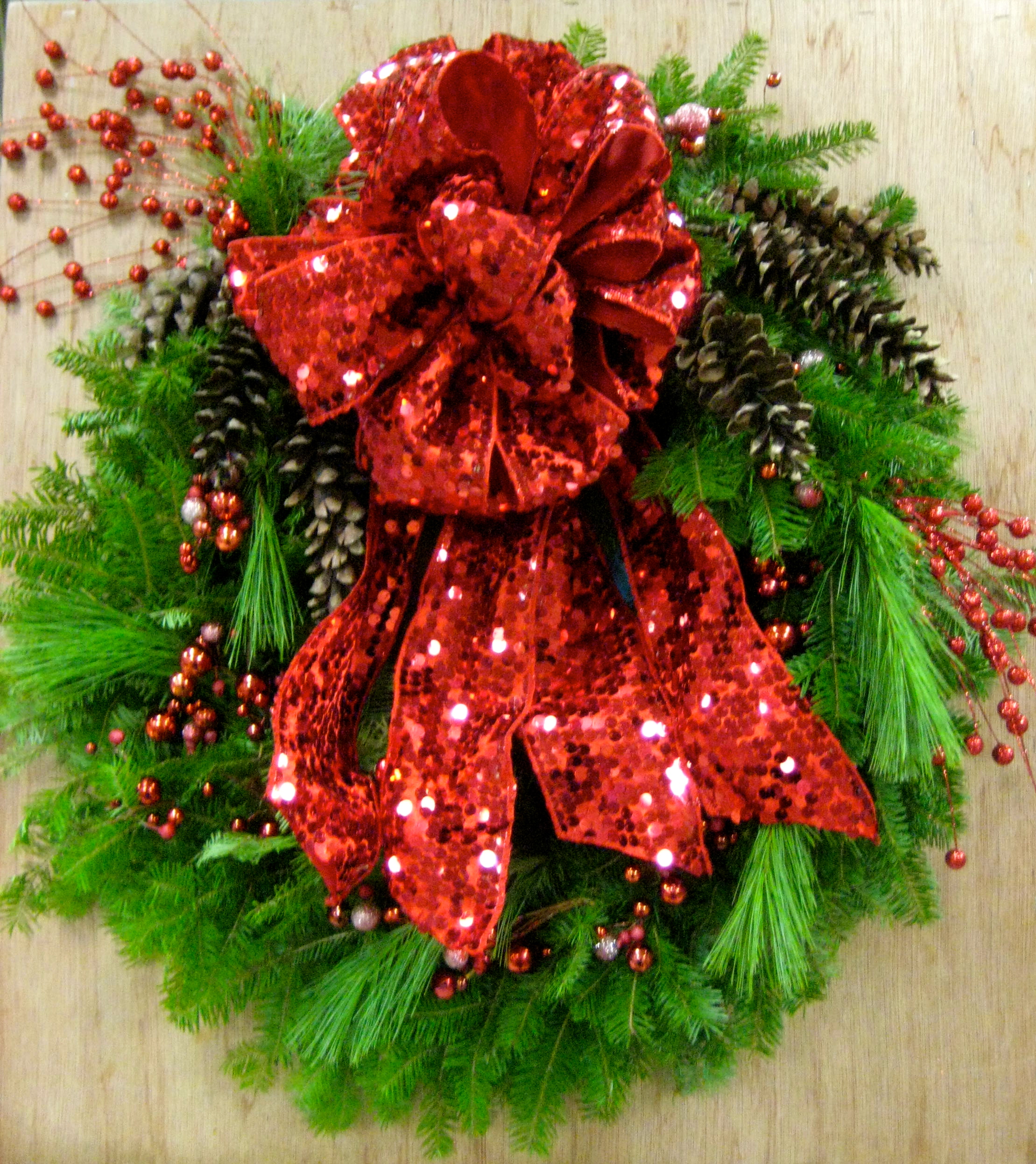
One decorator was making a wreath for her sister-in-law (believe me, we wouldn’t inflict this much of a statement if we didn’t know the customer) and decided to go all out on the shiniest bow we could provide. The ribbon was a special order, and is balanced by lots of glittery balls, plus natural pine cones and white pine sprigs. Cambridge neighbors will take notice of this front door!
-
Monday, January 27, 7:00 pm – 8:30 pm – The Swerve: How the World Became Modern
Nearly six hundred years ago, a short, genial, cannily alert man in his late thirties took a very old manuscript off a library shelf, saw with excitement what he had discovered, and ordered that it be copied. That book was the last surviving manuscript of an ancient Roman philosophical epic, On the Nature of Things, by Lucretius—a beautiful poem of the most dangerous ideas: that the universe functioned without the aid of gods, that religious fear was damaging to human life, and that matter was made up of very small particles in eternal motion, colliding and swerving in new directions. One of the world’s most celebrated scholars, Stephen Greenblatt, PhD, Cogan University Professor of the Humanities, Harvard University, has crafted both an innovative work of history and a thrilling story of discovery in his book The Swerve, in which one manuscript, plucked from a thousand years of neglect, changed the course of human thought and made possible the world as we know it. This program, to be held Monday, January 27 beginning at 7 pm in the Hunnewell Building of the Arnold Arboretum, is as of this date full. However, it is winter, and people go to Florida, get a cold, or don’t feel like digging out the car, so call 617-384-5277, or email //adulted@arnarb.harvard.edu to join the waiting list. Include names/# of tickets desired, phone and email address.

-

Wreath of the Day – Lime Green
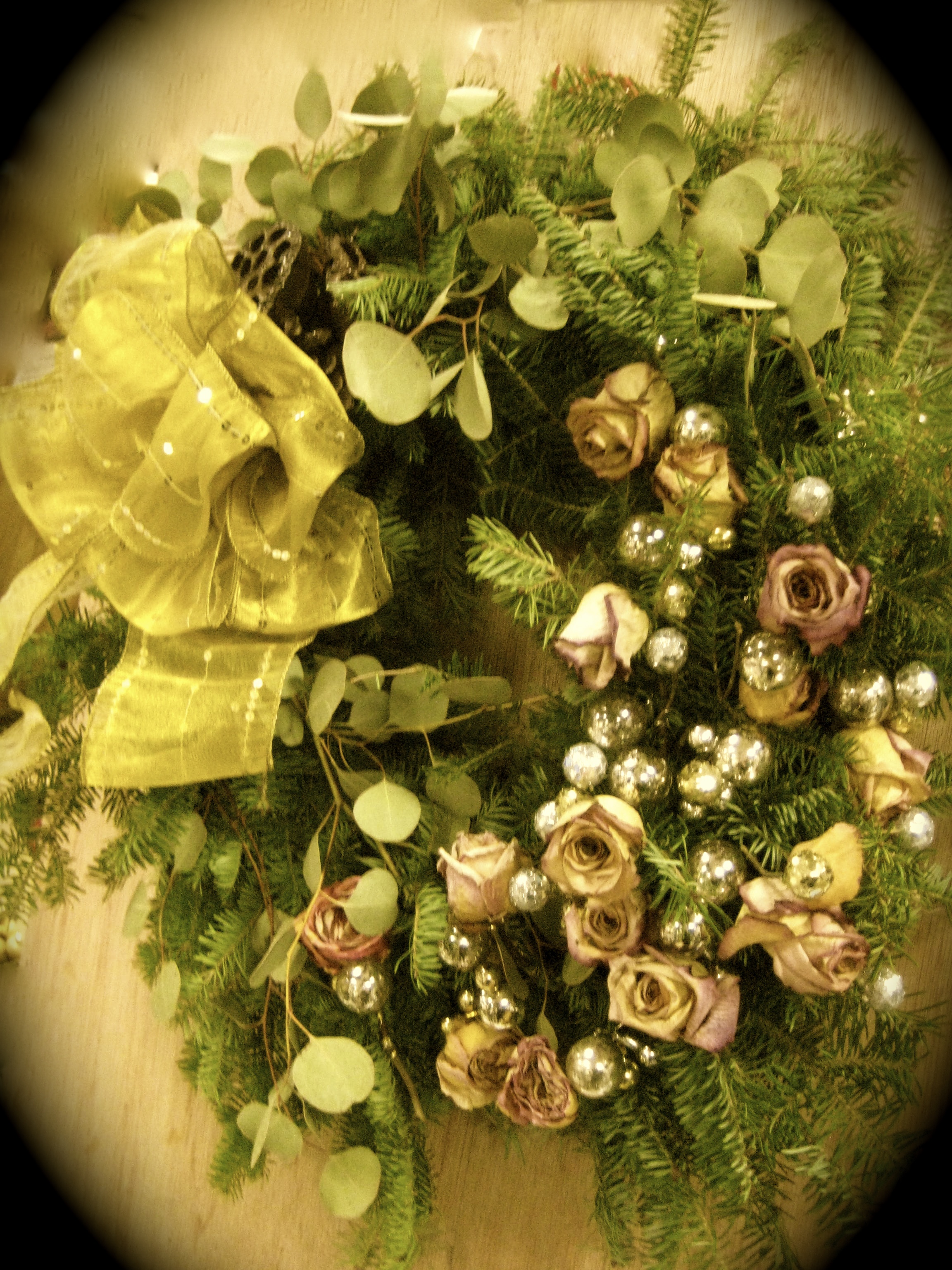
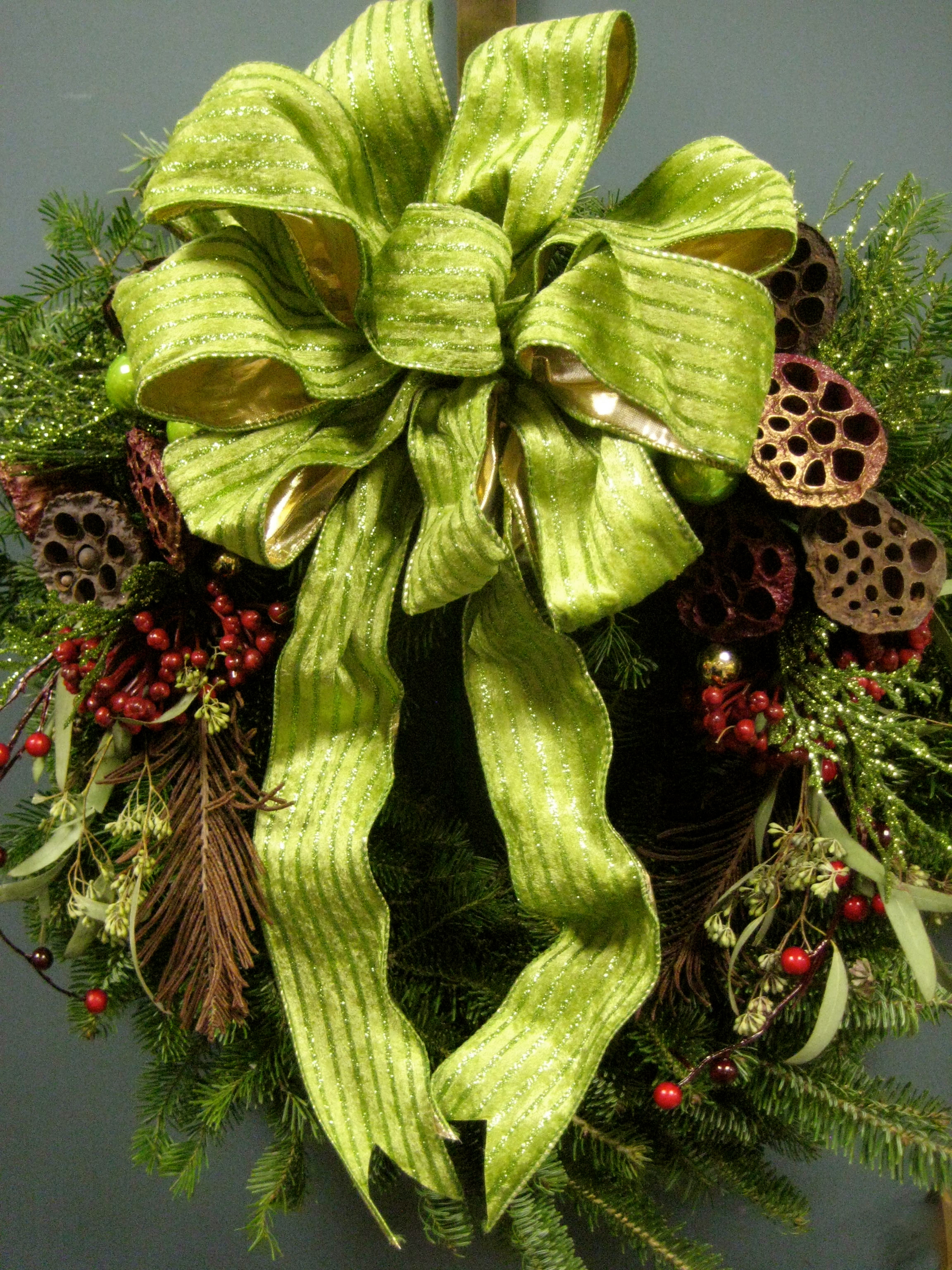
Most of our ribbons are red, plaid, and gold, although we carry silver, blue, copper, and patterns as well. Over the past few years we have received more requests for green, and this example shows what can be done with it. We used to believe green “didn’t show up well” but clearly that is not the case here.