Month: May 2016

  • Sunday, May 22, 1:00 pm – Eco-Tour: Invasive Plants at Bird Park

    What are invasive plant species and what harm do they do to an ecosystem? Invasive plant species are a threat to natural areas throughout the country. No habitat or region is immune from the threat of invasive species. They displace native plants, eliminate native food and cover for wildlife, and threaten rare plant and animal species. As with most public spaces, Bird Park in Walpole, MA is the unwelcome home to many invasives. The Trustees of Reservations (TTOR) oversees Bird Park, where staff members have been battling invasive plants for many years. Ecological Landscape Alliance Board member Bruce Wenning is an invasive plant specialist who will help to shed light on the invasive plant challenges that face most property owners. Join Bruce on Sunday, May 22 at 1 pm for a FREE professionally guided walking tour at Bird Park to learn:

    * How to identify different types of invasive plants
    * How to safely remove them your own landscape
    * How different invasive plants spread
    * What removal methods are effective on each
    * The importance of proper disposal of invasive plants once removed

    Free, but registration required. See more at: http://www.ecolandscaping.org/event/eco-tour-invasive-plants-what-are-they-and-what-can-be-done/#sthash.PgPrxbcT.dpuf

  • Monday, May 16, 5:00 pm – 7:00 pm – Annual Meeting of The Garden Club of the Back Bay

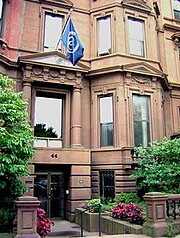
    The Annual Meeting of The Garden Club of the Back Bay will be held Monday, May 16, from 5 – 7 at The College Club of Boston, 44 Commonwealth Avenue, Boston, Massachusetts.  Members will receive written notification of the meeting.  If you are not a member but would like to attend, please rsvp at info@bostonflora.com.

  • Saturday, May 14, 8:00 am – 3:00 pm – Gardeners’ Fair at Elm Bank

    Join the Massachusetts Horticultural Society at its annual Gardeners’ Fair on Saturday, May 14, this year featuring Allandale Farm, Boston’s oldest working farm, and the New England Unit of the Herb Society of America.  Special members’ hours 8:00 am – 9:00  am, and public hours 9:00 am – 3:00 pm.  Admission free for Mass Hort members with valid membership card, $5 per car for nonmembers.  Herb Garden tours will be available, and there will be family-oriented workshops such as Fairy Flowers at 10 am and Planting Herbs in a Tea Cup at noon.  The Wellesley Bank will play in the Crockett Garden at 1 pm.

    The Gardeners’ Fair and Plant Sale at Massachusetts Horticultural Society at Elm Bank Reservation includes a variety of vendors carrying everything you need to plan, dig, plant, and enjoy your home garden space. The heart of the Gardeners’ Fair is the plant societies. New Englanders take their gardens seriously and the most passionate gardeners – whether of the indoor or outdoor persuasion – join a plant society dedicated to the pleasure and pursuit of growing a particular genus. At plant society meetings, plants are swapped, exchanged and bartered. At the Gardeners’ Fair, they’re sold to discerning visitors who are looking for the great addition to their garden. With every plant society purchase comes a wealth of advice on care and propagation. There will be representatives from the American Begonia Society, American Rhododendron Society, Gesneriad Society and Hosta Society, among others. Many of the local chapters of specialist plant societies will continue to offer their own plant varieties including unusual and popular cultivars that Society Row has provided for more than 75 years.

  • Tuesday, May 10, 7:30 pm – Coevolution in a Bee-Orchid Mutualism

    The next meeting of the Cambridge Entomological Club will be held on Tuesday May 10 at 07:30 PM in in room 101 of the Museum of Comparative Zoology, 84 Oxford Street, Cambridge. Santiago Ramirez will present a talk entitled Coevolution in a Bee-Orchid Mutualism.  A short explanation on the topic: it’s all about the perfume.

    All are welcome to join us at 5:45 at the West Side Lounge for an informal pre-meeting dinner. Please note the change in location from past years.  The speaker explains his program:

    “Evolutionary biologists have long recognized the central role that species interactions play in the origin and maintenance of biological diversity. However, the ecological conditions and the genetic mechanisms whereby interacting lineages coevolve and adapt to one other remain poorly understood. My work investigates the genetic bases of coadaptation in a highly specialized plant-pollinator mutualism. Unlike the majority of insects, male euglossine bees do not produce their own pheromones, but instead gather and accumulate perfume compounds (terpenes) from the environment to present subsequently to females during courtship display. Male-gathered perfumes are species-specific, and thus likely mediate reproductive isolation among related bee lineages. A large diversity of orchid species from the American tropics has evolved the production of terpene-rich floral scents to attract male euglossine bees in exchange for pollination services. My research explores the mechanisms of coadaptation and reproductive isolation on both sides of this fascinating mutualism. On the bee side, my research aims to (1) characterize the diversity of perfume phenotypes across the phylogeny of euglossine bees, (2) investigate whether and how male perfume phenotypes mediate reproductive isolation among lineages, and (3) characterize the genetic and functional bases of sensory (olfactory) perception that control perfume specificity. On the orchid side, my work aims to (4) elucidate the ecological and chemical mechanisms of scent-mediated pollinator specificity, (5) determine whether and how divergent floral scent phenotypes promoted the evolution of reproductive isolation, and (6) characterize the genetic mechanisms that regulate scent production and differentiation among related orchid lineages. My research integrates approaches from multiple disciplines including evolutionary biology, genomics, molecular biology, chemistry and physiology to investigate how genetic toolkits are coopted to generate the intricate associations we observe between species in nature.”

    The meeting is free and open to the public.  Image from www.orchidspecies.com.