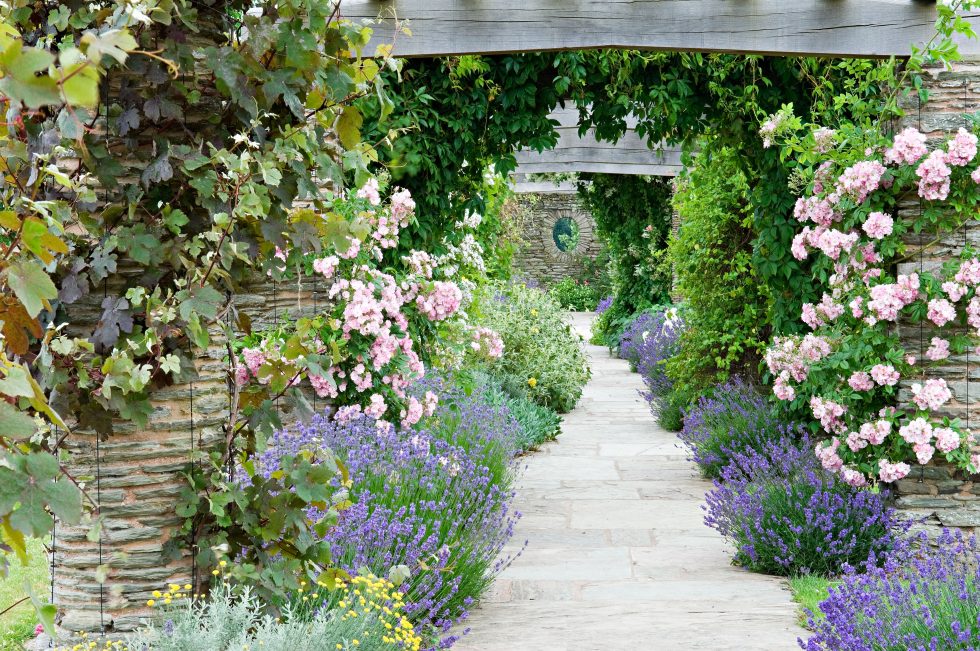
Month: November 2020

  • Tuesday, December 1, 5:30 pm – 8:30 pm – Holiday Boxwood Trees

    It’s time to pull out the holiday greenery. Highfield Hall and Gardens will sponsor a workshop on Decmeber 1 from 5:30 – 8:30 on Holiday Boxwood Trees. Learn how to make this festive classic Christmas tree design using fresh boxwood branches with mini lights, ornaments and ribbon, with a tree topper. Your tree will last throughout the holidays. All materials are provided, but you are asked to bring a box to carry your tree home, a small pair of hand clippers, and of course, a mask. You’ll be able to select your decorations at the class. The workshop is taught by Anna Holmes. Please register EARLY! This popular class fills quickly & space is limited. $50 for Highfield Hall members, $60 for nonmembers. Highfield Hall is located at 56 Highfield Drive in Falmouth.

    Register on-line today or call, 508-495-1878, ext. 2.

  • Wednesday, November 11, 7:00 pm – 8:00 pm – Living Wild with Hilton Carter, Online

    Author, artist, and plant stylist, Hilton Carter is an advocate for seeing plants as living beings worthy of your passion, time, and attention. His own home is filled with more than 200 of them. In this talk, he’ll share the best plants for particular rooms, his top 10 favorites right now, and how to care for them. Along the way you’ll get inspiration on how to use plants to create an oasis of calm in your own home.

    Hilton Carter’s work has been featured in The New York Times, Wall Street Journal, HGTV, and BuzzFeed among others. His popular 2019 book, Wild at Home, was followed up this year with Wild Interiors: Beautiful Plants in Beautiful Spaces. This New York Botanical Garden webinar will take place November 11 from 7 – 8, and is $15 for NYBG members, $18 for nonmembers. Register HERE.

  • Esplanade Association: Sponsor the Park Program

    The Esplanade Association’s Sponsor the Park program is a great way to celebrate an occasion, honor a loved one, or simply create a special place for yourself on the Esplanade. Your support will preserve and enhance the Esplanade and demonstrate a commitment to our community.

    Buy a Bulb.

    Each year across the Charles River Esplanade, thousands of flowers mark the arrival of spring. Give the gift of renewal and honor someone special by having bulbs planted at the park. With a donation of $1 per bulb (minimum of $25), the Esplanade Association will plant species such as daffodils, tulips, alliums, and lilliums on the Esplanade so that they will grace the park each spring when they bloom. For your donation, you or the person(s) you are honoring will receive a beautiful e-card from the Esplanade Association indicating the number of bulbs planted and the date of the gift, and you will receive an acknowledgment letter.

    Sponsor a Pollinator:

    Populations of native bees and other pollinators like butterflies, moths, and hummingbirds are declining around the world due to loss of habitat. Without pollinators, you’d have a third less food on your plate, and many fewer flowers blossoming along the Charles River.

    The Esplanade Association, along with friends like you, is here to help! Your donation will help the Esplanade Association create lush and diverse habitat for our imperiled pollinators while beautifying the park for you and your loved ones for years to come.

    For your donation of $50 or more, you or the person(s) you are honoring will receive a beautiful e-card from the Esplanade Association describing the native plantings and the date of the gift, and you will receive an acknowledgment letter.

    Sponsor a Tree:

    By sponsoring a tree, you help the Esplanade Association care for the Esplanade’s nearly 1,700 trees. There is a wide array of tree species on the Esplanade, including extraordinary specimens of weeping willow. Your sponsorship gift supports tree maintenance and plantings through our Lasting Esplanade Arbor Fund (L.E.A.F.) Initiative, which aims to keep the park’s trees healthy and strong for generations to come.

    When you sponsor a tree, you receive a certificate of sponsorship, a photograph of your tree, and a map showing the location of your tree. In addition, a unique metal-embossed tree plaque will be placed on your tree. Tree plaques will contain the Botanical and common name of the tree, a donor-personalized inscription, and year of donation. You can sponsor in someone else’s name, too, making this a unique gift that celebrates a friend, commemorates a momentous occasion, or honors the memory of a loved one.

    In addition to caring for its 1,700 existing trees, the Esplanade Association plans to plant over 200 new trees in coming years. Your sponsorship of an existing tree provides 10 years of care tailored to that tree’s species and its age. Your sponsorship of a new tree provides 10 years of care for saplings, helping to ensure their future as strong, healthy additions to the park’s tree canopy.

    Tree Sponsorships last for 10 years. Donors can double the terms of sponsorship by doubling the contribution. At the end of the sponsorship period, the donor has the opportunity to renew at the then current contribution level. It is the donor’s responsibility to keep the Esplanade Association updated as to their current contact information.

    A donation of $2,500 is requested to Sponsor an Existing Tree. A donation of $10,000 is requested to Sponsor a New Tree. 

    Please Note: Locations for plantings cannot be specified and no plaques will be placed in the park. Bulbs are planted each fall when temperatures drop for the season. 

    Sponsor a Bench:

    View an interactive map of all benches located on the Charles River Esplanade. Benches displayed are either sponsored or available to be sponsored. Benches displayed in light green are currently sponsored. Benches displayed in dark green are available for sponsorship.

    To contribute online and for more information, visit https://esplanade.org/donate/sponsor-the-park/

  • Tuesdays, November 10 & November 17, 5:00 pm – 6:30 pm – Introduction to Bulbs, Online

    Since Autumn is the optimum season to plant bulbs, now is the time to decide what will work best in your garden. In this two session New York Botanical Garden online class, you’ll receive an overview of bulbs – what they are and how to properly plant them. Common problems and solutions for a successful growing season will also be covered. Michael Hagan will be the instructor, and registered students will receive login instructions. NYBG members $44, nonmembers $59.

  • Monday, November 9 or Wednesday, December 2, 6:00 pm – 7:00 pm – Holiday Wreaths Online

    Learn to fashion different types and sizes of wreaths – from those that hang on the wall to those surrounding a candle to bring a soft glow to your holiday table. Calamia Crafts owner Madeline Yanni will demonstrate how to make an evergreen wreath from scratch, as well as how to create one using preserved greens such as cedar and juniper, dried seasonal botanicals, and mushroom birds. The New York Botanical Garden online class will be held twice, on November 9 and on December 2, online, from 5 – 7. Registered students will receive log in instructions. NYBG members $25, nonmembers $29. Register at http://enrole.com/nybg/

  • Monday, November 16, 8:00 am – Thursday, November 26, 12:00 noon – Growing Trees Near Pavement On Demand Webinar

    Monday, November 16, 8:00 am – Thursday, November 26, 12:00 noon – Growing Trees Near Pavement On Demand Webinar

    Trees in areas surrounded by pavement often have inhospitable rooting environments, which shorten their useful life expectancy. Join the Massachusetts Arborists Association as we compare tree growth using different soil treatment options near concrete pavement. You’ll learn methods to use in urban planting sites to ensure beneficial tree health and growth outcomes. The on demand webinar will be available to watch at your convenience from November 16 – noon on November 26, and will be taught by Tom Smiley, Ph.D., Senior Arboriculture Researcher at Bartlett Tree Research Laboratories. $24 for MAA members, $44 for nonmembers. Register at https://massarbor.org/meetinginfo.php?id=63&ts=1600355135

  • VOTE

    We can’t say it often enough – if you haven’t already done so, please go to the polls tomorrow and cast your vote. Wear a mask. Bring a folding chair if you have to. Carry your hand sanitizer. But vote. As a not for profit charitable corporation, we cannot suggest how you should vote, but please keep the environment in mind as you do so.

  • Thursday, November 12, 11:00 am – 12:30 pm – Gardens of the Arts & Crafts Movement, Online

    Thursday, November 12, 11:00 am – 12:30 pm – Gardens of the Arts & Crafts Movement, Online

    Join the Institute of Classical Architecture & Art, New England, on November 12 at 11 am for a Zoom webinar with Judith B. Tankard on Gardens of the Arts & Crafts Movement. Free with registration HERE.

    English gardens from the Arts & Crafts era are jewels of early 20th Century design. Part of the same design movement that flourished in Europe and North America between 1880 and 1920, these gardens emphasized medieval and romantic styles. Designed on an intimate scale, they blurred the distinction between indoors and outdoors, and emphasized the symbiotic nature of the house and garden as a unified landscape. Many contained a series of distinct outdoor ‘rooms’ often delineated by hedges and embellished with whimsical topiary. Most had lavish plantings of perennials, ornamental shrubs, bulbs, and annuals—all massed for color, textural effect, and seasonal impact. Small structures, such as pergolas, arbors, sundials, and other traditional ornaments produced storybook-like gardens that referenced Old English manor house surroundings of the 17th Century.


    In this illustrated lecture, Judith Tankard will give insight into the minds of the movement’s creative giants such as William Morris and Gertrude Jekyll, as well as lesser known designers such as Avray Tipping, Thomas Mawson, and Robert Lorimer. She will illustrate gorgeous National Trust gardens such as Hidcote, Standen, Snowshill Manor, Red House, and Kellie Castle, among others, and give visual tours of other stunning gardens, such as Hestercombe, Great Dixter, Gravetye Manor, and Munstead Wood. Tankard will show how these English models created a lasting impact on gardens across the pond, as American designers took inspiration from their British contemporaries.


    Judith B Tankard is a landscape historian, award-winning author, and preservation consultant. She is the author of 10 illustrated books, including Ellen Shipman and the American Garden, winner of the 2019 J. B. Jackson Book Award. Her book, Beatrix Farrand: Private Gardens, Public Landscapes, was named an Honor Book for the 2010 Historic New England Book Prize. She taught at the Landscape Institute of Harvard University for twenty years. Judith is a Garden Conservancy Fellow, a Heritage Circle member of The Royal Oak Foundation, and a Stewardship Council member of The Cultural Landscape Foundation. She lives in Boston, is a member of The Garden Club of the Back Bay, and gardens on Martha’s Vineyard. www.judithtankard.com

    For information on other upcoming ICAA New England Chapter tours and lectures, please visit: www.classicist-ne.org/calendar

  • Thursday, November 12, 6:30 pm – 7:30 pm – Weird Plants

    Enjoy a virtual lecture and Q&A session on November 23 at 5:30 with author Dr. Chris Thorogood about his new book, Weird Plants. In this little book of horrors, Chris Thorogood reveals the weird, the wonky, and the sinister specimens he has encountered during his travels in the wide world of plants. Far from passively absorbing the sun’s rays, these plants kill, steal and kidnap, making them dynamic participants in the ecosystems around them. From orchids that duplicitously look, feel and even smell like a female insect to bamboozle sex-crazed male bees, to giant pitcher plants that have evolved toilets for tree shrews to carnivorous plants that drug, drown, and consume unsuspecting insect prey, Weird Plants takes us deep inside the worlds of plants whose imaginative and calculating survival methods are startlingly reminiscent of human schemes.

    Dr. Chris Thorogood is the Deputy Director and Head of Science of the University of Oxford Botanic Garden and Arboretum in the UK, and a lecturer in biology at the University of Oxford’s Department of Plant Sciences.

    Chris’s research focuses on the evolution of ‘weird plants’ – parasites and carnivores, as well as their conservation. He also works on plant diversity in the Mediterranean Basin and Japan, and the uses of plants in technology (biomimetics).

    Chris is an ambassador for public engagement with plant sciences, and makes regular television appearances, He is also an international best-selling author of specialist and non-specialist titles including three specialist field guides to the wild flowers of the Mediterranean published by Kew (the Algarve, the western Mediterranean and eastern Mediterranean), popular title ‘Weird Plants’ (which has a focus on parasitic plants) and the children’s book Perfectly Peculiar Plants.

    The Zoom author book talk is sponsored by Tower Hill Botanic Garden, $10 for Tower Hill members, $15 for nonmembers. Register at www.towerhillbg.org.

  • Wednesday, November 18, 12:00 noon – 1:00 pm – Evaluating Soil Health Webinar

    Soil health has become something of a buzz word in the past few years, but many are unfamiliar with what soil health means. Kirsten Kurtz will discuss big-picture issues including characteristics of healthy soil as well as the global importance of soil health in the face of increased soil degradation, in this November 18 webinar at 12 noon sponsored by the Ecological Landscape Alliance. Additionally, she will explore quantifying soil health through laboratory analyses included in the Comprehensive Assessment of Soil Health (CASH) and will address management strategies for improving and maintaining soil health under different cropping systems.

    Kirsten Kurtz is the Manager for the Cornell Soil Health Lab with responsibilities in lab management, research, communication, teaching, and outreach. She has more than eight years of experience working with Soil Health Assessments. Before joining the Lab, Ms. Kurtz worked extensively with various Finger Lakes wineries and vineyards and co-owned a small organic farm, thus accumulating valuable agricultural and scientific knowledge. She is a co-author of the Comprehensive Assessment of Soil Health (CASH), the Cornell Framework Manual Version 3.2. She is the co-author on the Cornell Soil Health Laboratory Standard Operating Procedures, guest lecturer for a wide range of Cornell University classes, and developer of lab modules focused on soil health at Cornell University and elsewhere. Ms. Kurtz is also the founder of the Soil Painting Initiative, which utilizes soil painting as a form of scientific communication.

    Free for ELA members, $10 for nonmembers. Register at https://www.ecolandscaping.org/event/webinar-evaluating-soil-health/