Tag: Annie White

  • Sunday, November 13, 10:00 am – 5:00 pm – 8th Annual Rooted in Place Ecological Gardening Symposium: Seeding Community in the Garden, Live and Online

    As gardeners, our work extends beyond the soil, rippling out to communities of every type. From our human neighbors, to pollinators and beyond, what and how we grow has an indelible effect on the world around us. This year, Berkshire Botanical Garden’s Rooted in Place symposium speakers will consider the impacts of the way we garden on the world around us. Both in person and online options will be available. The event takes place November 13 from 10 – 5 at the Duffin Theater in Lenox, or online. Registration ranges from $45 – $110. Visit https://www.berkshirebotanical.org/events/8th-annual-rooted-place-ecological-gardening-symposium-seeding-community-garden

    Wambui Ippolito: Growing In Weeds: So many children grow up with sterile green spaces designed with their safety in mind — structured spaces that don’t allow for exploration, imagination and the sense of danger that fuels curiosity. How can landscape designers, gardeners, parents, and communities approach design and create new spaces that bring a new vitality into children’s green spaces? How do these spaces help our children to be emboldened explorers and better stewards of landscapes they inhabit? 

    Wambui Ippolito is a horticulturist and landscape designer and a graduate of the New York Botanical Garden’s School of Professional Horticulture. She develops programming for museums, public gardens and parks exploring the broader context of horticulture, focusing on the intersections between migration, culture, history and science. She lectures both in the USA and internationally and is the principal designer of her New York-based landscape design firm. In her former career, Wambui worked as a Development & Democracy Consultant. She is multilingual, fluent in five languages. Wambui is the founder of the BIPOC Hort Group, a multicultural organization with membership from the African American, Asian, African, Latin American and Caribbean public and private professional ornamental horticulture community.

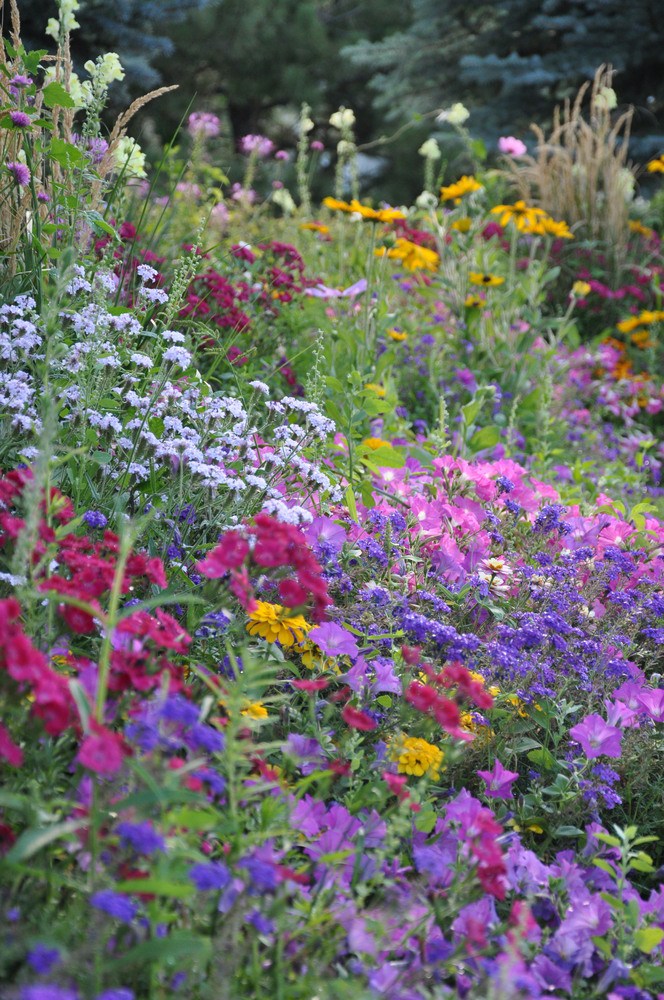
    Bringing Meadows into the Garden: With global warming and energy conservation in mind, let’s cut down on mowing and blowing and replace some of our lawns with higher grass. Page Dickey will discuss a wide range of examples showing how beautifully meadows — however small — and meadow plants can be incorporated into our gardens.

    Page has been passionately gardening since her early 20s and writing about gardening, as well as designing gardens for others, for the last three decades. She has written eight books and edited another. Most of her books concentrate on aspects of garden design, such as creating gardens that reflect their settings (Gardens in the Spirit of Place and Breaking Ground) or planning gardens as extensions of our homes (Inside Out), in each case illustrated by exceptional examples around America. Duck Hill Journal and Embroidered Ground are about Duck Hill, where she lived for 34 years, about the process of making the garden there, and her thoughts on gardening in general. Page was the editor of the book Outstanding American Gardens, celebrating 25 years of the Garden Conservancy with photographs by Marion Brenner. Her new book, Uprooted: A Gardener Reflects on Beginning Again, describes leaving a beloved garden of 34 years, finding a home in the northwest corner of Connecticut and falling in love with its land. Page lectures around the country about plants and garden design. She has written many articles over the years, including in House and Garden, House Beautiful, Architectural Digest, Horticulture, Elle Décor, Garden Design, and The New York Times. The garden at Duck Hill has been featured in a variety of periodicals. She is a director emeritus of the Garden Conservancy and is one of the two founders of its Open Days Program. She also serves on the boards of Stonecrop Garden, in Cold Spring, N.Y.; Hollister House Garden, in Washington, Conn.; and The Little Guild, in Cornwall, Conn. She and her husband, Bosco Schell, are both members of the Friends of Horticulture at Wave Hill. Page was recently elected as an Honorary Member of The Garden Club of America. In 2015, Page and her husband moved to Falls Village, Conn., to an old church with 17 acres of fields and woods and a view of the Berkshire foothills. They are off on a new gardening adventure.

    Agriculture as Conservation: Lessons for the Landscape: Our increasingly complex and dire environmental challenges can’t be met by wildland preservation alone. It has become abundantly clear that we must also radically change our approach to intensively human-managed landscapes. Since 2018, Stone Barns Center has been managing over 350 acres of former traditionally managed pasture land (now predominantly part of a state park preserve) using holistic regenerative methods focused around intensive, multi-species rotational livestock grazing. These efforts have been coupled with a comprehensive ecological monitoring program measuring responses in our soil health, plant biodiversity, bird biodiversity, insect biodiversity, and water quality. This presentation will share some of our preliminary discoveries from listening closely to the landscape and how those lessons could be applied by stewards of a variety of human-impacted landscapes, including the landscaping and gardening community.

    Elijah Goodwin is the ecology and GIS manager at Stone Barns Center. He first joined the organization in 2019, monitoring bird populations on the pastured grasslands managed through the Conservation Action Plan with Rockefeller State Park Preserve. He previously conducted a four-year study on the wood thrush populations within the Park Preserve. Since starting an expanded role with the organization in 2020, he has been working to build out the ecological monitoring program and create and implement an ArcGIS-based database system to collect, manage, synthesize, and present the vast array of monitoring and management data collected from across the farm and the Center. Elijah has been working as a research scientist and/or science educator for over 25 years. While his primary training is as an ornithologist, he has experience working with soil, plant communities, and DNA technology . His scientific experience includes banding hawks and owls during migration in New Jersey; surveying beaver activity and bird populations in the Adirondacks; and studying bird song learning all over the Eastern Seaboard and Mexico. He holds a B.S. in wildlife biology from the University of Massachusetts, Amherst, an M.S.T in biology education from Boston College, and a Ph.D. in organismic and evolutionary biology, also from the University of Massachusetts, Amherst. On the side: Elijah enjoys time spent in the outdoors with his wife, Katherine, and child, Spirit. He is an award-winning nature and night/light painting photographer and owns a small photography, education and ecological consulting business, Whimbrel Nature. He has served as president and a board member for the Color Camera Club of Westchester and is a science advisor for ⅔ For The Birds.

    Ecosystem Approaches to Landscape Design: Building Resiliency Through Community: Today’s gardeners are faced with more challenges than ever before—a changing climate, more pressure from invasive plants and pests, and more decisions about what to put into and how to manage our landscapes. Annie White is striving to create a new culture of gardening where we move away from carefully curated gardens, work more with rather than against nature, and become better stewards of the ecosystems within and around our gardens. Annie will share her ecosystem approach to landscape design that helps build resiliency through community. Sharing case studies of her successes and failures, Annie’s talk will open your eyes to the myriad of naturally occurring processes in the landscapes and how we can steward these to create both beautiful and ecologically significant landscapes. 

    Annie White (below) is an Ecological Landscape Designer and the owner of Nectar Landscape Design Studio in Stowe, Vermont. She is also a full-time Lecturer of Sustainable Landscape Horticulture + Design at the University of Vermont.  Annie earned an MS in Landscape Architecture from the University of Wisconsin—Madison in 2005 and a PhD in Plant & Soil Science from The University of Vermont in 2016. She is passionate about designing cutting-edge and science-based ecological landscapes at all scales—from urban backyards to rural agricultural landscapes.

  • Friday, April 12, 1:00 pm – 4:00 pm, and Saturday, April 13, 8:00 am – 4:00 pm – The 15th Annual Great Gardens Symposium

    Friday, April 12, 1:00 pm – 4:00 pm, and Saturday, April 13, 8:00 am – 4:00 pm – The 15th Annual Great Gardens Symposium

    The premier Great Gardens Symposium takes place on Friday, April 12 and Saturday, April 13, 2019, at the magnificent, world-class Woodstock Inn and Resort in Woodstock, Vermont. The symposium features:

    Five info-packed lectures led by nationally and regionally renowned professionals in their fields

    A Gardeners Marketplace with plant vendors, artisans, gardening gifts and products

    An exquisite setting – The Inn is cherished for its preservation of New England history, heritage, and elegance as well as farm-fresh food and an emphasis on conservation

    Terrific handouts, door prizes and garden gifts for everyone

    Special overnight room rates for symposium attendees at The Woodstock Inn and Resort

    An opportunity to connect with hundreds of gardeners from around the Northeast and beyond

    The 2019 symposium is sure to be another sellout like past symposiums! Friday’s Pre-Symposium program from 1 – 4 with Kerry Ann Mendez is $55, and Saturday’s 8 – 4 day, with presenters Matthew Benson, Annie White, Warren Leach, and Kerry Ann Mendez, is $98. Full descriptions of the lectures and registration may be found at https://pyours.com/symposium/

    Image result for photographic garden: mastering the art of digital garden photography

  • Wednesday, July 11, 1:00 pm – 4:00 pm – Pollinate New England Garden Installation Workshop

    Pollinate New England is an initiative to raise awareness of the steep decline in the insects, birds, and other animals that pollinate our plants and crops, and to encourage people to use native plants in their gardens to create habitat for these critical species. Attend a local, hands-on gardening installation workshop on Wednesday, July 11 from 1 – 4 with Mark Richardson, Director of the New England Wild Flower Society, and Annie White, horticultural research at University of Vermont and owner of NECTAR Landscape Design Studio, to learn about the plight of pollinators and the great garden plants native to your eco-region that best support them. Free. The workshop will take place at the South Shore Natural Science Center, 48 Jacobs Lane in Norwell, Massachusetts, which is a co-sponsor of the event. Register at http://www.newenglandwild.org/learn/our-programs/pollinate-new-england-garden-installation-workshop-ssymca-south-shore-natural-science-center

    Image result for pollinate new England

  • Wednesday, November 1, 8:00 am – 4:30 pm – Season’s End Summit: The Plant Pollinator Partnership

    As native bees as well as European honey bees struggle for survival, their reduced numbers put natural ecosystems and agricultural systems at risk. And bees are not the only pollinators that are suffering. Beetles, butterflies, ants, birds, and bats all help with pollination. In response, landscape professionals and concerned homeowners across the country are learning more about the habitat needs of the creatures that pollinate plants – and using that knowledge to make planting decisions.

    In landscapes across the country, a movement is gaining momentum as landscape professionals and gardening enthusiasts learn more about the plants that support pollinators – and make planting decisions accordingly. Join us on Wednesday, November 1 from 8 – 4 for the ELA Season’s End Summit as four experts (Tod Winston, Annie White, Thomas Berger (his sculpture featured below), and Sam Jaffe) help us to learn what we can do to be part of the solution in support of pollinators. Program schedule can be found at http://www.ecolandscaping.org/event/seasons-end-summit-the-plant-pollinator-partnership/ The summit will take place at the Community Harvest Project Barn, 37 Wheeler Road, North Grafton, and is $85 for ELA members, $110 for nonmembers.

  • Wednesday, April 5, 7:00 pm – 8:30 pm – How Native Plant Cultivars Affect Pollinators

    On Wednesday, April 5 at 7 pm at the Cambridge Public Library, 449 Broadway in Cambridge, Grow Native Massachusetts presents a free talk by Annie White, a Landscape Designer and University of Vermont Adjunct Professor.

    Initiatives to address pollinator decline are widespread and native plants are the preferred choice for pollinator habitat restoration. The growing demand for natives, coupled with a longstanding desire of horticulturalists for enhanced bloom, color, or other characteristics, has led to the increased selection and breeding of native cultivars. Although these cultivars are typically marketed for their ecological benefits, until now there have been no scientific studies to support or refute these claims. So are native cultivars as valuable in pollinator habitat gardens as the true native species?

    Annie White will help answer this question by sharing the results of four years of field data. Her research is groundbreaking and remarkable. She is the founder of Nectar Landscape Design Studio and an Adjunct Professor at the University of Vermont. She earned her MS in Landscape Architecture from the University of Wisconsin-Madison. Her recent PhD in Plant & Soil Science from the University of Vermont was focused on this exceptional new research on native plant cultivars. For more information visit http://grownativemass.org.

  • Wednesday, July 27, 1:00 pm – 5:00 pm – What Role do “Nativars” Play in an Ecological Landscape?

    As interest increases in native plants for ecological landscapes, growers and nurseries are meeting the demand through increased production of native plant cultivars (nativars) and through asexual propagation methods like cuttings, grafting, and tissue culture.

    While asexual propagation is perhaps the quickest way to produce large quantities of plants in order to meet demand, a landscape composed entirely of clonal plants (even if they are native) does not offer the same level of ecosystem services as a genetically diverse landscape grown from locally-sourced seed. Co-sponsored by ELA and New England Wild Flower Society, this program is intended to raise awareness of the many aspects of this important topic. The audience for this event will be landscape designers, landscape architects, conservation and restoration specialists, growers, and others in the landscape field. We hope that this discussion will reveal current research into the ecological value of nativars and other asexually propagated native plant species, and address the challenges of meeting the demand for genetically diverse native landscapes.

    In the midst of many opinions, this  July 27 ELA workshop at Garden in the Woods brings together several experts on the topic to bring clarity and guidance on the topic.

    Presenters and Panelists:

    Cayte McDonough is the Nursery Production Manager for New England Wild Flower Society’s Nasami Farm Native Plant Nursery based in Whately, MA. For the past 15 years she has worked to propagate, cultivate, understand, and promote New England native plants. McDonough and her colleagues collect seeds in the wild with permission from landowners. They collect from large populations to ensure genetic diversity and limit their collections to 20 percent of the available seed to minimize the impact on the population. She also enjoys learning about native pollinators and supporting local farmers.

    Michael Piantedosi is the Seed Bank Coordinator of New England Wild Flower Society and is currently working with Seeds of Success (SOS), a native seed collection program led by the Bureau of Land Management. SOS collects wild land native seed for research, development, germplasm conservation and ecosystem restoration. The ultimate goal is to ensure the availability of genetically rich, regionally adapted native plant materials to restore, rehabilitate and stabilize lands in the United States.

    Mark Richardson oversees the New England Wildflower Society’s botanic garden, Garden in the Woods in Framingham, Massachusetts and its native plant nursery operation, Nasami Farm in Whately, Massachusetts. He studied ornamental horticulture at the University of Rhode Island and helped run a mid-sized ornamental plant nursery before finding his true passion in public horticulture. He led undergraduate programs at Longwood Gardens, overhauled the curriculum of the Professional Gardener Program, and oversaw adult education at Brookside Gardens. In 2013, Mr. Richardson assisted with the development of the first comprehensive master plan for Garden in the Woods. He holds an MS from the University of Delaware’s Longwood Graduate Program.

    Peter van Berkum, along with his wife Leslie, started Van Berkum Nursery (VBN) in 1986. VBN is a wholesale perennial nursery specializing in natives, shade perennials, and Wicked Ruggeds – plants that perform well and last a long time in New England landscapes. Peter has a degree in Plant Science from the University of New Hampshire, spent a year studying horticulture in the Netherlands, and worked at several nurseries before starting VBN. He is a past president of the New Hampshire Plant Growers Association, as well as a founding member of the New Hampshire Horticulture Endowment. He and his wife were recipients of the Massachusetts Horticulture Societies Silver Medal, and Peter was the Perennial Plant Association’s Grower of the Year in 2013.

    Laney Widener is the Botanical Coordinator at the New England Wild Flower Society with a background and research on plant genetic differences.

    Annie White is a Horticultural Researcher at the University of Vermont and owner of NECTAR Landscape Design Studio & Consulting. Annie has a PhD in Plant & Soil Science from the University of Vermont and a MS in Landscape Architecture from the University of Wisconsin-Madison. For years, Annie worked as an ecological landscape designer and continually saw native cultivars being substituted for native species in her designs. Recognizing a lack of research to support this, she began researching the topic herself as a PhD student. Using replicated research methods, Annie has evaluated about 20 native cultivars in comparison to the native species for pollinator preference, floral abundance, bloom duration, and hardiness. Her research was funded by a SARE Partnership Grant and the New Hampshire Horticultural Endowment.

    $30 for ELA and NEWFS members, $40 for nonmembers. See more at: http://www.ecolandscaping.org/event/what-role-do-nativars-play-in-an-ecological-landscape/#sthash.NTcIk8Ne.dpuf