Andrew Knoll,Fisher Professor of Natural History and Professor of Earth and Planetary Sciences, Harvard University, and Curator of Paleobotanical Collections, Harvard University Herbaria, will speak in the Hunnewell Building of the Arnold Arboretum on Wednesday, April 24, from 7 – 8:30, on Plants of New England: A History in Deep Time. Celebrated as a land of marble and granite, the bedrock of New England also includes patches of sedimentary rock that document ancient landscapes and vegetation. From Earth’s deep Precambrian past dominated by bacterial photosynthesis, through the early history of land plants and tropical coal swamps of the Carboniferous Period, and on to warm temperate forests of 25 million years ago and conifer forests established as ice age glaciers melted, New England rocks and fossils shed light on our region’s deep photosynthetic past. Free for Arboretum members, $10 nonmembers. Register on line at www.arboretum.harvard.edu.
Tag: Arnold Arboretum
-
Sunday, April 28, 1:30 pm – 3:30 pm – Spring Wildflowers of the Northeast: A Natural History
The Ecological Landscaping Association, New England Wildflower Society, Arnold Arboretum of Harvard University, Massachusetts Audubon Drumlin Farm, and Tower Hill Botanic Gardens will co-sponsor Spring Wildflowers of the Northeast: A Natural History, with author Carol Gracie, on Sunday, April 28, from 1:30 – 3:30 at Garden in the Woods in Framingham. The wildflowers that brighten our woodlands in spring are more than just a delight for the eye and a lift for the winter-weary spirit. Each has a role in the environment, with often interesting interactions with pollinators and seed dispersers. Topics will include adaptations for early blooming, medicinal and other uses, the origin of wildflower names, pollination and seed dispersal, and the latest scientific research on the ecology of these beautiful plants. Following the lecture and book signing, enjoy an optional docent-led walk through Garden in the Woods in its early spring glory. $15 for members of a sponsoring organization, $18 for nonmembers. Register by calling 617-436-5838, or visit www.ecolandscaping.org.

-
Tuesday, April 16, 6:30 pm – 7:30 pm – Forecasting the Future: Can Ecologists Predict the Fate of Plant and Animal Populations?
Elizabeth Crone, Population Ecologist of Harvard Forest, will speak at the Arnold Arboretum on Tuesday, April 16, beginning at 6:30, in a program co-sponsored by the Cambridge Science Festival. Population ecologists study plant and animal populations in essentially the same way that insurance actuaries assess risks about human populations: they track births and deaths of different plant and animal species, and use these patterns to predict how these species will respond to changes in habitat management, climate, and more. However, there is much less data about most species than about humans, and environmental planners often want longer-term forecasts than insurance companies. Elizabeth Crone will describe how plant ecologists monitor populations and collect demographic information. She will also speak about successes and failures in forecasting the futures of different plant populations, and describe how ecologists go about the science of fortune-telling. Free, but registration requested at www.arboretum.harvard.edu.

-
Saturday, April 20, 10:00 am – 4:00 pm – Ginkgo Fest: A Symposium About Ginkgo biloba
On April 20, three prominent biologists will join forces to share all they know about the unique tree species, Ginkgo biloba. Ginkgo is a plant species that has existed since the Jurassic period with few evolutionary changes and continues to thrive today. This special symposium includes a series of lectures, a tour of the Arboretum’s Ginkgo biloba collection, and lunch with a tasting of ginkgo nuts. Ginkgo artifacts and illustrations from the Harvard Libraries and collected paraphernalia will also be on display. So don your best ginkgo outfit (we know you have at least one article of clothing with a ginkgo leaf on it) and immerse yourself in the history and biology of this relict species.
Peter Crane, Carl W. Knobloch, Jr. Dean of the School of Forestry & Environmental Studies and Professor of Botany, Yale University, and co- author of the just published book, Ginkgo: The Tree that Time Forgot, Yale University Press, William “Ned” Friedman, Director, Arnold Arboretum and Arnold Professor of Organismic and Evolutionary Biology, Harvard University, and expert in the reproductive biology of early seed plants, including Ginkgo biloba, and Peter Del Tredici, Senior Research Scientist, Arnold Arboretum and Adjunct Associate Professor of Landscape Architecture, Graduate School of Design, Harvard University, a botanist who has studied ginkgo for more than 20 years and searched for and located remnant wild stands of ginkgo on the slopes of mountains in southwest China, will be the three luminaries speaking at the symposium.
WHEN: Saturday, April 20, 2013, 10:00 a.m. to 4:00 p.m. View details and registration at https://my.arboretum.harvard.edu/Info.aspx?DayPlanner=1165&DayPlannerDate=4/20/2013
WHERE: The Arnold Arboretum of Harvard University, Weld Hill Research Building, 1300 Centre Street, Roslindale, MA. http://arboretum.harvard.edu/visit/weld-hill-directions/

-
Monday, April 1, 7:00 pm – 8:30 pm – Becoming Hydrangea: The Wild History of a Popular Garden Plant
Larry Hufford, Ph.D., Plant Systematics and Evolution at Washington State University, will speak in the Hunnewell Building of the Arnold Arboretum on Monday, April 1, beginning at 7 pm, on Becoming Hydrangea: The Wild History of a Popular Garden Plant. Hydrangeas are among our most popular garden plants, but what were they and where were they before hydrangeas entered gardens? Larry Hufford will explore the history of the hydrangea family in the wild. He will look at hydrangea’s desert roots, the origin of its two forms of flowers, including the flag flowers so prominent in garden varieties, and what happens when hydrangeas migrate to tropical forests. Free for Arboretum members, $10 nonmember. Register on line at www.arboretum.harvard.edu.
-
Monday, April 8, 7:00 pm – 8:30 pm – The New You: How Symbiosis Studies Have Undercut Biological Views of Individuality
Scott Gilbert, Howard A. Schneiderman Professor of Biology at Swarthmore College, will speak as part of the Director’s Lecture Series at the Arnold Arboretum on Monday, April 8 beginning at 7 pm. What defines an individual? Can an animal be construed an individual if its anatomy, physiology, development, and even its immune systems depend on symbiotic microorganisms? What becomes of the genetic and evolutionary individual when inherited symbionts provide selectable variation for the host? Animal plus symbiont equals… what? Super-animal? Team? Holobiont? Have we been lumping and sorting erroneously only to learn through advances in biotechnology that individuals are really communities or, perhaps, relationships? Join us for a mind-bending presentation that may leave you reassessing your place in the biosphere.
Free, but registration requested at www.arboretum.harvard.edu.
-
Tuesday, March 26, 12:15 pm – 1:15 pm – Japanese Flowering Cherries: A 100 Year-long Love Affair
Last year marked the 100th anniversary of the planting of the famous flowering cherries surrounding the Tidal Basin in Washington, DC. Flowering cherries have long been a captivating presence in Japan and throughout the U.S. since their introduction 100 years ago. Although the Tidal Basin plantings seem like a single instance in time, the interest in flowering cherries in the early 1900s was widespread and these plants came into America through a number of different sources. Along with the famous plantings in Washington, there is a long history of growing flowering cherries in Philadelphia. In this Tuesday March 26 lecture in the Weld Hill Research Building at the Arnold Arboretum, Tony Aiello will discuss the introduction of flowering cherries into the U.S. and will focus on their history in Philadelphia. Along with his interest in the history of cultivation of flowering cherries, Mr. Aiello has been using the Arboretum’s cherry collection as a model for preserving our horticultural heritage and at the same time providing best practices of veteran tree care. He has been working with other botanic gardens in the Northeast to identify, propagate, and share rare varieties of flowering cherries. Free, but registration requested at www.arboretum.harvard.edu. The speaker is the Gayle E. Maloney Director of Horticulture and Curator, Morris Arboretum, University of Pennsylvania. Beautiful photo from the Brooklyn Botanic Garden.

-
Saturday, April 6, 9:00 am – 1:00 pm – Growing Plants from Seeds
There’s nothing more satisfying to a gardener than growing plants from seeds. From annuals and perennials to trees and shrubs, success can be achieved if you understand what triggers germination. On Saturday, April 6, from 9 – 1 at the Dana Greenhouse Classroom at the Arnold Arboretum, expert propagator Jack Alexander will share techniques for starting various types of plants— annuals (including vegetables), trees, and shrubs— from seeds. This workshop is for beginners and those who have been frustrated in past attempts to transform seed to seedling. Students will leave class with a selection of seeds raring to grow. Aftercare will be necessary. $50 for Arboretum members, $65 for non members. Register on line at www.arboretum.harvard.edu. Photo from www.growingagreenerworld.com.

-
Thursday, March 21, 6:30 pm – 8:00 pm – Growing Nuts in the Northeast
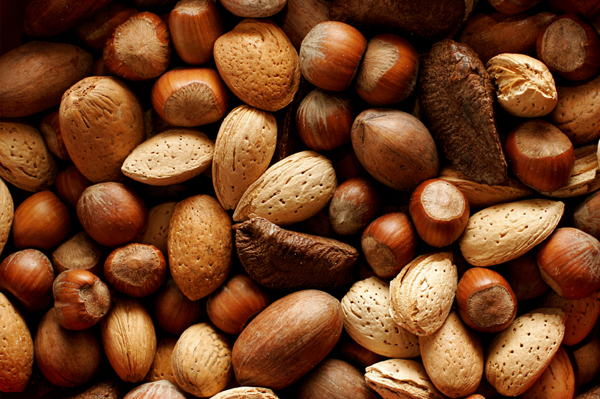
Sandra Anagnostakis, PhD, Department of Plant Pathology at the Connecticut Agricultural Experiment Station, will speak at the Hunnewell Building of the Arnold Arboretum on Thursday, March 21, beginning at 6:30 pm, on the topic of Growing Nuts in the Northeast. There are many nut trees that can easily be grown in Massachusetts. These can be interesting hobby plants for your back yard, a source of nutritious nuts for your table, or provide a little extra income from their sale. In this talk you will hear about starting an orchard, the characteristics of several species of nut trees, their problems, and suggestions for harvesting and marketing the nuts. $5 for Arboretum members, $15 for nonmembers, and registration may be completed on line at www.arboretum.harvard.edu. Image from cdn.sheknows.com.