Tag: Arnold Arboretum

  • Request For Proposals for Boston Committee Grant

    Established in 1989, The Boston Committee of the Garden Club of America is a consortium of 14 garden clubs in the greater Boston area, from Buzzards Bay to the South, and coastal Maine to the north, with a total membership of 1,100 individuals. The Garden Club of the Back Bay is an affiliate member of The Boston Committee.

    Over the past years, the Boston Committee has awarded $110,000, through its Blossom Fund, to various not for profit groups in the City of Boston, for the purpose of beautifying our urban spaces. The Fund has been most effective when used to leverage larger grants. It has been at the forefront of projects such as the construction of the Blackwell Path at the Arnold Arboretum, which allows access to the Arboretum from public transportation. The Blossom Fund has helped with the construction and planting of a butterfly garden and maple tree allee at Massachusetts Audubon Society’s George Robert White Nature Center, in Mattapan. It has provided money for the restoration of the Kelleher Rose Garden on the Emerald Necklace. The Esplanade Association purchased irrigation equipment, the Charles River Conservancy restored the landscape surrounding the Eliot Bridge, and a garden was established at the Neighborhood Charter School, all with the help of the Blossom Fund.

    Now, the Boston Committee is soliciting proposals for a project in the vicinity of the Rose Fitzgerald Kennedy Greenway. We expect to award a single grant for $50,000, with the potential to collaboratively raise additional funds in the future.

    The Committee members agree that innovation, positive community impact, and horticultural achievement must be the hallmarks of a successful Greenway proposal. Sustainability and future maintenance are important considerations. The grant will not be awarded for general fund drives, endowments, or for operating or staffing costs. The successful applicant must work with us to raise additional monies in the final year of the fund drive. Importantly, applicants must be an exempt organization under the IRS code.

    Complete details may be obtained by email. Contact Michele Hanss, current Chairman of The Boston Committee, at m.hanss@comcast.net. Applications are due February 10. We have received notice that applications may be forthcoming from the Friends of Christopher Columbus Park, The Rose Kennedy Greenway Conservancy, the Boston Aquarium, and the Boston Harbor Walk. After a full review and interviews, member Clubs will vote for the winning application, to be announced at our Annual Meeting in the fall of 2012, after which we will embark on the final year of fund raising. We encourage all groups in or around the Greenway to submit applications.

  • Monday, February 13, 10:00 am – 12:00 noon – Seeds Up Close: Amazing!

    Enjoy the beauty of seeds and learn about plant conservation projects from Julie McIntosh Shapiro at a Horticulture Morning sponsored by the Garden Club Federation of Massachusetts on Monday, February 13, from 10 – noon at the Espousal Center in Waltham.   The Seed Herbarium Image Project, or SHIP, is an initiative of the Arnold Arboretum of Harvard University to create a web-based repository of high-resolution digital images documenting the morphology of woody plant seeds and selected fruit structures.  SHIP is headquartered at the Arboretum’s Dana Greenhouse facility and is coordinated and photographed by curatorial assistant Julie McIntosh Shapiro. The Seed Herbarium Image Project supports the work of educators and professionals in horticulture and the botanical sciences, particularly in conservation research and management of rare and endangered species. The digitized images of seeds offer an important new aid for teaching seed identification—a fundamental skill in plant propagation, hybridization, and distribution—and serve as a resource for nurserymen, horticulturists, botanical curators, taxonomists, ecologists, and the general public. SHIP also provides an online resource for botanical institutions and nurseries to verify their collections and inventories. SHIP is made possible through the generous support of the Stanley Smith Horticultural Trust, Cabot Family Charitable Trust, and the J. Frank Schmidt Family Charitable Foundation.  A $5 donation is requested.

  • Monday, January 23, 2:00 pm – Soil: Where Geoscience Meets Botany

    Soil has been called “the bridge between life and the inanimate world.” Join Janet McDonough, Senior Instructor of Biological Science Laboratory at Wellesley College, to gain a new appreciation for this backbone of our landscape. From its origins in the glacial era, explore the characteristics of soils in New England and how that character is represented by the plants in our landscape. How is soil made? What are the components of a good soil, and what easy methods can gardeners use to tell what amendments are needed? From geology to biology, Janet will give us all the dirt on soil. This Monday, January 23 presentation is offered by the Wellesley College Friends of Horticulture in collaboration with the Arnold Arboretum of Harvard University, the Boston Junior League Garden Club, and the New England Wild Flower Society. Register on line at www.wellesley.edu/WCFH, or call 781-283-3094. Members $10, non-members $15.

  • Monday, February 6, 7:00 pm – 8:30 pm – The Global Forests of Greenhouse Earth

    Earth’s climate has passed from times characterized by huge ice caps to times when there was almost no ice at all and both Greenland and Antarctica were covered by forests. Kirk Johnson, Vice President of Research & Collections and Chief Curator, Denver Museum of Nature and Science, studies fossil leaves to refine geologic time, reconstruct ancient landscapes, track climate change, and document the evolution and extinction of species and ecosystems. For 30 years he has been chasing the 50–100 million year-old-forests of the last great global greenhouse period. Join him as he takes you on a journey to an entirely different Planet Earth—an environment that may help us to better understand changes occurring in our own time. This Arnold Arboretum lecture will take place Monday, February 6, from 7 – 8:30 in the Hunnewell Building, as part of the Director’s Lecture Series. The event is free but registration is required. Call 617-384-5277, or visit www.arboretum.harvard.edu to place your name on the list.  Painting below by Peter Trusler.

  • Monday, January 9, 7:00 pm – 8:30 pm – The Evolution of Big

    Think you know trees? Come to the Hunnewell Building at the Arnold Arboretum on Monday, January 9, from 7 – 8:30 and learn about an amazing period when there were no trees, and then, in the blink of a geological eye, several different groups of plants evolved the ability to increase their girth and qualify for placement in an arboretum. Get a sense of what forests looked like over three hundred million years ago. Learn about the (sad) extinction of all but one of the early arborescent lineages of plants and find out which evolutionary group of trees survived to populate the Arnold Arboretum and today’s forests. The free lecture will be given by Ned Friedman, Director of the Arnold Arboretum and Arnold Professor of Organismic and Evolutionary Biology at Harvard University. Registration is required, however, so call 617-384-5277, or visit www.arboretum.harvard.edu.

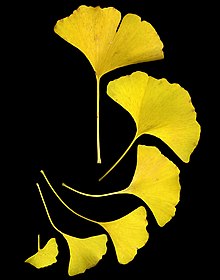
  • Tuesday, December 13, 7:00 pm – 8:30 pm – Gingko: A Fresh Look at a Living Fossil

    Join Peter Del Tredici, Senior Research Scientist at the Arnold Arboretum, for an in-depth look at one of the oldest and most fascinating trees on the planet. Del Tredici has been studying the natural history and evolution of Gingko biloba for a quarter century and is recognized as a world authority on the subject. His recent travels have taken him to remote areas in southwest China to search for wild-growing populations. Del Tredici has investigated nearly all aspects of this unique and ancient relict, from its cultivation for ornamental purposes to its uses in traditional medicine to improve memory.  The free lecture will take place at the Hunnewell Building of the Arnold Arboretum, but registration is requested at www.arboretum.harvard.edu.

  • Wednesday, December 7, 7:00 pm – 8:30 pm – Deadly Nightshades: From Potatoes to Poisons

    Outside of the grasses and beans, few plant groups have contributed more to influence global cuisine and culture than the nightshade family (Solanaceae). Members like potatoes, tomatoes, peppers, and eggplants have figured prominently not only in human nutrition, but also in the history of New England and the world. At the same time, poisonous relatives like tobacco, mandrake, henbane, and belladonna have contributed to its other, more sinister reputation. Join Gregory J. Anderson, Professor of Ecology and Evolutionary Biology, University of Connecticut, at the Hunnewell Building at Arnold Arboretum on Wednesday, December 7, from 7 – 8:30 for a deeper look at both sides of the family line.  Free, but registration requested.   On line registration is available at www.arboretum.harvard.edu.

  • Wednesday, November 16, 7:00 pm – 8:30 pm – Botany of Thanksgiving

    Pumpkins, squash, peas, beans, turnips, carrots, potatoes, parsnip, spinach, corn, apples, pecans, cabbage, and more are common components of a Thanksgiving feast. But have you considered these fruits, tubers, nuts, and vegetables from a botanical perspective? In a novel analysis of this traditional meal, Professor Pamela Diggle, Evolutionary Biologist at University of Colorado and Harvard University, will open your eyes to the plant anatomy and physiology that preceded the creation of, say, your grandmother’s sweet potato-marshmallow casserole or your uncle’s savory succotash.  This Arnold Arboretum class will be held Wednesday, November 16, from 7 – 8:30 in the Weld Hill Research Building at the Arboretum.  Free, but registration requested.  Visit www.arboretum.harvard.edu for registration and more information.

  • Tuesday, November 29, 7:00 pm – 8:30 pm – American Eden: What Our Gardens Tell Us About Who We Are

    Trinity Church, Copley Square, Boston, and the Arnold Arboretum of Harvard University team up once again as part of their Garden and Spirit: The Power of Landscapes to Transform series on Tuesday, November 29, from 7 – 8:30, hosting Wade Graham, designer, historian, and Adjunct Professor of Public Policy at Pepperdine University. In his book, American Eden, Wade Graham argues that how we design and garden shows more than simply how green are our thumbs. Gardens reveal information about who we are as a nation—where we have come from, and where we might be headed. From ethics to aesthetics, from politics to political correctness, Graham will speak about the history of gardening in America and how it has shaped and been shaped by daily life. The lecture is entitled American Eden: What Our Gardens Tell Us About Who We Are.  The event will take place at Trinity Church, and the fee is $15 for Arboretum members, $20 for non-members.  You may register online at  www.my.arboretum.harvard.edu.

  • Thursday, November 10, 1:00 pm – 4:00 pm – Winter Gardening: Challenges and Rewards

    New England winters can be cold, long, and gray but our landscapes don’t have to be. Our gardens can still provide cheer even on the dreariest winter days. Get tips from Nate McCullin, Horticulturist of the New England Wild Flower Society,  for creating a landscape with year-round appeal as well as ideas to help your plants survive the season’s challenges such as damage from ice, snow, and voracious mammals. Learn about plants that provide color, texture, shelter, and food sources throughout the winter with a few surprises etched in along the way.  The class takes place at Garden in the Woods in Framingham on Thursday, November 10, from 1 – 4 pm.  Fee $36 member, $43 nonmember
    Offered by the Arnold Arboretum with the New England Wild Flower Society.  You may register online at www.arboretum.harvard.edu, or at www.newfs.org.  Doug Green photo from www.simplegiftsfarm.com.