Tag: Arthur Shurcliff

  • Tuesday, June 22, 6:00 pm – Garden Club of the Back Bay Kelleher Rose Garden Tour

    Tuesday, June 22, 6:00 pm – Garden Club of the Back Bay Kelleher Rose Garden Tour

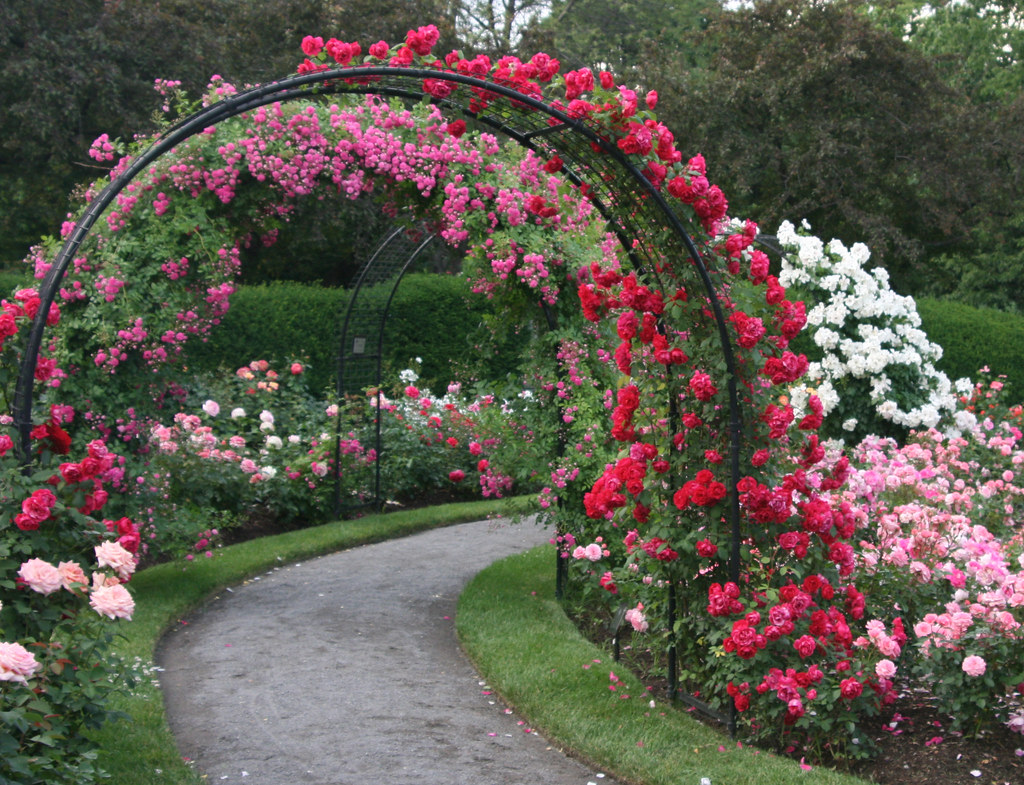
    The Kelleher Rose Garden, located in the Fenway near the MFA, is a wonderful rose infused garden graced with nearly 1,500 rose plants, trellises, a water fountain and statues.  It was originally designed by landscape architect Arthur Shurcliff. A recent renovation has brought the garden back to its original design and glory.  This is a docent-led tour and will conclude with a quick tour of the nearby Victory Gardens.  We will meet on June 22 at 6 pm at the entrance to the Rose Garden. Details and directions will be sent to everyone who signs up.

    RSVP by clicking here:  dianegipsonboston@gmail.com
    It is important to RSVP as soon as possible because the tour is limited to 20.  We will confirm RSVP’s and maintain a waiting list. This is a Garden Club of the Back Bay member pop up event – if you are not a member, consider joining now at https://bostonflora.com/membership/

  • From the Archives: The Trees of Beacon Street

    A letter went out to the residents of Beacon Street in 1910, from a citizens committee chaired by Mrs. F. T. Lord, from the Committee of the Metropolitan Improvement League (whose members included Frederick Law Olmsted,) and from the Secretary of the Massachusetts Forestry Association, Mr. Irving T. Guild. The letter is excerpted below:

    “A year ago a committee of residents of Beacon Street met with delegates of the Metropolitan Improvement League and the Massachusetts Forestry Association to consider the planting of a row of trees on either side of Beacon Street between Arlington Street and Massachusetts Avenue. A strong sentiment in favor of tree-planting had previously been shown by a house-to-house canvass by ladies of this committee. As a result of this meeting, Mr. Arthur A. Shurtleff, the well-known landscape architect and tree expert, was requested to make a complete study of the situation and to present a full report…

    The undersigned committee recommend that Mr. Shurtleff’s plan be adopted and the details of the undertaking be placed in his hands as architect. To do this will cost approximately $12,000, or an average of $34 per house, there being 352 houses between Arlington Street and Massachusetts Avenue.

    It is desirable that the work of preparing the pits be done during the summer months, when most of the residents will be away and when the work can be done more cheaply.  The planting should be done either in November or April, better in the latter month…

    Will you not contribute toward this well-considered, desirable, and permanent improvement of Beacon Street?  Cheques may be made payable and sent to R.G. Wadsworth, 323 Beacon Street.  If enough money is not raised, the cheques will be returned.  The committee wish to point out that as all the 352 houses between Arlington Street and Massachusetts Avenue are not occupied by permanent residents, it is hoped that those who are especially interested in the plan will not limit their contributions to any arbitrary sum. On the other hand, small contributions from any one interested will be very welcome.  Should more money than is necessary for the actual planting be obtained, this excess will be used for the future care of the trees.”

    This project was a successful early example of crowdfunding.  Thomas High, in his invaluable site www.backbayhouses.org, notes that Dr. Wadsworth was a physician who lived and maintained his office at 323 Beacon Street. Noted artist Polly Thayer Starr also resided there, and the building is now a lodging house. Picture below is from 1870, of a treeless Beacon Street looking west from Arlington Street.

    Save

  • Wednesday, March 18, 5:30 pm – 7:00 pm – Arthur Shurcliff

    The next lecture sponsored by the Massachusetts Historical Society will take place Wednesday, March 18, from 5:30 – 7, on Arthur Shurcliff. In 1928 Boston landscape architect Arthur A. Shurcliff began what became one of the most important examples of the American Colonial Revival landscape—Colonial Williamsburg, a project that stretched into the 1940s and included town and highway planning as well as residential and institutional gardens. A graduate of the Massachusetts Institute of Technology in 1894, Shurcliff immediately went back to school at Harvard University where his mentor, Charles Eliot, helped him piece together a program in the Art History Department, the Lawrence Scientific School and the Bussey Institute. Upon graduation with a second Bachelor of Science, he worked in Frederick Law Olmsted’s office for eight years, acquiring a broad and sophisticated knowledge of the profession. When he opened his practice in 1904, Shurcliff emphasized his expertise in town planning. Two decades later, when he was tapped to be Chief Landscape Architect at Colonial Williamsburg, he was a seasoned professional whose commissions included his Boston work, campus design, town planning, and a robust practice in private domestic design. How he utilized the skills he acquired over the years, and how his professional expertise intermingled with his avocational interests in history, craftsmanship, and design is the subject of Cushing’s biography—a story that inexorably sweeps him to his work in the restoration and recreation at Colonial Williamsburg.

    Elizabeth Hope Cushing, Ph.D., is the author of a newly published book about Boston landscape architect Arthur A. Shurcliff (1870–1957), based on her doctoral dissertation for the American and New England Studies program at Boston University. She is also a coauthor, with Keith N. Morgan and Roger Reed, of Community by Design, released in 2013. Cushing is a practicing landscape historian who consults, writes, and lectures on landscape matters. She has written cultural landscape history reports for the Taft Art Museum in Cincinnati, The National Park Service, the Department of Conservation and Recreation of the Commonwealth of Massachusetts, and other institutions and agencies. Her contributor credits include Pioneers of American Landscape Design (McGraw Hill Companies, 2000), Design with Culture: Claiming America’s Landscape Heritage (University of Virginia Press, 2005), Shaping the American Landscape (University of Virginia Press, 2009), and Drawing Toward Home (Historic New England, 2010). She has received a grant from the Gill Family Foundation to write a biography of Frederick Law Olmsted Jr., which she is currently researching.

    This series has been made possible by the generous underwriting of Stephen Stimson Associates Landscape Architects and is cosponsored by the Mount Auburn Cemetery and the Nichols House Museum.  $10 fee, (no charge for Fellows and Members of the MHS, Mount Auburn Cemetery and the Nichols House Museum) and pre-registration required at https://dnbweb1.blackbaud.com/OPXREPHIL/EventDetail.asp?cguid=76FBBAD5-59FC-442D-8347-A5AE40DBF561&eid=50860&sid=A801527F-4B9A-49B4-9B54-FCBE293D2EFE

  • Wednesday, December 3, 6:00 pm – Arthur Shurcliff: From Boston to Colonial Williamsburg

    Join historian and author Elizabeth Hope Cushing on Wednesday, December 3, at 6 pm in the Hunnewell Building at the Arnold Arboretum of Harvard University, as she speaks of landscape architect Arthur Shurcliff’s early work in Boston and how this led to Colonial Williamsburg, his largest and most significant contribution to American landscape architecture.

    In 1928, the landscape architect and preservationist Arthur A. Shurcliff (1870–1957) began what became one of the most important examples of the American Colonial Revival landscape—Colonial Williamsburg. But before this, Shurcliff honed his skills in Boston. An 1894 engineering graduate of MIT with an interest in landscape design, Shurcliff, on the advice of Frederick Law Olmsted and with the aid of his mentor, Charles Eliot, pieced together courses at Harvard College, the Lawrence Scientific School, and the Bussey Institute. He then spent eight years working in the Olmsted office, acquiring a broad and sophisticated knowledge of the profession. Opening his own practice in 1904, Shurcliff emphasized his expertise in town planning, preparing plans for towns surrounding Boston. He designed recreational spaces that Bostonians still enjoy today, including significant aspects of the Franklin Park Zoo and the Charles River Esplanade. Historian Elizabeth Hope Cushing will speak of Shurcliff’s early work in Boston and how this led to Colonial Williamsburg, his largest and most significant contribution to American landscape architecture.  Fee Free, but registration requested. You may register on line at https://my.arboretum.harvard.edu/Info.aspx?DayPlanner=1381&DayPlannerDate=12/3/2014. Seating is limited. A reception will follow the lecture.

    The Esplanade Association is please to be a co-sponsor of this event along with the Library of American Landscape History, Boston Society of Landscape Architects, Friends of Fairsted, the and the Arnold Arboretum of Harvard University.

  • Sunday, November 16, 1:00 pm – 2:30 pm – Franklin Park: From “A” to “Z”

    On Sunday, November 16 at 1 pm, explore the portion of Franklin Park that designer Frederick Law Olmsted called the Ante-Park (“A”), which today is largely defined by the Franklin Park Zoo (“Z”). The walk will include stops at the Valley Gates, the Playstead Overlook, White Stadium, and the old Bear Dens. This tour includes an OPTIONAL extension into Franklin Park Zoo to explore the early Zoo designed by one-time Olmsted firm apprentice Arthur Shurcliff.  Meets at “Giraffe” rear entrance to the Franklin Park Zoo, just off the Jewish War Veterans Drive (also known as Circuit Drive).  The National Park Service ranger led Walk and Talk is free and open to the public. For more information, please call 617-566-1689.

  • Friday, November 14, 9:00 am – 3:30 pm – Castle Hill Casino Restoration Seminar

    Friday, November 14, 9:00 am – 3:30 pm – Castle Hill Casino Restoration Seminar

    New England Landscape Design and History Association (NELDHA) and The Trustees of Reservations (TTOR) are pleased to collaborate on a Preservation Seminar that focuses on the Casino restoration at the Country Place Era Estate at Castle Hill in Ipswich, Massachusetts. The seminar is on November 14, 2014, at the Great House at Castle Hill from 9:00 a.m. to 3:30 p.m.

    Join them for an in depth program in the Great House with TTOR staff and other professionals who will explain the issues, process and decision making involved. TTOR Northeast Region’s Operations Manager Robert Murray will lead a tour of the restored Casino. After lunch, a distinguished panel will answer questions and discuss issues with a particular emphasis on hardscape, ornamentation and adaptive reuse of this incredible space. The panelists include Robert Murray; Lucinda Brockway, TTOR Program Director for Cultural Resources; James Younger, AIA, LEED AP, TTOR Director of Structural Resources and Technology; Susan Hill Dolan, TTOR Curator and Cultural Resources Specialist for the Northeast Region; Robert Levitre of Consigli Construction, and distinguished landscape architect and preservationist, Marion Pressley, FASLA, and past speaker for the Garden Club of the Back Bay.

    In 2014, TTOR continued the restoration of the grounds at Castle Hill, a National Historic Landmark. This year, 99 years after its creation, the crumbling Casino—the epitome of a Country Place Era estate feature for entertainment and leisure—was restored. The casino was designed in the Italian Renaissance Revival style by landscape architect Arthur Shurcliff, in collaboration with the Boston architectural firm Shepley, Rutan, and Coolidge, 1914 – 1915. Although sited on the fabulous grand allee, it is elegantly hidden within the iconic view from the Great House. The Casino predates the existing Great House designed by David Adler, 1924 – 1928. For this project, TTOR used original documentation and materials wherever possible.

    The seminar is $70 for NELDHA members, TTOR members and current students and $85 for non-members. We are offering an early registration discount of $10 for registrations received before October 14, 2014. The Registration & Refund Deadline is November 8, 2014. Space is limited. Visit www.ttor.org to register.

    casino ballroom 1915

  • Eliot Memorial Revitalization Project Update

    W thought we would share an update from the Esplanade Association on the Eliot Memorial project we here at The Garden Club of the Back Bay have helped fund during the past three years:

    “We have seeded the grass, installed stone dust around the memorial and added 6 new Shurcliff benches and 2 new curved benches. The 32-foot curved benches around the Memorial are proving very popular and are often occupied with people reading or waiting for Community Boating participants. The entry to Community Boating itself is now a welcoming spot with beautiful plantings and rationalized pathways resulting in less asphalt and more green.
    Our maintenance plans are already underway. The shrubs and groundcovers survived the winter well, though a few are being replaced. The grass has been seeded and is coming is well, although a few spots will likely need to be over-seeded later this summer. We plan to leave the short fencing up around the grassy areas until after the Fourth of July crowds.

    We believe that great parks help make communities great … Public spaces provide an important connection to nature for urban dwellers, both rich and poor.  A successful public space involves thoughtful design and an achievable maintenance strategy.  Once built, the space engages park users and provides a myriad of benefits to the physical and mental health of individuals and to the economic vitality of an area.

    We thank you again for your support of the creation of a great new gathering spot in the park.  This is one of the very few well-framed spaces on the Esplanade where small groups can gather and feel comfortable.  The area displays a wonderful balance of enclosure and openness which will get even better as the plants grow in.  The project also demonstrates critical aspects of proper horticultural maintenance that will inform our future efforts.”

    For more information about the Esplanade, visit www.esplanadeassociation.org.

  • Garden Club of the Back Bay Receives $5,000 Beautify Boston Grant from the City of Boston for Historic Linden Pruning Project

    The Garden Club of the Back Bay has successfully applied for a grant from the City of Boston to prune 67 Linden trees between Berkeley Street and Massachusetts Avenue, working with Bob Loree and The Boston Tree Company, in consultation with Boston’s Tree Warden Greg Mosman. The primary focus of the Garden Club for many years has been the care and planting of street trees of the Back Bay. There are about 1200 street trees in our neighborhood. For the last ten years the Garden Club, in consultation with the Boston Parks and Recreation Department, has been able to support an intense planting and pruning program.

    We have, in this period of time, pruned almost every tree in Back Bay at least once. Our focus has been on the removal of dead wood, clearing branches back from traffic signs, shaping new or smaller trees, and raising of the canopy to allow for clear vehicle and pedestrian passage. Although we have done some pruning of the very large mature street trees in the Back Bay, we have not done this in a systematic way, due party to the increased expense of pruning the large trees and the urgent need to address the younger trees.

    In 1910 Beacon Street, under the direction of Arthur Shurcliff and with help from residents led by Mrs. Lord, was planted with 350 Linden trees. Today there are only 67 Linden trees remaining. Many of these are very large trees now 112 years old, and some are plantings that were done in the 60’s to replace trees lost from the original planting. All of these 67 trees need attention.  The Garden Club will match the $5,000 Beautify Boston grant dollar for dollar, and begin Phase I of the project in spring, 2013.

    http://media-cdn.tripadvisor.com/media/photo-s/03/1d/13/99/463-beacon-street-guest.jpg

  • Castle Hill Grand Allee Landscape Restoration Completed

    The Trustees of Reservations (The Trustees)  announced the completion of a three-year, sustainable landscape restoration of the Crane Estate’s “Grand Allée” located on Castle Hill – a National Historic Landmark – in Ipswich. Thanks to the generosity and hard work of talented staff, community partners, donors, and volunteers, The Trustees were able to carefully remove and replant more than 700 deteriorating, overgrown trees; reinvigorate an underground, rainwater collection cistern for sustainable irrigation; and restore the beautiful, classical sculptures lining the undulating, half-mile-long, “front lawn” of the Crane Estate. Since 1949, when the Crane family gifted Castle Hill to The Trustees, the Allée has become a popular and impressive backdrop for open-air concerts, weddings, historic house and landscape tours, community events, a children’s summer camp, and other recreational activities held year-round at the Crane Estate. Now, this signature landscape feature once again sweeps to a panoramic view of Cape Ann and benefits from a healthier, more sustainably managed landscape.

    The Grand Allée is the only known, designed landscape of its size and kind still in existence in North America – and one of only a few remaining worldwide – combining grand scale with decorative arts. It is one of the largest landscape features created by renowned Boston landscape architect Arthur Shurcliff, who is best known for his design of Colonial Williamsburg and the Charles River Esplanade. Shurcliff modeled the dramatic design after the beautiful Italian and French gardens of Renaissance Europe.

    The restoration project was completed in memory of David Crockett, a former member of The Trustees of Reservations’ Board of Governors and Ipswich resident whose tireless efforts on behalf of Castle Hill and the Crane Estate were critical in preserving this property. His commitment to the care of the Crane family’s extraordinary gift to The Trustees set the standard by which the property has been – and will continue to be – privately managed for the public to enjoy. The photo below shows the area circa 1930.

    Caring for the 2,100-acre Crane Estate property is ongoing. Over the years, The Trustees have conducted extensive restoration of other interior and exterior features of the Great House and surrounding landscape features on Castle Hill, including the Bowling Green, which was awarded $50,000 from The National Trust for Historic Preservation and American Express Partners in Preservation program. The Allée restoration effort, however, represents one of the broadest, most expansive restoration and fundraising efforts ever undertaken on the property. In 2010, The Trustees launched a $2 million dollar campaign to restore this historically significant feature and welcome additional donations to complete the project. All donations are being matched by a generous donor, making individual support go twice as far. To donate, please visit http://www.thetrustees.org/alleeproject.

  • Esplanade Association Update

    The Garden Club of the Back Bay provided two grants to The Esplanade Association in 2010 in support of its work with trees – updating the tree inventory and replacing storm damaged trees.  We have received a note from Executive Director Sylvia Salas at The Esplanade Association which we’d like to share with our readers:

    “1. Tree inventory: We have been working with Joyce Husseni from Nitsch Engineering and David Rines on this project. David has assessed the condition of every tree on the Esplanade and has input this data into an Excel spreadsheet for Joyce to import into a database. David also has re-plotted tree locations on the maps, as needed. The assessment and data update include approximately 90 new trees, including the Yoshino cherries. The updated inventory will prove very useful to DCR as well as TEA in identifying and prioritizing tree work. We hope next to re-tag the trees.

    2. Replacement trees and tree care: The process of planting, even pruning, trees on the Esplanade is somewhat complicated because of oversight requirements by the Massachusetts Historic Commission and Boston Landmarks Commission, but we have managed to work through all of the DCR requirements to move forward with tree work. We are planting 10 willows at Otis Grove this spring and we intend to plant trees, as well as shrubs, ground cover and other plants at Eliot Plaza. The Eliot Plaza project is a significant one, encompassing a redesign of the plaza’s current landscape to convert it into the classic room within the park as intended by Arthur Shurcliff. We also have managed to get nearly 200 trees pruned around the Hatch Shell and are working with DCR to have as many as 300 trees pruned in the Otis Grove, Esplanade Café and Sherborn exercise areas this spring.

    Please express our gratitude to the members of the garden club for their support of The Esplanade Association’s ongoing work to improve the health and care of the Esplanade.”