Tag: Boston University

  • Monday, February 23, 6:00 pm – Whiskey in America

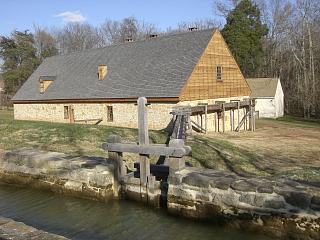
    Drawing from the archaeological records of known whiskey production sites, Mount Vernon Assistant Director for Archaeological Research Luke Pecoraro will offer a brief introduction to distilled products made in colonial America, with specific reference to George Washington’s distillery. A five-still commercial operation on one of Washington’s farms from 1797 to circa 1802, the distillery burned to ground in 1814, and was lost until re-discovered by Mount Vernon archaeologists in 1997. Intensive excavations uncovered the entire structure, revealing information about the layout of the stills, drains, and living quarters, and sparking renewed interest in spirits distillation in America. A generous grant from the Distilled Spirits Council of the United States (DISCUS) helped enable reconstruction of the distillery, which is completely operational—one of the few places where whiskey is made just as it was in the early Republic. The recipe for Washington’s whiskey survives, and is faithfully reproduced in small batches, twice a year, at the distillery (pictured below.) Following the lecture on Monday, February 23, beginning at 6 pm, five whiskeys are offered for tasting. The Boston University free event, part of the Pepin Lecture Series in Food Studies and Gastronomy, will be held in Room 117 at 808 Commonwealth Avenue, Brookline. Enroll at www.bu.edu/foodandwine.

  • Thursday, February 12, 6:00 pm – The Future of Food: How Science, Technology, and Taste Shape What We Eat

    Food is as fundamental to human life as it is to the development of civilization itself. It is also a source of pleasure, a celebration of culture, and a foundation of health and well-being. To quote Kurt Vonnegut, “When it comes right down to it, food is practically the whole story every time.” From hunting and gathering to contemporary living in today’s fast-paced, digital world, how we produce food and what we eat is continuously shaped by scientific discovery and engineering ingenuity, which dovetail with our ever-evolving dietary preferences. In this lively and entertaining talk on Thursday, February 12, beginning at 6 pm, part of Boston University’s Pepin Lecture Series in Food Studies and Gastronomy, P.K. Newby, ScD, MPH, MS, reflects on the human journey from farm to fork, science fiction to science, and paints a picture of what our plate will look like as we approach a population of nine billion. Dr. Newby, co-author of the new book Foods for Health: Choose and Use the Very Best Foods for Your Family and Our Planet, is a scientist, educator, speaker, and food writer who teaches at several universities in Boston and communicates regularly with the public via her blog The Nutrition Doctor is In the Kitchen.  $20 fee includes book. Register online at www.bu.edu/foodandwine. Class is held in Room 117, 808 Commonwealth Avenue, the old Peter Fuller Cadillac building.

  • Thursday, February 5, 6:00 pm – Virgin Territory: Exploring the World of Olive Oil

    Discover everything you wanted to know about extra-virgin olive oils.  Nancy Harmon Jenkins, author of the just published Virgin Territory, will show you the ins and outs of one of the most important ingredients in the modern kitchen: what extra-virgin olive oil really is, how to choose it and use it, and why it’s critically important for good health and good food.  Together we’ll taste good and bad oils, try some tasty samples of fearless cooking with olive oil, and learn what to look for in the market.  $30, includes copy of book.  Sponsored by Boston University as part of the Pepin Lecture Series in Food Studies and Gastronomy.  Class will take place Thursday, February 5 beginning at 6 pm in 808 Commonwealth Avenue, Room 117, Boston. Register online at http://www.bu.edu/foodandwine.

  • Wednesday, February 4, 6:00 pm – 8:00 pm – Searching for the Histories of Boston’s Public Garden

    The Friends of the Public Garden presents Searching for the Histories of Boston’s Public Garden, a lecture by Boston University Professor Keith N. Morgan. Explore the creation, evolution, criticism, interpretation and enduring value of the most unusual public landscape in the city’s circuit of parks. From its origins as a private botanical garden built on filled marshland to the public horticultural and educational gem of the mid-Victorian era, the Public Garden became a site for controversy and celebration in its nearly two-century history.

    Keith N. Morgan is a professor of History of Art and Architecture at Boston University, where he has taught since 1980. He has served as the Director of Preservation Studies, the Director of American and New England Studies, and the Chairman of the Art History Department. He is a former national president of the Society of Architectural Historians, and has authored several publications.

    The event will take place on Wednesday, February 4, 6:00 – 8:00 p.m. at Suffolk University Law School, 120 Tremont Street. Admission is $15 per person and registration is required in advance. Please visit http://www.friendsofthepublicgarden.org to purchase tickets.  Image from 1904 courtesy of www.bostongeology.com.

    http://bostongeology.com/boston/images/BostonGarden_1904.jpg

  • Saturday, November 8, 9:00 am – 4:00 pm – Earthwatch Summit 2014

    You are cordially invited to Earthwatch Summit 2014, a Citizens for Science Exposition, on Saturday, November 8, from 9 – 4 at the Harvard Science Center in Cambridge.  Although the registration deadline has passed, please contact Nicole Barry at 978-450-1235 if you wish to attend.  The event is sponsored by the Earthwatch Institute. This FREE event is a great opportunity to learn about meaningful research from scientists around the world, including Dr. Wallace J. Nichols, a marine biologist and author of Blue Mind, Dr. William Moomaw, Chief Science Officer of the Earthwatch Institute, Dr. Richard Primack, Boston University biologist and author of Walden Warming, and Dr. Meg Lowman, Chief of Science & Sustainability at the California Academy of Sciences. You will also learn how citizen science research directly influences wildlife, the environment, and community members. At the Summit, you’ll have the opportunity to meet and network with some of the world’s brightest scientists.

  • Thursday, October 30, 7:00 pm – 10:00 pm – The Japanese Kimono – Now and Then

    The Japan Society of Boston and the Boston University Center for the Study of Asia present The Japanese Kimono – Now and Then, on Thursday, October 30, from 7 – 10 at the Boston University Metcalf Trustee Ballroom, Ninth Floor, One Silber Way in Boston.  Performance and reception to follow.  Free and open to the public.  Welcome a delegation from one of the leading kimono schools in Japan, who will present a retrospective of kimono styles, from modern to ancient.  Performance will be from 7 – 8:30 in the Ballroom, and the reception, from 8:30 – 10, will be in the Lounge.  Sponsored by The Cultural Foundation for Promoting the National Costume of Japan.

  • Tuesday, October 28, 6:00 pm – From Acorn to Zucchini: A Squash Harvest Meal

    Nothing speaks the bounty of the harvest season like squash. Chris Douglass, chef/owner of Ashmont Grill and Tavolo, will demonstrate the vast diversity of squash as students work with him to prepare a variety of recipes, from savory to sweet. Students will then enjoy the fruits of their labor with a delicious and colorful squash-centered autumn meal paired with wine. This Boston University Hands On Cooking Class takes place Tuesday, October 28, beginning at 6 pm in the Kitchen Room (Room 116) at 808 Commonwealth Avenue in Boston.  The cost is $150, and you may register online at http://www.bu.edu/foodandwine/registration-manager/catalog.php?action=section&course_section_id=889. Image by www.horseandbuggyproduce.com.

  • Thursday, October 23, 6:00 pm – Sitting Down to Table: Visualizing the Daily Meal in a Pennsylvania Coal Town

    Karen Metheny, scholar in food studies, anthropology, and archaeology, will explore ways that material culture can be combined with oral and historical sources to interpret the content, context, and significance of the daily meal. Using archaeological evidence of food consumption from her nineteenth-century coal town study, Dr. Metheny will discuss the significance of food sharing and commensality in the context of household stability and community formation. This free lecture, part of the Jacques Pepin Lecture Series at Boston University, will take place on Thursday, October 23 beginning at 6 pm in Room 117 at 808 Commonwealth Avenue.  For more information visit http://www.bu.edu/foodandwine/registration-manager/catalog.php?action=section&course_section_id=895.

  • Now Through September 28 – Wilderness Kingdom: The Papercut Art of Adrienne Ginter

    Adrienne Ginter is a Vermont based artist who works in a variety of mediums, including the beautifully intricate papercut artwork she will be exhibiting at Tower Hill Botanic Garden, 11 French Drive, Boylston, through September 28. She received a Masters in Fine Arts, Painting from Boston University and has exhibited her work in galleries throughout the New England area. Adrienne has made publication appearances in Art New England, International Contemporary Artists, and Studio Visit Magazine. Adrienne was recently interviewed by “Other People’s Pixels” and featured on their blog. Adrienne recently participated in a month long residency at the Vermont Studio Center in Johnson, VT. Exhibition is free with admission to Tower Hill.

  • Tuesdays, July 15 – July 29, 10:30 am – 12:00 noon – Great American Gardens Series at the MFA

    Tuesday mornings July 15-29 (see below for information on individual weeks,) take a break from the summer heat to hear the fascinating stories behind these monumental and luscious gardens, from their inceptions to recent renovations. Experience one of America’s first botanical gardens, Boston’s green oasis, the Public Garden; the magnificent mansion gardens of Newport, Rhode Island; and the gardens of Thomas Jefferson’s iconic Monticello. All sessions will be held in the Remis Auditorium of The Museum of Fine Arts, Boston from 10:30 – noon.

    Three-session course tickets ($60, $75) are not available online. To order tickets by phone, call 1-800-440-6975; to order in person, visit any MFA ticket desk. The first price is for members, seniors, and students; the second is full price.

    On July 15, Keith Morgan, director of Architectural Studies and professor of American and European Architecture at Boston University will discuss The Boston Public Garden: The Atypical Landscape. How many of us know the true story behind this Boston icon? From its origins as a private botanical garden built on filled marshland to the public horticultural and educational gem of the mid-Victorian era, see how the Public Garden has become a site for celebration and forgotten controversy.

    On July 22, Jeffrey Curtis, Director of Gardens and Grounds at Newport Mansions will present Gardens of the Newport Mansions. Hear the inside story of the miraculous gardens of Newport, Rhode Island’s mansions. The Preservation Society of Newport County has worked tirelessly since the 1940s to preserve Newport’s sumptuous mansions and grounds. Take a visual walk through gardens including Miss Wetmore’s Secret Garden at Chateau-sur-Mer, Rosecliff, and the Sunken Gardens at The Elms.

    Lastly, on July 29, the Museum welcomes Jane Amidon, Associate Dean for Graduate Programs and Research, and Professor and Director of the Urban Landscape Program at Northeastern University, who will speak on Jefferson’s Monticello: A Garden of Science and Art. Our third US president was also the founding father of quintessential American landscape practices. Examine the enduring legacy and fruitful lessons of his civic horticulture through the gardens of his estate in Virginia at Monticello, home to two centuries of innovation in botanical, agrarian, and aesthetic techniques.