Tag: Botanic Gardens

  • Tuesday, October 7, 9:00 am – 5:00 pm – Agents of Change: Botanic Gardens in the 21st Century

    Agents of Change: Botanic Gardens in the 21st Century, is a symposium presented by the National Tropical Botanical Garden and the Smithsonian National Museum of Natural History on Tuesday, October 7, from 9 – 5, at the Smithsonian in Washington, DC.  This symposium celebrates NTBG’s 50th anniversary, and will explore Extinction or Survival: Conserving Plants in a Changing World; Feast or Famine: How We Can and Will Feed 9 Billion People; Biocultural Conservation: Interpreting the Richness of the Human Experience; and Operational Sustainability: Are Botanic Gardens an Endangered Species?

    What lies ahead as the world faces grave challenges to the natural environment, struggles to feed the hungry, and loses cultural diversity?  This one-day event will bring together the world’s leading scientists, researchers, academics, and garden leaders to share the most pressing issues, trends, and solutions.

    Then, at 7 pm at The St. Regis Hotel in Washington, you are invited to a Gala Dinner with featured speaker Thomas L. Friedman, internationally renowned Pulitzer Prize winning author, reporter, and New York Times columnist.

    Tickets for the Symposium are $125 for the full day and $90 for half day (2 – 5,) and dinner tickets are $400 per person.  Register online at https://ntbg.wufoo.com/forms/m1vsoytu0x069wy/.

  • Saturday, September 25, 10:00 am – 5:00 pm, and Sunday, September 26, 10:00 am – 4:00 pm – Gesneriad/Begonia Show

    Saturday, September 25, 10:00 am – 5:00 pm, and Sunday, September 26, 10:00 am – 4:00 pm – Gesneriad/Begonia Show

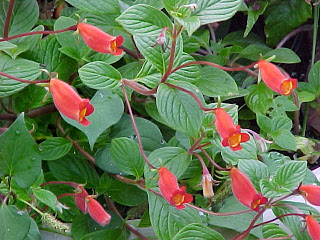
    Visit Tower Hill Botanic Gardens in Boylston, Massachusetts on Saturday, September 25 or Sunday, September 26 for the annual plant show sponsored by the Buxton Begonia Society and the New England Gesneriad Society.   The Gesneriad family consists of over 3,000 species and over 133 genera.  It was named after 16th century Swiss naturalist Konrad von Gesner.  Most Gesneriads are from tropical parts of the world.  Some of the most common plants in this genera are the Cupid’s Bower (Achimenes), Lipstick Plant (Aeschynanthus), Flame Violet (Episcia), Goldfish Plant (Nematanthus), African Violet (Saintpaulia), Florist Gloxinia (Sinningia – below), and Cape Primrose (Streptocarpus). See beautiful displays of rare and unusual houseplants, take a guided tour of the show, hear lectures on begonia and gesneriad care, and visit vendors selling an incredible selection of begonias and gesneriads..  For more information, directions, and hours, log on to www.towerhillbg.org.


  • Saturday, April 3, 9 am – noon – Pruning Basics

    Learn the why’s and how’s of pruning – why to prune, if you even need to prune, when to prune, and what cuts to make.  Wellesley College Botanic Gardens Senior Horticulturist Tricia Diggins teaches you to make cutting edge decisions about nearly every pruning job from house plants to large tres.  She explores with you how these general principles relate to specific plants like flowering shrubs, evergreens, older trees, young plants and fruit trees.  Approximately half the class time will be indoors and the remaiinder will be outside in the Hunnewell Arboretum and Alexandra Botanic Gardens, looking at the pruning needs of a variety of trees and shrubs.  The Wellesley College Hunnewell Arboretum can be damp under foot in early spring.  Please dress appropriately for the weather.  Class number HOR 10 080, WCFH members $20, non members $25.  To register, or for directions, log on to www.wellesley.edu/WCFH, or email horticulture@wellesley.edu.

    Pruning Tools

  • Saturday, April 10, 9:30 am – 2:30 pm – Wow! Botany is Exciting

    Carol Govan is back at the Wellesley College Botanic Garden on Saturday, April 10, with a class beginning at 9:30 a.m.  Do you love plants and want to understand them better? Enjoy early arrival of spring in the WCBG Greenhouses as Carol Govan introduces botany using basic terminology, direct observations and journaling to explore basic plant morphology (seeds, roots, shoots, flowers and fruit). No previous experience is necessary. Class meets at the Wellesley College Botanic Gardens Visitor Center.  Fee $50 Arnold Arboretum or WCBG member, $65 nonmember.  To register, log on to www.arboretum.harvard.edu.

    http://www.botany.com/img/plants/dictionary-plants-flowers.jpg

  • Saturday, February 6, 10 am – 2:30 pm – Winter Tree Observations: Deciduous Trees

    You may already have taken Carol Govan’s evergreen tree identification class – now move on to deciduous trees.  On Saturday, February 6, from 10 – 2:30, Carol will present a workshop at the Wellesley College Botanic Garden in this program co-sponsored by the Wellesley College Friends of Horticulture and the Arnold Arboretum.  Winter is a great time to identify trees based on their overall structure and twig and bud characteristics. Close observation can also reveal clues to the adaptive strategies of various tree species. You will begin indoors at the Wellesley College Greenhouse Visitor Center, carefully looking at twigs and other tree parts, discovering family and genus similarities, and examining indicators of the growth cycles of deciduous trees. After lunch Carol will lead you through the Wellesley College Botanic Gardens to identify trees, observing both large- and small-scale details. Bring a lunch and hand lens and dress for cold weather. (Snow date: February 13)
    Fee $50 WCFH or Arnold Arboretum member, $65 nonmember.  To register, log on to www.arboretum.harvard.edu.

    http://www.istockphoto.com/file_thumbview_approve/5500733/2/istockphoto_5500733-oak-tree-winter-silhouette.jpg

  • Saturday, January 30, 10 am – 2:30 pm – Winter Tree Observations: Evergreens

    Carol Govan has been a popular speaker with The Garden Club of the Back Bay.  Join her on Saturday, January 30 at the Wellesley College Botanic Garden for this one session class beginning at 10 am.  Winter is a great time to identify trees based on their overall structure and twig and bud characteristics. Close observation can also reveal clues to the adaptive strategies of various tree species. You will begin indoors at the Wellesley College Greenhouse Visitor Center, carefully looking at twigs and other tree parts, discovering family and genus similarities, and examining indicators of the growth cycles of evergreens. After lunch Carol will lead you through the Wellesley College Botanic Gardens to identify trees, observing both large- and small-scale details. Bring a lunch and hand lens and dress for cold weather. (Snow date: February 13) Fee $50 Arnold Arboretum or Wellesley College Friends of Horticulture member, $65 nonmember.  To register, or for more information, log on to www.arboretum.harvard.edu.

    Evergreen Needles and Snow by ...Rachel J....

  • Monday, October 26, 9:30 am – noon – Volunteer Training at the Wellesley College Botanic Gardens

    The Wellesley College Botanic Gardens depends on its many Friends of Horticulture volunteers to assist the WCBG  in gardening tasks, host campus events, lead tours, work on special research projects, and share their enthusiasm with other plant lovers.  Volunteer meetings are the third Monday of the month, and the first volunteer training session of 2009/2010 will be held at the Greenhouses on October 26, with additional training dates of November 2, 9, 16, and February 1 and 8, 2010.  Training for the Arboretum begins March 20, 2010.  Additional information can be found at www.wellesley.edu/WCFH, or by emailing horticulture@wellesley.edu, or calling 781-283-3094.  Sometimes you just want to hang out in the Greenhouses!

    http://farm2.static.flickr.com/1197/529668793_ae69fe7466.jpg?v=0

  • Saturday, October 17, 9:30 – 12:30 – Essential Elements of Botanical Drawing: Getting It Right

    Are you a beginner or even an advanced artist in need of a basic approach to drawing? Jump-start your drawing skills in this five session class with Jeanne Kunze, illustrator and Instructor in Art History and Studio Art. The techniques she teaches are designed to develop accurate observation and definition of shape–both essential to artistic renderings, botanical or not. Learn to represent plants through specialized observation and sketching exercises and techniques for making proportional measurements, depicting foreshortened petals, flowers, and leaves and representing perspective and compositional balance. Jeanne will help you develop your illustration skills through class demonstrations, exercises, and individual teaching moments. Class meets at the Wellesley College Botanic Gardens Visitor Center, and is co sponsored by the Arnold Arboretum and the Wellesley College Friends of Horticulture.  The first class is October 17, and remaining classes will take place Saturdays October 24, October 31, November 7, and November 14, all 9:30 – 12:30.   To register, log on to www.arboretum.harvard.edu, or www.wellesleycollege.edu/WCFH.

    http://www.learnnc.org/lp/media/uploads/2007/09/sassafras_drawing.jpg

  • Saturday, October 10 – Monday, October 12, 9:00 am – noon – An Introduction to Plant Ecology

    When we see a flower or tree in our garden, we are often unaware of the myriad ways in which that plant’s growth and form is affected by other organisms and its environment.  This three consecutive morning course will explore key concepts in plant ecology with environmental scientist Katie Alt Griffith.  Each session will start with a lecture in the Wellesley College Botanic Garden Visitor Center and then move outdoors into the botanic gardens for observational studies and other structured activities in the field.  Please bring a notebook or journal and pencil, as well as a hand lens (available at Staples) and a field guide, if you have them.  Dress appropriately for going outdoors, rain or shine.  The botanic gardens contain stairs and uneven surfaces.  This course is co-sponsored with Arnold Arboretum of Harvard University.  WCFH members $75, non-members $90.  For more information, or to register for course number HOR 10 020, log on to www.wellesley.edu/WCFH, or email horticulture@wellesley.edu.

    Leaf-footed bug on Adam's needle by Ken-ichi.

  • Wednesday, August 12, 2 – 4:30 pm – Fertilizers and Soil Amendments – What Are Your Favorite Recipes?

    This summer’s Ecological Landscaping Association Roundtable will take place Wednesday, August 12, from 2 – 4:30 pm, at Tower Hill Botanic Garden, 11 French Drive, Boylston, Massachusetts.  Panalists M.L. Altobelli, Roger Sturgis, and Michael Talbot, who together bring more than 80 years of accumulated experience to ELA’s Roundtable, will discuss Fertilizers and Soil Amendments – What Are Your Favorite Recipes? Learn how to make ecological landscaping work for you.  Understanding fertilizers and soil amendments is fundamental to landscaping and is essential to successful ecological, sustainable, and organic practice.  Please join the discussion.  Email ELA.INFO@COMCAST.NET to pregister.  Walk-ins are welcome.  $20 members of ELA, $25 non-members, includes general admission to Tower Hill Botanic Gardens.  For more information on the Ecological Landscaping Association, now in its 18th year focusing on the education of green industry professionals, concerned citizens, and homeowners, log on to www.ecolandscaping.org.