Tag: Calvert Vaux

  • Monday, June 12, 6:00 pm – A Description of the New York Central Park

    Monday, June 12, 6:00 pm – A Description of the New York Central Park

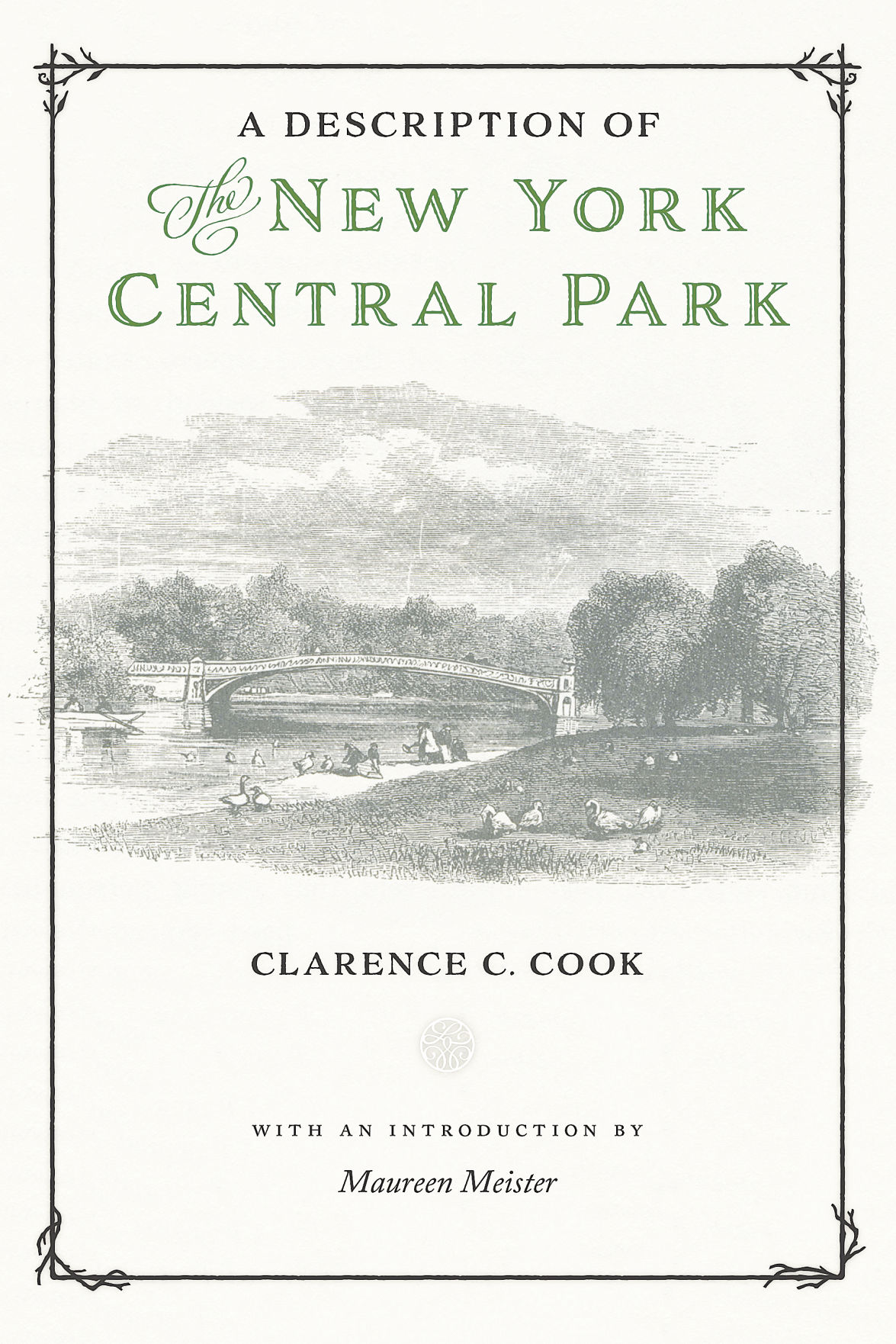
    A Description of the New York Central Park by Clarence C. Cook, issued in 1869, is recognized as the most important book about the park to appear during its early years. This work has been republished with a new Introduction by Maureen Meister that reveals the roles of Frederick Law Olmsted and Calvert Vaux in the creation of the book, which served in part to champion their vision for a major public park–a park that would become a model for the nation. For more information, see https://nyupress.org/books/9781479877461/

    Maureen will speak at The Gibson House Museum on Monday, June 12, with a reception at 6 and talk beginning at 6:30. $10 for Gibson House members, $12 for nonmembers. Please pre-register at info@thegibsonhouse.org or 617-267-6338.

    Maureen Meister is an art historian who has taught for many years at Boston-area universities including Tufts, Lesley, and Northeastern. She is the author of Arts and Crafts Architecture: History and Heritage in New England and Architecture and the Arts and Crafts Movement in Boston: Harvard’s H. Langford Warren and is the editor of H. H. Richardson: The Architect, His Peers, and Their Era.

  • Friday, May 21 – Sunday, August 29 – Romantic Gardens: Nature, Art, and Landscape Design

    The pen and ink drawing that won Frederick Law Olmsted and Calvert Vaux the commission to design Central Park, and a drawing by J.M.W. Turner, former owned by John Ruskin, are among the treasures in “Romantic Gardens: Nature, Art, and Landscape Design,” at the Morgan Library & Museum in New York City, running from May 21 through August 29.   Scenic vistas, winding paths, bucolic meadows, and rustic retreats suitable for solitary contemplation are just a few of the alluring naturalistic features of gardens created in the Romantic spirit. Landscape designers of the Romantic era sought to express the inherent beauty of nature in opposition to the strictly symmetrical, formal gardens favored by aristocrats of the old regime.

    The Romantics looked to nature as a liberating force, a source of sensual pleasure, moral instruction, religious insight, and artistic inspiration. Eloquent exponents of these ideals, they extolled the mystical powers of nature and argued for more sympathetic styles of garden design in books, manuscripts, and drawings, now regarded as core documents of the Romantic Movement. Their cult of inner beauty and their view of the outside world dominated European thought during the late eighteenth and early nineteenth centuries.

    The exhibition features approximately ninety highly influential texts and outstanding works of art, providing a compelling overview of ideas championed by the Romantics and also implemented by them in private estates and public parks in Europe and the United States, notably New York’s Central Park. If you plan to be in New York during that period, don’t miss this rare treat.  For information and hours, call 212-685-0008, or log on to www.themorgan.org.

    View of the Welbeck Estate, Humphry Repton (1752–1818), Sketches and Hints on Landscape Gardening (London, 1794). PML 46448. Gift of Henry S. Morgan and Junius S. Morgan, 1954. Photography, Graham Haber, 2009.