Tag: Capability Brown

  • Tuesday, November 11, 5:00 am – 6:30 am Eastern (but recorded) – The Architectural Aspirations of Capability Brown and Humphry Repton, Online

    The 18th century landscape is viewed by many as being the pinnacle of English garden design. From its early Arcadian experiments and passion for all things classical, through to the vast and minimal landscapes of Capability Brown and his contemporaries, the gardening century was brought to a close with conflicting appeals for rugged wildness and domestic prettiness.

    In a new five part series sponsored by the Gardens Trust, Dr Laura Mayer will explore some of the themes and trends that emerged during the century, with a particular focus on the role of art, antiquity and architecture in shaping 18th landscape designs. The series is designed to pick up on themes and ideas not covered in any depth in last year’s introductory course on the History of Gardens – and so may appeal whether or not you joined us for the earlier series. The ticket for the entire series costs £35 for the 5 sessions, or you may purchase a ticket for individual sessions, costing £8. [Gardens Trust members £26.25 or £6 each]. To register through Eventbrite, click HERE. Attendees will be sent a Zoom link 2 days (and again a few hours) prior to the start of the first talk (If you do not receive this link, please contact us), and a link to the recorded session will be sent shortly after each session and will be available for 2 weeks.

    Week Four on November 11 will focus on The Architectural Aspirations of Capability Brown and Humphry Repton, Lancelot ‘Capability’ Brown and Humphry Repton are famous for being the century’s most prolific landscape gardeners, and yet both men harboured strong architectural ambitions. Significantly, Brown even referred to himself as a ‘place-maker’, a term specifically chosen to encompass his abilities as both landscaper and architect.

    In 1771, Brown formed a resourceful partnership with Henry Holland, a successful builder and architect. In 1796, Repton entered into a formal partnership with the architect John Nash, having previously worked alongside William Wilkins and Samuel and James Wyatt. In 1773, Holland married Brown’s daughter Bridget, whilst Repton’s sons, George Stanley and John Adey, were pre-destined for a career in architecture and apprenticed from a young age to Nash.

    This lecture explores the lesser-known, architectural side of Brown and Repton’s careers. It considers how they involved themselves – both directly and indirectly through their sons and business partners – with the broader design of country estates. This included ambitious architectural design, the building of garden temples within the landscape and even interior decorative schemes, all intended to seamlessly integrate a house with its setting.

  • Now Through Friday, September 26 – The Green World of Brown

    This dynamic, mixed-media, free to enter exhibition, The Green World of Brown, presented by The Landscape Foundation (UK), explores how the most celebrated English landscape designer and early environmentalist Lancelot ‘Capability’ Brown (1716-1783) remains the ‘Great Influencer’.

    The Green World of Brown focuses on a new direction to the Brown story by showing the works of a board spectrum of creative people influenced by Brown over the last 300 years in over 60 estates and public parks that are still enjoyed today.

    Artists and craftspeople: painters, sculptors, poets, photographers, landscape designers, architects, engineers, musicians, even writers, editors, playwrights, actors and filmmakers, have all been inspired by Brown’s holistic, innovative, naturalistic approach to landscape, architecture and interiors.

    The Green World of Brown opens at Weston Park, within one of Shropshire’s best-loved landscapes, Weston Park and explores how Brown’s philosophy developed in his lifetime. A creative mix of visuals will help visitors experience both the dramatic scale of Brown’s stunning panoramas and the detail of his designs. Both historical and contemporary media and editorial will include paintings, text, stills, video and projection. Several drawings and plans, including Brown’s, will be on display through September 26.

    Center stage is the relationship photography has had with Brown’s landscapes and architecture. Visitors will be able to get up close and personal to a collection of analogue and digital photography inspired by Brown’s work from the earliest pioneers, including Fox Talbot’s photography at Lacock Abbey (courtesy of the National Science and Media Museum Bradford) to the most advanced ground and drone photography in the world today. Alongside contemporary women photographers, a small tribute will highlight photographic heroines, Anna Atkins, Lucy and Charlotte Bridgeman, whose accomplishments in breaking new ground in 1800s photography have been often overlooked.

    From the main avenue of the RHS Chelsea Flower Show to the terraces of Chatsworth and Trentham, this exhibition will be the first to highlight designs of highly acclaimed 21st century landscape architects who have worked alongside Brown including Tom Stuart Smith, Piet Oudolf, Kim Wilkie, Dan Pearson, Nigel Dunnett and XA Tollemache.

    The Green World of Brown Community Project for students from local schools will run alongside this exhibition. The exhibition has been purposely designed in a sustainable way, mainly displaying existing media and artworks, thanks to the support of various archives. Informal interviews with some of our diverse, creative contributors will be posted under greenworldofbrown on social media on Insta, Facebook and TikTok.

    The Rose Paterson Art Gallery is open daily and is free of charge to enter. For complete information visit https://weston-park.com/capability-brown-exhibition/

  • Tuesday, November 19, 4:00 am – 5:30 am Eastern (but recorded) – Lancelot Brown: Assessing the ‘Capabilities’

    The Georgian era is often seen as the pinnacle of garden design in England, as the formal, baroque style of the late 17th century gave way to the looser, more naturalistic designs of what became known as the English Landscape Movement. It was a style that spread around the world.

    This Gardens Trust online series will trace the development of the landscape style, beginning with early examples full of decorative garden buildings and classical allusions, and then the impact of England’s most famous landscape designer, Lancelot ‘Capability’ Brown, who laid out vast parklands with rolling lawns, serpentine lakes and clumps of trees. As we’ll see, the century ended with a clash between the wild, rugged aesthetic of the Picturesque and the start of a return to formality and ornamentation in garden-making.

    As well as examining individual gardens and designers, we will explore some of the myriad social and economic influences at work on Georgian design. These included political upheaval, changing land use, foreign trade and the lure of exoticism, alongside the impact of the European ‘Grand Tour’ undertaken by wealthy men, which instilled an admiration for classical art and poetry, and for French and Italian landscape painting.

    The third lecture takes place November 19 with Dr. Laura Mayer. The architect and designer Lancelot ‘Capability’ Brown, born in 1716, is credited with formulating the iconic English landscape garden. Even today, his rolling lawns, scattered with tree clumps and ornamented with glittering lakes, continue to define our perception of rural Britain. As a result, his hundreds of landscapes have eclipsed the study of eighteenth-century garden history almost entirely.

    Both a visionary and a practical plantsman, the scale of Brown’s work is truly extraordinary. However, no designer works within a cultural vacuum, leading us to question just how many of his landscape schemes can be attributed solely to him. And when we look at the man behind the name, what, in fact, was Brown’s greatest ‘capability’? This lecture considers that it was not just his aesthetic insight – nor even his practical gardening talents – that set Brown apart from his peers, but arguably something entirely more mercenary.

    Dr Laura Mayer is an independent lecturer, writer and researcher, with an MA in Garden History and a PhD in eighteenth-century patronage. Originally an art historian with a side of Spanish, she accidentally fell into garden history whilst working at the Alhambra in Granada. Laura has published extensively – particularly on Lancelot Brown and Humphry Repton – as well as on the historic gardens of Cambridgeshire. She lectures regularly for Cambridge University Botanic Gardens and works as a conservation consultant for the National Trust and Land & Heritage. Laura lives in Bristol, in a lilac-and-blue Georgian house with a tiny garden overlooking Repton’s Ashton Court estate.

    Register at https://www.eventbrite.co.uk/e/a-history-of-gardens-3-tickets-1011314337407

    Image: The Brownian landscape at Alnwick Castle in Northumberland, photo © Jill Sinclair

  • Friday & Saturday, October 6 & 7 – Forum 2023: Harewood House and the Walled Kitchen Gardens of North Yorkshire

    Fancy a quick trip across the Pond? The Walled Kitchen Gardens Network is hugely pleased to announce Harewood House as our venue for 2023, with thanks to Trevor Nicholson, Head of Gardens & Grounds, and the Trustees at Harewood. The theme this year will look at the historic relationship between the Kitchen Garden and the Kitchen – a vitally important collaboration for the management of Estates and their households historically, many again recognizing and enjoying the benefits and working together.

    The first day, Friday 6th October, will be at Harewood House, where we will meet from 9 am, with talks during the morning, from our speakers; Trevor Nicholson, Steffie Shields, Claudio Bincoletto and Bent Varming. After lunch, we will spend the afternoon in the 18thC walled kitchen gardens with Trevor and his team and return to the Courtyard with time for discussions, Q&A and tea.On Saturday 7th, we will visit other  Walled Kitchen Gardens in North Yorkshire.

    Harewood sits in the heart of Yorkshire and is one of the Treasure Houses of England. The House, built during the mid-18th century, has over 50 ha (100 acres) of landscaped gardens laid out by Lancelot ‘Capability’ Brown, set within a wider estate of over 350 ha. Trevor Nicholson oversees this landscape, including of course, the Walled Garden, which sits at the far side of the Lake. It is the oldest garden at Harewood, already under construction when building at Harewood House began in 1759. Its purpose – to provide the kitchens with the finest fresh fruit and vegetables.

    Susan Campbell writes: The kitchen garden at Harewood was designed by Lancelot Brown between the years of 1758 and 1781 for the owner, Edwin Lascelles. It is unique in that it looks like an island in the lake created by Brown, but in fact it is built on a promontory jutting into the west side. The lake was created by damming the Stank Beck that flows through the western part of the estate. A watercolor by Turner, painted in 1797, shows how well the kitchen garden melts into the wider landscape. It is also noticeable that the lake can be seen from the mansion, but not the kitchen garden. Complete registration materials can be found at www.walledgardens.net

  • Tuesday, October 3, 5:00 am – 6:30 am Eastern (but recorded) – Blenheim Palace

    The Gardens Trust has created a seven part series on Tuesdays, beginning September 12, to mark 50 years of UNESCO World Heritage, £5 each or all 7 for £28. Starting with an overview of World Heritage values and the changing nature of the UK list, the series will aim to enthuse people about individual sites around Great Britain, highlighting what makes each one exceptional, the advantages and challenges of being inscribed on the list, and the issues around sustainable future management of these global assets. Attendees will be sent a Zoom link 2 days prior to the start of the talk, and again a few hours before the talk. A link to the recorded session (available for 1 week) will be sent shortly afterwards. Register for the complete series HERE, or follow the links on that page to sign up for individual sessions.

    Week four is an exploration of Blenheim Palace. Blenheim Palace was designated as a UNESCO World Heritage Site in 1987. Situated in Oxfordshire, this magnificent palace is a masterpiece of English Baroque architecture.

    Designed by the esteemed architect Sir John Vanbrugh, Blenheim Palace showcases a harmonious blend of grandeur, elegance, and intricate detailing. Its commanding facade, adorned with majestic columns and intricate sculptures, captivates visitors from the moment they set eyes upon it.

    Beyond its architectural splendour, Blenheim Palace holds immense historical value. It is the birthplace of Sir Winston Churchill, one of the most influential figures in British history. The palace has witnessed significant events and played a pivotal role in shaping the course of the nation. Surrounded by vast parklands, including Capability Brown designed lakes and meticulously landscaped gardens, Blenheim Palace offers a glimpse back in time.

    As a World Heritage Site, Blenheim Palace stands as a testament to human ingenuity, cultural significance, and the enduring beauty of architectural achievements. Today it welcomes over a million visitors through its gates.

    Roy Cox is Managing Director of the Estates at Blenheim Palace. He has overall responsibility for the Estates sector covering rural, farming, forestry, shooting, gardens, World Heritage Parkland, let agricultural portfolio, renewables and their outdoor events. Roy has been at Blenheim for nearly ten years having joined from a career at Smiths Gore, a Chartered Surveying practice where he specialised in private client management.

  • Saturdays, December 4, January 8, and January 29, 10 am Eastern Time – Enchanted Ground, Humphry Repton, Online

    Join John Phibbs online on Saturdays, December 4, January 8, and January 29 at 10 am Eastern time for Zoom talks from Great Britain. The three talks will center on the work of the landscape gardener Humphry Repton (1752 – 1816), and are free. The talks are arranged in conjunction with Mr. Phibbs’ new book published by Rizzoli, Humphry Repton Designing the Landscape Garden, which, one hopes, will be put on your list of holiday purchases.

    The December 4 talk will be on The Work, not what he said he was going to do in his red books and publications, but what Repton actually did as a landscape gardener. On January 8, the topic is The Revolution – how Repton took the landscape tradition that he inherited from Capability Brown and turned it on its head. The final talk, on January 29, is entitled Why? This talk will begin with what Repton might have learned when he was in Ireland in 1783, and will consider the kind of man he was and will explore the social program that drove him, which contributed so much to the influence he had in the USA through the work of the great Frederick Law Olmsted, the founding father of American landscape architecture, whose bicentenary we are celebrating in 2022. For the links to the talks, email johnphibbs@hotmail.com and he will forward the links to you.

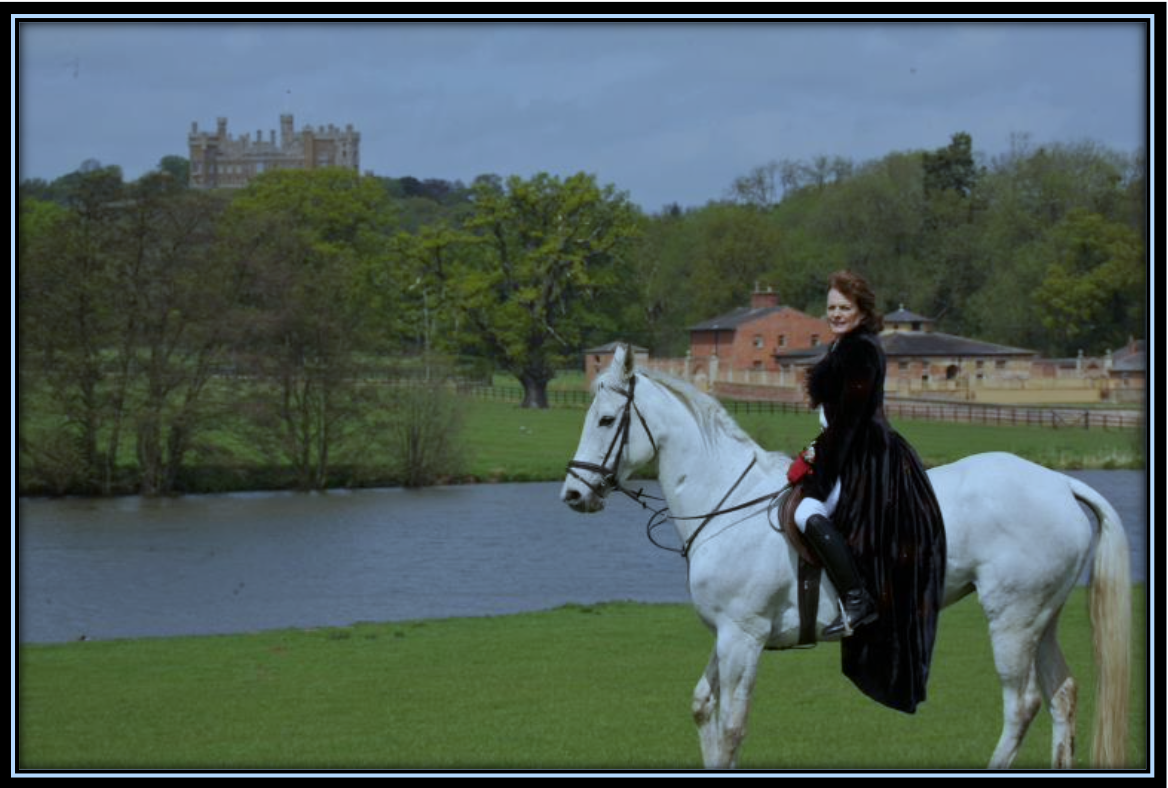
  • Thursday, May 27, 12:00 noon – The Duchess of Rutland: Belvoir Castle and ‘Capability’ Brown, Online

    Thursday, May 27, 12:00 noon – The Duchess of Rutland: Belvoir Castle and ‘Capability’ Brown, Online

    The Garden Club of the Back Bay is pleased to announce its live virtual May program, welcoming the Duchess of Rutland speaking on Belvoir Castle and ‘Capability Brown’ – Discovering a Lost Landscape. The program will take place on Zoom on Thursday, May 27 at noon.

    Belvoir Castle (pronounced “Beaver”) is the most fabulous fairy-tale castle in England. From its high hill it broods over immense tracts of Leicestershire and Lincolnshire. It is one of the great treasure houses of the country and its chatelaine for the new millennium is Emma, 11th Duchess of Rutland. Since taking charge of the estate she has shaken off the dust-sheets and brought back to life a castle that had slept since the 2nd World War.
     

    As a 21st century duchess, Emma’s role is very different from that of her forebears. How do you maintain for the future a 1000 year old estate with huge overheads? An estate with 16,000 acres of tenanted farms, 400 properties, 50 employees, a thriving local community and a castle with 2.5 acres of roof? Seeking advice from the legendary Duchess of Devonshire, she was shocked to learn that, when it comes to Dukedoms, it is the women who earn the money and the men who spend it!
     

    In her book, Belvoir Castle and Capability Brown – discovering a lost landscape the Duchess tells the story of her discovery of plans for the park, drawn up in 1780 by the great landscape designer Lancelot ‘Capability’ Brown, but then shelved and left forgotten. Her predecessor, Elizabeth, the 5th Duchess (known as the ‘Builder’) had started to implement these plans and now, over 200 years later, Emma is bringing them to fruition.

    Please RSVP by May 21st  to Jackie Blombach by clicking here:  jdb.lily@comcast.net. The program is free for Garden Club of the Back Bay members. Non-members may register online for $10 by clicking HERE.

    A ZOOM link will be sent a few days before the program. PLEASE NOTE:  This program will not be recorded.

  • Monday, April 26, 1:00 pm – 12:30 pm – Other Voices in Garden History: Learning from the Blackamoor, Online

    This series of Gardens Trust illustrated lectures will explore the impact and legacy of empire, colonialism and enslavement on western garden and landscape history. Our aim is to bring back some of the voices usually absent from this history, to identify and fill gaps in our collective knowledge, and to explore new ways of engaging with the whole history of gardens, landscapes and horticulture.

    The diverse range of topics and speakers will offer a new range of perspectives on the history of gardens and landscapes and suggest more inclusive ways of presenting and interpreting their stories. The series does not aim to point fingers or to encourage hand-wringing but is more a celebration of voices starting to be heard.

    This talk on April 26 at 2 pm Eastern is the third in our series aiming to hear voices previously absent from our garden history:

    When William III commissioned a pair of kneeling slaves for the privy garden at Hampton Court palace, he initiated a new genre of British garden sculpture. As the product of a culture that valued the profitability of the Atlantic slave economy, The Blackamoor, a.k.a. The Kneeling Slave, became the most popular of all the lead statues made for British gardens in the 18th century. Unlike the visualising Blackamoor, the source of income remained invisible in landscape gardens – as exemplified by Harewood in Yorkshire, where both ‘Capability’ Brown and Humphry Repton were consulted.

    This ticket is for this individual session and costs £5, and you may purchase tickets for other individual sessions via the link, or you may purchase a ticket for the entire course of 10 sessions at a cost of £40 (students £15) via the link here.

    Attendees will be sent a Zoom link 2 days prior to the start of the talk, and a link to the recorded session (available for 1 week) will be sent shortly afterwards.

    Dr Patrick Eyres is editor of the unique, artist-illustrated New Arcadian Journal, which engages with the cultural politics of designed landscapes (53 editions since 1981: www.newarcadianpress.co.uk). He has also published in numerous other books and journals, most recently in Penny Florence (ed.), Thinking The Sculpture Garden (2020). For many years he served on the boards of the Little Sparta Trust, Garden History Society, Leeds Art Fund, and Wentworth Castle Heritage Trust. On behalf of The Gardens Trust, he set up and chaired for the first ten years the annual New Research Symposium in Garden History.

  • Saturday, August 2 – Tuesday, August 11 – The Downton Abbey Experience & Classic English Manor Houses

    The picturesque South West of England is home to a veritable treasure trove of impressive stately homes and atmospheric manors. These magnificent properties boast extraordinary interiors and often feature fascinating garden styles and parkland too, many of which were created by 18th-century garden design trendsetters such as ‘Capability’ Brown.

    On this Royal Oak Foundation tour, we will enjoy a wonderful Downton Abbey experience with a special visit to Highclere Castle, an evening Downton Abbey-themed event and a tour of filming locations of this iconic television series and film.

    We also will uncover some classic and sometimes hidden gems, from the Elizabethan Longleat House to the tranquil Heale House Gardens and Italianate Peto Garden. There is a guided walking tour of Bath with afternoon tea at The Pump Rooms for all you Jane Austen fans, a guided tour of the Bishop’s Palace & Gardens, tour and lunch at Bowood House, and much more. The trip, August 2 – 11, is $4,990 per person, and details may be found at https://www.royal-oak.org/downtown-abbey-experience-with-royal-oak/

  • Sunday, June 10 – Monday, June 18 – England, Gardens of the West Country

    Cornwall, Devon, Somerset & Wiltshire — Come explore the enchanting West Country of England, with rich gardening traditions that have influenced Western horticulture, on June 10 – 18 with the American Horticultural Society. Our trip starts in coastal Cornwall, where the mild, maritime climate supports both subtropical and Mediterranean-style plantings. From there, we will continue on through equally lush and diverse garden settings in Devon, Somerset, and Wiltshire. Your AHS Hosts will be Holly and Osamu Shimizu, horticultural professionals who trained in England. Holly is an AHS Board member and is currently the Interim Executive Director of the AHS.

    Our itinerary begins on the picturesque Cornish coast with walks through the Lost Gardens of Heligan (pictured below), the Eden Project, Trelissick, and Glendurgan Garden. Crossing into Devon we will visit the Antony House and its gardens, the thatched cottages of Mothecombe, the gardens and interiors at Mothecombe House with its architectural additions by Sir Edward Lutyens, and the Garden House with a famed two-acre walled garden.More historic houses and gardens await us in Devon, including the Elizabethan manor, Cadhay, and Killerton House, where the landscape was created by Capability Brown and Scottish horticulturist John Veitch. In Somerset and Wiltshire we will see Wells Cathedral and nearby Milton Lodge, then the next day visit Bath, Bradford on Avon, and Iford Manor with its hillside garden by Harold Ainsworth Peto. At Claverton Manor we will tour the American Museum and its Mount Vernon Garden, a replica of the flower garden at George Washington’s home. Our tour organizer is Susie Orso, a native of Britain, who has arranged and led dozens of AHS Travel Study programs. Susie has created this special tour, offered exclusively to our AHS travelers. For complete itinerary and information visit http://ahsgardening.org/gardening-programs/travel-study/england-gardens-of-the-west-country2018