Tag: climate change

  • Wednesday, August 10, 4:30 pm – 5:30 pm – John Hay Estate Summer Speaker Series: Climate Change and How to Fix it

    Join Erich Osterberg, Associate Professor of Earth Science at Dartmouth College, at the John Hay Estate at The Fells, 456 Rt. 103A in Newbury, New Hampshire on August 10 beginning at 4:30 pm for a talk about the impacts of climate change on our New England communities. Erich’s research seeks to understand recent changes in extreme storms and flooding, melting glaciers and sea level rise, warming and wildfires, and climate drivers of Lyme Disease. 

    In this presentation, he’ll clearly summarize the latest scientific understanding of climate change impacts and what they mean for you and your family now and into the future. We’ll also discuss recent progress on slowing climate change and making communities more resilient to its effects, and why he’s still optimistic about his kids’ (and their kids’) future.  Erich has a BA from Middlebury and a PhD from the University of Maine.  Please consider joining us for this timely and engaging presentation with Erich.  

    Meets at the Pavilion.  Members: $10 a person; nonmembers: $15.  Advance registration is required. CLICK HERE to register, or call 603-763-4789 x3 for more information. The John Hay Estate at the Fells sits on 83.5 acres near Lake Sunapee and is listed on the National Register of Historic Places and is a preservation project of The Garden Conservancy.

    Rose Terrace Fountain at the John Hay Estate at The Fells
  • Sundays, January 23, February 27, and March 27, 2:00 pm – The Big Chill: Early Environmental Histories of Climate Change, Online

    Historic Deerfield presents a free three part virtual lecture series beginning Sunday, January 23 at 2 pm, and continuing monthly. From a centuries-long Little Ice Age to the global aftermath of the largest volcanic eruption in the last 10,000 years, this year’s series is devoted to early environmental histories and their impact on people and places. Join us for three virtual webinars this winter exploring how North American Indigenous communities and European colonizers understood and experienced the plunging temperatures and deep freezes, catastrophic flooding, and severe droughts and famine that became part of cultural memory and identity.

    Topics include The Problem of Climate in Early Colonial History, presented by Sam White of Ohio State University, Tambora: The Eruption that Changed the World, presented by Gillen D’Arcy Wood of University of Illinois, and Snow Cover and Winter Knowledge of the Little Ice Age, presented by Thomas M. Wickman of Trinity College. Thomas Wickman, by the way, is author of Snowshoe Country: An Environmental and Cultural History of Winter in the Early American Northeast.

    Free, but registration is required by clicking HERE This lecture series will be presented live via Zoom webinar. The link to the webinar will be sent to registrants prior to the event. Webinar will be recorded and available to registrants for viewing for two weeks after the live event.

  • Wednesday, December 1, 6:30 pm – 7:30 pm – Boston Nature Center’s Annual Meeting, Online

    Join the Massachusetts Audubon Society and the Boston Nature Center for the Boston Nature Center’s Annual Meeting on Wednesday, December 1 from 6:30 – 7:30 via Zoom. Sanctuary Committee Chair Jim McGuinness and Anne & Peter Brooke Sanctuary Director Julie Brandlen warmly invite you to attend. Kindly RSVP by November 30
    Please reply to Zaskya Perez at 617-983-8500 x6904 or by email. The featured speakers, on the topic of From Local to Global: Climate Change Mitigation, are Crane Ledge Woods Coalition facilitator Lokita Jackson, who discusses a broad-based effort to save a 24-acre unprotected urban wild in Boston, and Brookline science educator Mark Goldner, who presents Climate Change in the Arctic from his PolarTREC research.

  • Friday, October 29, 1:00 pm – 4:00 pm – Climate Resilience Symposium, Online

    Join Native Plant Trust online on October 29 from 1 – 4 for a symposium on the changing climate and New England’s native plants, featuring the region’s prominent conservationists and environmentalists. Through a keynote lecture, workshop, and panel discussion, we will examine current climate change patterns and their implications for the future of the region’s plant life, key factors for building climate resilience, and how key players can make resilience possible. Reserve your spot at NativePlantTrust.org and keep checking the NPT website for the most up-to-date details. $45 for NPT members, $54 for nonmembers.

  • Tuesday, October 19, 1:00 pm – 2:00 pm – Botanical Phenology, Online

    Join Native Plant Trust’s Botanical Coordinator Micah Jasny on October 19 from 1 – 2 in this live webinar exploring phenology: the study of the timing of biological events in a plant’s life cycle. Understanding when plants will be in certain life stages, from leaf to flower to seed, plays a critical role in monitoring and protecting key plant species. We will also address how seasonal and annual variations in habitat and climate can impact phenology. $12 for NPT members, $15 for nonmembers. Register at http://www.nativeplanttrust.org/events/botanical-phenology/

  • Thursday, October 14, 6:30 pm – 7:30 pm – Climate Talk:  New England Alpine Plants, Online

    Thursday, October 14, 6:30 pm – 7:30 pm – Climate Talk: New England Alpine Plants, Online

    Tower Hill Botanic Garden is dedicated to understanding the ways climate change impacts our world and exploring methods we can use to combat its effects and improve our climate outlook. “Climate Talks” are an opportunity to connect with experts in the field to learn and understand the current effects of climate change and explore ways we can make a difference.

    This October 14 online climate talk will explore the current global biodiversity crisis spurred by human-driven environmental change. This crisis make is critical for us to determine our current conservation priorities and the extinction vulnerability of rare taxa. This talk highlights a framework for understanding the climate change vulnerability of certain plant species, and a research study applying this framework to understand how rare alpine rattlesnake-root plants (Nabalus spp., Syn: Prenanthes spp.) endemic to mountains of the Northeast will respond to ongoing environmental change (pictured below). The results from this study have important implications for the management of these rare taxa. This research can give us insight into how the world is being effected from climate change and the ways our conservation plans can help us manage those effects.

    Speaker Kristen Haynes, PHD is an ecologist and plant biologist whose work focuses on climate change conservation. Kristen’s interest in environmental issues began with early experiences in the Adirondack Mountains in northern New York State, and grew through involvement with her high school’s Envirothon team. Kristen studied Natural Resources at Cornell University and then pursued a PhD at SUNY College of Environmental Science and Forestry. Currently, as the Assistant Director of SUNY Oswego’s Rice Creek Field Station, Kristen is co-leading a project aiming to restore native tree species to New York State’s canal region for ecosystem, climate, and cultural benefits.

    Free for Tower Hill members, $10 for nonmembers. Register at www.towerhillbg.org

  • Wednesday, October 6, 12:00 noon – 1:00 pm – Implications of Climate Change for Invasive Species Webinar

    Invasive species and climate change are two of the most prominent forms of anthropogenic global change identified by the Millennium Ecosystem Assessment. Invasive species have pronounced negative impacts on ecosystems and economies, and these impacts may be exacerbated by climate change. But for most invasive species and invaded ecosystems, the outcomes of this interaction remain unknown. This Ecological Landscape Alliance online presentation on October 6 at noon Eastern will review the current state of knowledge about how climate change influences invasive species as well as describe the work of the Northeast Regional Invasive Species and Climate Change network that is bringing together researchers and practitioners to address this challenge.

    Carrie Brown-Lima is a Senior Extension Associate and the Director of the NY Invasive Species Research Institute at Cornell University. In this role, she works closely with research scientists, state and federal agencies, the NY Invasive Species Council and Advisory Committee, and regional stakeholders to promote innovation and improve the scientific basis of invasive species management. Carrie has over 20 year of experience working with natural resource conservation and management across ecosystems and borders. Prior to her position with the Research Institute, she spent 11 years promoting conservation strategies and partnerships in Brazil and throughout Latin America on diverse programs such as sustainable fisheries certifications, agriculture and conservation, and transboundary protected areas.

    Free for ELA members, $10 for nonmembers. Register at https://www.ecolandscaping.org/event/webinar-implications-of-climate-change-for-invasive-species/

    d

  • Tuesday, September 14, 8:30 am – 10:00 am – Inspiration, Empathy and Education: How Cultural Entities are Helping People Think About Climate in New Ways, Online

    Tuesday, September 14, 8:30 am – 10:00 am – Inspiration, Empathy and Education: How Cultural Entities are Helping People Think About Climate in New Ways, Online

    As the world has sought to understand the causes and impacts of climate change, the topic has long been situated within the domain of science. In the 21st century, data, studies, reports, and academic/technical discourses have been the central mechanisms by which we learn about and process climate change: its consequences, our roles, and possible solutions. In recent years, however, artists and cultural institutions have developed a powerful interest in the topic and begun to employ myriad strategies by which to explore, draw attention to, and process it. There is an evolving understanding among educators and community and political stakeholders that in order to be impactful, messages about climate change need to be delivered from a wide variety of interdisciplinary sources and perspectives. When presented from multidisciplinary vantage points, discussions related to climate change can deepen the appeal to diverse audiences; promote innovative approaches to understanding the issues; inspire empathy; and sound a clarion call to action.

    Many of the Green Ribbon Commission (GRC) members represented on the Cultural Institutions Working Group are working to help their audiences access climate change content via non-traditional entry points in order to have a wider and more impactful reach. This GRCx program will highlight three such approaches: the Emerald Necklace Conservancy’s Olmsted Now initiative, the Harvard Museums of Science & Culture’s In Search of Thoreau’s Flowers exhibition, and the Leventhal Map Center’s More or Less in Common: Environment and Justice in the Human Landscape exhibition. The program will consider how cultural institutions are particularly well-equipped to document and interrogate the long time horizons of climate change and resilience, shedding light on how environmental challenges stretch deep into the past and, similarly, how their solutions must speculate about distant futures. The program will also explore the critical role cultural institutions can fill in showcasing the intersections between climate, history, racial equity, public health, and empathy.

    To join the Harvard Museums of Science & Culture program, you will need to download the free Zoom app in advance. If you already have Zoom, you do not need to download it again. For details on how to improve your Zoom experience, visit the How to Attend an HMSC Program webpage.

    The September 14 discussion, beginning at 8:30 am, will feature Karen Mauney-Brodek, President, Emerald Necklace Conservancy, Brenda Tindal (pictured), Executive Director, Harvard Museums of Science & Culture, Garrett Nelson, President & Head Curator, Norman B. Leventhal Map Center. Advance registration required.

  • Monday, August 9, 7:00 pm – Bridging the Rural-Urban Divide, Online

    Climate Fast in collaboration with Drawdown Toronto, EcoJust Food Network & Green Thumbs Growing is presenting a series of free webinars about agriculture, land-use and climate change. Food systems have a huge impact on climate and climate has a huge influence on sector.

    Learn how agriculture and changes in our food system can be a climate solution. Research by Project Drawdown has demonstrated that by scaling up existing solutions, land-use can become a carbon sink rather than a source, while securing future food production, protecting natural systems and creating a more equitable world. REGISTER FOR August 9th program HERE: https://www.eventbrite.ca/e/groundwork-bridging-the-rural-urban-divide-tickets-161522846181

    Confirmed speakers include:

    • Sally Miller, Fair Finance Fund
    • Sunday Harrison, Green Thumbs Growing Kids
    • Lily Phan, National Farmers Union
  • Thursday, April 15, 7:00 pm – 8:30 pm – Drought Tolerant Plants for Climate Change, Online

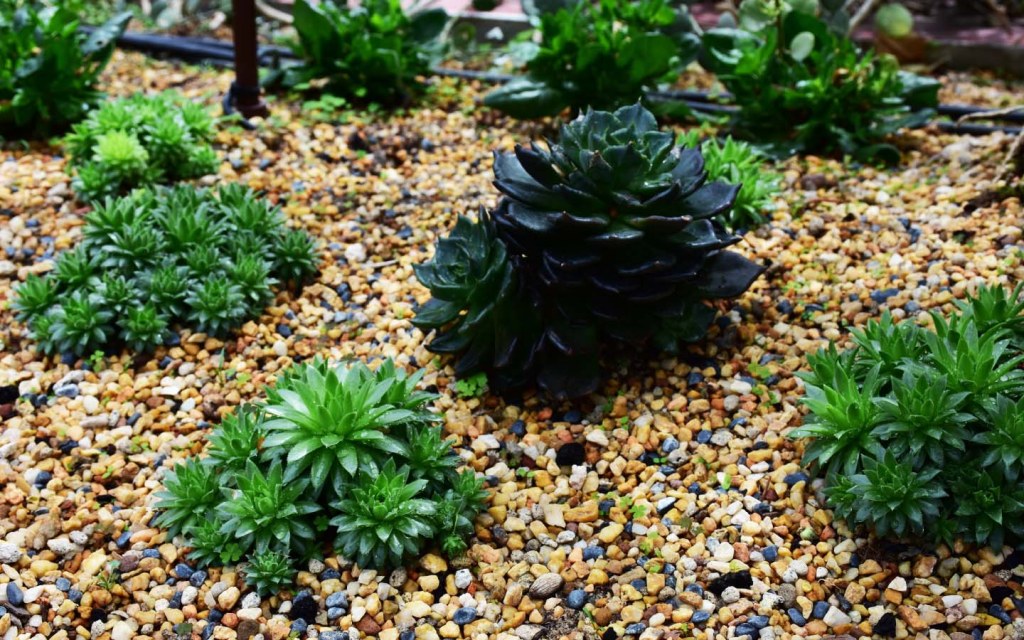
    When the dog days of summer hit, many of us are faced with water bans that limit our ability to water our lush gardens. We find ourselves carefully monitoring the water level in rain barrels and hoping for the next rainfall. What if we started to incorporate plants that simply need less water? In this online Massachusetts Horticultural Society lecture on April 15 at 7 pm, Jen Kettell will share the effects of drought on woody plants and describe plant adaptations for dealing with drought. Most importantly, she will introduce you to a new palette of plant material that will decrease your water use while increasing species diversity and beauty in your home landscape. 

    Jen Kettell is an arborist and horticulturist serving the New England area. She is a recent graduate of the American Society for Consulting Arborists (ASCA) Academy, an advanced professional training for experienced arborists. As the owner of Radiant Leaf Consulting, she shares her passion for horticulture through the training she provides to both homeowners and green industry professionals.

    Currently, she is a consultant for The Trustees’ public gardens, and a guest lecturer and trainer at the University of Massachusetts, the Arnold Arboretum, and the International Society of Arboriculture (ISA). In addition, she collaborates with other professionals through volunteer appointments on the Landscape Advisory Committee for the Wakefield Estate and Arboretum and the Board of Directors at Stearns Organic Farm.

    Prior to starting Radiant Leaf Consulting in 2013, she worked as a staff horticulturist at Harvard University’s Arnold Arboretum for more than ten years, and served on the board of directors for the International Society of Arboriculture’s local chapter for five years.