Tag: Ecological Landscape Alliance

  • Thursday, September 24, 1:00 pm – 2:00 pm – Designing Successful Rain Gardens for Civic Sites Webinar

    Rain gardens, as part of modern storm water management systems, rely on plant material for soil stabilization, contaminant filtering, nutrient absorption, and to slow rainwater for infiltration. Well designed rain gardens (with the appropriate plant material) can greatly improve the results of green infrastructure and ensure their long-term success. Selecting appropriate plants for rain gardens and other vegetated storm water management systems is a critical first step to their success. Beyond plant selection, proper site preparation and a comprehensive maintenance plan are critical components of a successful rain garden.

    In this Ecological Landscape Alliance webinar on September 24 from 1 – 2 pm EDT, Amanda Sloan describes the elements that go into a successful rain garden project. Amanda Sloan, RLA, ASLA, has worked for over 22 years to bring beauty as well as function to the design of parks and trails throughout New England. Amanda combines her background in natural science, community design, and art on projects such as school and playground gardens, lakeside parks, recreation sites, rain gardens, and home landscapes. Amanda is currently a landscape architect with BETA Group where she specializes in rain garden design and native plants. Free for ELA members, $10 for nonmembers. See more at: http://www.ecolandscaping.org/event/webinar-designing-successful-rain-gardens/#sthash.o0RY98CA.dpuf

  • Sunday, August 2, 9:00 am – 3:00 pm – Kill Your Lawn

    According to NASA scientists, in the United States more surface area is covered by lawn than by any other single irrigated crop. Lawns are resource-heavy, requiring irrigation, fertilizer, and pesticides to thrive in our climate. Learn why you should “kill your lawn” and how to replace it with environmentally friendly native plantings. The class will be held on Sunday, August 2 from 9 – 3 at Garden in the Woods in Framingham, taught by Mark Richardson. The fee is $82 for New England Wild Flower Society members, $98 for nonmembers, and is co-sponsored by the Ecological Landscape Alliance. Register online at http://www.newfs.org/learn/our-programs/kill-your-lawn.  Image from www.sustainable-gardening.com.

  • Thursday, August 6, 10:00 am – 1:00 pm – A River Runs Through It: Daylighting the Neponset River at Gillette Stadium

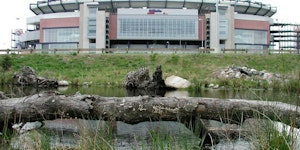
    More than a decade ago, the New England Patriots constructed the new Gillette Stadium. A significant side project was the restoration of a long stretch of the Neponset River adjacent to the new stadium’s parking lot. In the 1940’s, racetrack construction on the site had forced the river underground. Gillette Stadium needed parking and the silt-clogged system needed daylighting and restoration. The daylighting project removed two blocked culverts and reconnected disrupted sections of the river, diverting flow back to river’s historic alignment. Wetland mitigation and flood control provided major drivers for this fast-tracked project that proceeded from concept to implementation in less than one year. Learn more and register today for this Ecological Landscaping Alliance talk and tour. Sponsor organization member price $22, nonmembers $32. Brady sitings not guaranteed. Co-hosted by the Southern New England Chapter of the Soil and Water Conservation Society. Rain or shine, bring a bag lunch. Register online at http://www.ecolandscaping.org/event/a-river-runs-through-it-daylighting-of-the-neponset-river-at-gillette-stadium/

  • Saturday, July 25, 10:00 am – 12:00 noon – The Green Art Garden: A Garden for Nature and a Space for Art

    Join artist, landscape designer, and ecologist Thomas Berger on Saturday, July 25 from 10 – noon for an Ecological Landscape Alliance private tour of the Green Art Garden, 30 US Route 1 Bypass in Kittery, Maine. Over the span of several years, Thomas renovated the formerly neglected landscape, removing debris and clearing the impenetrable stands of multiflora rose, buckthorn, barberry, autumn olive and poison ivy. In the early years Thomas planted many trees, hedges, and display beds for use as a commercial nursery. Later these landscape elements became the framework for the formal gardens with mixed borders, a reflecting pool, a grapevine-covered greenhouse frame, a miniature garden, and a pollinator-planting. Throughout the garden, Thomas displays his nature-inspired stone sculptures.

    Adjacent to the formal gardens are two woodland acres including mature red oak, white pine, and beech, and a wide variety of other species. With a keen interest in providing habitat, Thomas is now enriching this woodland with native plants, and has created a pond and other habitat elements to provide food and shelter for wildlife. Thomas is particularly concerned with insect habitat. There are many species of butterflies, dragonflies, solitary wasps, and bees, and new guests being attracted to the garden every year.

    Thomas Berger grew up in a small rural town in Germany. During his childhood he was an avid collector of shells, bones, sea creatures, and fossils. He also gardened with his father and kept bees and sheep which led him to study agriculture. As an adult, Thomas worked on farms in Germany, France and Australia, and joined the German Volunteer Service in 1984, working in an agricultural project in Niger, West Africa. In 1994 he moved to the United States, where he started a landscape design and construction firm, Green Art, and received an award of excellence from the New Hampshire Landscape Association in 1998. Thomas is a regionally known stone sculptor, expressing his love of nature through his art. Thomas has won many awards and commissions and his sculpture is displayed at many public venues throughout the Northeast. – See more at: http://www.ecolandscaping.org/event/the-green-art-garden-a-garden-for-nature-and-a-space-for-art/#sthash.QksKgg99.dpuf Rain or shine event, $20 for ELA members, $30 for nonmembers.

  • Thursday, July 16, 4:00 pm – 6:00 pm – A Path to Beauty and Bounty: Building a Sustainable Eco-System

    For landscape designer Sanne Kure-Jensen, this path began with a historic farm dating to 1670. After years of ecologically-guided design, planting and maintenance, this Portsmouth, Rhode Island destination is a thriving landscape ecosystem and bountiful garden.

    The professionally designed, organically managed property includes a wildflower meadow, liberty lawn and honeybee apiary. Perennial and woodland gardens offer food and shelter for pollinators, birds and wildlife as well as compost inputs and firewood. Leaves, twigs, finished compost and wood ash feed soil life, continuing the cycle.

    Vegetable and herb gardens feed the homeowners with a comfortable balance between pests and beneficial insects. Fruit trees and shrubs benefit honeybees; homeowners share berries, fruit and honey. This organically managed property has received a Backyard Wildlife Habitat certification from the National Wildlife Federation. As you stroll through this idyllic property, you will learn how the garden welcomes diversity in plant, animal, insect and microbial life. Throughout the tour, Sanne will share tips for how you can create client enthusiasm for sustainable landscapes. Register for this Ecological Landscape Alliance tour, to be held on Thursday, July 16 from 4 – 6. $20 for ELA members, $30 for nonmembers. See more at: http://www.ecolandscaping.org/event/a-path-to-beauty-and-bounty-building-a-sustainable-eco-system/#sthash.iQK6Ohuk.dpuf
  • Tuesdays, July 14 – August 4, 9:00 am – 12:00 noon – Landscape for Life

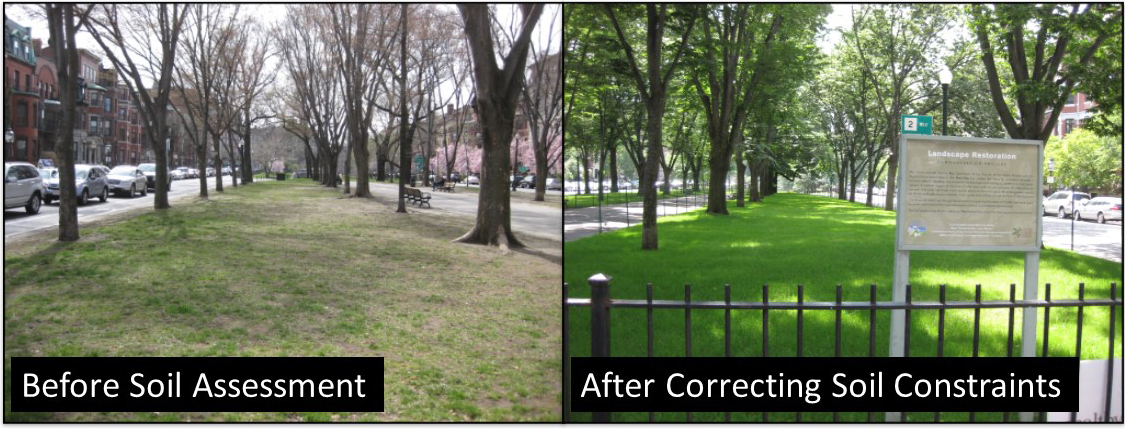
    This intensive four session (July 14, 21, 28, and August 4) introductory course co-sponsored by the Ecological Landscape Alliance and the New England Wild Flower Society will provide you with the knowledge, skills, and understanding to create a great-looking garden that is healthier for you, your family, and the environment. This class, taking place at Garden in the Woods in Framingham, is based on the principles of the Sustainable Sites Initiative, the nation’s first rating system for sustainable landscapes.

    Instructor Mark Richardson oversees the New England Wildflower Society’s botanic garden, Garden in the Woods, and its native plant nursery operation, Nasami Farm in Whately, Massachusetts. He studied ornamental horticulture at University of Rhode Island and helped run a mid-sized ornamental plant nursery before finding his true passion in public horticulture. He led undergraduate programs at Longwood Gardens, overhauled the curriculum of the Professional Gardener Program, and oversaw adult education at Brookside Gardens. In 2013, Mr. Richardson assisted with the development of the first comprehensive master plan for Garden in the Woods. He holds a MS from the University of Delaware’s Longwood Graduate Program. Bring a bag lunch each day. $185 for members of the sponsoring organizations, $218 for nonmembers. See more at: http://www.ecolandscaping.org/event/landscape-for-life/2015-07-14/#sthash.D6dVSvgx.dpuf

  • Saturday, July 11, 5:00 pm – 7:00 pm – Lush, Lovely, and Lawn-Free Gardens

    The Ecological Landscape Alliance is sponsoring a Brookline Village Walking Garden Tour with Landscape Designer Carol Spitzer on Saturday, July 11, from 5 – 7. There is an exciting new trend in ecological landscape design that goes by many names: lawn-free, no-mow, or lawn-alternative gardens. The incentives are many: lower maintenance, water conservation, reduced fertilizer/chemical use, increased biodiversity/habitat, and the greatest incentive – the stunning diversity of gardens! Landscape designer Carol Spitzer has been designing lawn-free gardens for many years and invites you to join her on a unique walking tour in Brookline Village. On this tour, we will walk through three different front yards where the existing lawns were removed and replaced with shrubs, perennials, groundcovers, and walkways. In all three projects, there were existing trees and plants that were incorporated into the new landscape.

    Each lawn-free project is different and comes with its own unique set of challenges. One of Carol’s projects included side-by-side condos whose owners had differing opinions about plant materials. A second project required a more welcoming landing and front steps, as well as a new walking path to the driveway. In addition to these three gardens designed by Carol, we will walk down an adjacent street, to view several other examples of lawn-free front yards.

    Lawn-free gardens require a fraction of the maintenance time of traditional lawns; provide a rich palette of color; introduce contrasting textures and fragrance; and increase curb appeal. Join us to explore lawn-alternative gardens and consider the rich tapestry that awaits in your own yard makeover. $30 fee. Register at http://www.ecolandscaping.org/event/lush-lovely-and-lawn-less-gardens/#sthash.J1eAw7ox.dpuf.  Garden Club of the Back Bay members will receive an ELA member discount by using code garden-club at checkout.

  • Saturday, June 27, 10:00 am – 12:00 noon – Reclaiming the Land: Successful Invasives Management

    In Sudbury, Massachusetts, the incessant march of invasive plant species is meeting resistance by SWEET, Inc (the Sudbury Weed Education and Eradication Team).

    Established in August 2009, SWEET’s mission is to make people aware of the harm that invasive plant species do to our historic and environmentally sensitive natural areas and parks. With the help of community volunteers and students, the group teaches identification and responsible removal of invasive plants from designated Sudbury sites including the large wooded property at Lincoln Sudbury Regional High School (LSRHS.)

    Join SWEET founder, Rebecca Chizzo for a walking tour at LSRHS on Saturday, June 27, from 10 – noon, to learn how to identify common invasive plants and how you can control or reduce their proliferation on your own property – without using chemicals. On this tour, participants will learn to identify invasive species using simple characteristics and habits and learn about what works in alternative approaches for control. At LSRHS, SWEET has encountered many invasive plant species including Japanese honeysuckle, black swallowwort, Oriental bittersweet, multiflora rose, glossy buckthorn (pictured,) Cypress spurge, and many more… Come with your questions about invasives and Rebecca will share her knowledge as we walk through the LSRHS landscape. $15 for Ecological Landscape Alliance members, $25 for nonmembers. Register at http://www.ecolandscaping.org/event/reclaiming-the-land-successful-invasives-management-2/#sthash.yz7CCsSH.dpuf

  • Thursday, June 25, 10:00 am – 12:00 noon – Beaver: Building Habitat, Improving Eco-Systems

    Beaver are unique among mammals in that they alter their habitat to meet their needs by damming streams to form ponds. This behavior actually benefits other species (including people), as well. By building dams and flooding woodland swamps, beaver play an important part in the restoration of lost wetlands, providing habitat and food for a wide variety of plants and animals. Over 50 percent of our wetlands have disappeared since European settlement in North America. Beaver build their dams in order to create deep ponds that won’t freeze at the bottom in winter. Because of the flooding beaver create, trees often die off, providing nesting sites for great blue herons, wood ducks, tree swallows, and other birds. These new ponds become homes to amphibians, turtles, fish, otters, muskrats, and other animals.

    Beaver-created wetlands also enhance human habitat by storing and slowly releasing floodwater, which controls downstream flooding. They improve water quality by removing or transforming excess nutrients, trapping silt, binding and removing toxic chemicals, and removing sediment. And finally, flooded areas can also recharge and maintain groundwater levels, and provide flow to streams even during droughts.

    Join conservationist Cindy Dunn at Wachusett Meadow Wildlife Sanctuary in Princeton, Massachusetts, on Thursday, June 25, from 10 – noon, for this unique walking tour of the 85 acre beaver pond to learn about the important ecological role that beaver play. Wachusett Meadow is one of the spectacular wildlife sanctuaries within Mass Audubon. This property consists of 1,200 acres accessed by 12 miles of trails. The sanctuary protects a diverse landscape of shrubland fields and meadows, forests, Wachusett Meadow’s Wildlife Pond, and beaver wetlands. Rain or shine event. $22 for ELA members, $32 for non-members. Register at http://www.ecolandscaping.org/event/beaver-building-habitat-improving-eco-systems/#sthash.a7IC3Fga.dpuf

  • Wednesday, June 24, 6:00 pm – 8:00 pm – Edibles in the Landscape – Foraging and Growing Your Own

    Edible wild plants offer opportunities for people to connect to nature via their taste buds, thereby building enthusiasm and support for land stewardship. Reconnect with the many edible plants that are all around us.

    Join tour guide, Russ Cohen, to view plants in the landscape through a new lens. Russ Cohen’s “day job” is serving as the Rivers Advocate for the Massachusetts Department of Fish and Game’s Division of Ecological Restoration. He is also an expert forager and the author of Wild Plants I Have Known… and Eaten, published by the Essex County Greenbelt Association. For more than 25 years, Russ Cohen has been teaching foraging and leading foraging walks each year at a wide variety of venues throughout the Northeast, including talks for the Garden Club of the Back Bay.

    On this Wednesday, June 24 early evening walking tour of the landscape at Mass Audubon’s Habitat property in Belmont, Russ will point out which commonly found native and non-native plants have edible potential. Russ will discuss how adding edible plants to a landscape can boost biodiversity as well as “spice up” the experience for garden visitors. Learn about dozens of tasty native and non-native plant species that area landscapes have to offer, some of which may already be growing on your property. If your landscape is not rich with edibles yet, let this presentation be your inspiration to add edibles to your landscape this season. Register ($15 ELA members, $25 nonmembers) and see more at: http://www.ecolandscaping.org/event/edibles-in-the-landscape-foraging-and-growing-your-own/#sthash.S7t4kEYV.dpuf  Photo below of the Habitat property from www.everytrail.com.