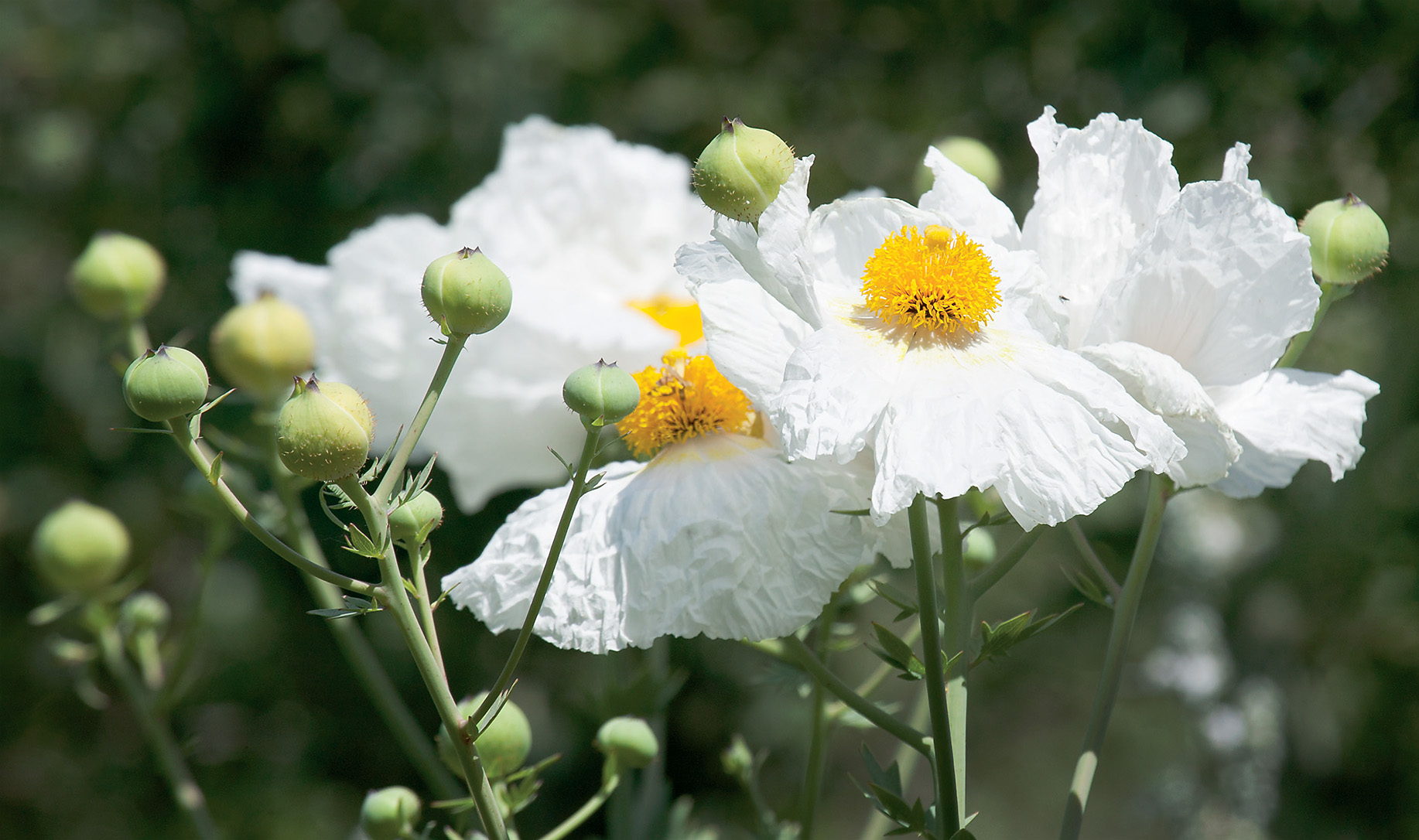
What does it take to create a conservation and restoration landscape project in your own backyard? In this two session Ecological Landscape Alliance workshop on April 27 and May 4 from 2-4, we will explore the principles underlying these small-scale projects and outline specific steps to keep you engaged and confident while completing them. You will learn tips, techniques, and a well-defined process for transforming a small plot of land to a native plant landscape. Topics cover everything from removing invasives to analyzing the site, conserving resources, and enhancing aesthetics and wildlife habitat. Held at Garden in the Woods in Framingham, and taught be Staci Jasin.
Join the Ecological Landscape Alliance on March 3 & 4, 2021 for the 27th Conference & Eco-Marketplace – all online. We’ll energize your practice and prepare you for spring with two full days of research and field-tested expertise, as well as innovative case studies on a wide range of topics.
In our online conference space, you can pick and choose from presentations in multiple tracks. You can easily move from presentation to presentation with a couple of clicks, and if you miss a presentation, you’ll have access to recordings after the conference. The conference platform also lets you connect with exhibitors in their own conference spaces and network with colleagues and friends in rooms designated for that purpose. A short initial orientation and continuously available technical assistance help support a positive conference experience.
Wednesday sessions will probe landscapes bracing for climate change. How will a changing climate affect our landscapes and our practices, and what can we do to prepare? Learn the latest research and find new information to help you prepare your landscapes for the future. Choose from two educational tracks:
Thursday sessions in three separate tracks provide insightful explorations of landscape design, land care practices, and current hot topics. In the Focus on Design track, you can explore the connection between designs that introduce beauty and landscapes that restore natural systems, provide valuable habitat, and offer climate relief. The Focus on Practice track shares insights into innovative large-scale landscape management; delves into smaller-scale landscape projects that incorporate dry stone walls; and offers a soil update relevant to landscapes of any scale. This year’s Idea Exchanges track explores a wide range of thought provoking topics from rewilding landscapes and reconsidering the concept of Native to the intersection of the landscape profession and the issues of diversity, inclusion, and social justice.
Oaks are sometimes referred to as the “tree of life” for providing food and shelter for a multitude of wildlife species. Murphy Westwood, director of global tree conservation for The Morton Arboretum in Illinois, refers to oaks as the “kingpins in the forest.”
But today oaks are in trouble. Razed to make way for crops, pastureland and development, and ravaged by fire suppression, climate change, diseases and pests, this country’s oak forests are a fraction of what they once were, and those that remain are declining rapidly. In a recent analysis, Morton Arboretum scientists found that 28 of the nation’s 91 native oaks—or more than 30 percent—are of conservation concern. That percentage of at-risk species in one genus, Westwood says, “is seriously worrying.” The threats to oaks include pests and diseases, changes to landscapes, development and agriculture. Notably, oaks’ longevity and slow growth rates make them particularly susceptible to the effects of a rapidly changing climate.
In this Ecological Landscape Alliance online presentation at 12:30 pm Eastern time, online, Dr. Westwood will discuss the economic, ecological, and cultural value of oaks, and will explain the threats each species faces and the conservation efforts underway to save them, including the establishment of the Global Conservation Consortium for Oak, a recent global initiative to coordinate conservation efforts across sectors and regions to ensure no oak species goes extinct. Murphy Westwood, PhD is Director of the Global Tree Conservation Program at The Morton Arboretum. The mission of the program is to save trees from extinction through global collaborations. Murphy works closely with colleagues from botanical gardens, universities, and other sectors in strategic locations like Mexico, Central America, Europe, and China, as well as throughout the United States, to develop conservation projects targeting key threatened tree species, especially oaks (genus Quercus). She also creates tools, guidelines, publications, and other resources to build capacity and catalyze action for tree conservation. Murphy leads the Global Conservation Consortium for Oak, is a Global Tree Conservation Officer for Botanic Gardens Conservation International, and works to build support for the Global Trees Campaign, the only global conservation program dedicated to saving all of the world’s threatened tree species. Murphy also manages ArbNet, the interactive, global community of arboreta and tree-focused professionals. She facilitates the ArbNet Arboretum Accreditation Program and develops resources and content for the ArbNet website. Free for ELA members, $10 for nonmembers. Register HERE.
Human impact on planet earth is at least three million years deep but it wasn’t until the advent of agriculture some 11,000 years ago that the ways we conduct our daily living began creating dramatic shifts in the biological functions that sustain us. This Ecological Landscape Alliance online program on February 8 from 1 – 2 will explore how adapting an ecological framework that acknowledges biological limits supports healthy design. By living in agreement with nature we can create better stories, more sustainable economies, and stronger community relationships. Those three things form the bedrock of thriving organizations and communities.
Claude Stephens will explain how regenerative thinking relates to design goals for projects exploring LEED®, the Living Building Challenge, and other criteria based design challenges. The program also introduces how an ignorance-based approach to planning frames new ways of exploring traditional challenges. Claude Stephens is the Facilitator of Outreach and Regenerative Design at Bernheim Arboretum and Research Forest in Clermont, Kentucky. He is also the director of the Children at Play Network which is an ongoing project of Bernheim focused on working regionally to reenvision the landscapes for children’s play. The CAPN values play as part of healthy child development and as a means to reconnect children with nature in order to foster the next generation of environmental stewards. Claude has more than 35 years of experience working in museums and environmentally focused organizations. He has been at Bernheim for 21 of those years. Claude’s academic background is in evolutionary ecology and biology which continues to frame his approach to how humans might build deeper and healthier relationships with the natural world. He has worked on numerous boards including the Food Literacy Project, Squallis Puppeteers and the Kentucky Chapter of the US Green Building Council.
Free for ELA members, $10 for nonmembers. Register HERE.
As a long-time birding enthusiast, Becky Laboy is passionate about creating bird-friendly landscapes. Her passion for birds dovetails nicely with Becky’s other passion, native plants. Native plants are the key to attracting birds. Native plants provide the food, shelter, and nesting places essential to the survival of birds.
In this January 27 Ecological Landscape Alliance online presentation, Becky will discuss different plant species native to the “northeast” that are appropriate for back (and front!) yards, and will point out the many ways these species provide essential services to birds.
In an ecologically holistic approach, Becky will also discuss landscape features and practices that support birds, such as leaf litter, brush piles, dead trees, nest boxes, and water features. She will share lots of photos of colorful migratory warblers and other backyard favorites such as chickadees, woodpeckers, and robins eating berries, pulling worms from the soil, and raising their families. In this presentation there will be an emphasize on the importance of planting natives as a sustainable approach to gardening.
Becky Laboy is the full-time Education Outreach Specialist with Ocean County Soil Conservation District. She is also an adjunct professor at Kean University, she instructs the Barnegat Bay Volunteer Master Naturalist course through Ocean County College, and she leads birding tours with Ocean County Parks and Recreation. In total, Becky has over 20 years of experience as a formal classroom teacher and informal environmental educator. She serves as co-leader for the Jersey Shore Chapter of the Native Plant Society of New Jersey. She co-authored The Kid’s Guide to Exploring Nature, published by Brooklyn Botanic Garden. When not teaching about soil conservation, botanizing, or leading people on outdoor adventures, Becky can usually be found behind a pair of binoculars as an avid and devoted birder. She enjoys landscaping her own yard to attract and support birds, and strives to inspire others to make small but positive changes in home landscaping practices that benefit both wildlife and humans.
Growing native plants from seed is a different way to interact with our native flora and an inexpensive way to produce a lot of plants. The seeds of wild plants have a very different set of needs than those of garden and vegetable species. Timing is crucial and fall and winter are ideal times to sow the seeds of many species.
In this Ecological Landscape Alliance webinar on January 22 from noon – 1, Heather will describe the reproductive life cycle of many different types of native plants and explain how we can change our landscape practices to help support wild plant reproduction and survival. Then she will describe simple outdoor seed sowing methods that anyone can use to grow their own seedlings. Be part of a grassroots movement to sow native seeds and increase the amount of native plants in the landscape with an abundance of genetically diverse seedlings. Free for ELA members, $10 for nonmembers. Register at https://www.ecolandscaping.org/event/grassroot-seed-propagation-of-native-plants/
Heather McCargo is the founder and executive director of Wild Seed Project, a Maine based 501(c)3 nonprofit that works to increase the use of seed grown native plants in all landscape settings. Wild Seed Project publishes an annual magazine Wild Seed, sells seeds of locally grown wild type native plants, and educates the public so that a wide range of people can participate in increasing native plant populations.
Patches of native habitat in urban and other degraded areas provide important ecological services. A design team developed and tested a series of planting that attempted to restore ecological connections between fragmented and degraded remnant habitats in large, urban areas. Old, urban landfills were planted with woodland patches of various sizes to determine how quickly mutualisms, including seed dispersal and pollination, occurred. Focusing on Brooklyn Bridge Park in New York and Orange County Great Park in California, where complex habitat was integrated with civic needs, Dr. Handel, in this January 13 Ecological Landscape Alliance webinar, will explore how these types of ecological solutions can be applied to many urban designs. The event begins at 12 noon and is free for ELA members, $10 for nonmembers. Register at https://www.ecolandscaping.org/event/the-challenges-of-restoring-urban-native-habitat/
Dr. Steven Handel is a Distinguished Professor of Ecology and Evolution at Rutgers University where he studies the potential to restore native plant communities, adding sustainable ecological services, biodiversity, and amenities to the landscape. His research explores pollination, seed dispersal, population growth, and problems of urban and heavily degraded lands. Previously, Dr. Handel was Director of the Marsh Botanic Garden at Yale University, a Visiting Professor at Stockholm University, and Research Scholar at Macquarie University in Sydney, Australia. He is the Editor of the professional journal Ecological Restoration and an Aldo Leopold Leadership Fellow of the Ecological Society of America. He was elected an Honorary Member of the American Society of Landscape Architects and also received the Society for Ecological Restoration’s highest research honor, the Theodore M. Sperry Award. Dr. Handel received his BA from Columbia College in Biology and MS and PhD degrees from Cornell University in the Field of Ecology and Evolution.
Nature play can awaken children’s senses, challenge their bodies, inspire their imaginations, and build self-confidence. In order to grow up healthy and happy, children need abundant unstructured time to play and explore in the natural world, but today’s children rarely have the opportunity to roam free outside. Bringing nature to the places where children spend their time is an answer. Well-designed nature play spaces are inviting and endlessly engaging for children AND good for the planet. With rich, inspiring images from around the world, author, educator, and landscape designer Nancy Striniste explains why and how to bring the beauty, adventure, and sustainability of nature play to backyards, schoolyards, churchyards, neighborhood parks, early childhood settings, and more. This Ecological Landscape Alliance webinar takes place December 14 from noon – 1 and is free for members, $10 for nonmembers. Register at https://www.ecolandscaping.org/event/webinar-creating-outdoor-spaces-that-connect-children-to-the-natural-world/
Nancy Striniste, founder and principal designer at EarlySpace, LLC, has a unique background as both a landscape designer and an early childhood educator. From her Arlington, Virginia design office, she has worked with schools, childcare centers, municipalities, and organizations to create sustainably designed natural play and learning spaces and to teach educators and others about how to use the outdoors for teaching and learning.
As greenery unfurls in spring, our deep relationship with nature renews us and lifts our spirits. But this spring with COVID threats and uncertainties, reconnecting with nature took on more significance than ever.
On the most basic level, plants nurture our bodies and souls. Our relationship with plants, however, is more complex than simply food and survival. For millennia, plant-based medicines have been used for healing and time spent in the forest or garden has been recognized for its ability to reduce stress while improving health and well-being.
On December 4th, The Ecological Landscape Alliance invites you to spend a day reconnecting with familiar plants, learning about new plant options, exploring garden insects, and reconsidering our relationship to plants. Five experts will invite us to examine different attributes, uses, and values of plants and the insects that inhabit our gardens.
Innovative tools and interactive collaborations will ensure that this online conference provides participants with an engaging and inspiring experience. Dan Jaffe Wilder will speak on How To Grow Food Anywhere, Nadia Ruffin will present Garden Insects: Good Bug? Bad Bug? Who’s Who and What Do They Do?, Uli Lorimer will discuss Native Species, Hybrids, Selections and Cultivars, Abra Lee’s lecture is entitled Power to the Trees, and finally, Rebecca McMackin presents Pollinator Ecology. Full descriptions and biographies, and registration links, are found at https://www.ecolandscaping.org/event/ela-ecological-plant-conference-2020/ $139 for nonmembers.
Rain impacts each of our lives. Past generations developed methods that quickly whisk the rain from roofs, roads, and plazas on its journey to the ocean. The contemporary stormwater model features the design and installation of landscapes that mimic nature, capturing, storing, and infiltrating the water close to its source. Rain gardens and bioretention facilities are two practices in the green infrastructure toolbox, and they are often the first choices for designers, contractors, public agencies, and landowners due to their relatively low cost, large stormwater treatment capacity, and perceived ease of installation. However, complaints ranging from unsightly weedy holes to mosquito breeding water can leave agencies and landowners wishing for another stormwater alternative. With appropriate planning, design, construction, and maintenance, these stormwater treatment workhorses can be an artistic part of our landscapes, gardens, streetscapes, and public spaces.
Steven Torgerson is a Registered Landscape Architect and the Director of Landscape Architecture at AMT Landscape Architecture + Design Division. He has nationwide experience in planning and design within an ecologically resilient framework and is passionate about creating spaces that are a catalyst for people to interact with their environment and community. Mr. Torgerson’s multidisciplinary design approach encourages alternative solutions to complex rainwater problems. He delights in community engagement and the opportunity to integrate public preferences into the design outcome. Before coming to AMT, Mr. Torgerson served as the Cultural Landscape Architect at Yosemite National Park and was the lead landscape architect for the Forest Service during the 2002 Winter Olympics. He has won numerous awards for his work in landscape architecture including the 2018 ASLA Potomac Chapter Honor Award for Brookside Gardens and the 2017 ASLA, Potomac Chapter Honor Award for Greening DC’s Streetscapes. Mr. Torgerson holds a Master in Landscape Architecture from the Pennsylvania State University with an emphasis in watershed planning and a Bachelor of Landscape Architecture from Utah State University.