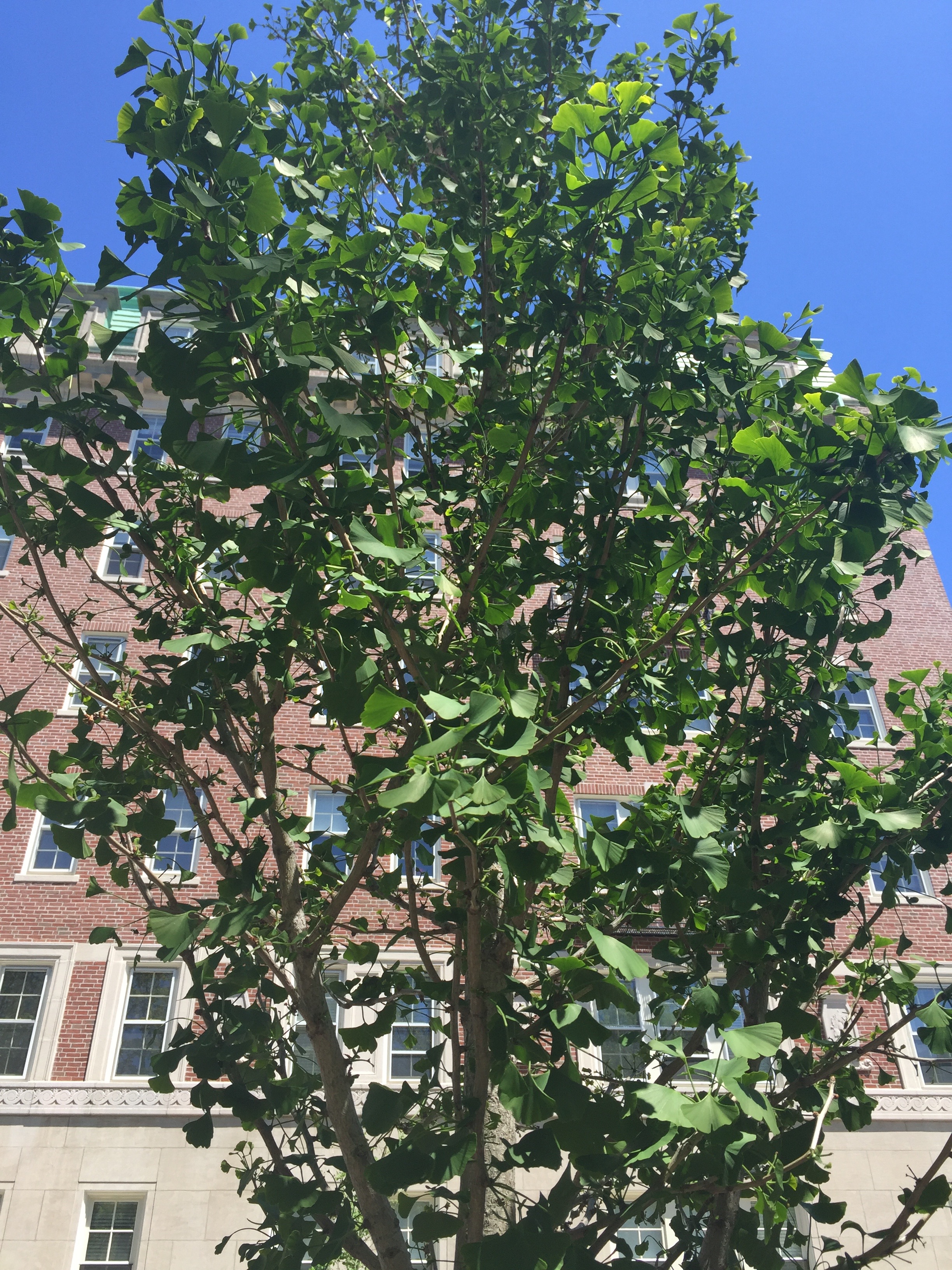
Ginkgo trees evolved before the dinosaurs, survived three mass extinctions, and one species is still living today. The Smithsonian Institution’s Museum of Natural History staff are researching how the cells of leaves on ginkgos have changed over time, and whether we can use them to learn about the ancient atmosphere of the Earth. We want to create a record of how the atmosphere has changed through time by calculating the ratio of two different types of leaf cell (stomatal and epidermal) for many leaves, from the present and the geological past. It is important for us to understand what effect climate change might have on life on our planet in the long term.
One way we can understand the effect of climate change is to look at the geological past – millions of years ago – and the fossil record, to see what happened to organisms during periods of time in Earth history when there were similar changes in the atmosphere and climate. If we want to build an accurate picture of these past changes, we need to know what the atmosphere was like back then.
Our planet’s atmosphere is composed of many different gasses, one of which is carbon-dioxide (CO2). Through extensive research we now know that CO2 concentration in the atmosphere has a very important influence on Earth’s climate. There are several ways researchers try to reconstruct past climates; we call these climate proxies. One proxy for CO2 concentration comes from plants, and is known as stomatal index. This is a measure of the number of gas-exchange holes on the surface of a leaf, relative to the number of normal cells. Count cells of modern and fossil leaves and help them track climate change over millions of years. You will count oval-shaped stomata in highly magnified images of both fossilized and living ginkgo leaves. Learn how to do it at https://www.zooniverse.org/projects/laurasoul/fossil-atmospheres