Tag: Go Botany

  • Debbi Edelstein to Retire as Executive Director of Native Plant Trust

    Native Plant Trust, the nation’s first plant conservation organization and the only one solely focused on New England’s native plants, announced on December 8 that Debbi Edelstein will be retiring as executive director at the end of January after fifteen years of service. The organization is concluding a nationwide search for her successor and is expected to make an announcement shortly. Edelstein has led the 30-person nonprofit since February 2009 and has inspired her team to significant achievements and new initiatives in conservation, ecological horticulture, and education. Edelstein’s many accomplishments reflect her lifelong commitment to making the world a better place. During her tenure, the organization expanded its work to save rare and endangered plants, undertook important restoration projects, developed the first master plan for the 45-acre Garden in the Woods in Framingham, Massachusetts, and launched the nation’s first online botany courses a decade ago. She also set a research agenda that resulted in the publication of the Go Botany website, four books, and two major research reports, “The State of New England’s Native Plants” (2015) and “Conserving Plant Diversity in New England” (2022).

    In addition, she developed a successful new business model for the native plant nursery in Whately, MA, and expanded seed- processing and storage facilities to support the new Northeast Seed Network, a regional initiative led by Native Plant Trust to create a sustainable source of seed to meet the increased demand for native plants in the restoration and nursery sectors.
    She is the lead author of Native Plant Trust’s new fifteen-year vision document, which describes the organization’s opportunities—and obligations—in addressing the twin environmental crises of our era, climate change and the loss of biodiversity.

  • Wednesdays, September 9 & 16, 10:30 am – 2:30 pm – Introduction to Go Botany

    Native Plant Trust’s Go Botany online platform is a critical tool for New England native plant identification. This two session Native Plant Trust program serves as a review on field guide identification and forms a bridge between identification by book and identification by online resource. We will use common wildflower identification guidebooks to review how to use a key to identify plants, including terminology and plant characteristics. From there, we learn how to apply similar skills to use Go Botany to identify plants. Class is scheduled to meet at Garden in the Woods on two Wednesdays, September 9 and 16, from 10:30 – 2:30, and is $120 for NPT members, $144 for nonmembers. Register at http://www.nativeplanttrust.org/events/introduction-go-botany/

  • Friday, December 1, 6:45 pm – New England Botanical Club Meeting with Dr. Alden Griffith

    The New England Botanical Club will meet Friday, December 1 at 6:45 pm and will host Dr. Alden Griffith, Assistant Professor of Environmental Studies at Wellesley College. Meetings at Harvard University are held in Haller Lecture Hall (Room 102), Geological Museum, 24 Oxford St., Cambridge, MA 02138 (door to right of Harvard Museum of Natural History entrance). Free and open to the public.

    Dr. Griffith is an ecologist focusing on invasive plant population dynamics and environmental influences. His work is conducted at the Boston Area Climate Experiment (BACE) in Waltham, MA and uses Persicaria lapathifolia as a model species. An important goal is to explicitly link environmental factors to population performance using integral projection models. This work is a collaboration with Vikki Rodgers at Babson College. Also, he studies the capacity for invasion of Bromus tectorum (‘cheatgrass’) in east coast dune systems. There has been much research into the invasion of B. tectorum in the Western U.S., but there is very little known about its potential in the east. This work is being conducted at the Cape Cod National Seashore and focuses on relating population success to factors of both the abiotic environment and the background plant community. Another area of inquiry is the population-level consequences of positive interactions among plants. Interactions among plants are often assumed to be negative (e.g. competition), but there is growing interest in the importance of positive interactions, or plant-plant facilitation, in ecological systems. His research, in collaboration with Ray Callaway at the University of Montana, examines the overall importance of facilitation by neighboring plants for Smelowskia calycina populations at high elevation in Glacier National Park.

    For more information visit www.rhodora.org. Image of dock leaved smartweed by David Cameron courtesy of our friends at New England Wildflower Society’s Go Botany!

  • Wednesday, September 17, 10:00 am – 12:00 noon – Go Botany!

    Elizabeth Farnsworth, Senior Research Ecologist for the New England Wild Flower Society, demonstrates exciting new tools for plant identification. Go Botany is the NEWFS’s new website that teaches botany and plant identification. This resource serves as a field guide to help you identify and learn about 1,200 of the most common native and naturalized plants of New England. Imagine identifying plants in the field with your iPad or smartphone!

    This flexible and user-friendly tool helps you identify species based on whichever portions of the plant (leaves, flowers, winter buds, bark, etc.) you are able to observe at any given time of year. Once you identify the plant, you can see a wealth of information about it, including gorgeous color photographs, maps of its geographic range, diagnostic characteristics, and memorable facts. Go Botany is optimized for both desktop and tablet computers, so you can use it anywhere you have a web connection. Dr. Farnsworth is one of New England’s great botanists and Editor-in-Chief of Rhodora.

    This talk kicks off The Garden Club of the Back Bay’s 2014-2015 meeting schedule, centered around Technology and the Garden.  The event will take place Wednesday, September 17 beginning at 10 am at The College Club, 44 Commonwealth Avenue in Boston.  Club members will receive written notification of the meeting.  Guests are welcome – if you are not a GCBB member, please email info@bostonflora.com to register.  A suggested $5 contribution is requested for non-members.

  • Wednesday, September 11, 1:00 pm – 3:00 pm – Go Botany: Plant ID Tools at Your Fingertips

    Join the Ecological Landscaping Association and the New England Wild Flower Society on Wednesday, September 11, from 1 – 3 at Garden in the Woods in Framingham for a morning stroll to enjoy the fall foliage as your host Elizabeth Farnsworth demonstrates exciting new tools for plant identification.  Go Botany is the NEWFS’s new website that teaches botany and plant identification.  This resource serves as a filed guide to help you identify and learn about 1,200 of the most common native and naturalized plants of New England.

    This flexible and user-friendly tool helps you identify species based on whichever portions of the plant (leaves, flowers, winter buds, bark, etc.) you are able to observe at any given time of year.  Once you identify the plant, you can see a wealth of information about it, including gorgeous color photographs, maps of its geographic range, diagnostic characteristics, and memorable facts.  Go Botany is optimized for both desktop and tablet computers, so you can use it anywhere you have a web connection.  $20 for ELA and NEWFS members, $25 for nommembers.  For more information email ela.info@comcast.net, or call 617-436-5838.  You may also register online at https://www.eventville.com/catalog/eventregistration1.asp?eventid=1010613.

    http://media-cache-ec0.pinimg.com/236x/dc/ba/6b/dcba6b9b2a64cf4f90746c82f123006f.jpg

  • Saturdays, July 13, 20, and 27, 10:00 am – 2:00 pm – Introduction to Plant Families: Rosaceae, Liliaceae, Violaceae, and Ericaceae

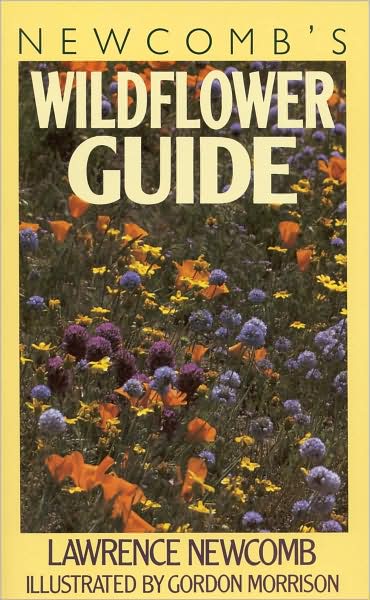
    Rosaceae, Liliaceae, Violaceae, Ericaceae. . . Expand your understanding of New England’s wild plants by learning interesting clues about their family relationships. Use microscopes and walk the Garden in the Woods to study live plants and find diagnostic characteristics. With instructor Carol Govan, examine woody and herbaceous plants belonging to several families to observe their similarities and differences. Learn basic formulas for plant structure and how to apply these to other families encountered. Handouts will be provided before class begins so novices can become familiar with basic botanical terminology included in Go Botany and Newcomb’s Wildflower Guide, which will help you enjoy looking at plant structure. Bring lunch and a hand lens to class. Fee $180 member, $216 nonmember, offered with the New England Wild Flower Society. Register on line at www.my.arboretum.harvard.edu. The class will be held on three successive Saturdays, July 13, 20 and 27, from 10 – 2.

    http://foraging.com/images/0316604429.jpg

  • Tuesday, June 18, 9:30 am – 12:30 pm – Ericaceae Family Focus

    Many different members of the Ericaceae, or heath family, thrive in New England’s acidic soils. This Arnold Arboretum class, offered with the New England Wild Flower Society and taking place at Garden in the Woods in Framingham on Tuesday, June 18, 9:30 – 12:30, begins with images and a description of the attributes of this family, including a demonstration of Go Botany to see the various genera. Along with botanist instructor Carol Govan, you will then walk outdoors to visit Garden in the Wood’s collection of azaleas, rhododendrons, blueberries, cranberries, leatherleaf, dog hobble, and more, also looking for evidence of nectar thieves and buzz pollination. Fee is $40 for Arboretum and NEWFS members, $48 for nonmembers. Register on line at www.my.arboretum.harvard.edu. Crowberries below courtesy of www.digitalnaturalhistory.com.

    http://www.digitalnaturalhistory.com/empetrum.jpg

  • Wednesday, May 1, 7:00 pm – 8:30 pm – Go Botany! Plant ID for the 21st Century

    Grow Native Massachusetts continues its Evenings with Experts on Wednesday, May 1, from 7 – 8:30 at the Cambridge Public Library, 449 Broadway in Cambridge, with Elizabeth Farnsworth, Senior Research Ecologist for the New England Wild Flower Society. Imagine identifying plants in the field with your iPad or smartphone! Go Botany is the new definitive on-line Flora of New England for just that. Elizabeth Farnsworth will introduce and demonstrate this richly illustrated interactive key to over 3,500 native and naturalized plants of our region. This tool also includes PlantShare for reporting discoveries, exchanging checklists, and more. This evening will equip you to ID and better understand the many plants you encounter. Dr. Farnsworth is one of New England’s great botanists and Editor-in-Chief of Rhodora.

  • Friday, July 20, 2:00 pm – 4:00 pm – Invasive Plant Workshop

    Elizabeth Farnsworth is Senior Research Ecologist at the New England Wild Flower Society and Research Associate at Harvard Forest. On Friday, July 20, from 2 – 4, she will introduce Go Botany, a brand new interactive, online plant sharing and identification tool, at Harvard Forest, 324 Main Street in Petersham.  Part of the training will also take place in the field, identifying flora around Harvard Forest. Participants are encouraged to bring laptops, iPods and iphones for easy identification. Participants will also be asked to continue stewardship work on conservation land in their area by identifying invasives and reporting them to the Go Botany blog. Whether you have photographs, sketches, stories about using the Go Botany tool or recipes for cooking with invasives your experiences will help track invasive plants in the North Quabbin region.  The program is free.

    Please RSVP to Aja Lippincott, AmeriCorps Outreach Coordinator, Mount Grace Land Conservation Trust: 978-248-2055 ext. 21, or by email at outreach_americorps@mountgrace.org.