Tag: Hand Lens

  • Saturday, August 28, 10:00 a.m. – Fern Identification Workshop

    Field trips are a long standing tradition of the Connecticut Botanical Society.  They provide an opportunity to learn about plants and habitats from some the area’s most knowledgeable botanists, and an opportunity to share your own knowledge with others.  The trips also add to the bank of knowledge of New England flora.  On each field trip, a list is made of all plant species identified, and this list becomes part of the Society’s records.  The Connecticut Botanical Society encourages the gardening public to participate in this Fern Identification Workshop at 55 Harvest Lane in Glastonbury, Connecticut, led by Casper Ultee, Past President of CBS.  Although many ferns are readily identified, some are easily confused with similar species.  This workshop will focus on those and others that are less common.  You may bring your own problem specimens (fronds only, no complete plants, please).   This workshop is limited to ten participants, and pre-registration is required by contacting the leader in advance at 860-633-7557. For field trips, wear sturdy footwear and bring a lunch.  Sunscreen and insect repellant are also recommended.  For plant identification, you may wish to bring a field guide(s), a hand lens, and a small notebook.  Familiarity with plant taxonomy is helpful, but not required.    Free to CBS members.  Non-members must pay a $15 fee, which includes a one-year membership in CBS, and entitles you to join future trips this season at no additional cost.  For more information and directions, call Casper Ultee at the number above, or log on to www.ct-botanical-society.org.

    http://orgs.okstate.edu/botanical/Images/others/Side_Fern.png

  • Saturdays, February 27 and March 6, 9 am – 12:25 pm – Introduction to Winter Tree Identification

    You have a second chance to take this two session program with Kyle Stevens, if you missed the November dates.  The Arnold Arboretum is sponsoring a two session class on Saturday mornings, February 27 and March 5, beginning at 9:30 a.m., with Arborist Kyle Stephens.  This class will provide an overview of the information necessary to identify deciduous trees during their dormant season. Looking at specific character combinations, participants will learn to determine the genus and species of several types of trees in the Boston area. The group will begin indoors with a discussion of basic classification techniques and then go outside to the Arboretum grounds to explore maples, oaks, lindens, buckeyes, hickories, hornbeams and as many other trees as time will allow. This class is recommended for the beginner-to-intermediate tree observer. The first class meets at the Dana Greenhouse Classroom. The second class meets at the Hunnewell Building. Dress warmly for spending the morning outdoors. A hand lens may be helpful, but is not necessary. Fee $65 Arboretum member, $75 nonmember.  To register, log on to www.arboretum.harvard.edu.

  • Saturday, February 6, 10 am – 2:30 pm – Winter Tree Observations: Deciduous Trees

    You may already have taken Carol Govan’s evergreen tree identification class – now move on to deciduous trees.  On Saturday, February 6, from 10 – 2:30, Carol will present a workshop at the Wellesley College Botanic Garden in this program co-sponsored by the Wellesley College Friends of Horticulture and the Arnold Arboretum.  Winter is a great time to identify trees based on their overall structure and twig and bud characteristics. Close observation can also reveal clues to the adaptive strategies of various tree species. You will begin indoors at the Wellesley College Greenhouse Visitor Center, carefully looking at twigs and other tree parts, discovering family and genus similarities, and examining indicators of the growth cycles of deciduous trees. After lunch Carol will lead you through the Wellesley College Botanic Gardens to identify trees, observing both large- and small-scale details. Bring a lunch and hand lens and dress for cold weather. (Snow date: February 13)
    Fee $50 WCFH or Arnold Arboretum member, $65 nonmember.  To register, log on to www.arboretum.harvard.edu.

    http://www.istockphoto.com/file_thumbview_approve/5500733/2/istockphoto_5500733-oak-tree-winter-silhouette.jpg

  • Saturday, January 30, 10 am – 2:30 pm – Winter Tree Observations: Evergreens

    Carol Govan has been a popular speaker with The Garden Club of the Back Bay.  Join her on Saturday, January 30 at the Wellesley College Botanic Garden for this one session class beginning at 10 am.  Winter is a great time to identify trees based on their overall structure and twig and bud characteristics. Close observation can also reveal clues to the adaptive strategies of various tree species. You will begin indoors at the Wellesley College Greenhouse Visitor Center, carefully looking at twigs and other tree parts, discovering family and genus similarities, and examining indicators of the growth cycles of evergreens. After lunch Carol will lead you through the Wellesley College Botanic Gardens to identify trees, observing both large- and small-scale details. Bring a lunch and hand lens and dress for cold weather. (Snow date: February 13) Fee $50 Arnold Arboretum or Wellesley College Friends of Horticulture member, $65 nonmember.  To register, or for more information, log on to www.arboretum.harvard.edu.

    Evergreen Needles and Snow by ...Rachel J....

  • Saturday, November 21, 9:30 am – Arlington Great Meadows Nature Walk

    The Friends of Arlington Great Meadows’ next “3rd Saturday Nature Walk” at, naturally,  Arlington’s Great Meadows will be on November 21.  Meet them at 9:30am ,  in the nursing home parking lot, directions below . The walk is scheduled to end at approximately 11:30. Adults and teens are welcome, as are older children accompanied by at least one of their parents. Please bring: hat; insect repellent; binoculars and a hand lens (if you have one); wear long pants and appropriate footwear. You may encounter just a bit of mud along some trails, so bring appropriate shoes. No dogs, please. (Note: These events are sponsored by FoAGM and are free.)

    Arlington’s Great Meadows is a 183-acre parcel of land located in east Lexington.   It is the largest piece of undeveloped land in the Arlington/Lexington area.  It is part of the Mystic River watershed.  Once a glacial lake, it is now a wet meadow surrounded by uplands created by glacial outwash.  Great Meadows was purchased by Arlington in 1871 to serve as a supplementary water storage area, but was only briefly used for that purpose.   However, it remains a valuable buffer against flooding in the area.

    Arlington’s Great Meadows has long served as public open space and is a popular recreational spot, particularly since the opening of the Minuteman Bikeway on its southern border.  It also provides a home for local wildlife.  To date, 56 species of birds have been found nesting in Great Meadows, 12 species of amphibians and reptiles live there, and 251 species of plants grow in the wet meadow and uplands.  Last summer’s Biodiversity Days survey of the area recorded nearly 400 species of plants and animals in the Great Meadows area.

    Because it is situated between two schools, the Waldorf School of Lexington and Lexington Christian Academy, Arlington’s Great Meadows is a valuable resource for teaching children about nature and the environment.  The Citizens for Lexington Conservation organizes annual bird watching and geology walks in the Meadows.

    Meet at the far end of the parking lot on the right side of Golden Living Center – Lexington.   If you need more information, contact Don Miller at donaldbmiller@comcast.net, preferably, or 781-646-4965.  The web site for the Friends group is www.foagm.org.

    http://farm3.static.flickr.com/2476/3946115246_1a0ef5b1e9.jpg

  • Saturday, November 21 & Saturday, December 5, 9 – 12:30 – Introduction to Winter Tree Identification

    The Arnold Arboretum is sponsoring a two session class on Saturday mornings, November 21 and December 5, beginning at 9:30 a.m., with Arborist Kyle Stephens.  This class will provide an overview of the information necessary to identify deciduous trees during their dormant season. Looking at specific character combinations, participants will learn to determine the genus and species of several types of trees in the Boston area. The group will begin indoors with a discussion of basic classification techniques and then go outside to the Arboretum grounds to explore maples, oaks, lindens, buckeyes, hickories, hornbeams and as many other trees as time will allow. This class is recommended for the beginner-to-intermediate tree observer. The first class meets at the Dana Greenhouse Classroom. The second class meets at the Hunnewell Building. Dress warmly for spending the morning outdoors. A hand lens may be helpful, but is not necessary. Fee $65 Arboretum member, $75 nonmember.  To register, log on to www.arboretum.harvard.edu.

    winter tree by Madeleine_.

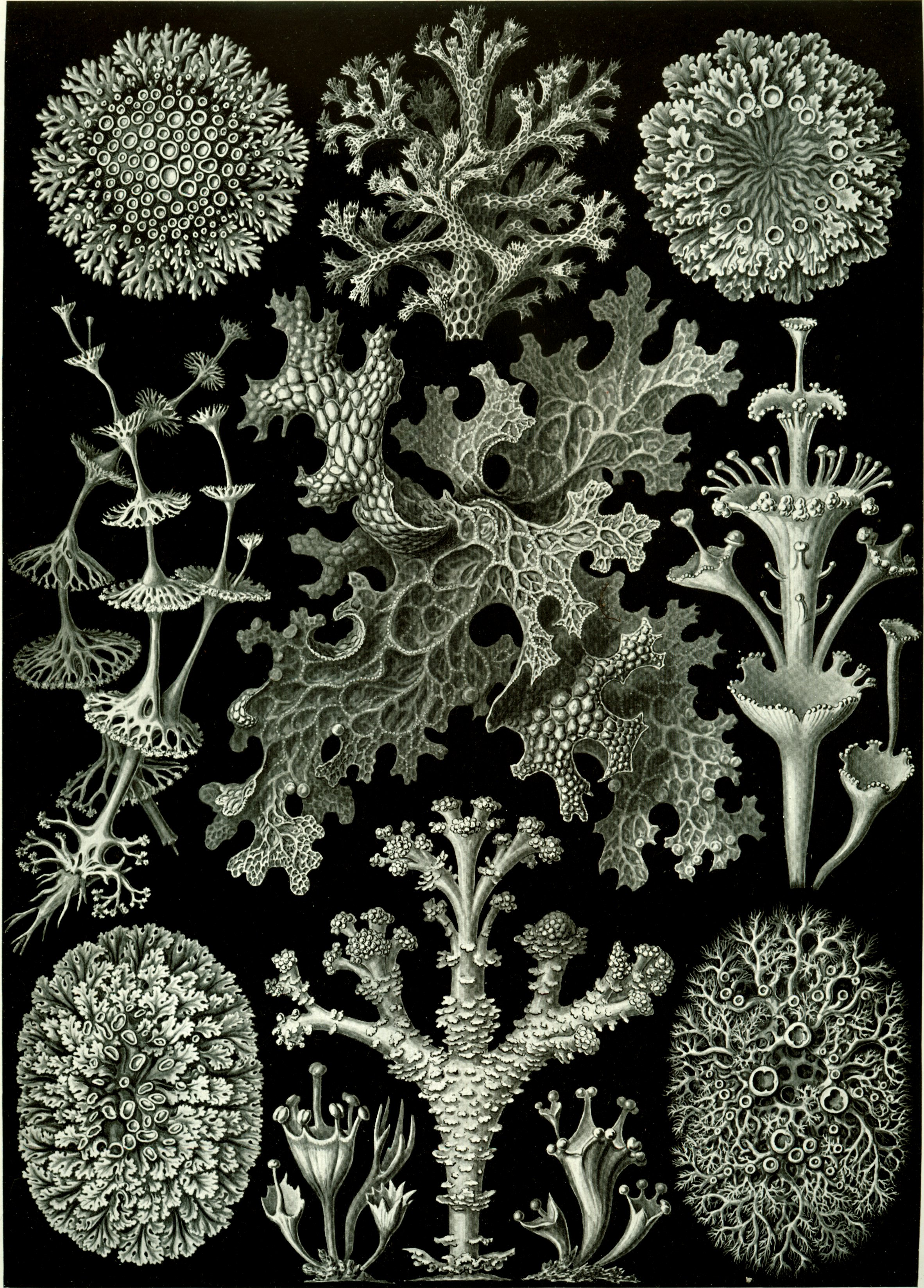
  • Saturday, November 14, 10 – 2 – Lichen Identification Workshop

    This will be an intermediate workshop on lichens. Participants are expected to know basic lichen information. Participants should have the book MicroLichens of New England by Hinds and Hinds or photocopied keys from this book. We will use this lichen key and a few chemicals necessary for identification. Please register by contacting the leader in advance (limit 10). Bring a 15x hand lens or low power microscope. Bring lunch and a beverage (microwave and refrigerator are available). Bring the macrolichens that you wish to work with in the class. We will briefly key several lichens that I will bring, but this is a workshop to learn to key any lichens you find in the field, and especially problematic lichens.

    Field trips are a long standing tradition of the Connecticut Botanical Society.  They provide an opportunity to learn about plants and habitats from some the area’s most knowledgeable botanists, and an opportunity to share your own knowledge with others.  The trips also add to the bank of knowledge of New England flora.  On each field trip. a list is made of all plant species identified, and this list becomes part of the Society’s records.  The Connecticut Botanical Society encourages the gardening public to participate in this Lichen Identification Workshop in Hamden, Connecticut, led by Carol Lemmon, President of CBS.    For field trips, wear sturdy footwear and bring a lunch.  Sunscreen and insect repellant are also recommended.  For plant identification, you may wish to bring a field guide(s), a hand lens, and a small notebook.  Familiarity with plant taxonomy is helpful, but not required.    Free to CBS members.  Non-members must pay a $15 fee, which includes a one-year membership in CBS, and entitles you to join future trips this season at no additional cost.  For more information and directions, or to register, call 203-488-7813, or log on to www.ct-botanical-society.org.

  • Sunday, October 18, 1:00 – 5:00 pm – Understanding Fungi: Mushrooms in the Wild

    Author-mycologist Lawrence Millman will lead a mushroom walk in Concord or Lincoln (exact location to be determined before the event based on conditions). However dry or unpromising the conditions, he guarantees that participants will find a minimum of 30 different species. You will learn to identify mushrooms both with and without a guidebook, and you’ll also unlearn everything you were ever told about how to distinguish a poisonous from a non-poisonous species. Be aware, however, that the focus of this event is scientific, not culinary. Bring a basket, wax paper, a pocket knife, a hand lens (if you have one), and – most important of all – a spirit of adventure. Please join us come rain or shine! Dress appropriately for weather.  Limited to 16. If students have questions for Larry Millman about the walk, call (617) 492-5861. Directions to Estabrook Woods from Concord Center, MA: Get to Concord Center and the Colonial Inn, in the heart of Concord Center. If you’re facing the Colonial Inn, take a right onto Monument Street and head toward the Old North Bridge. Take a left on Liberty Street, then right on Estabrook Road. After less than half a mile, take another right on Estabrook Road when it bends to the right. Go to the end of the road and park (space for cars on the left-hand side of road).  Cost – $76.

    http://www.wvpics.com/pics/morelmushroom.jpg

  • Saturday, October 17, 10 am – 1:30 pm – Fall in the Bog

    A thick, floating mass of sphagnum moss, oxygen-poor water, and plants adapted to very low nutrient conditions characterize quaking bogs. The Philbrick-Cricenti Quaking Bog, one of the best examples of these unique peatlands, offers a chance to explore a trail about a mile in length, while staying high and dry atop a boardwalk. A host of bog plants are to be discovered as you transition from a red maple-sphagnum swamp, through a black spruce-larch swamp, to the Tundra Garden Loop where you find vegetation similar to that in more northern areas where boreal forest meets the open Arctic tundra. The walk will be led by Roland “Boot” Boutwell, and is sponsored by the New England Wild Flower Society. Bring a bag lunch, water, and a hand lens if you have one.  Cost for NEWFS members is $28, $32 for nonmembers.  Limit 10 participants.  To register, and for directions, log on to www.newfs.org, or call 508-877-7630.

    http://www.nhdfl.org/library/images/photo-index/DSC_0037a.jpg

  • Saturday, October 10, 10 am – 2 pm – Double Drumlin with Fire

    Join the New England Wild Flower Society on a hike botanizing two different communities formed by two dramatic glacial features:  a double drumlin and a kettlehole, owned by The Trustees of Reservations. We visit Weir Hill Reservation with Frances Clark and walk through 80 acres of field and woodland under fire management.  Oaks, hickories, blueberries, grasses, and sedges, with a variety of fall wildflowers of various colors highlight the mosaic formed by different burning regimes.  Descending from these dry slopes, we enter a wet meadow and visit the Ward Reservation to investigate the classic kettlehole bog, one of the best examples in eastern Massachusetts.   The colors should be spectacular, with many end-of-season fruits and flowers.   This botany hike emphasizes the different ecologies of these very different sites. Walking is on a wide but steep path over the drumlin, moist in the meadow, and easy along the board walk through the bog.  Bring Newcomb’s Wildflower Guide, Peterson’s Fern Guide, and a hand lens, as well as water and lunch.  Limit 15 participants, fee is $32 for NEWFS or Trustees of Reservations members, $36 for non members.  To register, log on to http://www.newfs.org, or call 508-877-7630.

    http://www.townofnorthandover.com/Pages/NAndoverMA_Conservation/StevensPd1.jpg