Tag: Harvard Graduate School Of Design

  • Friday, March 31, 6:30 pm – 8:30 pm – Mexico City at a Crossroads: Designing an Urban Future in the Era of Climate Change

    Join the Harvard Graduate School of Design on Friday, March 31 from 6:30 – 8:30 in Gund Hall’s Piper Auditorium, Quincy Street in Cambridge, for the Keynote Lecture for Mexico City at a Crossroads: Designing an Urban Future in the Era of Climate Change.

    Mexico City’s Mayor Miguel Mancera will discuss current challenges for the nation’s capital city, which was recently named the World Design Capital for 2018 by ICSID. The mayor will share lessons learned so far and engage in a dialogue about the built environmental future of CDMX (Ciudad de México) going forward. Mexico City has emerged out of a complex history to take a role as a leading global metropolis but is now in flux. Renowned for its architecture and design aesthetics, the city also faces major infrastructural scarcities in transportation, water supply, and affordable housing. Its enormous scale poses environmental, energy, and public health problems associated with pollution, carbon emissions, and urban sprawl. Recent efforts to write a new city constitution have amplified conflicts over how to build, govern, and finance its future. This keynote lecture—which launches a day-long conference on Harvard’s campus sponsored by the David Rockefeller Center for Latin American Studies that will include participation by governing officials and activists as well as leading researchers on CDMX—will highlight Mexico City’s tripartite identity as global leader, national powerhouse, and sovereign urban authority confronting the multi-scalar territorial and environmental challenges of the twenty-first century.

    Co-sponsored by the David Rockefeller Center for Latin American Studies and the Interdisciplinary Urbanism Initiative, Department of Urban Planning and Design.

    Anyone requiring accessibility accommodations should contact the events office at (617) 496-2414 or events@gsd.harvard.edu.  Free and open to the public.  Image from www.planetsave.com.

  • Tuesday, March 7, 6:30 pm – 8:30 pm – Planting in the Public Realm: Projects and Projections

    The Harvard Graduate School of Design will conduct a panel discussion on Tuesday, March 7 from 6:30 – 8:30 in Gund Hall, Piper Auditorium, Quincy Street in Cambridge.

    Plant life, long regarded in cities as an amenity, has throughout the twentieth and twenty-first centuries also become an accepted necessity integral to the urban fabric. Yet, there are multiple challenges facing plants and planting design in urban areas. Pollution, climate change, increasingly restricted space, and insufficient or nonexistent public budgets for plants are only some of the factors that make it difficult for vegetation in our cities to survive. Yet numerous new public urban parks have been created, tree planting programs persist, new plant cultivars are developed, spontaneous plant growth is studied, and new planting design paradigms are proposed.

    In a series of short presentations and a moderated discussion, landscape architects, planting designers, and ecologists will assess the current state of the art in planting the public realm. The event seeks to draw out ideas for how plants can be used in the future design of urbanizing areas to create healthy, sustainable, inclusive, and appealing environments. What is the importance of planting the public realm today, and what are its biggest challenges? What are the roles of landscape architects, designers, ecologists, and plant scientists in accommodating plant life in cities and in areas that are becoming urbanized, and are we beyond botanical xenophobia? Moderated by author Sonja Dümpelmann, associate professor of landscape architecture, with Steven Handel, visiting professor in landscape architecture; Noel Kingsbury, writer and garden designer; Norbert Kühn, TU Berlin; Doug Reed MLA ’81, lecturer in landscape; and Matthew Urbanski MLA ’89, associate professor in practice of landscape architecture.

    Anyone requiring accessibility accommodations should contact the events office at (617) 496-2414 or events@gsd.harvard.edu. The event is free and open to the public.

  • Thursday, November 17, 11:30 am – 2:00 pm – Designing Natures: For Pluralism of Ecology, Ethics and Aesthetics

    Fionn Byrne, lecturer in landscape architecture at Harvard GSD, focuses his research on the moral underpinnings of contemporary landscape architecture. As the recipient of the Harvard GSD’s 2015–16 Daniel Urban Kiley Teaching Fellowship in Landscape, he will speak about his work during the past year. The lecture will take place on Thursday, November 17, from 11:30 – 2 in the Harvard Graduate School of Design Gund building, 112 Stubbins. The lecture is free and open to the public.

    Byrne’s research and design interests depart from the convergence of technolo­gy and ecology; he is most intrigued by how velocity and information interact with biological systems.

    “The science of ecology is shaping a shared environmental ethic. The discipline speaks with unchallenged authority, claiming knowledge of the past and predicting the future. We are told that human accelerated climate change poses a threat to the continued existence of our species. Landscape architecture is the design discipline that has accepted the charge of integrating ecology into the urban. But beginning here with our very survival as the initial design problem, two undesirable propositions emerge:  The first is that any work of landscape architecture that does not slow the momentum of a warming planet can be said to be complicit in the downfall of our species. Thus, are we not compelled to act ecologically, to design with nature? The second is that even the most poorly designed space that includes plant material can be argued to be contributing to saving the planet. Thus, does ecology not trump aesthetics? If these propositions are indeed valid, how shall we respond?”

    Anyone requiring accessibility accommodations should contact the events office at (617) 496-2414 or events@gsd.harvard.edu.

  • Thursday, October 27, 6:30 pm – 8:30 pm – Rouse Visiting Artist Lecture: Christo

    The Rouse Visiting Artist Series will present Christo on Thursday, October 27, from 6:30 – 8:30 in the Gund Piper Auditorium of the Harvard Graduate School of Design. The program is free and open to the public.

    Christo and Jeanne-Claude met in Paris in 1958, not long after their education at the National Academy of Art in Bulgaria and the University of Tunis, respectively. Their first project was Stacked Oil Barrels and Dockside Packages (1961) in Cologne Harbor, but perhaps their most renowned project was Wrapped Reichstag (1995) in Berlin, which swathed the iconic capital building in fabric for fourteen days. Christo and Jeanne-Claude’s overt, site-specific landscape interventions have evolved from Christo’s early works. Smaller sculptural pieces that are key to his portfolio, such as wrapped cans, bottles, crates, suggestive forms, and indoor installations reveal an interest in concealment, but also in the dimensional qualities of shapes in an environment and in the process itself. It is no surprise that in a caption to a chronological list of projects on their website, the artists refer to “software” and “hardware” periods: preparation and imagination on the one hand, physical execution on the other. The Floating Piers, Christo and Jeanne-Claude’s most recent finished work, was conceived in 1970 yet came to fruition only in the summer of 2016. The 16-meter-wide shimmering walkways of this project, constructed on Lake Iseo, Italy, were open and free for the public to traverse. Christo will discuss this work in his lecture, along with two upcoming projects: Over the River, for the Arkansas River in Colorado, and The Mastaba, for the United Arab Emirates. Both were planned with his wife and partner Jeanne-Claude. Notwithstanding her death in 2009, Christo continues to fundamentally credit Jeanne-Claude in his projects.

    Anyone requiring accessibility accommodations should contact the events office at (617) 496-2414 or events@gsd.harvard.edu. Photo by Wolfgang Volz.

    the-floating-pieres-3_wolfgang-volz

    Save

  • Thursday, October 6, 6:30 pm – 8:30 pm – Pioneering New Territory

    The Harvard University Graduate School of Design presents its Frederick Law Olmsted Lecture on Thursday, October 6, from 6:30 – 8:30 in the Gund Piper Auditorium.  The featured speaker is Peter Latz, who will give a talk entitled Pioneering New Territory.  Peter Latz studied landscape architecture at the Technical University of Munich. He is best known for his emphasis on reclamation and conversion of former industrialized landscapes. Retired today, he was an adjunct professor at the University of Pennsylvania in Philadelphia and was also a visiting professor at the Harvard Graduate School of Design.

    Latz once noted in a foreword for the book Visionary Gardens by Ernst Cramer that the overall of landscape architecture could be applied in abstract rules. “The beauty of nature lies within the essence and effect of plants and materials.”  The lecture is free and open to the public.

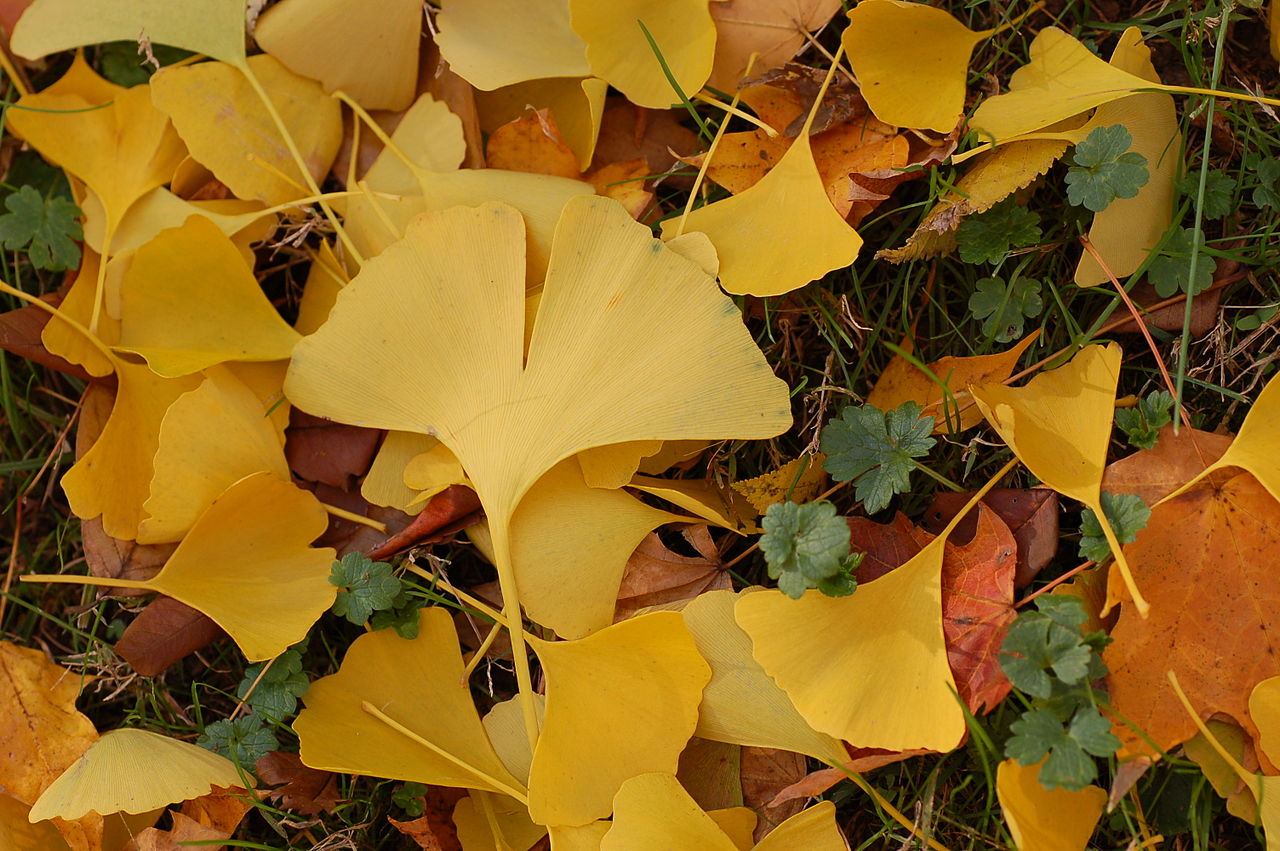
  • Wednesday, October 12, 10:00 am – Everything You Ever Wanted to Know About Ginkgo, but Were Afraid to Ask

    Wednesday, October 12, 10:00 am – Everything You Ever Wanted to Know About Ginkgo, but Were Afraid to Ask

    Join The Garden Club of the Back Bay and Dr. Peter Del Tredici of the Arnold Arboretum on Wednesday, October 12 at 10 am at The College Club of Boston, 44 Commonwealth Avenue, for an in-depth look at one of the most ancient and fascinating trees on the planet. Peter has been studying the natural history and evolution of this tree for the last twenty-five years and is a world authority on the subject. His travels have taken him to remote areas in southwest China in search of wild-growing Ginkgos as well as to old estates and botanical gardens in Europe and the United States. Peter has also studied the cultivation of the Ginkgo for ornamental purposes as well as for the production of leaves to make an extract that some people take to improve their memories.

    Peter Del Tredici holds a BA degree in Zoology from the University of California, Berkeley (1968), a MA degree in Biology from the University of Oregon (1969), and a Ph.D. in Biology from Boston University (1991). He retired from the Arnold Arboretum of Harvard University in 2014 after working there for 35 years as Plant Propagator, Curator of the Larz Anderson Bonsai Collection, Editor of Arnoldia, Director of Living Collections and Senior Research Scientist. Dr. Del Tredici taught in the Landscape Architecture Department at the Harvard Graduate School of Design from 1992 through 2016 and is currently teaching a course in urban ecology in the Urban Planning Department of MIT. He is the winner of the Arthur Hoyt Scott Medal and Award for 1999 presented by the Scott Arboretum of Swarthmore College and in 2013 he was awarded the Veitch Gold Medal by The Royal Horticultural Society (England) “in recognition of services given in the advancement of the science and practice of horticulture.”

    Dr. Del Tredici’s interests are wide ranging and include such subjects as plant exploration in China, the root systems of woody plants, the botany and horticulture of magnolias, stewartias and hemlocks, and the natural and cultural history of the Ginkgo tree. His recent work is focused on urban ecology and has resulted in the publication of the widely acclaimed Wild Urban Plants of the Northeast: A Field Guide (Cornell University Press, 2010) as well as a GPS-based mobile app, “Other Order” which interprets the Bussey Brook Meadow section of the Arnold Arboretum (with Teri Rueb). He lectures widely in North America and Europe and is the author of more than 130 scientific and popular articles.

    Garden Club of the Back Bay members will receive separate notification of this October meeting. If you are not a Club member but are interested in attending, please email info@bostonflora.com. This lecture is part of our 2016/2017 series on The Prehistoric Garden.

    Save

    Save

    Save

    Save

  • Thursday, December 3, 6:00 pm – Our National Parks and the “Fairsted School”: An Enduring Legacy

    The Olmsted firm is famous for the design of hundreds of municipal parks and other landscapes. The achievements of Olmsted and his successors in scenic preservation are less well understood, but park design and scenic preservation were both aspects of the practice of landscape architecture Olmsted developed in the second half of the nineteenth century. This December 3 talk explores the role of the “Fairsted School” of landscape architecture and its influence on scenic preservation and the design of state and national park systems through the twentieth century. The program will begin with a 6 pm reception followed by the lecture at 7, at the Wheelock College Brookline Campus, 43 Hawes Street, corner of Hawes and Monmouth Streets in Brookline. Reservations are required. Call 617-566-1689, x 265, or reserve online at http://friendsoffairsted.org/programs/register/

    Ethan Carr, PhD, FASLA, is a landscape historian and preservationist specializing in public landscapes. He has taught at the Harvard GSD, the University of Virginia, and at the University of Massachusetts Amherst, where he is a professor. He has written two award-winning books, Wilderness by Design (1998) and Mission 66: Modernism and the National Park Dilemma (2007), and is the volume editor of Volume 8 of the Papers of Frederick Law Olmsted, The Early Boston Years, 1882-1890 (2013).

    Limited street parking is available. Public parking is not allowed in the Wheelock parking lot. Venue is easily accessible by MBTA Green Line “C” (Hawes Street) or “D” (Longwood) trains.

  • Saturday, November 7, 10:00 am – 12:00 noon – The Radicle Underground

    Saturday, November 7, 10:00 am – 12:00 noon – The Radicle Underground

    Join Dr. Peter Del Tredici of Harvard University’s Arnold Arboretum on Saturday, November 7 from 10 – noon at Berkshire Botanical Garden for an exploration of the important relationship between plants and soil. Developing a clear understanding of what goes on below the ground will help make you a better gardener. Learn about the structure and function of woody- plant root systems as well as the practical aspects of when and how best to water and fertilize trees and shrubs. Dr. Del Tredici will also examine the all-important contribution that soil microorganisms make to the nutrition and survival of plants, both in nature and in cultivation. The lecture will also cover the pros and cons of various methods for “packaging” root systems in commercial nurseries and basic planting techniques. This lecture is a must for anyone who cares about their garden plants both large and small.

    Dr. Peter Del Tredici retired from the Arnold Arboretum of Harvard University in 2014 after working there for 35 years as Plant Propagator, Curator of the Larz Anderson Bonsai Collection, Editor of Arnoldia, Director of Living Collections and Senior Research Scientist. Dr. Del Tredici is an Associate Professor in Practice at the Harvard Graduate School of Design, where he has been teaching in the Landscape Architecture Department since 1992. He is the winner of the Arthur Hoyt Scott Medal and Award for 1999 presented by the Scott Arboretum of Swarthmore College, and in 2013 he was awarded the Veitch Gold Medal by The Royal Horticultural Society (England) “in recognition of services given in the advancement of the science and practice of horticulture.”

    You may register online ($25) at http://www.berkshirebotanical.org/event/peter-del-tredici-the-radicle-underground/?instance_id=3528 or call 413-298-3926, ext 15.

    OLYMPUS DIGITAL CAMERA

  • Thursday, November 12, 10:00 am – From Landscape Gardening to Landscape Urbanism

    The Boston Committee of the Garden Club of America will hold its annual fall membership meeting, lecture and luncheon on Thursday, November 12 beginning at 10 am at The Country Club, 191 Clyde Street in Brookline.  Charles Waldheim will give a talk entitled From Landscape Gardening to Landscape Urbanism.

    Charles Waldheim is the John E. Irving Professor of Landscape Architecture at Harvard University’s Graduate School of Design. His lecture will focus on the evolution and current trends in ‘Landscape Urbanism’, a term coined by Waldheim to describe the recent emergence of landscape as a medium of urban order for the contemporary city. Professor Waldheim is a Canadian-American architect, urban theorist, and educator. His research examines the relations between landscape, ecology, and contemporary urbanism. At the same time that urban sprawl has distanced the population from the landscape, environmental literacy among designers and scholars has grown, giving rise to an architectural discourse known as ‘landscape urbanism’. In his lecture Waldheim, who is at the forefront of this movement, explores the origins, the current context and the aspirations of this relatively new field that is inspiring the future of city making. Waldheim is author, editor, or co-editor of numerous books on the subject, and his writing has been published and translated internationally. He has taught at Rice University, University of Toronto, University of Pennsylvania, and the University of Michigan. Charles is also the Ruettgers Consulting Curator of Landscape at the Isabella Stewart Gardner Museum.

    The event is open to members of Garden Clubs affiliated with The Boston Committee and their guests.  Garden Club of the Back Bay members will receive separate invitations and a car pool notice in the mail.  For more information email info@bostoncommittee.org.

  • Tuesday, April 28, 7:00 pm – 8:30 pm – Healthy Places in the Transition Century

    In the coming century urban populations around the world will grow at uneven rates–some places will lose population in metropolitan areas and others gain it. Populations in most places will be older on average. How can the growing body of research on the connections between health and environments be used to make a positive contribution to evolving urban and suburban communities? Ann Forsyth, PhD, Professor of Urban Planning at the Harvard Graduate School of Design, will speak about the components that contribute to healthier and more sustainable cities, alternatives to sprawl, and the tensions that exist between social and ecological values in urban design. The talk takes place Tuesday, April 28, from 7 – 8:30 in the Hunnewell Building at the Arnold Arboretum. Fee: Free for Arboretum members, $10 nonmembers. Register online at http://my.arboretum.harvard.edu/Info.aspx?EventID=1.