Tag: Harvard Museum Of Natural History

  • Wednesday, April 2, 6:00 pm – From Darwin to DNA: The Genetic Basis of Animal Behavior

    How do certain animals, such as wild mice, evolve their most critical survival traits, including skin coloration, body shape, and the ability to dig elaborate tunnels in order to hide from predators? How fast can successive generations acquire visible traits, and how do animal genes and behavior interact? Evolutionary geneticist Hopi Hoekstra, Professor of Zoology and Curator of Mammals at the Museum of Comparative Zoology, Harvard University, and colleagues have combined extensive field research with the latest techniques in DNA analysis to unlock one of biology’s most elusive secrets: the genes that control behavior. She will speak on Wednesday, April 2, beginning at 6 pm at the Geological Lecture Hall of the Harvard Museum of Natural History, 24 Oxford Street, Cambridge. The Evolution Matters Lecture Series is supported by a generous gift from Drs. Herman and Joan Suit. Free and open to the public. Free event parking in the 52 Oxford Street Garage.

    https://www.mcb.harvard.edu/mcb_files/media/editor_uploads/2013/05/2013_hoekstra_hhmi.jpg

  • Sunday, March 9, 2:00 pm – Echoes of Their Wings: The Life and Legacy of the Passenger Pigeon

    The passenger pigeon once ruled the skies of North America, numbering in the billions and comprising upwards of 25% of the region’s bird population in the mid-1800s. By 1914, however, the species was extinct—a downfall hastened by America’s growing hunger for land development and hunting.  Author and naturalist Joel Greenberg will discuss how the passenger pigeon’s extinction may inform today’s conservation decisions. The author talk and book signing will take place on Sunday, March 9, beginning at 2 pm at the Harvard Museum of Natural History, 26 Oxford Street, Cambridge. Regular museum admission rates apply.

    http://s3-media2.ak.yelpcdn.com/ephoto/kFVWWOrayv12ZMt8dGp6Qw/l.jpg

  • Wednesday, March 12, 6:00 pm – Evolutionary Forces in Humans and Pathogens

    Have you been watching Helix on the SciFi Channel? This Evolution Matters Lecture on Wednesday, March 12, beginning at 6 pm, will appeal to you. The genome revolution has created unprecedented opportunities to study human biology, evolution, and infectious diseases. Geneticist Pardis Sabeti, Associate Professor, Center for Systems Biology at Harvard University, and a member of the Department of Immunology and Infection Diseases at Harvard School of Public Health, will discuss the rapidly emerging techniques and resources her lab is applying to advance our understanding of natural selection in the human genome and the genomic evolution of microbial pathogens such as Lassa virus, Ebola virus, Plasmodium falciparum malaria, and Vibrio cholerae.

    The Evolution Matters Lecture Series is supported by a generous gift from Drs. Herman and Joan Suit.  Free and open to the public. The talk will be held at the Harvard Museum of Natural History’s Geological Lecture Hall, 24 Oxford Street. Free event parking in the 52 Oxford Street Garage.

    http://www.news.harvard.edu/gazette//srv/htdocs/wp-content/uploads/2008/09/022709_Sabeti_KS_016.jpg

  • Wednesday, February 26, 6:00 pm – Building Earth-Like Planets: From Gas and Dust to Ocean Worlds

    How do planets form, and what makes them habitable? Where might life be found beyond our solar system? Linda Elkins-Tanton, Director of the Department of Terrestrial Magnetism at the Carnegie Institution and an expert in planet formation and evolution, will discuss how the violent impacts that are the “final act” of a planet’s creation may not always wipe out water and carbon from the early-growth period. Enough of these all-important elements may have existed to make many rocky planets and exoplanets habitable, increasing the likelihood that life might exist elsewhere among the Milky Way’s 17 billion Earth-sized planets. The Harvard Museum of Natural History lecture will take place Wednesday, February 26, beginning at 6 pm.  Free and open to the public. Geological Lecture Hall, 24 Oxford Street. Free event parking in the 52 Oxford Street Garage. Image from www.sciencedaily.com.  For more information visit www.hmnh.harvard.edu.

    http://images.sciencedaily.com/2008/10/081015144137-large.jpg

  • Saturday, February 22, 2:00 pm – Wild Animal Neighbors

    In cities and suburbs around the world, wild creatures such as coyotes, alligators, and mountain lions are showing up where least expected. How can they survive in the contemporary world of concrete, steel, and glass? Ann Downer discusses the factors that bring these creatures to our backyards and ways to create spaces for people and animals to live side by side, in a talk and book signing at the Harvard Museum of Natural History, 26 Oxford Street, Cambridge, on Saturday, February 22 at 2 pm. Regular museum admission rates apply. Visit www.hmnh.harvard.edu for more information.

    http://1.bp.blogspot.com/-4VfyL6Tj8mw/Uf2PW5CekaI/AAAAAAAAbsc/1ZjdmuxJSuk/s1600/0761390219.01._SX450_SY635_SCLZZZZZZZ_.jpg

  • Wednesday, February 12, 6:00 pm – Time Travel in Experimental Evolution

    Richard Lenski, Hannah Distinguished Professor, Michigan State University, will speak at the Geological Lecture Hall, 24 Oxford Street, Cambridge, as part of the Harvard Museum of Natural History’s Evolution Matters Lecture Series on Wednesday, February 12, beginning at 6 pm. Escherichia coli (E. coli) is a common form of intestinal bacteria that reproduces and mutates with incredible speed. This trait, along with scientists’ ability to freeze and revive organisms, makes E. coli an ideal organism for studying the evolutionary process (a form of “time travel”). Microbiologist Richard Lenski has carried out a 25-year study of E. coli, propagating over 50,000 generations, and has discovered new insights into natural selection, adaptation, and genetic evolution.

    The Evolution Matters Lecture Series is supported by a generous gift from Drs. Herman and Joan Suit.  Free and open to the public.  Free event parking is available in the 52 Oxford Street Garage.

    http://3.bp.blogspot.com/-_Fw6BHk6kmk/Tei5VnW3vpI/AAAAAAAAAIQ/MUFQ2SFSeAs/s1600/e-coli-streptococci.jpg

  • Saturday, February 1, 2:00 pm – Discovering Thoreau the Geologist

    Henry David Thoreau’s contributions to botany are well documented. Far less known was his passion for the physical sciences, especially geology. Robert Thorson’s new book, Walden’s Shore, is the first-ever book to focus on Thoreau the geoscientist, from his studies of local rocks and minerals to his interpretation of how Walden Pond and the Concord landscape were created.  Dr. Thorson, Professor of Geology at University of Connecticut will speak on Discovering Thoreau the Geologist at the Harvard Museum of Natural History, Oxford Street, Cambridge, on Saturday, February 1, at 2 pm, and will sign copies of his book.

    Regular museum admission rates apply. Free event parking in the 52 Oxford Street Garage.  For more information visit www.hmnh.harvard.edu.

    http://ecx.images-amazon.com/images/I/51I-MBCkkHL._SY344_PJlook-inside-v2,TopRight,1,0_SH20_BO1,204,203,200_.jpg

  • Saturday, February 1, 9:00 am – 4:00 pm – Earth Rocks! A Family Festival

    Explore our amazing planet from the inside out at the Harvard Museum of Natural History on Saturday, February 1, from 9 – 4! Discover how volcanoes and other earth processes help us understand Earth’s structure. Examine rocks, minerals, fossils, and meteorites from the museum’s collections. Meet Harvard paleontologist Anjan Bhullar, interact with members of the Boston Mineral Club, and learn about Harvard research. Look back in time and peer deep inside the earth with demonstrations, presentations, and hands-on activities for all ages. Regular museum admission rates apply. Free event parking is available in the 52 Oxford Street Garage the day of the event. For more information visit www.hmnh.harvard.edu.

    http://news.harvard.edu/gazette//srv/htdocs/wp-content/uploads/2013/04/040813_EPS_033_605.jpg

  • Saturday, January 11, 2:00 pm – Navigating Our Milky Way Galaxy

    Earth may be a pint-sized planet and the Sun just an average star, but the Milky Way galaxy is a major player within the cosmos. Astronomer William Waller, author of the new The Milky Way, An Insider’s Guide, will lead a journey through our home galaxy, as viewed both from dark-sky sanctuaries here on Earth and from space satellites that explore the outer limits of the solar system. The author talk and book signing will take place Saturday, January 11, beginning at 2 pm at the Harvard Museum of Natural History, 26 Oxford Street, Cambridge. Regular museum admission rates apply.

    http://press.princeton.edu/images/k9938.gif

  • Saturday, February 22 – Wednesday, March 5  – Wild Tanzania: An Eco-Friendly Safari

    Saturday, February 22 – Wednesday, March 5 – Wild Tanzania: An Eco-Friendly Safari

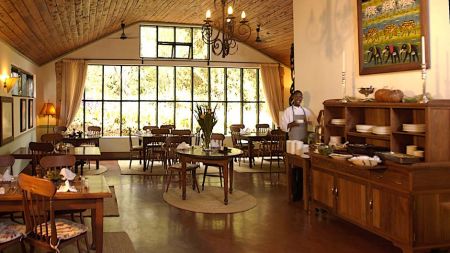
    Still looking for a last minute Christmas gift? Journey with the Harvard Museum of Natural History into the heart of East Africa and go off the beaten path to learn about the culture, people, and wildlife of Tanzania. Marvel at a vast and unspoiled landscape under the equatorial sun and enjoy comfortable tented camps and small lodges, beautifully situated for their proximity to the seasonal concentrations of wildlife. Begin in Enashiva, a nature refuge in the Loliondo area just east of Serengeti National Park, and a model for community-based tourism. With multiple Masai villages nearby there will be opportunities to visit homes, talk with people, and learn about challenges facing the people today. We will go on game drives — both day and night. Drive to the Serengeti, spending the days amidst untamed wilderness where lion, cheetah, warthog, and millions of hoofed animals roam. Travel to the lush and verdant Ngorongoro Crater, a massive caldera inhabited by rhinoceros, elephant, and black-maned lion. En route, visit Olduvai Gorge, the site of the Leakey family’s remarkable discoveries. We spend the last two nights at Gibbs Farm, a peaceful sanctuary surrounded by breath-taking scenery (pictured below.)  The study leader is Professor Andrew Biewener, and the cost of the trip is $6,975 per person, double occupancy, with a $1,300 single supplement option available.  Call 617-495-2463 for more information, or click on to the Harvard Museum link above.

    http://cdn.naturalhighsafaris.com/cdn/made/cdn/uploads/camp_images/New/Tanzania/Gibbs%20Farm/gibbs-04_450_253_80_s_c1.jpg