Tag: Harvard University

  • Tuesday, October 27, 3:30 pm – Reading and Conserving New England: Insights from History and Ecology

    David Foster, of Harvard Forest and Department of Organismic and Evolutionary Biology, Harvard University, will speak on Tuesday, October 27 at the University of Massachusetts Amherst campus Student Union, Cape Cod Lounge, as part of The Environmental Institute’s Fall Lecture Program, which is free and open to the public.

    This talk is based on David’s long-standing conviction that every landscape and region has a history that strongly conditions its current condition and its future dynamics. In this talk he will provide an overview of the ecological insights that emerge from a consideration of the natural and cultural history of New England and then illustrate how this can be applied both to anticipating future conditions and to conservation management, including discussion of the Wildlands and Woodlands vision being developed by scientists associated with the Harvard Forest.

    Bio

    David Foster is an ecologist and author of Thoreau’s Country – Journey through a Transformed Landscape (1999), New England Forests Through Time (2000; both Harvard University Press), Forests in Time – The Environmental Consequences of 1000 years of Change in New England (2004; Yale University Press) and Wildland and Woodlands: A Vision for the Forests of Massachusetts (Harvard University). He has been a faculty member in Biology since 1983 and is Director of the Harvard Forest, Harvard University’s 3500-acre ecological laboratory and classroom in central Massachusetts. David is the Principal Investigator for the Harvard Forest Long Term Ecological Research program, sponsored by the National Science Foundation and involving more than 100 scientists and students investigating the dynamics of New England landscape as a consequence of climate change, human activity, and natural disturbance.

    David has a Ph.D. in ecology from the University of Minnesota and has conducted studies in the boreal forests of Labrador, Sweden and Norway and the forests of Puerto Rico, the Yucatan, and Patagonia in addition to his primary research on landscape dynamics in New England. His interests focus on understanding the historical changes in forest ecosystems that result from human and natural disturbance and applying these results to the conservation and management of natural and cultural landscapes. He currently serves on the boards of The Nature Conservancy -Massachusetts, Trustees of Reservations, Conservation Research Foundation and Highstead Foundation. As part of his larger conservation work David and a group of Harvard Forest researchers developed Wildlands and Woodlands – A Vision for the Forests of Massachusetts, which lays out an ambitious plan for the protection and conservation of half of the land in the state.At Harvard University David teaches courses on forest ecology and environmental change and directs the graduate program in forest biology. He lives in Shutesbury, Massachusetts with his wife Marianne Jorgensen and their children Christian and Ava.  For more information, log on to www.umass.edu/tei/TEI/LectureFall2009.html.

    http://www.redstartconsulting.com/Maidenhair.jpg

  • Friday, October 9, 7 pm – Catching Fire Book Dinner

    Catching Fire: How Cooking Made Us Human presents a groundbreaking theory of our origins.  Author Richard Wrangham, the Ruth Moore Professor of Biological Anthropology at Harvard University and Curator of Primate Behavioral Biology at the Peabody Museum,  shows that the shift from raw to cooked foods was a key factor in human evolution.  Chef Jody Adams invites you to an intimate salon dinner with the author, Richard Wrangham, on Friday, October 9, beginning at 7 pm.  The three course dinner, paired with wine, is priced at $100, including tax and gratuity. The book will be available for purchase courtesy of the Harvard Bookstore.  “Richard’s thought provoking conversation and infectious charm make him an incredible host” says Ms. Adams. He is also the co-author of Demonic Males (perhaps one of the best book titles in recent memory) and co-editor of Chimpanzee Cultures.  Please call 617-661-5050 to reserve your space.  Rialto Restaurant is located at One Bennett Street in Cambridge, in the Charles Hotel, and you may obtain additional information by logging on to www.rialto-restaurant.com.

    Catching Fire: How Cooking Made Us Human

  • Saturday, October 10 – Monday, October 12, 9:00 am – noon – An Introduction to Plant Ecology

    When we see a flower or tree in our garden, we are often unaware of the myriad ways in which that plant’s growth and form is affected by other organisms and its environment.  This three consecutive morning course will explore key concepts in plant ecology with environmental scientist Katie Alt Griffith.  Each session will start with a lecture in the Wellesley College Botanic Garden Visitor Center and then move outdoors into the botanic gardens for observational studies and other structured activities in the field.  Please bring a notebook or journal and pencil, as well as a hand lens (available at Staples) and a field guide, if you have them.  Dress appropriately for going outdoors, rain or shine.  The botanic gardens contain stairs and uneven surfaces.  This course is co-sponsored with Arnold Arboretum of Harvard University.  WCFH members $75, non-members $90.  For more information, or to register for course number HOR 10 020, log on to www.wellesley.edu/WCFH, or email horticulture@wellesley.edu.

    Leaf-footed bug on Adam's needle by Ken-ichi.

  • Monday, September 21 – Fog, Cloud and Mist

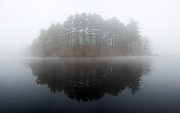
    The Photography of John Borchard

    Why does water vapor evoke such emotions? Scenes that are so prosaic in the broad light of day take on such mystery in a mist. John Borchard creates images that project an intense sense of place, that irresistibly position one in the world of the image, whether crisp, with every atom seemingly leaping forth, or in a fog, half-discerned. His art aims to transport you into a place and perhaps into a time, inviting one into its space in a fashion dependent on one’s own emotional state.

    John Borchard received a Master’s in Mechanical Engineering from MIT in 1976 and has spent the decades since then practicing engineering at the interface between the digital, analog, sensory and robotic worlds. His interest in photography blossomed when he discovered digital photography. Over the last several years, he has participated in many solo and group shows.  This exhibit will take place September 21–October 15, 2009 at The Landscape Institute, 30 Chauncy Street, Cambridge, MA and is sponsored by the Arnold Arboretum of Harvard University.  For more information, log on to www.arboretum.harvard.edu.

  • Monday, July 13, 5 – 7 – Landscapes: Urban & Rural

    The Arnold Arboretum of Harvard University presents a photographic exhibit July 13 – August 6, 2009, with an opening reception Monday, July 14, from 5 – 7 pm.

    By forcing the photographer to impose limits and provide visual meaning to what amounts to a pre-drawn canvas, the photograph has the possibility of communicating a personal vision, revealing lines and relationships previously hidden. Roger Cody will exhibit a collection of landscapes that provide an opportunity to see the familiar and ordinary as something more. The locales are diverse, but the collection of images is united by a commonality of artifice—the transformations used to make the impersonal and chaotic, personal and meaningful.

    Location: The Landscape Institute, 30 Chauncy Street, Cambridge, MA.  For more information, log on to www.arboretum.harvard.edu.

  • Tuesdays, March 2 – April 6, 6:30 – 8:30 pm – The Plant Kingdom: An Overview

    Join K.N. Gandhi, Botanist at the Harvard University Herbaria, for this six session introductory course in botany, beginning March 2 at 6:30 pm.  Through lectures and work in the laboratory, Dr. Gandhi will provide a deeper understanding of the plant kingdom, from the simple plants to those that are highly evolved. He will outline the structure and reproduction of bacteria, cyano-bacteria, algae (fresh water and marine), fungi, moss, ferns, pines, and flowering plants. You will learn about the fundamental differences in the plant structure of these groups and also their capabilities in reproducing both sexually and asexually. The role of xylem, phloem, fruits, and seeds in the success of flowering plants will be discussed.
    Fee $165 Arnold Arboretum member, $200 nonmember.  For additional information, and to register, log on to www.arboretum.harvard.edu.

    http://www.feenixx.com/science/images/large-a112-plant-kingdom2-306-8x12x72.jpg