Tag: Harvard

  • Saturday, February 22 – Wednesday, March 5  – Wild Tanzania: An Eco-Friendly Safari

    Saturday, February 22 – Wednesday, March 5 – Wild Tanzania: An Eco-Friendly Safari

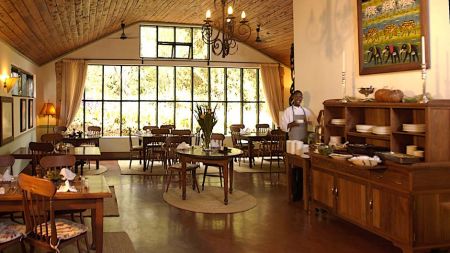
    Still looking for a last minute Christmas gift? Journey with the Harvard Museum of Natural History into the heart of East Africa and go off the beaten path to learn about the culture, people, and wildlife of Tanzania. Marvel at a vast and unspoiled landscape under the equatorial sun and enjoy comfortable tented camps and small lodges, beautifully situated for their proximity to the seasonal concentrations of wildlife. Begin in Enashiva, a nature refuge in the Loliondo area just east of Serengeti National Park, and a model for community-based tourism. With multiple Masai villages nearby there will be opportunities to visit homes, talk with people, and learn about challenges facing the people today. We will go on game drives — both day and night. Drive to the Serengeti, spending the days amidst untamed wilderness where lion, cheetah, warthog, and millions of hoofed animals roam. Travel to the lush and verdant Ngorongoro Crater, a massive caldera inhabited by rhinoceros, elephant, and black-maned lion. En route, visit Olduvai Gorge, the site of the Leakey family’s remarkable discoveries. We spend the last two nights at Gibbs Farm, a peaceful sanctuary surrounded by breath-taking scenery (pictured below.)  The study leader is Professor Andrew Biewener, and the cost of the trip is $6,975 per person, double occupancy, with a $1,300 single supplement option available.  Call 617-495-2463 for more information, or click on to the Harvard Museum link above.

    http://cdn.naturalhighsafaris.com/cdn/made/cdn/uploads/camp_images/New/Tanzania/Gibbs%20Farm/gibbs-04_450_253_80_s_c1.jpg

  • Wednesday, December 11, 7:00 pm – 8:00 pm – Evolution in a Toxic World

    With pesticides in produce, mercury in fish, and flame retardants permeating our homes, the world has become a toxic place. But as Emily Monosson demonstrates in her groundbreaking book, Evolution in a Toxic World, it has always been toxic. When oxygen first developed in Earth’s atmosphere, it threatened the very existence of life: now we literally can’t live without it. According to Monosson, understanding life’s evolutionary response to environmental poisons and how rapidly or slowly life adapted to such threats can teach us a great deal about today’s and tomorrow’s most dangerous contaminants. Emily Monosson, PhD, is Environmental Toxicologist and Adjunct Professor at University of Massachusetts, Amherst.   She will speak on Wednesday, December 11, from 7 – 8 in the Hunnewell Building, Arnold Arboretum, Jamaica Plain, and the fee is free for members of the Arboretum, $10 for nonmembers.  Students: call 617.384.5277 to register  free.  To sign up, visit http://my.arboretum.harvard.edu/Info.aspx?DayPlanner=1260&DayPlannerDate=12/11/2013&utm_source=November-December+2013+Lectures+and+Classes&utm_campaign=Fall+2013+Classes&utm_medium=email.

    http://bookwanderer.files.wordpress.com/2012/04/evo.jpg

  • Sundays, December 8 & 15, 9:00 am – 12:30 pm – Introduction to Winter Tree Identification

    Learn how to identify deciduous trees during their dormant season with Arnold Arboretum Arborist Kyle Stephens on two Sundays, December 8 and 15, from 9 – 12:30 at the Hunnewell Building at the Arnold Arboretum of Harvard University. Looking at specific character combinations, you will determine the genus and species of several types of trees in the Boston area. Class begins indoors with a discussion of basic classification techniques and continues outside to the Arboretum grounds to examine a variety of trees. (Note: Start date has shifted from Dec. 1 to Dec. 8.)  Fee $75 Arboretum  member, $100 nonmember.  Register on line at http://my.arboretum.harvard.edu/Info.aspx?DayPlanner=62&DayPlannerDate=12/8/2013&utm_source=November-December+2013+Lectures+and+Classes&utm_campaign=Fall+2013+Classes&utm_medium=email

    http://www.eattheweeds.com//srv/htdocs/wp-content/uploads/2012/03/istockphoto_6200329-winter-tree-silhouette-collection.jpg

  • Friday, December 6, 6:45 pm – Conifer Swamps of Central and Western Massachusetts

    Glenn Motzkin, botanist/ecologist, will address the New England Botanical Club on Friday, December 6, beginning at 6:45 at Harvard University, in the Haller Lecture Hall (Room 102), Geological Museum, 24 Oxford Street in Cambridge.  The door is to the right of the Harvard Museum of Natural History entrance.

    Glenn Motzkin is a plant ecologist interested in patterns of species distribution, vegetation dynamics, disturbance history, and the application of historical ecology to conservation in New England. Glenn has studied a wide range of natural communities, with particular interests in the history and dynamics of uncommon communities that support rare species and are priorities for conservation. Glenn is currently an independent ecological consultant, having previously worked as Plant Ecologist at Harvard Forest in Petersham, MA. Glenn serves as a member of the Advisory Committee for the Massachusetts Natural Heritage and Endangered Species Program.

    He received his BA in American Civilization, Brown University (1982)  and an MS in Forest Ecology at University of Massachusetts, Amherst (1990).

    http://www.nhdfl.org/uploads/NHB%20photos/AWC_009.jpg

  • Thursday, November 21, 6:00 pm – Seeing Earthquakes Before They Happen

    Geophysicist Brendan Meade, using satellite technology, generates images of current fault-line activity to help predict earthquakes and to better understand earthquake cycles and the tectonic development of continents. Find out more about his research and the progress being made in predicting the timing and magnitude of earthquakes on Thursday, November 21, at 6 pm, in a lecture sponsored by the Harvard Museum of Natural History. Free and open to the public. Geological Lecture Hall, 24 Oxford Street. Free event parking is available in the 52 Oxford Street Garage after 5:00 pm.

    http://news.harvard.edu/gazette//srv/htdocs/wp-content/uploads/2011/03/Japan_AP_rescueworkers_605.jpg

  • Thursday, November 14, 6:30 pm – 8:00 pm – Airport Landscape Keynote Lecture

    Adriaan Geuze is founder and principal of West 8, an international urban design and landscape architecture practice whose designs are informed by contemporary culture, urban identity, architecture, public space, and engineering. West 8 has done landscape projects for Schiphol Airport (below) since 1992 and has won international design competitions for the Toronto Waterfront (2006), Governors Island in New York (2007), Playa de Palma in Mallorca (2008), and the master plan for Yongsan Park, Seoul (2012). Among his many awards, Geuze was the 2002 recipient of the Veronica Rudge Green Prize for Urban Design. He was curator of the 2005 International Architecture Biennale in Rotterdam. In 2012 he received a lifetime achievement award from the Dutch government. Mr. Geuze will give the Airport Landscape Keynote Lecture at the Harvard Graduate School of Design, Piper Auditorium, Gund Hall, 48 Quincy Street in Cambridge, on Thursday, November 14 beginning at 6:30 pm. The lecture is free and open to the public. For more information email events@gsd.harvard.edu.

    http://www.west8.nl/images/dbase/3053.jpg

  • Thursday, November 14, 6:00 pm – Illustrating Thoreau’s Maine Woods: A Photographer’s Journey

    On Thursday, November 14, beginning at 6 pm at the Harvard Museum of Natural History, Scot Miller will discuss his seven-year project photographing northern Maine for his new book, The Maine Woods: A Photographic Journey Through an American Wilderness. Miller combines contemporary imagery with text from Henry David Thoreau’s classic essay collection, The Maine Woods (first published 150 years ago). He will also screen The Unexpected Journey, a short documentary about the making of the book.Free and open to the public. Geological Lecture Hall, 24 Oxford Street. Free event parking is available in the 52 Oxford Street Garage after 5:00 pm.  Members-only gallery preview and reception to follow in the exhibition gallery. RSVP to members@hmsc.harvard.edu or call (617) 496-6972.

    http://g-ecx.images-amazon.com/images/G/01/ciu/1c/43/d7ebc060ada0ee2a07bb3210.L._V192245302_SX200_.jpg

  • Thursday, November 7, 7:00 pm – 8:00 pm – 100 Years On: Alfred Russel Wallace, Evolution’s Unsung Discoverer

    Andrew Berry, PhD, Organismic and Evolutionary Biology, Harvard University, will speak at the Hunnewell Building at the Arnold Arboretum on Thursday, November 7, beginning at 7 pn, on Alfred Russel Wallace, Evolution’s Unsung Discoverer. Remarkably, what is arguably the simplest and most powerful theory in all of science, the theory of evolution by natural selection, was discovered not once but twice. It was developed completely independently by two Victorian scientists, Charles Darwin and Alfred Russel Wallace. Today Darwin is famous, the face of evolution, but Wallace is very little known. This talk, on, to the day, the centenary of Wallace’s death, will address three issues: 1. Why was this long sought theory discovered twice and more or less at the same time? 2. Who was Wallace, and how did he come to the idea? 3. Why has Wallace been so comprehensively eclipsed by Darwin in the popular imagination? Overall, this talk is a celebration of Wallace’s life and extraordinary contributions. He was a visionary scientist, bold adventurer, superb writer, and compassionate campaigner. Free to Arboretum members and students, $10 nonmember fee.  Register online at https://my.arboretum.harvard.edu/SelectDate.aspx.

    http://wallace-online.org/wallace.jpeg

  • Friday, November 1, 6:45 pm – Ginkgo: An Evolutionary and Cultural Biography

    Dr. Peter Crane, Carl W. Knobloch, Jr. Dean of the School of Forestry and Environmental Studies and Professor of Botany, Yale University, will speak on Friday, November 1 on Ginkgo: An Evolutionary and Cultural Biography, at the meeting of the New England Botanical Club in the Haller Lecture Hall (Room 102), Geological Museum, 24 Oxford Street, Cambridge.

    Dean Crane’s work focuses on the diversity of plant life: its origin and fossil history, current status, and conservation and use. From 1992 to 1999 he was director of the Field Museum in Chicago with overall responsibility for the museum’s scientific programs. During this time he established the Office of Environmental and Conservation Programs and the Center for Cultural Understanding and Change, which today make up the Division of Environment, Culture, and Conservation (ECCo). From 1999 to 2006 he was director of the Royal Botanic Gardens, Kew, one of the largest and most influential botanical gardens in the world. His tenure at Kew saw strengthening and expansion of the gardens’ scientific, conservation, and public programs. Dean Crane was elected to the Royal Society (the U.K. academy of sciences) in 1998. He is a fellow of the American Academy of Arts and Sciences, foreign associate of the U.S. National Academy of Sciences, a foreign member of the Royal Swedish Academy of Sciences, and a member of the German Academy Leopoldina. He was knighted in the U.K. for services to horticulture and conservation in 2004. Dean Crane currently serves on the Board of the Global Crop Diversity Trust, the Missouri Botanical Garden, the Chicago Botanic Garden, the Lady Bird Johnson Wildflower Center at the University of Texas, and the Gaylord and Dorothy Donnelley Foundation.

    For information visit www.rhodora.org.

    http://news.yale.edu/sites/default/files/imce/Dean-Peter-Crane-browser_0.jpg

  • Thursday, October 24, 6:30 pm – 8:00 pm – Walid Raad and Theaster Gates: On Art in Cities

    Theaster Gates, an artist trained as an urban planner and sculptor (pictured below courtesy of www.chicagomag.com,) has developed a practice that includes space development, object making, performance, and critical engagement with many publics. Among recent projects, he was a participating artist in Documenta 13 in Kassel, Germany, for “12 Ballads for Huguenot House.” Gates, a 2011 Loeb Fellow, is a Creative Time Global Resident for 2012–13 and was honored by the Wall Street Journal as an Arts Innovator of the Year in 2012. Walid Raad is a New York-based artist and associate professor of art at The Cooper Union. His works include The Atlas Group, a fifteen-year project about the history of Lebanon between 1989 and 2004; the ongoing projects Scratching on Things I Could Disavow and Sweet Talk: Commissions (Beirut); and several books.  They will be in conversation on Thursday, October 24, from 6:30 – 8 in the Piper Auditorium of Gund Hall, 48 Quincy Street, Cambridge, in a free program sponsored by the Harvard Graduate School of Design.  For more information email events@gsd.harvard.edu.

    http://chicagomag.com/images/2012/0212/C201202-ST-Theaster-Gates.jpg