Tag: Harvard

  • Saturday, January 26, 9:00 am – 12:00 noon – Pruning in Winter

    The Arnold Arboretum will hold a class on Pruning in Winter in the Hunnewell Building, 125 Arborway, on Saturday, January 26 from 9 – noon. Jen Kettell, an ISA-certified arborist, will explain the reasons for pruning and what to consider when pruning dormant trees, shrubs, and vines. She will demonstrate techniques, give guidelines for determining which plants benefit from winter pruning, and explain how plants heal from pruning wounds.

    Note: this workshop teaches ornamental pruning techniques; it does not provide information on pruning for fruit production. The fee is $48 ($35 for Arnold Arboretum members) and you may register by emailing pam_thompson@harvard.edu.  Image from www.danwilt.com.

  • Monday, January 14, 7:00 pm – Plants, The First Three Billion Years

    Plants, The First Three Billion Years: A Reflection on the Nature of Evolutionary History will be the first of this year’s Director’s Lecture Series at the Arnold Arboretum on Monday, January 14 at 7 pm at the Hunnewell Building of the Arnold Arboretum, 125 Arborway in Boston.

    Plant biodiversity. How did it all begin? And what are some of the key evolutionary twists and turns that have deposited us into a world teaming with photosynthetic life? William “Ned” Friedman, Director of the Arnold Arboretum and an evolutionary biologist, will explore how lunch for a unicellular organism inadvertently laid the groundwork for the first plants, and how they then went on to produce exquisitely beautiful multicellular photosynthetic lineages dozens of times, only one of which made it out of the water and onto land 475 million years ago.  Free, but registration requested at 617-384-5277, or email Pam Thompson at pam_thompson@harvard.edu.

  • Thursday, December 13, 6:00 pm – Nature Wars: The Incredible Story of How Wildlife Comebacks Turned Backyards into Battlegrounds

    Although Americans may spend 90 percent of their time indoors, we now live in closer proximity to wild animals now than anytime in our history. Journalist Jim Sterba traces our 400-year relationship to wild animals, from the 19th-century “era of extermination” to the conservation movement of last century, and up through the current age of “sprawl.” Today, Sterba argues, our well-meaning efforts to protect certain species has allowed some wild populations to burgeon out of control, costing billions in damage, degrading ecosystems, and deepening disputes that have polarized communities. The talk will take place this Thursday, December 13, beginning at 6 pm. Free and open to the public, Geological Lecture Hall, 24 Oxford Street. Free event parking in the 52 Oxford Street garage.

  • Thursday, November 29, 6:00 pm – 7:00 pm – The Ants of New England

    Ecologist Aaron Ellison (of the Harvard Forest in Petersham, MA) and co-authors have just completed the new Field Guide to the Ants of New England (Yale University  Press), the first user-friendly regional guide devoted to the diversity, ecology, natural history and beauty of the “little things that run the world.” Lavishly illustrated with more than 500 line drawings and 300 photographs, Ellison’s guide introduces amateur and professional naturalists alike to more than 140 ant species found in the northeast U.S. and eastern Canada. On Thursday, November 29, beginning at 6 pm at the Geological Lecture Hall, 24 Oxford Street, hear a free lecture by the author followed by a book signing. Free event parking in the 52 Oxford Street garage.  For more information call 617-495-3045, or visit www.hmnh.harvard.edu.

  • Friday, October 26, 6:00 pm – Beautiful Minds: The Parallel Lives of Great Apes and Dolphins

    In her new book Beautiful Minds: The Parallel Lives of Great Apes and Dolphins (co-written with Craig Stanford), biologist Maddalena Bearzi examines how apes and dolphins, although distantly related, share a remarkably parallel evolution toward complex intelligence and behavior – and what this may reveal about the cognitive development of homo sapiens. Cosponsored by The Harvard Museum of Natural History and Harvard University Press. Free and open to the public, Geological Lecture Hall, 24 Oxford Street. Free parking in the 52 Oxford Street garage.

  • Saturday, November 3, 10:00 am – 11:30 am – Naturally Curious

    Meet Mary Holland, the engaging author of Naturally Curious, A Photographic Field Guide and Month-by-Month Journey through the Fields, Woods, and Marshes of New England, and with her inspiration get started on your own journey of discovery, on Saturday, November 3, beginning at 10 am at Garden in the Woods in Framingham.  Mary guides you through a selection of each month’s most memorable natural events with information and images of native plants and wildlife, beginning in March when the earth awakens and ending in February at the end-of-year cycle.  After the presentation, examine the accompanying collection of skulls, scat, feathers, horns, antlers and more.  Books will be available for purchase and signing.  Co-sponsored by the Arnold Arboretum of Harvard University, New England Wild Flower Society, Mass Audubon Drumlin Farm, and Friends of Wellesley College Botanic Garden.  Members of any of the sponsoring organizations pay $10, non-members $15.  Register at www.newfs.org.

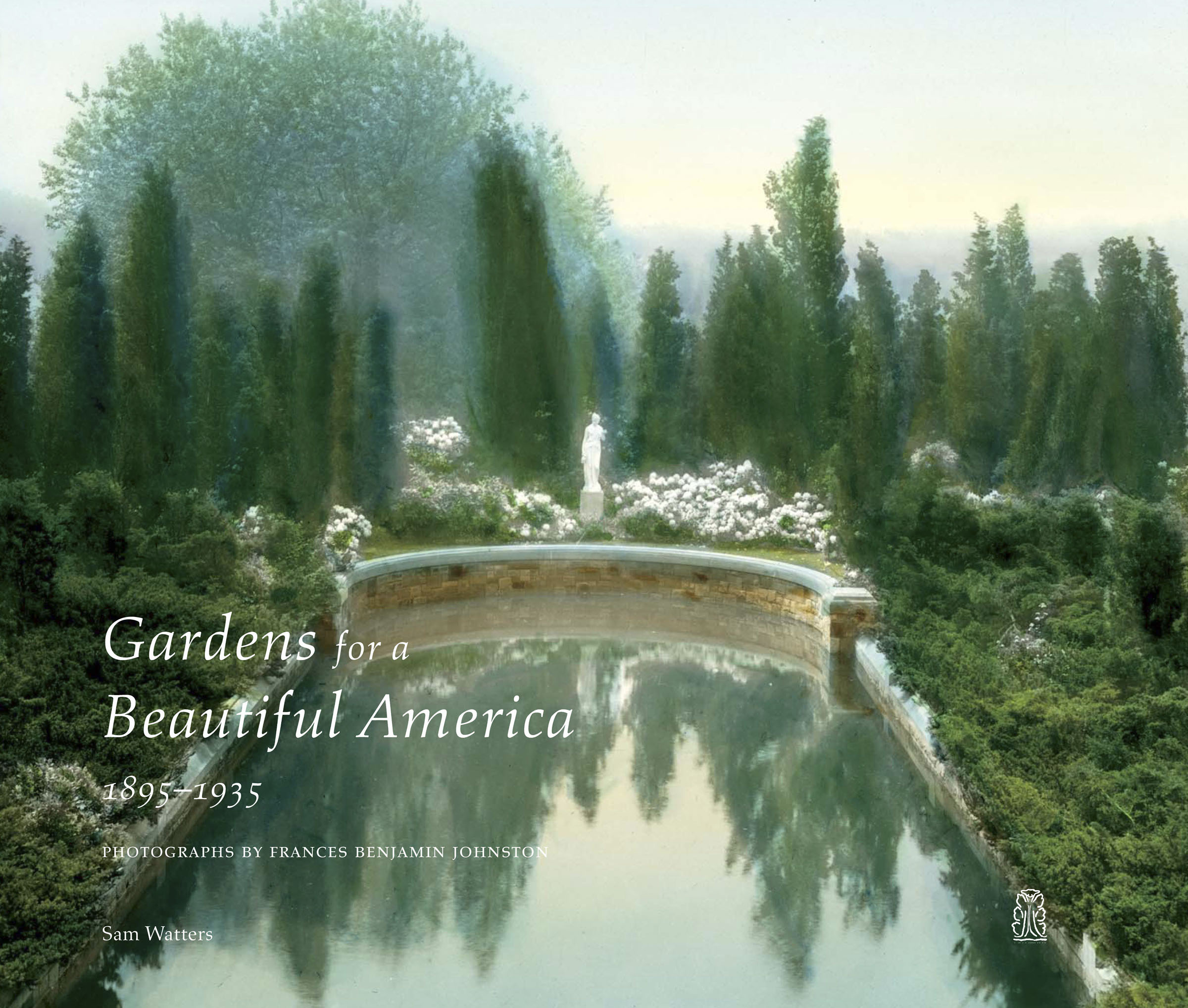
  • Monday, October 29, 9:30 am or 7:00 pm – Gardens for a Beautiful America

    Monday, October 29, 9:30 am or 7:00 pm – Gardens for a Beautiful America

    At the opening of the 20th century, pioneering photographer Frances Benjamin Johnston (1864 – 1952) was front and center in the movement to beautify America. Gilded age industrialism had brought a new prosperity to life in the United States, but at the price of once pristine forests, rivers, and clear air. In response, the Garden Beautiful movement began. Johnston, a progressive and perhaps one of America’s first “house and garden” photojournalists, was enlisted to photograph gardens from coast to coast. Historian Sam Watters will reveal a sampling of Johnston’s images for lectures delivered across America to advance the Garden Beautiful movement. He will speak about her as an artist and the relevance of her work as a cultural history collection. Over the course of 5 years, historian Sam Watters scanned through millions of books and magazines to match Johnston’s unlabeled hand painted glass garden slides (now in the collection of the Library of Congress) to the sites they depicted, bringing them to light again after more than 70 years, and showing them as a collection of significance in his new book Gardens for a Beautiful America.

    The morning lecture will take place at the new Weld Hill Research Building, 1300 Centre Street in Roslindale, and optional tours of the building will be available at 9:30 am for those registered for the morning lecture. For those unable to attend in the morning, an evening session will be held in the Hunnewell Building, 125 Arborway in Jamaica Plain. Due to space considerations, limited spaces are available for both lectures, and early registration will be encouraged. Co-sponsored by The Garden Club of the Back Bay with Arnold Arboretum of Harvard University, Friends of Wellesley College Botanic Gardens, Photographic Resource Center at Boston University, and The Garden Conservancy.  Garden Club of the Back Bay members will receive written notification in the mail.  All others may register at www.arboretum.harvard.edu.  Fee to the public  is $20 through October 15, and $25 thereafter.

  • Mondays, October 1 – December 3, 7:00 pm – 2012 Food & Science Lecture Series

    Members of the public are invited to attend a series of lectures by world-class chefs and food experts, inspired by the Harvard College General Education course “Science and Cooking: From Haute Cuisine to the Science of Soft Matter.”

    The lectures, while related to the course, are not a replication of the course content.

    All talks will take place in the Harvard Science Center at 1 Oxford Street, Cambridge, MA (unless otherwise noted).
    All talks will begin at 7 p.m..

    Each talk will begin with a 15-minute lecture by a member of the course staff, which will discuss one of the scientific topics from that week’s class.
    Seating for all lectures (except the ticketed lecture with Ferran Adrià on December 3) is first come, first seated. In previous years, many of the talks were already full before they started, but we have a larger lecture hall this year, and can therefore accommodate more people.
    Questions regarding the public lecture series: candujar@seas.harvard.edu
    Lectures will be available for viewing live online. Watch the live stream. Past archives are available at http://video.isites.harvard.edu/liveVideo/liveView.do?name=Science_Cooking_2012
    Science and Cooking aprons will be available for purchase at all public lectures for $15 (cash or check).  More details may be found at www.seas.harvard.edu/cooking

    The schedule:

    October 1: Fina Puigdevall and Pere Planaguma of Les Cols, and Paco Perez of Miramar.

    October 8: Raul Balam Ruscalleda of Moments.

    October 15: Jose Andres, of Think Food Group, minibar, and Jaleo (also an Iron Chef)

    October 22: Wylie Dufresne of wd-50, and Top Chef Masters

    October 29 – Dan Barber from Blue Hill Farm

    November 5 – Joanne Chang of flour bakery

    November 12 – Jack Bishop, Editorial Director at Cook’s Illustrated and an editor on The Science of Good Cooking, with his associate editor Dan Souza

    November 19 – Nathan Myhrvold, former Microsoft CTO, co-founder and CEO of Intellectual Ventures, and author of the massively expensive Modernist Cuisine: The Art and Science of Cooking (image below)

    November 29 – David Chang of momofuku and Carles Tejedor of Via Veneto

    December 3 – Ferran Adria, elBulli Foundation

    Harvard thanks sponsors Alicia Foundation, Think Food Group, Whole Foods Market, and Xertoli.


  • Saturday, September 29 – Cockroaches Mini-Exhibit Opening

    These adaptable arthropods are some of the oldest land-living animals on Earth. They thrived in lush coal forests 300 million years ago, survived multiple mass extinctions, and today encompass 4,500 species, including some of the most beautiful and colorful insects on the planet. Nurturing parents, these insects often carry and protect their young, and some species even feed them with a kind of “milk” made from their own bodies! Who are they? The answer may surprise you. They’re cockroaches!

    You’ve already heard the negative propaganda. Now come learn the real and amazing truth about these much maligned and misunderstood insects in a new mini-exhibit at the Harvard Museum of Natural History.

    The exhibit is the latest installment in the museum’s Exploring Diversity series in the exhibition Arthropods: Creatures that Rule. It opens to the public on Saturday September 29, 2012. The Harvard Museum of Natural History is located at 26 Oxford Street, Cambridge, MA, a 7-8 minute walk from the Harvard Square T station. The Museum is handicapped accessible. For general information please call 617 495 3045 or visit www.hmnh.harvard.edu.

    With a mission to enhance public understanding and appreciation of the natural world and the human place in it, the Harvard Museum of Natural History draws on the University’s collections and research to present a historic and interdisciplinary exploration of science and nature. More than 198,000 visitors annually make it the University’s most-visited museum.  Image from www.godofinsects.com.

  • Thursday, September 27, 4:00 pm – Science & Advocacy: The Legacy of Silent Spring

    Fifty years ago, Rachel Carson’s Silent Spring brought concerns about the environmental impact of pesticides to a broad public audience, spawning a grassroots environmental movement that continues to this day. On Thursday, September 27, beginning at 4 pm at Sanders Theatre, 45 Quincy Street in Cambridge, join environmental leaders to explore the legacy of Silent Spring, and how science and advocacy interact in the face of our modern environmental challenges. This event is sponsored by the Harvard University Center for the Environment. The discussion will feature:
    Frances Beinecke, President, Natural Resources Defense Council
    Bill McKibben, Writer, activist, community organizer
    Andrew Revkin, New York Times and Pace University

    With Harvard Faculty:
    William Clark, Harvard Kennedy School
    Rebecca Henderson, Harvard Business School
    Sheila Jasanoff, Harvard Kennedy School
    James McCarthy, Faculty of Arts and Sciences
    John Spengler, Harvard School of Public Health

    Moderated By:
    Daniel Schrag, Faculty of Arts and Sciences; School of Engineering & Applied Sciences

    Event is free; tickets required. Tickets are available starting on day of event. Tickets available starting at noon on day of the lecture at the Harvard Box Office in the Holyoke Center at 1350 Massachusetts Avenue and starting at 2PM at Sanders Theatre. Available by phone and online  (www.my.arboretum.harvard.edu) for a fee.