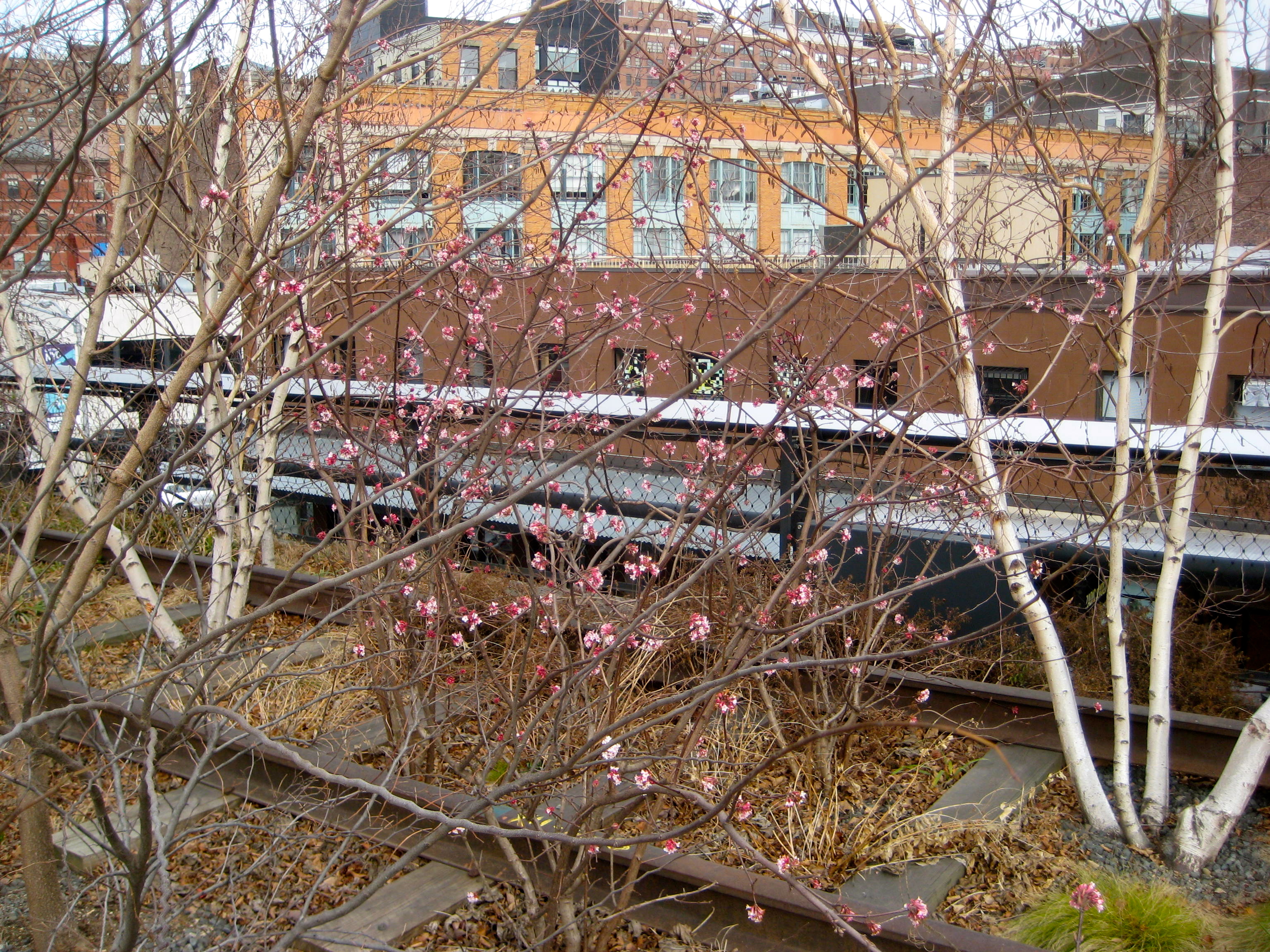
Tag: High Line

  • September 13, 10:00 am – 11:30 am – Editing the Garden – Advice from the High Line

    Hollister House Garden, 300 Nettleton Hollow Road in Washington, Connecticut in the Berkshires, will present Editing the Garden – Advice from the High Line with Yuki Kaneko on September 13 at 10 am. A naturalistic garden does not necessarily mean it is wild or low maintenance – it flourishes through intentional care and thoughtful curation. Learning to edit your garden is a crucial part of this process. Join Yuki Kaneko of New York City’s High Line for an exploration of the principles and practices of maintaining and enhancing naturalistic gardens. Learn editing strategies that preserve design clarity while managing dynamic plant communities. Get expert guidance for selecting plants that emphasize texture and structure for four-season interest. Help foster biodiversity in your own garden with a naturalistic aesthetic that changes seamlessly through the seasons. Autumn is the perfect time to make thoughtful edits that will keep your garden vital, evolving and looking its best.

    HHG Members $30. Non-members $40 (includes admission to the garden). Register at https://hollisterhousegarden.org/event/editing-the-garden-advice-from-the-high-line/.

    Yuki Kaneko is the Senior Horticulture Manager at the High Line in New York City, overseeing a naturalistic landscape designed by Piet Oudolf. Yuki holds an MFA from Tara Art University in Japan where she was born, and was awarded the Blanchette H. Rockefeller Fellowship to study in the United States. Yuki studied horticulture and botany through New York Botanical Garden’s certificate program and further trained as a horticulturist through a John Nally Internship at Wave Hill. She is an author and has also translated a number of nature themed Japanese children’s books into English.

  • Friday, December 7, 8:00 am – 5:00 pm – 2018 Ecological Plant Conference

    Brooklyn Botanic Garden is host to the Ecological Landscape Alliance (ELA) third annual Ecological Plant Conference at Brooklyn Botanic Garden, Brooklyn, New York. Join us on December 7 from 8 – 5 as five plant masters discuss a few valuable plants at length, from native perennials to under-story heroes to top performing trees. Cultivation, propagation, behavior, and ecological function will be highlighted, with an emphasis on plant communities. Presenters will delve into the interactions between individual plants and the complex interactions among plant communities, as well as interactions with the plant’s environment.

    Noted plant masters Carol Gracie, Andi Pettis, Laura Hansplant, Bill Logan, and Don Leopold will lead this rare opportunity to delve into the world of plants.

    This conference is an opportunity for professional gardeners, horticulturists, landscape architects, and designers to explore deeply the cultivation of the plants professionals in the Northeast work with every day. Speakers will share their expertise with plant selection, pruning techniques, and long-term plant care, offering the necessary information to grow and create healthy, dynamic, and beautiful plant communities. Morning coffee and catered lunch are included with registration. $119 for ELA members, $139 for nonmembers. Register at http://www.ecolandscaping.org.

    The High Line’s Urban Nature: Tenacious Plants for Tough Places
    ~Andi Pettis

    The High Line’s renowned plantings are inspired by the natural landscape that grew wild there, before the elevated rail line was transformed into a New York City public park.
    In this talk, Andi Pettis will present some of the toughest plants growing on the High Line, both the cultivated species and some of the plants that grew wild on the rail tracks, spontaneously and without any care or thought from human beings. She will explore how we can study the spontaneous nature in urban environments in order to glean lessons about the tenacity of plants, and how we can apply those lessons to our ecological landscapes.

    Pioneering Higher Ground – Explorations in Designing Rooftop Habitats
    ~Laura Hansplant

    Why can native volunteer plants thrive on green roofs while the same intentional plantings fail? How can rooftop landscapes support urban habitat with the same resilience as sedum roofs? What lessons can we learn for on-ground landscapes? Rooftop environments offer unique opportunities for urban habitat. The ecology of these plant communities parallels natural, thin-soil environments but also presents some important functional differences. In this session, Laura Hansplant compares alternative design approaches to establishing meadows on green roofs based on observations of plant community dynamics and tracking plant performance at pilot projects over the past fiver years.

    The Thousand Year Wood: Past, Present and Future of People and Oaks
    ~William (Bill) Bryant Logan

    Oaks and people have been intimately related since the Mesolithic, at the latest. Bill will sketch the long history of that relationship, including the many things that oak taught us. We will look from Japan, to Europe, to California, considering the intimate relationship between people and oaks. He will look at the present possibilities for planting and maintaining oaks in the landscape, considering the preferences of different species and where they are best placed in the landscape. Finally, Bill will examine the current threats to oak trees from newly-arrived pathogens and discuss how these potential problems should adjust the way we plant and care for oaks.

    Native Wildflowers – Beyond Their Beauty: How They Integrate into the Environment
    Carol Gracie

    Although the beauty of local wildflowers enhances our enjoyment of the outdoors in summer, a look behind the flowers’ beauty reveals the important roles that they play in the ecology of our northeastern environment. Carol Gracie look at how the plants have adapted to their habitats, their role as a food resource for insects, their methods of dispersal, and some of their uses by humans as medicines, foods, and dyes. Our native wildflowers also provide easy-care beauty in our home gardens.

    Native Plants and Natural Plant Communities for Difficult Sites
    ~Donald (Don) J. Leopold

    An expert on native species, Don Leopold will go into depth of native herbaceous and woody species that are no maintenance, long-lived, adapted to extreme conditions (e.g., salinity, alkalinity, drought, shade), attract wildlife (especially birds and butterflies), are deer-proof, and/or produce food for people. Native species for the most challenging sites will be highlighted. The ecological role of these species in their natural communities and how these assemblages of species can be used for home gardens as well as urban projects and larger scale restoration of degraded industrial landscapes will also be covered.

    Image result for Sprout Lands William Bryant Logan

  • Wednesday, November 14, 6:30 pm – 9:00 pm, and Thursday, November 15, 12:00 noon – 1:30 pm – The Veronica Rudge Green Prize in Urban Design: The High Line

    Please join The Harvard Graduate School of Design for two days of events in conjunction with the 2017 Veronica Rudge Green Prize in Urban Design, awarded to the High Line. The events begin Wednesday, November 14 at 6:30 PM with remarks in the GSD’s Piper Auditorium followed by a reception in the Druker Design Gallery to celebrate the opening of the exhibition. Thursday, November 15 from 12:00 – 1:30 PM, the GSD will host a panel discussion exploring the enduring impact of The High Line.

    The 13th Veronica Rudge Green Prize in Urban Design has been awarded to the High Line in New York, designed collaboratively by James Corner Field Operations, Diller Scofidio + Renfro, and Piet Oudolf. The prize committee has elected to allot the monetary prize of $50,000 associated with the award to Friends of the High Line, in recognition of the organization’s originating efforts and continued stewardship behind the project.

    The High Line, a linear public park built on elevated freight rail on Manhattan’s West Side, has been hailed as a model of urban regeneration and of collaboration across fields and perspectives. In summarizing the deliberation process, the Green Prize jury noted that a great urban-design project is one where multiple actors spanning public and private domains are involved in and committed to lasting urban change. For complete information visit http://www.gsd.harvard.edu/event/the-veronica-rudge-green-prize-in-urban-design-the-high-line/

    Image result for veronica rudge green prize in urban design

  • Wednesday, September 12, 5:30 pm – 6:30 pm – Island Hopping: Landscape Design Lessons from Manhattan to Maine

    Patrick Cullina is an award-winning horticulturist, landscape designer, photographer, lecturer, and planning consultant with nearly twenty-five years of experience in the landscape and green infrastructure fields. The Polly Hill Arboretum, in conjunction with SBS:The Grain Store, are pleased to host Pat for a September 12 lecture at PHA, in which he will discuss design lessons through the lens of his current work. His talk will cover site design and plant and material selection with a particular focus on current projects in New York City, along Boston Harbor, on Long Island, and on a private island off the coast of Maine. Topics will include ecological inspirations from the coastal plain and other maritime environments and the roles they play in design choices.

    Pat has served as founding V. P. of Horticulture and Operations for New York City’s High Line, as Brooklyn Botanic Garden’s V.P. of Horticulture, Operations & Science Research and as Associate Director of the Rutgers University Gardens in affiliation with the school’s department of landscape architecture and the College of Agriculture and Environmental Science. His current practice is dedicated to the creation, development, establishment and maintenance of transformational living landscapes through the innovative integration of plants and management strategies, often in collaboration with some of the world’s leading architects, landscape architects and planners.

    The lecture begins at 5:30, and is $5 for PHA members, $10 for nonmembers. Call 508-696-9426 to register in advance.

    Image result for Patrick Cullina

  • Wednesday, May 2, 7:00 pm – 8:30 pm – Evoking Nature: Form and Function on the High Line

    Wednesday, May 2, 7:00 pm – 8:30 pm – Evoking Nature: Form and Function on the High Line

    The High Line in Manhattan was born of a city that is constantly reinventing itself. Built on a mile-and-a-half long elevated railroad, this dynamic landscape was inspired by the tenacity of plants in its industrial setting, and it uses a matrix of perennial and woody plants to evoke a natural landscape. Wildly successful and overwhelmingly popular, caring for this garden in the sky poses unique challenges. Andi will describe how her team uses traditional and innovative horticultural techniques, how they work to promote the park’s biodiversity and wildlife habitat, and how they foster an emotional connection to nature in this challenging urban environment.

    As Director of Horticulture for the Friends of the High Line, Andi Pettis leads a world-class team of gardeners who care for this beloved elevated park in Manhattan. Andi’s horticulture career in New York City spans nearly two decades, including work in both private and public garden settings, park management, and teaching at the New York Botanical Garden. Join Grow Native Massachusetts on Wednesday, May 2 at the Cambridge Public Library, 449 Broadway, at 7 pm for a free lecture featuring Andi Pettis. For more information visit http://www.grownativemass.org/programs/eveningswithexperts. Photo by Liz Ligon of Ms. Pettis carrying a tote bag designed for the Friends of the High Line by Diane von Furstenburg.

  • Thursday, September 21, 1:00 pm – 4:30 pm – The Foundation of Our Landscapes: Understanding Site Analysis and Soil

    Soil is vital. Often geologic history can be seen in soil profiles, and in this lecture by John Swallow, we will be focusing in on the unique conditions present at our site, Great Hall Lodge at Cedar Hill Girl Scout Camp, 265 Beaver Street in Waltham. He will also outline the different types of organic matter that are present in soils, explain why different soils hold varying levels of moisture, and examine the impact of microbes on soil. This workshop will also include a review of proper techniques for collecting soil samples, instruction on how to interpret standard soil analyses, and an examination of the hidden history revealed by the profile of a soil pit dug at our garden. The class will take place on Thursday. September 21 beginning at 1 pm.

    John Swallow is a Principal and co-founder of Pine & Swallow Environmental, a renowned landscape-engineering firm that has created soils for Lusitania Field at Fresh Pond in Cambridge, the Brooklyn Botanic Garden, the High Line in NYC, and many other projects around the world. He holds a PhD in Organic Chemistry from the Massachusetts Institute of Technology.

    Grow Native Massachusetts members $38, nonmembers $48. For more information, visit us at http://grownativemass.org/programs/workshops, or call 781-790-8921.

  • Tuesday, June 9 – Sunday, June 21 = Discovering Gardens in the Netherlands

    The American Horticultural Society announces an upcoming tour June 9 – 21 entitled Discovering Gardens in the Netherlands.  Visit the private garden of Piet Oudolf, one of the world’s most influential and innovative garden designers, whose credits include the High Line park in New York City and Lurie Garden in Chicago.  See the colorful world-famous flower auction at Aalsmeer.  Experience gardens that represent the best in Dutch horticulture, and discover how they have inspired gardens around the world.  Hosted by AHS Board member Jane Diamantis and her husband George, and tour leader Susie Orso of Specialtours, this is a journey you won’t want to miss.  For more information visit www.ahs.org/gardening-programs/travel-study, or contact Eleanor Nelson at enelson@ahs.org, telephone 703-768-5700, ext. 132. Image of Aalsmeer flower auction from www.tripadvisor.com.

  • Saturday, October 19, 9:00 am – 11:00 am – The High Line

    Saturday, October 19, 9:00 am – 11:00 am – The High Line

    Located in the heart of Manhattan’s lower west side, the High Line has become one of the most popular park-gardens in New York City.  This unique park is the restoration of a 1.45 mile section of the former elevated New York Central Railroad West Side Line.  Inspired by Paris’ Promenade Plantee, this aerial greenway currently extends from Gansevoort Street to 30th Street.

    Through collaborative efforts started in 1999, Friends of the High Line successfully preserved and transformed this extraordinary public space.  Owned by the City of New York, The High Line is maintained by the non-profit High Line Conservancy working with the New York City Department of Parks & Recreation.  With Phase 1 and Phase 2, opened in 2009 and 2011 respectively, the Friends of the High Line are actively working toward the third and final section, which would run between West 30th and West 34th Streets.

    The restoration began with removal of everything down to the steel and concrete structure, in order to safely accommodate the public.  The public space blends plant life (inspired by the self-seeded landscape that once grew on the abandoned track) with long walking paths, a water feature, viewing platforms, a sundeck, and gathering areas for performances, art exhibitions and educational programs. The majority of the plant species in the design of Section 1 are native to New York.

    Join Tom Smarr, Director of Horticulture at the High Line, for an insider’s view of the High Line’s sustainable design elements such as the re-purposing of industrial infrastructure as public green space; the green roof design function that uses porous pathways to allow stormwater to irrigate adjacent planting beds, and the use of native plants to enhance habitat value and contribute to urban habitat corridors.  Tom will explain the ecological management practices and will discuss High Line successes and challenges.  This tour, scheduled for Saturday, October 19 from 9 – 11 in New York (rain or shine) is sponsored by the Ecological Landscaping Association and costs $20 for ELA members, $25 for nonmembers.  For more information email ela.info@comcast.net. Advance registration is required.

    IMG_8797

  • Wednesday, March 6, 10:00 am – New York Garden Spaces

    Maureen Bovet presents the green side of the Big Apple to The Garden Club of the Back Bay on Wednesday, March 6, beginning at 10 am at The College Club, 44 Commonwealth Avenue in Boston. This photo show explores the wonderful public parks of New York City. Maureen was born and raised in NYC and her passion for gardening began there. She offers a unique view of the green spaces available to be enjoyed by natives and visitors alike. The history and the horticulture of these parks are illustrated by beautiful slides from her collection. Included are Wave Hill, the garden at The Cloisters, Olmsted-designed Central Park, with its 70-year-old Conservatory Garden, the new High Line Park modeled on a Paris railroad bed reuse, The New York Botanical Garden, and Battery Park at the tip of Manhattan looking out at the Statue of Liberty. She will discuss garden design and plant cultivation along with the fascinating history of these parks. Maureen is a Museum Associate at the MFA on the Flower Team, a graduate of Wellesley College, and a former student at the Arnold Arboretum Landscape Institute and the UMass Green School.  An optional lunch ($20) will follow the presentation.  Free to GCBB and College Club members, $5 contribution requested from nonmembers.  If you wish to attend, please email info@bostonflora.com to put your name on the list.

  • Wednesday, October 3, 7:30 am – 7:30 pm – The High Line: An Extraordinary Urban Space

    Join gardener extraordinaire Robin Wilkerson for a day trip to the remarkable High Line in New York City on Wednesday, October 3.  The garden is built on a formerly abandoned mile and a half of elevated railroad line.  Both the hardscape and the plant material are informed by the structure’s history as a rail bed.  Native oaks, sassafras, sumacs, and an array of ornamental grasses are just a few of the plants rarely encountered in public gardens, but among many of the outstanding plant choices.  A High Line docent will lead this Friends of Wellesley Botanic Garden, Arnold Arboretum of Harvard University, and New England Wild Flower Society tour.  There will be time for lunch and exploration on your own.  Don’t miss this chance to see and experience what has quickly become one of the world’s great urban wonders.  Fee ($120 for members of the sponsoring organizations, $145 for non-members) includes private coach with restroom, snacks, box lunch and guided tour.  Bus departs Garden in the Woods, Framingham, at 7:30 a.  To register, visit www.wellesley.edu/wcbgfriends.