Tag: Mass Hort

  • Wednesday, March 10, 10:00 am – 11:30 am – Ornamental Meadow Gardens, Online

    This Massachusetts Horticultural Society online lecture on March 10 from 10 – 11:30 explores using native plants in an ornamental way to create dynamic, stunning meadow gardens. Layout techniques echoing the way plants communities intermingle will make your flowering planned meadow garden looks cohesive and natural. Choice plants will be highlighted. $16 for Mass Hort members, $23 for nonmembers. Register at www.masshort.org

    Maria von Brincken, principle of Maria von Brincken Landscape Garden Design, is an award-winning certified designer (APLD and LI) celebrating her 21st year in professional practice. Maria specializes in custom beautiful spaces and colorful flower gardens using native and ornamental plants.

    Trained as a fine artist, color theorist, and organic gardener Maria brings years of critical design thinking to her landscape solutions. Her design has been featured in Fine Gardening Magazine, Landscape Ideas You Can Use and others. 

    Her lectures and workshops have been featured at Mass Hort, Boston The Flower Show, Radcliffe Seminars and the LI, Conn. Master Gardener’s Conference, Perennial Plant Conference, ELA – just to name a few. Her lectures, classes, and workshops teach successful ways of thinking and techniques. Learn more about Maria and her work at www.mariavonbrincken.com

  • Tuesday. February 23, 10:00 am – 11:30 am – Captivated by Trees: The Work of Rutherford Platt, Online

    Rutherford Platt’s captivation by trees, and his almost 40 year career as an esteemed, Burroughs Medal winning naturalist, writer, and photographer, was set in motion one winter day in 1929 when, to his astonishment, he noticed that flower and leaf buds were already present on the seemingly bare branches of trees. Through an exploration of Platt’s life and work we will share his delight for trees, broaden our perceptions through ranges of time and scale, and discover the functional advantages of the distinct characteristic of trees as they grow, reproduce, and interact with their environment.

    This Massachusetts Horticultural Society webinar is instructed by Michael Wojtech on February 23 from 10 – 11:30. $25 for Mass Hort members, $37 for nonmembers. Register at www.masshort.org.

    As a naturalist, writer, photographer, illustrator and educator, Michael strives to share the science and beauty of natural history in an accessible and compelling fashion. He writes and teaches about the fascinating structure, function, and ecology of trees—including their bark, buds, leaves, roots, and wood—for audiences at all levels of experience, and explores how knowing the natural history of the places we live and love fosters connection and the feeling of home. Michael earned his Master’s Degree in Conservation Biology from Antioch University New England and is the author of Bark: A Field Guide to Trees in the Northeast and co-author of Drawing Trees and Leaves.

    To find out more about Michael, a past Garden Club of the Back Bay presenter, and his works check out his website at http://knowyourtrees.com

  • Tuesday, February 16, 10:00 am – 11:30 am – A Piet Oudolf Story, Online

    The first half of Deborah Chud’s Piet Oudolf Story traces her discovery of Piet Oudolf’s work, her research on his plant combinations, and her use of that research to create a garden in his style. The second half covers the historical context in which he emerged as a landscape designer and his basic principles of landscape design. Visit her Instagram, @pietgarden, to get a glimpse into her work. 

    The Massachusetts Horticultural Society presents this virtual lecture on February 16 from 10 – 11:30 am. $10 for Mass Hort members, $17 for nonmembers. Register at www.masshort.org.

    Deborah Chud is a retired physician who took up gardening in June of 2016.  The database resulting from her 5 years of research on Piet Oudolf’s plant combinations  constitutes the most comprehensive record of his juxtapositions across all gardens documented in his books. She recently presented her research at an international symposium (“Piet Oudolf: How Does He Do It?”) organized by Noel Kingsbury, under the aegis of gardenmasterclass.org. She is a member of the Perennial Plant Association and currently works a landscape design consultant and educator in the Boston area.  

  • Thursday, February 11, 7:00 pm – 8:30 pm – Growing Small Fruits in Your Backyard, Online

    This Massachusetts Horticultural Society class on February 11 from 7 – 8:30, online, is for those who want to grow small fruits in their backyard or on small commercial fruit farms. Growing blueberries, brambles, strawberries, or currants in your backyard can be rewarding and fun. This class will provide an overview on how to successfully grow these attractive fruits in your home landscape, be it a rural, suburban, or urban lot for ornamental purposes and for fruit production.

    Instructed by J. Stephen Casscles, Esq.

    J. Stephen Casscles is a government lawyer with over 35 years of experience in New York State and municipal government. He has dedicated his life to public service and has practiced law in a broad range of areas such as health, insurance, alcoholic beverage control, gaming, agriculture, economic development, municipal finance, and land-use law. 

    An enthusiastic viticulturalist, Stephen has a 12-acre farm in Athens, NY, called Cedar Cliff, where he cultivates over 110 different French-American hybrids, 19th Century heritage grape varieties from the Hudson Valley and Massachusetts, and own rooted chance hybrids that he evaluates, makes wine from, and lectures about. In addition, he lectures on wine, grape cultivation, 19th century American horticulture and landscape architecture at botanical gardens and historical societies throughout New York and New England. Mr. Casscles operates a small grape nursery that specializes in propagating rare French-American hybrids, 19th Century heritage grape varieties developed in the Hudson Valley, Boston’s North Shore, the rest of New England, and own rooted chance hybrids identified at his farm Cedar Cliff. He is an award-winning winemaker who currently works at Sabba Estate Vineyards, in Old Chatham, NY and formally of the Hudson-Chatham Winery in Ghent, NY (2007-2019) and his wines been covered by The New York Times, The Wall Street Journal, The Wine Enthusiast, New York Post, Hugh Johnson’s Annual Pocket Wine Book (2021), and The Albany Times-Union. 

    As a regional historian, Stephen authored Grapes of the Hudson Valley and Other Cool Climate Regions of the United States and Canada, which details the history of the Hudson Valley fruit growing industry, how to make wine, establish and maintain a vineyard, and the growing characteristics of over 170 cool climate grape varieties. He is currently working on two new books, The Prince Family Nurseries of Flushing, NY (1720-1869) and The Life and Times of E. S. Rogers and the Heritage Grapes of New England. 

    In addition to his full length works on grape varieties, grape cultivation, and 19th century horticulture,  Stephen is a frequent contributor to academic and trade journals such as Arnoldia of the Arnold Arboretum of Boston, MA, Fruit Notes of U. Mass Amherst, Horticultural News of Rutgers University, Wine Journal of the American Wine Society, New York Fruit Quarterly of the NYS Horticultural Society, and the Hudson Valley Wine Magazine

    As a culmination of his horticultural pursuits, Stephen advises and lectures at the Fermentation Sciences Program at SUNY at Cobleskill, and has a working relationship with professors at U-1 University Youngdong, Korea, and with many in the Korean grape and wine industry. 

    Stephen can be reached at cassclesjs@yahoo.com or by cell at 518-755-5475. 

    $18 for Mass Hort members, $26 for nonmembers. Register at www.masshort.org

  • Wednesdays, February 10 & 17, 10:00 am – 2:00 pm, and Thursday, February 11, 10:00 am – 11:00 am – Designing the Winter Landscape

    Maria von Brincken will help you design an outdoor space that uses texture, color, and mass planting to create visual interest throughout the winter. Winter gardens also create a backdrop for seasonal flower gardens. Featuring the Massachusetts Horticultural Society’s Bressingham Garden, her design work, and others, Maria will introduce you to lay-out and plant lists that will inspire your garden planning during these cold months. There will be class time for you to experiment with winter planting combinations and layout that could work in your own gardens.

    This is a three day workshop, taking place virtually and onsite at The Gardens at Elm Bank. 

    Virtual Dates – February 10th & 17th, 10am-2pm

    On-Site Garden Visit – February 11th, 10-11am 

    Maria von Brincken, principle of Maria von Brincken Landscape Garden Design, is an award-winning certified designer (APLD and LI) celebrating her 21st year in professional practice. Maria specializes in custom beautiful spaces and colorful flower gardens using native and ornamental plants.

    Trained as a fine artist, color theorist, and organic gardener Maria brings years of critical design thinking to her landscape solutions. Her design has been featured in Fine Gardening Magazine, Landscape Ideas You Can Use and others. 

    Her lectures and workshops have been featured at Mass Hort, Boston The Flower Show, Radcliffe Seminars and the LI, Conn. Master Gardener’s Conference, Perennial Plant Conference, ELA- just to name a few. Her lectures, classes, and workshops teach successful ways of thinking and techniques.


    Learn more about Maria and her work at www.mariavonbrincken.com

    Mass Hort Members: $165 Non-Members: $205  Register at www.masshort.org

    Photo credit: Jolinda Taylor
  • Thursday, October 21, 7:00 pm – 9:00 pm – Introduction to Permaculture

    In a permaculture garden everything works together in synergy. A permaculture garden requires little to no irrigation, fertilizer, weeding and pest-control, but is nonetheless highly productive.

    For an example, strawberries growing under a new apple tree…

    1. Keep down weeds

     2. Are beautiful with their pretty white flowers

    3. Provide nectar for bees

    4.Provide delicious fruit. 

    A permaculture garden requires little to no irrigation, fertilizer, weeding and pest-control, but is nonetheless highly productive. It is also a natural habitat for wildlife, including pollinators and butterflies.  And, by the way, because it will improve your soil, it is a way to sequester some of that excess climate-harming carbon floating around. This October 21 Massachusetts Horticultural Society workshop at The Gardens at Elm Bank from 7 – 9 will introduce you to the basic principles permaculture, and give you practical ideas to implement in your own garden. Come and spend a few (masked) hours with us for an introduction to permaculture, an approach to growing fruits, nuts, herbs and vegetables that intentionally mimics patterns and relationships found in nature. Instructed by Anna (Babette) Wils, see her work in Needham, MA at Big Foot Edible Forest Gardens Mass Hort Member Cost: $15 Non-Member Cost $20. Register at www.masshort.org.

  • Saturday, October 3, 10:00 am – 12:00 noon, or Thursday, October 8, 6:30 pm – 8:30 pm – Dig, Divide & Store: Dahlias After Season

    Saturday, October 3, 10:00 am – 12:00 noon, or Thursday, October 8, 6:30 pm – 8:30 pm – Dig, Divide & Store: Dahlias After Season

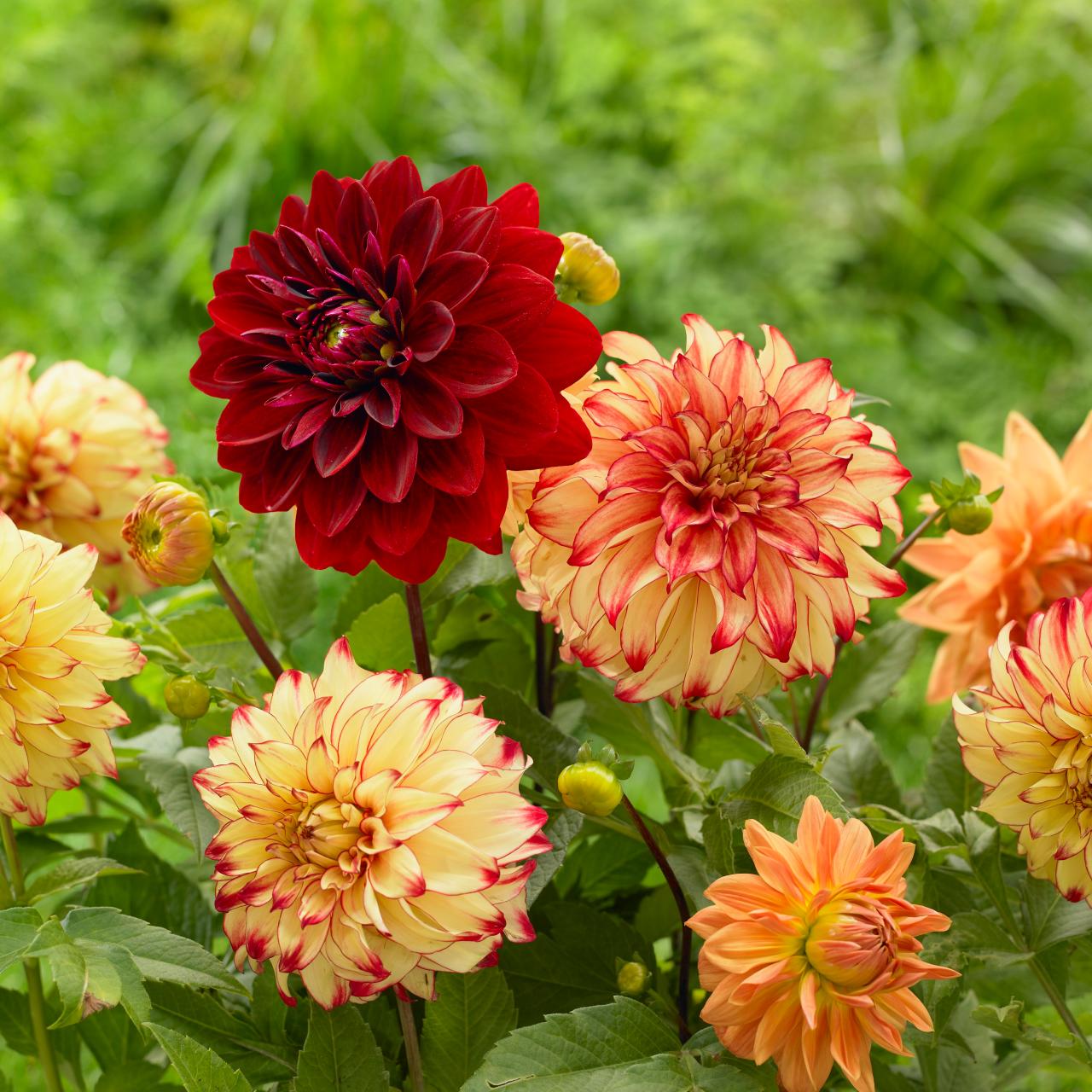
    Join Donna Lane, past president of the New England and Rhode Island Dahlia societies, for a hands-on workshop where you will learn when and how to dig your dahlias, how to divide your underground treasures, and the various methods of storing them over the winter months.

    There will be two optional sessions, October 3 from 10 – noon, or October 8 from 6:30 – 8:30, at the Gardens at Elm Bank, Putman Classroom, 900 Washington Street in Wellesley. Class size is small, preregistration and masks required.

    Donna Lane has been dabbling in dahlias since 1967. Like many others, she was given a plant by a co-worker and has been hopelessly hooked ever since. She advises people to persist if they have problems over-wintering dahlias. “I was frustrated because I had to buy new tubers each year, but I was determined to find a way to keep them from turning to mush. The way my co-worker stored them didn’t work for me,” she says.

    Her garden is a destination for numerous garden clubs during September. “I have a small dahlia patch compared to others in the Society,” Donna says.  “I only have room for about 150 plants, but I keep trying to squeeze in just one more every year.”  Of the 150 plants she grows, she has 120 different varieties.
    Read on at Rhode Island Dahlia Society.org

    Members $30 / Non-Members $50 Register at www.masshort.org.

  • Saturday, September 19, 10:00 am – 12:00 noon – Identify Your Landscape Plants

    This Massachusetts Horticultural Society live seminar will be a fast paced review focusing on the identification and placement of ornamental landscape plants & natives, to encourage sustainable landscape design practices. This offering will introduce species of the common native and non-native ornamental plants used in landscape architecture, horticulture, and urban forestry in New England. This seminar will approach plant identification from a horticultural perspective, covering basic plant morphology and botany to aid in the understanding of plant identification, also touching on the horticultural, cultural, and environmental requirements of each plant in relation to practical application. Instructor Nicole Forsyth will lead the class in the Cheney Classroom of the Education Building, 900 Washington Street in Wellesley, on September 19 from 10 – noon. $60 for Mass Hort members, $80 for the general public. Register at www.masshort.org or contact Allison Dash at 617-933-4973.

  • Tuesday, June 23, 10:30 am – 12:00 noon – Explore the Teaching Herb Garden

    Susan Leigh Anthony and Lucy Dean, members of The New England Unit of the Herb Society of America, will lead a program in The Teaching Herb Garden at The G3 from 10:30 – noon. They will point out several of their favorite plants, and share stories and methods of harvesting, history, lore and plant uses.

    The Teaching Herb Garden is divided into theme beds, which radiate from the center and include: fragrance, dye, culinary, native American, medicinal, edible plants and flowers, and a Colonial theme garden. A collection of Salvia plants was added in 2006. Along one side, a rectangular bed is planted with sweet violets and groundcover plants. On the opposite side of the garden, we feature the “Herb of the Year.” Another bed features an Ecumenical Garden. The plants in this garden have religious or symbolic importance in the five major religions, Buddhism, Christianity, Hinduism, Islam and Judaism. On either side of the teaching arbor, the beds are overflowing with roses and lavender and the perennial border is a visual delight. Planter/benches hold fragrant herbs that welcome visitors to touch and feel and to also smell the herbs.

    The Massachusetts Horticultural Society hopes you can join us for this program highlighting one of our most interesting gardens led by the people who maintain and care for it. At the end of the talk there will be a brief Herb Search for attendees. $15 for Mass Hort members, $25 for nonmembers. Register at http://masshort.org, or call 617-933-4973.

    Image result for Teaching Herb Garden Mass Hort

  • Saturday, May 16, 10:00 am – 12:00 noon – Identify Your Landscape Plants – Cancelled

    On May 15 at 10 am, join the Massachusetts Horticultural Society at the Gardens at Elm Bank, 900 Washington Street in Wellesley, for a botany and plant morphology review, and walk the grounds to learn how to identify common plants in your landscape.

    This seminar will be a fast paced review focusing on the identification and placement of ornamental landscape plants & natives, to encourage sustainable landscape design practices. This offering will introduce species of the common native and non-native ornamental plants used in landscape architecture, horticulture, and urban forestry in New England. This seminar will approach plant identification from a horticultural perspective, covering basic plant morphology and botany to aid in the understanding of plant identification, also touching on the horticultural, cultural, and environmental requirements of each plant in relation to practical application.

    Instructed by Nicole Forsyth, Norfolk County Agricultural High School Plant Science Instructor & Alumni. Workshop fee is $60 for Mass Hort members, $80 General Admission. Register online at www.masshort.org. In view of the continuing Covid-19 situation, please check the Mass Hort website for updated cancellation information before going.