Tag: Mount Vernon

  • Sunday, July 17, 4:00 pm – 5:30 pm – George Washington’s Mount Vernon, Online

    In the mid-18th century, George Washington purchased from a family member a small story-and-a-half wood frame house overlooking the Potomac River. Over the next four decades, he substantially rebuilt the house, reflecting his own evolving status from militia member to commander-in-chief of the Continental Army to the first president of the United States of America. 

    Historian Laura A. Macaluso traces the development of Mount Vernon from a traditional Virginia farmhouse to a splendid Georgian mansion decorated in color schemes done in the highest contemporary style. She covers highlights of the interior, including Washington’s painting collection of American waterways, the key to the Bastille, and his personal study, which reflects his love for technology, learning, and family.

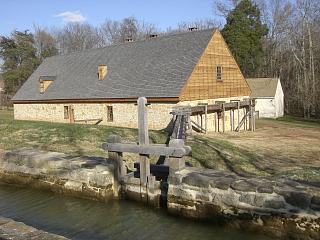
    Macaluso addresses the workings of Mount Vernon both as a house and as part of an 8,000-acre plantation on which more than 300 enslaved men, women, and children lived and worked. She looks at Mount Vernon’s outbuildings and sites where that work took place, including gardens, orchard, greenhouse, and its Pioneer Farm, as well as Washington’s tomb and the cemetery for the enslaved. Surveying the environs of Mount Vernon, she discusses Washington’s gristmill and distillery and other plantation sites such as Muddy Hole and Woodlawn, which was built for Washington’s nephew and Martha Washington’s granddaughter, who married.

    She also follows the estate’s history after the Washingtons’ deaths at the turn of the 19th century, Mount Vernon’s fall into disrepair, and how an organization of women came together to begin caring for what became the first historic house museum in the United States.

    Macaluso is a cultural heritage specialist and author of A History Lover’s Guide to Alexandria and Fairfax County. This July 17 webinar is presented through Smithsonian Associates, and is $25 for Smithsonian Associates members, $30 for nonmembers. Register at www.smithsonianassociates.org

  • Monday, May 23 – Friday, May 27 – Britannia in Virginia: Celebrate British Heritage and Washington’s Legacy

    This spring, join the Royal Oak Society as we explore America’s British roots in Virginia, the first, largest, and most prosperous of the original 13 colonies. George Washington notably considered Alexandria his hometown. Discover Washington’s life and legacy with extraordinary depth on exclusive guided tours of properties connected to his family. Ten miles south of Alexandria, enjoy an inside look at Washington’s legendary estate, Mount Vernon.


    The estate’s director will lead us on an enchanting candlelit private tour after hours. Washington’s great-grandfather, the English-born merchant John Washington, acquired the property in 1674, and you will chart Mount Vernon’s evolution over centuries, gaining an exclusive window into history from Britain’s colonial settlement of Virginia to the very birth of America.
    Other highlights of the 4-night program include access to historic homes, including properties representing the finest examples of English Georgian architecture on American soil. Stroll through their centuries-old private gardens with the expert guidance of horticulturists. On exclusive tours, step back in time at venues that have borne witness to some of the most consequential events in early American history. 

    JOIN the director of George Washington’s legendary estateMount Vernon, for an exclusive candlelit visit after public hours, and accompany the horticulturist for a private walk through the estate gardens
    MEET the library director on a behind-the-scenes visit to the Fred W. Smith National Library for the Study of George Washington at Mount Vernon, which is not open to the public, with an inside look at the Presidential Library Special Collections
    GATHER for a private champagne reception at the Presidential Librarythat features a tasting of George Washington’s whiskey, distilled on site according to the original recipe and methods
    DELIGHT in a private tour of George Washington’s River Farm, the 1653 property once owned by Washington and the headquarters of the American Horticultural Society, exploring the Manor House and strolling through the gardens with a horticulturist
    VENTURE behind the scenes of the 1753 Carlyle House when it’s closed to the public, and learn the history of this illustrious Georgian manor house, built by Scottish merchant John Carlyle, who founded the city of Alexandria
    ACCOMPANY a historian on a private walking tour through Alexandria’s Old Town, one of America’s most historically rich areas, with more than 200 pre-Revolutionary buildings, with special access to Lloyd House, an early American example of beautiful English Georgian architecture
    ENJOY an exclusive candlelit visit to Gadsby’s Tavern, the 1785 eatery that played host to all of the first five U.S. presidents, as well as Thomas Jefferson’s 1801 inaugural banquet, with a special candlelit dinner in one of the Tavern’s dining rooms
    EXPERIENCE a private, special-access opening to the (US) National Trust-maintained Woodlawn Plantation, an 1805 Georgian/Federal mansion, a gift from George Washington to his nephew and his bride.

    Download the brochure for full details HERE.

  • Wednesday, July 14, 1:00 pm – Great American Gardens: Monticello, Biltmore, Naumkeag, and More, Online

    Join garden historian and author Dr. Toby Musgrave online on a ‘Grand Tour’ showcasing America’s great and inspiring gardens, revealing their diversity and richness, and exploring their contribution to global garden art.

    We’ll explore a variety of gardens in a variety of locations and climates around the United States, each of which is open to the public and can be visited and experienced in person. From the eastern seaboard to the west coast; the cold, high Rockies to the tropical southeast; balmy California to hot, dry deserts; the warm, wet Pacific northwest to the Prairies and the cool northeast create the full spectrum of garden design possibilities. Ranging across historical periods and styles, we will visit well known (and lesser well-known) gardens around the country to reveal in broad terms the evolution of American garden design over time. Beginning with early Colonial gardens on the East Coast and Mission gardens in California, we will move on to English Landscape-style gardens and French Baroque influenced antebellum plantation gardens. As we move chronologically ahead, we will also study the opulence of the Beaux-Arts-inspired Country Place Era and how it evolved into the innovative “homegrown” styles such as Prairie Gardens. We will conclude with a look at modern and contemporary American garden design.

    Gardens featured include: Colonial Williamsburg, San Diego Mission, Mount Vernon, Monticello, Middleton Place, Rosedown Plantation, Biltmore, Dumbarton Oaks, Filoli, Innisfree, Longwood, Naumkeag, the Huntington Library, Untermeyer, Wave Hill, Longue Vue, Casa del Herro, J Irwin House and Garden, El Novillero, Lotusland, Sunnylands, Chanticleer, Chase Garden, Getty Centre, Hollister House and Windcliff.

    Led by an expert on gardens and garden history, Dr Toby Musgrave, this Context interactive seminar will showcase and celebrate America’s great and inspiring gardens. Designed to inform curiosity as well as future travels, participants will come away with an increased knowledge and understanding of America’s great garden heritage. $36.50. Register at www.contextlearning.com

    Dumbarton Oaks (Photo by Nikki Kahn/The Washington Post via Getty Images)
  • Tuesday, May 30 – Thursday, June 1 – Triennial Garden Symposium

    Join Mount Vernon for a unique opportunity to go behind the scenes and learn more about historic gardens and landscapes! The Triennial Garden Symposium, May 30 through June 1, features renowned speakers specializing in historic landscape exploration, preservation, and public interpretation. The symposium includes a private reception on the piazza, tours of the Mansion and newly opened Library, an elegant dinner in the Ford Orientation Center, and more behind the scenes experiences.

    This conference offers a broad scope of historic garden and landscape topics. Experts will examine, discuss and evaluate a wide variety of topics including, but not limited to: 18th-century bulbs, the search for lost gardens, maintaining plants throughout the winter, and the gardens of 18th-century Virginia. Tickets to this symposium are $250. The ticket includes meals and a private reception on the Mansion piazza.

    Featured experts include:

    Nicholas Luccketti is the Principal Archaeologist with the James River Institute for Archaeology in Williamsburg.

    Kent Brinkley is a Virginia native and an award-winning landscape architect, lecturer and author of The Gardens of Colonial Williamsburg, whose professional career spans over thirty years.

    William D. Rieley serves as the Landscape Architect for The Garden Club of Virginia, a position he has held since 1998.

    Scott Kunst is the owner of Old House Gardens, the country’s premier source for heirloom flower bulbs.

    Fiona McAnally examines issues of food policy, supporting groups such as the Tennessee Fruit and Vegetable Association and the Tennessee Food Policy Council, while pursuing her interests in southern garden history, food history, and agriculture.

    Wesley Greene founded the Colonial Garden and Garden Shop where costumed employees interpret 18th-century plants, tools and cultural technique and sell heritage plants, seeds, bulbs and garden related items.

    Jack Gary is the Director of Archaeology and Landscapes at Thomas Jefferson’s Poplar Forest, where he leads an interdisciplinary team of archaeologists and scholars in order to discover the site’s hidden landscapes.

    Peter J. Hatch is a professional gardener and historian with 38 years of experience in the restoration and interpretation of historic landscapes.

    Dean Norton has researched 18th-century landscape design and gardening practices at Mount Vernon for more than 35 years.

    For more information on registration and lodging options contact Melissa Wood at 703-799-5203 or email mwood@mountvernon.org.  Image from www.uncc.edu.

  • Wednesday, November 18, 12:30 pm – 2:00 pm – The Parks of Washington, DC

    Delight in the charms of gardens and parks on the Mall, in leafy Georgetown, and on the grounds of George Washington’s beloved Mount Vernon with garden designer and Wellesley College Botanic Gardens docent Maureen Bovet on Wednesday, November 18, beginning at 12:30 pm in the Botanic Garden Visitor Center.  Maureen’s photos and stories will take you on a tour of the green side of the nation’s capital.  WCBG members free, non members $10.  Call 781-283-3094, or visit www.wellesley.edu/wcbgfriends.  Photo by Maureen Bovet.


  • Monday, February 23, 6:00 pm – Whiskey in America

    Drawing from the archaeological records of known whiskey production sites, Mount Vernon Assistant Director for Archaeological Research Luke Pecoraro will offer a brief introduction to distilled products made in colonial America, with specific reference to George Washington’s distillery. A five-still commercial operation on one of Washington’s farms from 1797 to circa 1802, the distillery burned to ground in 1814, and was lost until re-discovered by Mount Vernon archaeologists in 1997. Intensive excavations uncovered the entire structure, revealing information about the layout of the stills, drains, and living quarters, and sparking renewed interest in spirits distillation in America. A generous grant from the Distilled Spirits Council of the United States (DISCUS) helped enable reconstruction of the distillery, which is completely operational—one of the few places where whiskey is made just as it was in the early Republic. The recipe for Washington’s whiskey survives, and is faithfully reproduced in small batches, twice a year, at the distillery (pictured below.) Following the lecture on Monday, February 23, beginning at 6 pm, five whiskeys are offered for tasting. The Boston University free event, part of the Pepin Lecture Series in Food Studies and Gastronomy, will be held in Room 117 at 808 Commonwealth Avenue, Brookline. Enroll at www.bu.edu/foodandwine.