Tag: Nature Conservancy

  • Wednesday, March 19, 12:00 noon – 1:00 pm Eastern – From Beijing to Europe: Chinese Gardens and the Rise of Chinoiserie, Online

    In a special three-part virtual series for the Garden Conservancy this winter, Professor Andrew Hui explores fascinating yet overlooked history of the Western Gardens at the Chinese Emperor’s Summer Palace in the eighteenth century. Over the course of three episodes, he will explore the unexpected story of how these vast gardens came to be designed by Jesuit priests and how they influence the development of Europe’s own gardens.

    Part 3: From Beijing to Europe: Chinese Gardens and the Rise of Chinoiserie

    March 19, 2026 I 12 noon Eastern

    While Jesuits introduced European designs to the Qing court, Chinese gardens themselves profoundly shaped Europe. Jesuit letters back to Europe described landscapes of winding paths, asymmetry, and surprise, a sharp contrast to Versailles’ rigid geometry. These ideas—captured in the English neologism “sharawadgi”—helped spark the English landscape movement and a wave of chinoiserie across Europe. This final lecture traces the paradox: the Summer Palace absorbed European mazes and fountains, even as Europe reimagined itself through the Chinese garden. Together, these exchanges reveal gardens as a global art form in the early modern world.

    Andrew Hui teaches at National University of Singapore and is the author of three books: The Study: The Inner Life of Renaissance Libraries (2025), A Theory of the Aphorism from Confucius to Twitter (2019, translated into 4 languages), and The Poetics of Ruins in Renaissance Literature (2017). His newest project is The Emperor’s Maze: The Jesuits in China and the Making of a Global Age (under contract, Penguin Press).

    Andrew is an experienced public speaker who has lectured widely, including recent talks at Yale, Oxford, and Brown universities, as well as online for the Medici Archive Project, the Smithsonian, and the 92nd Street Y.

    You will receive the webinar link directly from Zoom. A recording of this webinar will be sent to all registrants a few days after the event. We encourage you to register, even if you cannot attend the live webinar. Register at https://www.gardenconservancy.org/events/web26-the-emperor-s-western-maze-and-the-making-of-a-global-garden

  • Happy New Year

    I questioned what to write on January 1. A simple Happy New Year with a good photo would be sufficient. As a committed environmentalist, however, I’d like to encourage all who read this, regardless of political affiliation, to pledge to step up your climate activist game in 2026. Think globally, act locally has never been more important. There are many Massachusetts not for profit groups which can use your volunteer hours and/or donations. There are the obvious ones, the botanic gardens, Trustees of Reservations, and park friends groups, and some which may be less well known, like Save Our Rivers, Mass Parks for All, and The New Garden Society. If you’d like to help with legal challenges, go to The Conservation Law Foundation and pledge your support. Write to your elected officials and encourage them to act in everyone’s best interest, whether your particular interest is preserving forests and farmland, rivers and oceans, clean energy, Monarch butterflies, song birds, seed diversity (Native Plant Trust’s Seed Ark comes to mind) or increased funding for local parks and green spaces. Don’t forget the Emerald Necklace Conservancy, The Charlesgate Alliance, The Nature Conservancy, and your town’s parks departments. Federal funding for all these groups, and many more, has been cut drastically. Do your research, and do your best. Enjoy the outdoors. Best wishes for a happy and healthy New Year! Photo courtesy of Laura Bern Interiors.

  • Thursday, October 2, 5:30 pm – 7:00 pm – Conservation and Cuisine

    Join The Nature Conservancy in Massachusetts, Greencrab.org and PAGU restaurant on October 2 at 5:30 pm – 7 pm next to Night Shift Brewing between Summer St. and Congress St. across from South Station for an evening dedicated to ocean conservation and sustainable food practices, held at Boston’s Rose Kennedy Greenway. Come learn how everyday choices in the kitchen can support healthier coasts.

    PAGU will offer prepackaged sambusas made with local, sustainable ingredients such as kelp, oysters and green crab—showcasing how local seafood can be transformed into delicious, eco-conscious meals. Chef Tracy Chang, a James Beard Award nominee, brings her expertise in sustainable sourcing and culinary innovation. Greencrab.org will provide a touch tank and educational materials to help attendees understand the ecological impact of invasive green crabs and their impact on local ecosystems. They will also be giving away Polkadog treats made with green crab—so bring your four-legged friends! The Nature Conservancy will be on-site with ocean experts, a raffle and giveaways.

    Whether you’re a home cook, a seafood lover or curious about how your food choices affect the planet, this event offers practical insights into sustainability while supporting local ecosystems. This event is free to attend and open to the public. For more information contact chloe.tomasetta@tnc.org

  • Kris Sarri Named as the Nature Conservancy’s Massachusetts State Director

    Welcome to Kris Sarri, The Nature Conservancy’s new Massachusetts State Director. With over 30 years of experience in environmental advocacy and public service, Kris brings deep expertise, global perspective and a passion for improving the livelihoods of communities and protecting nature.

    Kris most recently served as USAID’s Acting Chief Climate Officer and Senior Advisor for Climate and Environment and was nominated by President Biden for Assistant Secretary of State for Oceans and International Environmental and Scientific Affairs. From shaping policy in the U.S. Senate to leading across federal agencies, her impact has been far-reaching and inspiring. She spent eight years in the U.S. Senate, where she was on the professional staff of the Senate Commerce Committee with responsibility for the Oceans, Atmosphere, Fisheries and Coast Guard Subcommittee; served as a senior policy advisor to Senator Jack Reed; and was the legislative director of the Northeast-Midwest Senate Coalition. A native of Ann Arbor, Michigan, her early life was shaped by a strong sense of service and a deep love for the outdoors, particularly the ocean. Her passion for the natural world, combined with her parents’ emphasis on service, led her to pursue a Bachelor of Arts degree from Washington University, where she majored in biology and minored in political science. She went on to earn two master’s degrees from the University of Michigan: a Master of Science in natural resources and a Master of Public Health.

    Sarri is an avid SCUBA diver. She and her husband, Drew, as well as their rescue cats and dogs, are relocating to Boston from Silver Spring, MD.

  • Saturday, October 2, 3:30 pm – 5:00 pm – History and Preservation of the American Elm in New England

    Tom Zetterstrom initiated Elm Watch in 1999 to protect the Baldwin Hill Elm from the threat of Dutch elm disease, and launched a regional effort with Tim Abbott of The Nature Conservancy to “adopt” specimen elms in our tri-state region. Several of these elms remain on the landscape. National Arboretum research on disease resistant elm cultivars in 2001 prompted elm restoration nationally. Learn what elm cultivars performed well and how to reduce the risk of Dutch elm disease.

    Tom Zetterstrom’s photographic record reveals a changing landscape impacted by species decline, alien plant invasion and forest collapse. In these talks he will describe projects in Connecticut and Massachusetts that have protected trees in natural and community forests. In 1999 he co-founded Elm Watch. Tom received the 2011 Public Awareness of Trees award from the national Arbor Day Foundation, and the 2013 Connecticut Urban forest Council’s meritorious service award for efforts “to educate and promote positive change regarding trees and plants.” He is recognized for his Portraits of America Trees exhibition and his photographs are in the collections of 43 museums nationally.

    This Berkshire Botanical Garden talk will be held October 2 at 3:30 pm at the Garden. BBG members $10, nonmembers $15. Advanced registration requested at https://www.berkshirebotanical.org/events/history-and-preservation-american-elm-new-england

  • Through June 18 – Resilient Landscapes of Marblehead and Cape Ann, Viewed Through the Prism of Ecology and Stories

    Enjoy the blending of art and ecology from May 6-June 18 at the Marblehead Arts Association exhibit Resilient Landscapes of Marblehead and Cape Ann: Viewed through the Prism of Ecology and Stories. Resilient landscapes, as defined by The Nature Conservancy, preserve biodiversity and sustain natural strongholds. They help us endure and survive as humans. But they need care, maintenance and management in order to sustain these special qualities. Unspoiled open spaces and landscapes are part of our legacy to our children and grandchildren. We look at the resilient landscape through the lens of stories which illustrate ’emotional geography.’

    The Nature Conservancy (TNC), drawing on cutting-edge research by Dr. Mark Anderson, defines a climate-change resilient site as “an area of land with sufficient variability and microclimate options to enable species and ecosystems to persist in the face of climate change, and which will maintain this ability over time.” By examining TNC resilience maps for both Halibut Point and Dogtown (below) we see how the varied landforms with steep elevational changes—the rocky coastland, upland forests, and water-covered quarries—create microclimates that provide temperature and moisture options for wildlife and plants. These microclimates allow the inhabitant to persist at the site and buffer them from the effects of the regional climate. A recent study by the Nature Conservancy identified the Dogtown quarries and Halibut Point as among the most resilient places within the North Atlantic Coastal region.

    Susan Quateman and Leslie Bartlett, SQ /LB Artist Collaboration, are landscape and environmental artists on Boston’s North Shore. Susan is a silk painter, urban planner and writer; Leslie is a photographer, local historian and graphic designer. We fuse our skills to create vibrant silk paintings, photography and text for indoor/outdoor art exhibits on the effects of climate change on the coastal landscape. Susan is from London, UK;
    Leslie from Epsom, New Hampshire.

    The Marblehead Arts Association is located at 8 Hooper Street in Marblehead. Call 781-631-2608 for hours and other information.

  • Tuesday, November 17, 7:00 pm – 8:00 pm – Rocks, Resilience, and Conservation

    Tuesday, November 17, 7:00 pm – 8:00 pm – Rocks, Resilience, and Conservation

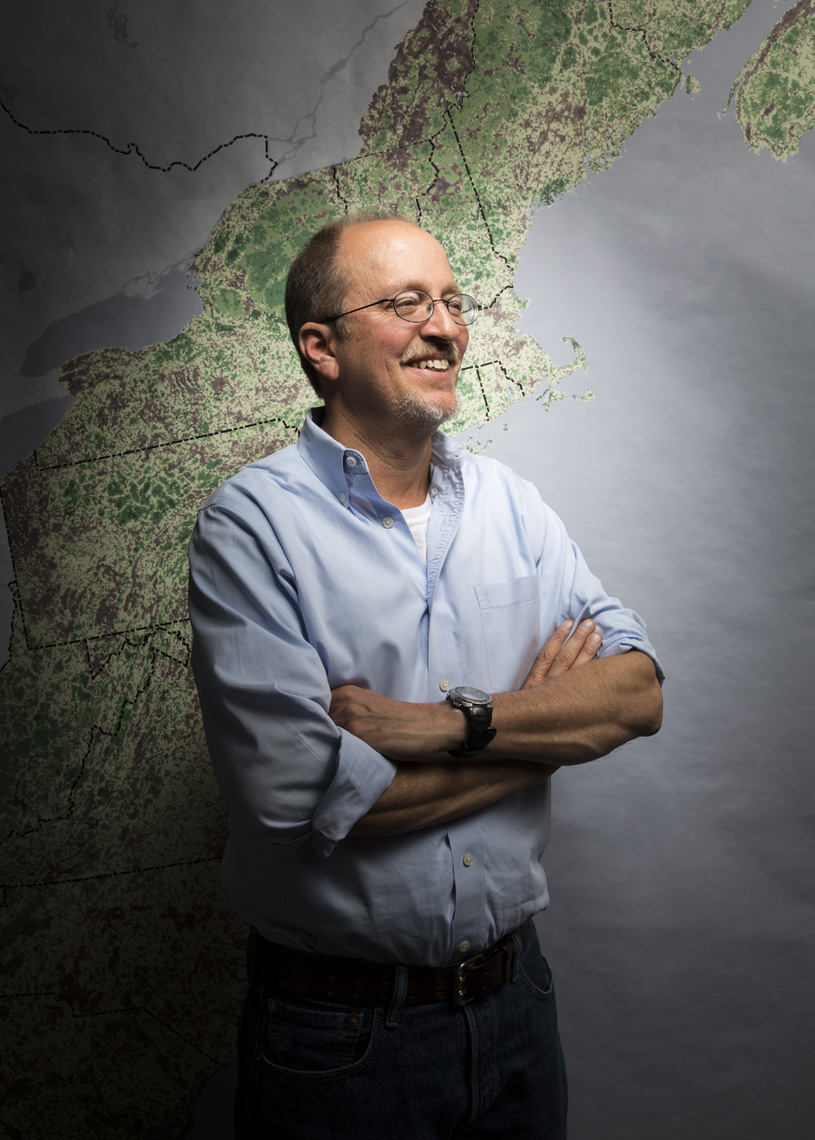
    Will species move in response to climate change? Yes, but where will they go and will they like it when they get there? Ecologist Mark Anderson, PhD, Director of Conservation Science, The Nature Conservancy’s Eastern U.S. Region, proposes that we step back from the individual species to examine the geology of places, looking at bedrock, sediment, and elevation, to correlate areas of species richness to future conservation strategies. His research suggests that these abiotic factors are better predictors of success than species-level climate change models. Come hear about his work in mapping the geophysical regions of New England with an eye towards conserving those that will support the greatest array of species into the future. The thinking is that the areas of most resilient will continue to support the greatest diversity of life, no matter the environmental challenges and changes. His assessment, done at an evolutionary timescale, provides critical data for scientists and conservationists considering how best to conserve landscapes and preserve biodiversity. The lecture takes place Tuesday, November 17 from 7 – 8 in the Hunnewell Building of the Arnold Arboretum. Fee: Free for Arboretum members and students, $5 nonmembers. Register at my.arboretum.harvard.edu or call 617-384-5277.  Photo by Ken Richardson.

    Mark

  • Thursday, June 26 – Sunday, June 29 – 2014 Northeast Dragonfly Society of the Americas Meeting

    The 2014 regional meeting of the Northeast Dragonfly Society of the Americas, to be held June 26 – 29 in Binghamton, New York, recalls one of the earliest US meetings, an informal gathering hosted by Nick and Ailsa Donnelly the weekend of 4 July 1982. That meeting drew 21 participants plus families (a large fraction of the odonatists in North America at the time!), with participants coming from as far away as Florida and Oklahoma. Nannothemis bella (Elfin Skimmer) and Cordulegaster obliqua (Arrowhead Spiketail) were added to the already large Broome County list, and we hope to continue this fine tradition.

    The Broome County area (including parts of Chenango and Cortland Counties, and Susquehanna Co., Pennsylvania) has a rich odonate fauna, but there are opportunities to find additional species. The Susquehanna River close to Binghamton was the place where Ophiogomphus howei (Pygmy Snaketail) was found in 1967, after having “disappeared” for 43 years following the 1924 find of the original male in Massachusetts and female in Pennsylvania. The river has a rich ode fauna, is easily accessible, and will be one of the main features of the meeting.

    One of our prime spots will be Jam Pond, one of the finest bogs in the state. Although having one of the longest lived colonies of Aeshna subarctica (Subarctic Daner) in the United States, it has never yielded any species of Somatochlora, though a few have been seen over the years. Late June will be a prime time to find abundant Enallagma annexum, all intergraded with Enallagma vernale (Vernal Bluet). (However, we will not find A. subarctica, which flies from mid August until late September.)

    Another site is Wier’s Pond, in northern Pennsylvania, which is a Nature Conservancy property featuring both Lanthus vernalis (Southern Pygmy Clubtail) and L. parvulus (Northern Pygmy Clubtail), and has apparently stable colonies of Coenagrion resolutum (Taiga Bluet) and Gomphaeschna furcillata (Harlequin Darner). There are numerous additional sites: The Chenango Valley State Park (where Aeshna mutata was recently found), Otselic Bog (another fine kettlehole bog), Geneganslet Creek, where three species of Calopteryx can be found together; Hawkins Pond and Greenwood Park (Broome County Parks) with several species of interest, such as Boyeria grafiana (Oscellated Darner) and Enallagma traviatum (Slender Bluet) (we are in the zone of intergradation between subspecies traviatum and westfalli).

    ORGANIZERS: Ailsa and Nick Donnelly and Bryan Pfeiffer
    REGISTRATION: You must register by March 1, 2014 in order for organizers to obtain necessary permits. To register send an email to Bryan Pfeiffer (bryan@bryanpfeiffer.com).

    Lodging options in the Binghamton area, including camping, will be available to registrants.

    http://bryanpfeiffer.com//srv/htdocs/wp-content/uploads/2013/04/pantalaflavescens.jpg

  • Friday, July 20, 10:00 am – Nature’s Partners: Pollinators, Plants, and You

    One of the oldest, most interesting, and important phenomena in the natural world is pollination by insects: the transfer of genetic material among plants by bees, flies, butterflies, and beetles. Insect pollinators are critical to both natural plant communities and human food production – yet for many, knowledge of pollinators stops with the honey bee.

    Entomologist Paul Goldstein and Nature Conservancy ecologist Matt Pelikan team up to introduce the science of pollination, discuss how people interact with the Island’s insect pollinators, and present ways to enhance native pollinator diversity in order to better harmonize landscape management and agriculture, at the Polly Hill Arboretum on Friday, July 20 at 10 am. No Fee.  For more information visit www.pollyhillarboretum.org.

  • Monday, July 23 through Sunday, July 29 – National Moth Week Programs

    Why moths? With more than 10,000 species in North America alone, moths offer endless options for study, education, photography, and fun. Moths can be found everywhere from inner cities and suburban backyards, to the most wild and remote places. The diversity of moths is simply astounding. Their colors and patterns range from bright and dazzling, to so cryptic that they define camouflage. Moth shapes and sizes span the gamut, with some as small as a pinhead and others as large as a hand. Most moths are nocturnal and need to be sought at night to be seen, but others fly like butterflies during the day. Finding moths can be as simple as leaving a porch light on and checking it after dark. Serious moth aficionados use special lights and baits to attract them. Popular interest in moths is rapidly growing, as noted by recent publications and web-based resources. The new Peterson Field Guide to the Moths by David Beadle and Seabrooke Leckie, moth caterpillar guides by David Wagner, and a vast number of moth-oriented Internet resources such as the “Moth Photographers Group” and “BugGuide” are just some examples of moth’s growing popularity. Moths are also featured widely in literature and art providing a different angle for enjoyment and study. “Moth Nights” are often held by nature groups, and provide an opportunity for either an introduction to the creatures, or a venue for more serious pursuits.

    National Moth Week brings together everyone interested in moths to celebrate these amazing insects. This summer, groups and individuals from all the across the country will spend some time during National Moth Week looking for moths and sharing what they’ve found. Getting involved during National Moth Week is easy: attend a National Moth Night event, start an event, join friends and neighbors to check porch lights from time to time, set up a light and see what is in your own backyard, or read literature about moths, etc.  But no matter what, participate; the richness of moths is sure to fascinate. Check out www.nationalmothweek.org for more.

    Locally, four programs with the Athol Bird & Nature Club will be of interest to our readers.  The first, on Tuesday, July 24 from 8:00 pm – midnight, is The Moths of the Broad Meadow Brook Sanctuary.  Join naturalists Dave Small and Lula Field as they travel to the Massachusetts Audubon Society’s Broad Meadow Brook Sanctuary in Worcester for an “Introduction to Moths” – a PowerPoint program at 8 introducing the families of moths likely to be encountered, followed by an evening of looking at moth-attracting lights and baited trees. Location: Broad Meadow Brook Conservation Center and Wildlife Sanctuary, 414 Massasoit Rd., Worcester, MA. Bring your point and shoot digital (or other) camera and flashlight. Free for ABNC and MAS members, a small fee for others. Questions: Dave@dhsmall.net.

    Next, on Wednesday, July 25, from 9:00 pm – midnight, join Sue and Ron Cloutier at their home on South Main Street, New Salem, for The Moths of New Salem, the ABNC local kickoff to National Moth Week. This will be a casual evening demonstrating the placement of various types of lights to attract moths Bring your point and shoot digital (or other) camera and flashlight. Free and open to all. Questions & RSVP: cloutier@tiac.net.

    Then, on Thursday, July 26, from 8:00 pm – midnight, join biologist Jenn Forman Orth and Athol Bird & Nature Club naturalists Dave Small and Lula Field in an exploration of the nighttime world of moths at New England Wild Flower Society’s Garden in the Woods in Framingham, MA.  They’ll start with a brief introduction on how to attract moths with lights and bait, and include a few tips for good nighttime photography. If conditions are good, you should see up to 100 different moth species, plus a plethora of beetles, caddisflies and maybe even a cicada or two! Bring your own camera, flashlight, water and insect repellent.

    Wrapping up the week, on Saturday, July 28 – Sunday, July 29, the finale of the National Moth Week celebration will be an overnight experience on the island of Martha’s Vineyard. ABNC naturalists will be joined by scientists from The Nature Conservancy, the University of Massachusetts and other organizations at the headquarters of the Manuel F. Correllus State Forest, a 5,100-acre property in the heart of Martha’s Vineyard. Bring your tent, sleeping bag, point and shoot digital (or other) camera and flashlight. Details are still being coordinated. RSVP Dave@dhsmall.net for updates.