Tag: new England Botanical Club

  • Saturday, April 1, 7:00 pm – Complex Interactions in Sarracenia

    The New England Botanical Society will hold its April meeting on Saturday, April 1 at 7 pm at Smith College in Northhampton. Dr. Jessica Stephens, Assistant Professor of Biology, Biology Department, Westfield State University in Westfield, will speak on Complex Interactions in Sarracenia: Implicationsfor Plant and Ecosystem Health. The meeting will be held in McConnell 103 in the Clark Science Center. For more information visit https://www.rhodora.org/meetings/upcomingmeetings.html

  • Saturday, December 3, 7:00 pm – Wild Seed Project: Grassroots Seed Propagation of New England Native Plants

    The New England Botanical Club will hold its December meeting on December 3 at 7 pm at Haller Lecture Hall at Harvard University, Geological Museum, 24 Oxford Street in Cambridge. Heather McCargo, Founder and Former Executive Director, The Wild Seed Project in North Yarmouth, Maine, will speak on the Wild Seed Project: Grassroots Seed Propagation of New England Native Plants. Native plants are beautiful, important for our local ecosystems, and do not need the high nutrient and water inputs of commonly cultivated plants. In this presentation, Heather covers the many reasons we all should care about our region’s native flora and the importance of bringing these native plants back into our gardens and developed landscapes. She also discusses current native plant trends and issues in the nursery trade (including cloning and the loss of genetic diversity), and explains how we all can support our native flora by planting seed-grown native plants. The meeting is free and open to the public.

    The goal of Wild Seed Project is to build awareness of the vital importance of native plants and to provide people with the tools to restore biodiversity in their own communities. The organization equips community members, public officials and municipalities, and land-holding individuals and organizations – from farmers to land trusts – with the skills and resources they need to collectively repopulate landscapes with native plants that expand wildlife habitat, support biodiversity, and build climate resilience.

    Zizia aptera
  • Saturday, November 5, 7:00 pm – Plant Diversity Shows its True Colors

    The next New England Botanical Club meting will be held November 5 at 7 pm Eastern at Harvard University in Haller Lecture Hall, Room 102, Geological Museum, 24 Oxford Street in Cambridge. The door is to the right of Harvard Museum of Natural History entrance. Dr. José Eduardo Meireles, Assistant Professor of Plant Evolution and Systematics, School of Biology and Ecology at University of Maine, will speak on Plant Diversity Shows its True Colors. There is an urgent need to understand the phylogenetic and functional dimensions of plant diversity at global scales. Reflectance spectral data — how leaves reflect light across different wavelengths — is emerging as a phenomenal tool for characterizing plant traits and physiology as well as identifying lineages at different evolutionary scales. He will discuss applications of spectral data in plant biodiversity science, including monitoring biodiversity, estimating traits, and identifying lineages using spectral data. He will also demonstrate how to integrate phylogenetic models and spectra as well as leverage herbarium specimens to rapidly advance our knowledge of phenotypic evolution in plants. Free and open to the public.

  • Saturday, August 21 (rain date August 22) – Wetland Wilderness Exploration

    Join the New England Botanical Club on August 21 for an exploration of the 1066-acre Savage Hill Wildlife Management Area, which abuts another 234-acre Savage Hill Wildlife Conservation Easement, in Princeton and Rutland, Massachusetts. The trip will traverse oak-pine dominated forest with pockets of hemlock and maple along wetlands associated with the East Branch Ware River. Narrow-leaved gentian (Gentiana linearis) is expected to be in full bloom along the wetlands, along with taxa yet to be documented in wetlands and the adjacent uplands. Those that are interested are encouraged to explore further into the wetland. Please come with a sense of adventure and bring attire that fits your wetness comfort level. Hiking boots will suffice for uplands and upper wetland edges, while knee boots are more appropriate for shallow marshy areas, and waders are recommended for deeper investigations. Matt Charpentier has graciously offered to host a potluck social time in Princeton nearby after the outing. Contact Brett Trowbridge (brettatrowbridge@gmail.com for more information and to register. Trip leaders include Bob Wernerehl and Matt Charpentier.

    We will follow COVID-19 Regulations & Guidance | Mass.gov as the minimum safety standard for our field trips. Attendees sharing a car with other participants as part of a field trip are expected to wear masks during the car ride, unless everyone is fully vaccinated. Anyone who is not vaccinated is requested to wear a mask, except while they are outdoors, and to maintain appropriate social distance from others on the trip.

    Summer day field trips are informal, small-group outings to explore interesting places and to see interesting plants, facilitated by knowledgeable and enthusiastic leaders. Bring your lunch, water, insect repellent, field guides, hand lens, and curiosity. Be prepared for the terrain and level of difficulty indicated for each trip. You should contact the trip leader at least 1 week in advance to register and to get time and directions. Trips will be limited to 10 participants.

  • Saturday, August 14 (Rain Date August 21) – Rare Fall Blooms Walk

    From high, dry glacial ridgetops to swamps and bogs, Norcross Wildlife Sanctuary in Monson, Massachusetts is a unique blend of natural, semi-natural and built landscapes. With over 8000 acres, NWS is one of the largest wildlife sanctuaries in the area and at its center is a 75-acre core complete with walking trails for the public to enjoy. Specifically timed to overlap with the bloom season for some of the rarer plants at the sanctuary, participants in this New England Botanical Club summer field trip on August 14 can expect to see Plymouth gentian (Sabatia kennedyana) pictured below, sickle-leaved golden aster (Pityopsis falcata), flat-topped goldenrod (Oligoneuron rigidum) and more.

    We will follow COVID-19 Regulations & Guidance | Mass.gov as the minimum safety standard for our field trips. Attendees sharing a car with other participants as part of a field trip are expected to wear masks during the car ride, unless everyone is fully vaccinated. Anyone who is not vaccinated is requested to wear a mask, except while they are outdoors, and to maintain appropriate social distance from others on the trip. Summer day field trips are informal, small-group outings to explore interesting places and to see interesting plants, facilitated by knowledgeable and enthusiastic leaders. Bring your lunch, water, insect repellent, field guides, hand lens, and curiosity. Be prepared for the terrain and level of difficulty indicated for each trip. You should contact the trip leader at least 1 week in advance to register and to get time and directions. Trips will be limited to 10 participants. Contact Dan Jaffe Wilder (danjwilder@norcrosswildlife.org) for times, more information and to register.

  • Saturday, September 14, 10:00 am – 5:00 pm – Floral Traits Mediating Pathogen Dynamics in Pollinators

    On Saturday, September 14, Smith College in Northampton, Massachusetts will host the New England Botanical Club for a day-long meeting with options including a field trip to the Montague Plains Wildlife Management Area with Pete Grima (10 – 2), a fungal walk with Dianna Smith at the Smith College MacLeish Field Station (12 – 3), and a lecture by Dr. Lynn S. Adler, Biology Department, University of Massachusetts, Amherst, on Floral Traits Mediating Pathogen Dynamics in Pollinators.

    The Montague Plains cover several power line corridors on the Montague sand plain and adjacent Will’s Hill, where the focus will be on the amazing asters, gorgeous goldenrods. lingering legumes, and genteel fringed gentians that will be in their prime. There may be orchids, too. This is an easy walk of 1.5 miles with 200 foot elevation gain. Be prepared for ticks and open, sunny conditions.

    The Fungi Walk will introduce you to the fascinating world of the fungi kingdom during our three-hour guided walk starting at noon at the Smith College MacLeish Field Station on Poplar Hill Rd in Whately, MA. In addition to helping attendees learn to identify particular morphological groups of fungi, Dianna will provide essential information about their lifestyles and functions in forest and garden ecology; their evolutionary history; habitat preferences; edibility; toxicity; and potential medicinal uses. By the time you complete this walk, you will know more about these curious representatives of the mostly hidden kingdom of fungi than 99.9% of the world’s population.

    Register at http://www.rhodora.org/meetings/upcomingmeetings.html

    figwort on Montague Sand Plain
  • Saturday, June 15, 6:45 pm – Vermont’s Contribution to New England’s Rare Flora

    The New England Botanical Club is sponsoring an Away Weekend in Vermont June 14 – 16, and on Saturday, June 15, welcomes Bob Popp of the Vermont Fish and Wildlife Department, a botanist from Barre, Vermont, speaking on Vermont’s Contribution to New England’s Rare Flora. Bob’s talk will focus on the rare plants in the Champlain Valley. The lecture will be held at the Vermont Grange Center, 308 West Street in Brookfield, Vermont. Several workshops and field trips are planned for the weekend. The registration fee will cover accommodations at the Center, plus meals and activities. Reduced student rates and scholarships are available. For more information contact Matthew Charpentier at mpcharpentier93@gmail.com.

    Registration deadline is June 7. The complete weekend program schedule is available at http://www.rhodora.org/meetings/notices/June2019-Away-Vermont-Schedule.pdf

  • Friday, March 1, 6:45 pm – Floristic and Climate Change on Mount Desert Island, Maine

    Dr. Nancy M. Eyster-Smith, Associate Professor Emerita, Bentley University, Waltham, Massachusetts, will address the New England Botanical Club on Friday, March 1 at 6:45 pm in the Haller Lecture Hall (Room 102) of the Geological Museum, 24 Oxford Street in Cambridge, on Celebrating Edward Lothrop Rand, NEBC Corresponding Secretary for 25 Years. Additionally, Dr. Caitlin McDonough MacKenzie, Postdoc, Climate Change Institute, University of Maine, Orono, Maine will address Floristic and Climate Change on Mount Desert Island, Maine, from the Champlain Society to Acadia National Park’s Centennial. Free and open to the public. For more information visit http://rhodora.org.

    Image result for Acadia National Park Centennial

  • Friday, February 1, 6:45 pm – The Ecology and Impacts of Garlic Mustard

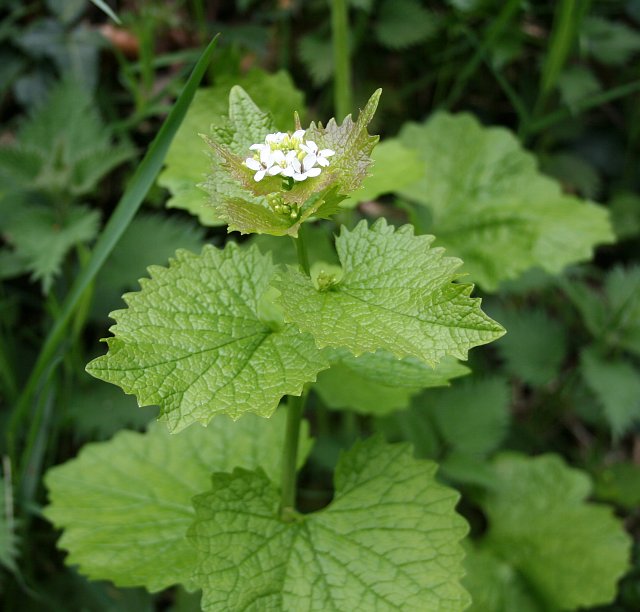
    The February meeting of the New England Botanical Club will take place Friday, February 1 at 6:45 in the Haller Lecture Hall (Room 102) of the Geological Museum, 24 Oxford Street in Cambridge. The speaker will be Dr. Kristina Stinson, Assistant Professor, Department of Environmental Conservation at University of Massachusetts/Amherst. Her topic is The Ecology and Impacts of Garlic Mustard (Alliaria petiolata). Her research is focused on plant species’ responses to biophysical stress and climate variation in forests, cities, and alpine ecosystems. This work is driven by theoretical questions about plant life histories, and how local processes within and among plant populations can help explain broader geographic distributions. The unifying goals of this work are: 1) to advance fundamental research in experimental plant population dynamics and ecology; and 2) to provide scientific guidance for restoration, management, and species conservation.  For complete information visit http://rhodora.org. Free and open to the public.

    Image result for garlic mustard (alliaria petiolata)

  • Saturday, January 12, 9:00 am – 2:00 pm, and Wednesdays, January 16 – January 30, 3:00 pm – 7:00 pm – Nonvascular Herbarium Work Sessions

    The New England Botanical Club welcomes volunteers to help with curatorial work in the nonvascular herbarium of the NEBC. Listed below are the scheduled work sessions. If you would like to join us or have questions, please email Elizabeth Kneiper (Ekneiper@aol.com) or call 781-801-2734. We look forward to hearing from you! Weather and various other circumstances can force the sessions to be canceled or rescheduled, but volunteers will be notified.

    Wednesday, January 9, 2019 – 3:00 p.m. to 7:00 p.m.
    Saturday, January 12, 2019 – 9:00 a.m. to 2:00 p.m.
    Wednesday, January 16, 2019 – 3:00 p.m. to 7:00 p.m.
    Wednesday, January 23, 2019 – 3:00 p.m. to 7:00 p.m.
    Wednesday, January 30, 2019 – 3:00 p.m. to 7:00 p.m.

    Type of work: Curatorial – replacing old packets, data basing, and inserting collections. A great chance to work with historic collections of New England lichens, bryophytes, algae, and fungi.

    Location: Farlow Herbarium, 22 Divinity Ave, Cambridge, MA.