Tag: Perkins School For The Blind

  • Sunday, August 4, 12:30 pm – 2:30 pm – Summer Sensory Arrangement from Nature

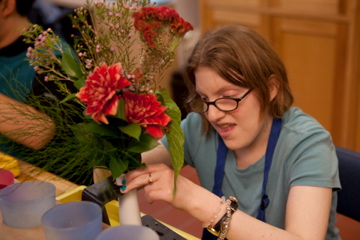
    Take deep breaths, slow down and leave your “to do” list behind.  Experience the therapeutic benefits of horticulture while creating floral arrangements including beautiful flowers with shades of summer colors, foliage with amazing textures and fragrant herbs. 

    Feel calm and refreshed with positive energy by focusing on being in the moment and engaging each of your five senses – sight, touch, sound, smell, and taste — while interacting with sensory rich plant materials.  You will design and make an arrangement while learning basic floral arranging techniques.  Information will be shared on plants you can easily grow, or collect, for your own unique summer arrangements.

    This New England Botanic Garden at Tower Hill class on August 4 from 12:30 – 2:30 will include an overview of the therapeutic benefits and power of horticulture to understand why and how it can be used personally, and for people of all ages and abilities.  We will discuss the difference between therapeutic horticulture and horticultural therapy.  You will learn about benefits including increased relaxation, decreased anxiety, stress relief, sensory stimulation, hope, improved cognitive abilities, engagement in life, connectedness, and physical exercise.  It will be clear how plants and the natural world give you support and a sense of well-being when life gets overwhelmingly busy or stressful.   We will spend approximately 40 minutes delving into this.

    Join Deborah Krause, Horticultural Therapist, in these relaxing sessions where you may leave with a smile, feeling of calm and peace, and pride in your creation.

    Deborah Krause is a Registered Horticultural Therapist. She is passionate about wellness and the therapeutic benefits of horticulture for people of all ages and abilities. She has served in various capacities in the American Horticultural Therapy Association (AHTA) and the Northeast Horticultural Therapy Network (NEHTN), which she co-founded, and currently is on the Board of Directors. Deborah developed the horticultural therapy program at Perkins School for the Blind and was the horticultural therapist and coordinator of the horticulture center there for 40 years. She is currently a program coordinator at The Nature Connection whose mission is to improve the well-being of individuals and communities through the therapeutic use of nature. Deborah is the horticulture educator at the Memorial Spaulding School Garden where students grow produce to donate to food pantries. She is a horticulture instructor at Danny’s Place for youth. She presents webinars for AARP on adaptive gardening. Deborah consults with non-profit organizations to design and facilitate therapeutic and educational horticulture and nature programs. Deborah’s popular classes for adults creating sensory rich seasonal flower and plant arrangements have focused on relaxation, stress reduction and positive thinking and she is honored and happy to continue to bring this to New England Botanic Garden at Tower Hill.

    $80 for NEBG members, $95 for nonmembers. Register at nebg.org

  • Wednesday, August 26, 6:00 pm – 7:00 pm – Adaptive Gardening for People 50 Plus, Online

    A lifelong love, or a newly discovered leisure activity of gardening, should not have to end as we age.  Gardening  provides exercise, stimulation, a sense of accomplishment, hope and many other benefits for mental and physical health.  Enjoying gardening late into life also helps people on fixed incomes to “stretch the pocketbook and tight budget” by growing food in a garden and keeping a healthy diet.  Join Deborah Krause, Horticulture Therapist, to learn how to make gardening more accessible depending on your physical abilities.  Learn about adaptations for limited mobility, arthritis, vision loss, or low stamina.  You will learn basics to get started or adapt your existing garden, including raised beds, container gardening, stools, pathways easy for walkers, canes or wheelchairs, adaptive tools, watering systems and growing nutritious food.  You will leave with creative solutions to stay comfortable, active and joyous.

    This August 26 webinar is free to attend thanks to the generous sponsorship by AARP Massachusetts. This webinar will be recorded and available to registrants for 1 month.  Register through Tower Hill Botanic Garden HERE.

    Deborah Krause is a Registered Horticultural Therapist. She is passionate about wellness and the therapeutic benefits of horticulture for people of all ages and abilities. Deborah has served in various capacities in the American Horticultural Therapy Association (AHTA) and the Northeast Horticultural Therapy Network (NEHTN), which she co-founded, and currently is on the Board of Directors. She developed the horticultural therapy program at Perkins School for the Blind and was the horticultural therapist and coordinator of the horticulture center there for 40 years. Deborah is the horticulture educator at the Memorial School Garden where students renovated a garden and grew produce to donate to food pantries. She consults with non profit organizations and programs to design and facilitate therapeutic and educational horticulture programs. Deborah’s popular classes for adults creating sensory rich seasonal flower and plant arrangements have focused on relaxation, stress reduction and positive thinking and she is honored and happy to bring this to Tower Hill.

  • Wreath of the Day – Good Deeds

    A heartwarming story: a man walked into the First Lutheran Church courtyard during wreath week, in some confusion. He thought he had come to The Perkins School for the Blind, and apparently had been dropped off, but instead of being on N. Beacon Street in Watertown, he was on Berkeley Street in Boston. It was night, it was cold, and he clearly needed help. Garden Club member Maureen O’Hara, assisting with deliveries, decided to spring into action and after figuring out what must have happened, got on her phone, summoned an Uber,  put the man into the car and got him to his destination safely.  We all hope to find such a good person in our lives, at moments of calamity. Thank you, Maureen.  The wreath below mirrors the beauty of your actions.

  • Thursday, October 11 – Sunday, October 14 – Horticultural Therapy Class

    Thursday, October 11 – Sunday, October 14 – Horticultural Therapy Class

    Learn how to combine a passion for gardening and helping people through the innovative field of horticultural therapy.  A new Horticultural Therapy Institute certificate series begins this fall, October 11 – 14,  at the Perkins School for the Blind in Watertown. The Horticultural Therapy Institute (HTI) is a leader in HT education and offers a certificate program in the field.  Join students from across the country to learn more by enrolling in this four-day course. The course will introduce the profession and practice of horticultural therapy, which uses gardening activities in community gardens, children’s gardens, health care and human service programs to name a few. The course describes the types of programs utilizing HT as well as the cognitive, social, emotional and physical goals for the varied people served. It also exposes students to resources for further exploration and to professionals in the field.

    One of the unique advantages to HTI’s certificate program is the opportunity for students from around the country to attend classes in sites that showcase horticultural therapy services in a variety of settings. This is exemplified at the Perkins School for the Blind. Take one class, or the full certificate program (four classes total, with remaining three in Colorado and California).  With its unique format, you don’t need to live where the classes are held and the format accommodates those who must travel to attend.  Perkins was founded in 1829 as the nation’s first school for the blind and horticulture goes back to the school’s move in 1910 to the current 38 acre campus in Watertown, MA. The contemporary program of horticultural therapy began as a part-time pilot program in 1979.  It quickly became a full time program and Perkins hired its first horticultural therapist and coordinator in 1980.

    For more information on this class or to enroll call 303-388-0500 For more information, visit www.htinstitute.org.

  • Saturdays, July 7 – September 29, 11:00 am – 12:30 pm – Historic Walking Tours of Jamaica Plain

    The Jamaica Plain Historical Society conducts tours of historic areas of Jamaica Plain each Saturday in July, beginning at 11:00 am, and lasting between 60 and 90 minutes.  The tours are free, open to the public, and are canceled in case of heavy rain.  No reservations are required – just meet the guide at the location listed below.

    July 7 (also repeated August 25) – Sumner Hill. View a sumptuous sampling of 19th-century Victorian houses — one of the finest collections of “painted ladies” outside of San Francisco. The tour includes the ancestral home of the founder of the Dole Pineapple Company, as well as the homes of several early feminists and an anti-racism activist. Sumner Hill was designated a National Historic District in 1987.  Leaves from Loring-Greenough House, 12 South St.

    July 14 (also repeated September 1) – Stony Brook. Explore a fascinating industrial area at the geographic heart of Boston that includes 19th-century tannery and brewery buildings, the homes of early German settlers, and today’s Samuel Adams beer company. In the 1970s, a coalition of community groups joined together to block construction of the Southwest Expressway through Jamaica Plain and other Boston neighborhoods. Today, the Southwest Corridor Park that runs through the Stony Brook neighborhood stands as a testament to the power of community activism.  Leaves from Stony Brook Orange Line T station.

    July 21 (also repeated September 8) – Hyde Square. Learn about 1840s Hyde Square when German and Irish immigrants transformed the neighborhood with their businesses, schools, and institutions. See how in the early 1960s, Hyde Square changed again when Cuban, Puerto Rican, and Dominican immigrants transformed it into Boston’s first predominantly Hispanic neighborhood. This tour also takes us to the home of Maud Cuney Hare, a prominent music historian and one of only two black women students at the New England Conservatory of Music in 1890. You will also learn about the property currently housing the MSPCA’s Angell Memorial animal hospital which was once the site of the Perkins School for the Blind. The tour will also walk through the Sunnyside neighborhood, the site of homes built by philanthropist Robert Treat Paine from 1889 to 1899 as a “worker’s utopia” for working families.  Assemble in front of Sorella’s, 388 Centre St.

    July 28 (also repeated September 15) – Green Street. Laid out in 1836, the street played a key role in Jamaica Plain’s development, functioning as a residential, commercial, and transportation conduit in the lives of the district’s residents. Although Green Street was subdivided as early as 1851 for stores, factories and houses, it was not extensively developed until the late 1870s with construction continuing until the early 1900s. The Bowditch School was completed in 1892, and early in the 20th century the United States Post Office moved from its location on Call Street at Woolsey Square to its new location at the corner of Green and Cheshire Streets. Leaves from Southern Jamaica Plain Health Center, 640 Centre St.

    August 4 (also repeated September 22) – Woodbourne. This neighborhood developed from 19th-century summer estates into a model suburban enclave. It contains examples representative of New England architecture with designs by local architects and builders. It also contains an unusual garden city model housing development by the Boston Dwelling House Company celebrating the centennial of its founding in 2012. Leaves from Bethel AME church steps, corner of Walk Hill and Wachusett Sts.

    August 11 (also repeated September 29) – Jamaica Pond. Once a gathering point for Boston’s elite, the Pond had previously been put to industrial use as tons of ice were harvested there each winter. Learn about the movers and shakers such as Francis Parkman who made their homes on the Pond’s shores. Discover how the Pond was transformed from private estates and warehouses into the parkland we know today. Leaves from the Bandstand, Pond St. and Jamaicaway.

    For more information, visit www.jphs.org.

  • Saturday, April 14, 10:00 am – 2:00 pm – Recovery from Construction: A Case Study

    Perkins School for the Blind broke ground for two large new buildings in the fall of 2009, involving the removal and replacement of over 100 trees.  Two years later, the new trees are planted, the new design is done, but at what cost to the trees, the soil, the other plantings, and the environment?  Tour the site on Saturday, April 14, from 10 – 2, to see firsthand how issues like tree protection, soil compaction, and remediation actually worked out.  Visit the state of the art greenhouse and other new buildings on this historic and beautiful campus with Sonia Baerhuk, Lead Groundsperson at Perkins School for the Blind.  Please bring a bag lunch.  Fee is $44 for members of the Ecological Landscaping Association or the New England Wildflower Society, and $50 for nonmembers.  Register on line at www.ecolandscaping.org.  Image courtesy of www.boston.com.

  • Thursday through Sunday, October 11 – 14 – Fundamentals of Horticultural Therapy

    Learn how to combine a passion for gardening and helping people through the innovative field of horticultural therapy.  Join students from across the country to learn more by enrolling in Fundamentals of Horticultural Therapy, to be held at Perkins School for the Blind in Watertown, Massachusetts, October 11 – 14, 2012.

    At the non-profit Horticultural Therapy Institute (HTI), the mission is to provide education and training in horticultural therapy to those new to, or experienced with, the practice of using gardening and plants to improve the lives of others.  The faculty is dedicated to teaching best practices with passion, and past students form a community of learners that become horticultural therapy practitioners in a variety of settings.  Take one class, or the full certificate program.  With its unique format, you don’t need to live where the classes are held.  Classes are offered in a four-day intensive format to accommodate those who must travel to attend.

    Class cost is $750 ($600 for full-time college students with proof of student status.)  The remaining three certificate courses will be held in Denver, Colorado and at Half Moon Bay in California.  For full class descriptions, schedules, and enrollment forms, go to www.htinstitute.org, or call 303-388-0500.

  • Saturday, September 26, 10 am – 2 pm – Sustainable Gardens at the Perkins School

    On Saturday, September 26, from 10 – 2, join Sonia Baerhuk, lead grounds-person, for a tour of the extensive campus at Perkins School for the Blind in Watertown, the country’s first school for the visually impaired, founded in 1832. The school’s sustainable garden highlights range from the leaf and fallen tree composting systems to a tropical “Cathedral” greenhouse that operates without the use of chemicals. See the two recently installed rain gardens funded by a grant from the Watertown Community Foundation, as well as orchards that grow with biological controls and visit several native plant gardens.  The smells, textures and sounds in the various gardens enrich the lives of students, staff and visitors. Bring a bag lunch. Sponsored by the New England Wild Flower Society, $35 for NEWFS members, $42 for nonmembers, limited to 20 participants.  For more information, directions, and to register, log on to www.newfs.org, or call 508-877-7630.

    http://support.perkins.org/images/content/pagebuilder/15915.gif