Tag: Peter del Tredici

  • Wednesday, October 29, 10:00 am – Nature in the City and Stewarding Our Native Ecology

    The Annual Meeting of The Boston Committee of the Garden Club of America will take place Wednesday, October 29, at The Country Club, Clyde Street, Brookline, beginning with coffee and registration at 10:00 am, and the business meeting at 10:30 am, followed by a keynote speech by Peter Del Tredici on Nature in the City and Stewarding Our Native Ecology. Dr. Del Tredici is Senior Research Scientist, Arnold Arboretum, and Adjunct Associate Professor of Landscape Architecture, Harvard Graduate School of Design.

    “My research interests are wide ranging and mainly involve the interaction between woody plants and their environment. Over the course of thirty plus years at the Arnold Arboretum, I have worked with a number of plants, most notably Ginkgo biloba, conifers in the genera Tsuga and Sequoia, various magnolias, and several Stewartia species (family Theaceae). In all of my work, I attempt to integrate various aspects of the botany and ecology of a given species with the horticultural issues surrounding its propagation and cultivation. This fusion of science and practice has also formed the basis of my teaching at the Harvard Graduate School of Design (since 1992), especially as it relates to understanding the impacts of climate change and urbanization on plants in both native and designed landscapes. Most recently, the focus of my research has expanded to the subject of spontaneous urban vegetation which resulted in the publication of Wild Urban Plants of the Northeast: A Field Guide (Cornell University Press, 2010).”

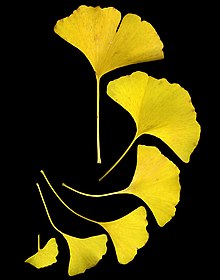
    The program is open to members of the Garden Clubs which comprise The Boston Committee (www.bostoncommittee.org) who will receive written invitations with information on attendance fees.  If you are not a member, email info@bostoncommittee.org for more information.  Image from www.peterdeltredici.com.

  • Tuesday, October 7, 7:00 pm – 8:30 pm – Ecologies in Flux: The Role of Exotic Plants in Urban and Suburban Landscapes

    Most people live in environments that have been drastically altered by humans. While we are well aware of the built structures (houses, roads, stores) in our communities, we are less aware of the organisms that co-inhabit the surrounding landscapes.

    In this dialogue, three prominent botanists will discuss the ecological impacts of exotic plants in both urban and suburban communities. The panelists will present different viewpoints on the various roles that plants play in these altered ecosystems and how human values and aesthetics influence biodiversity.

    Panelists: Peter Del Tredici, PhD, Senior Research Scientist, Arnold Arboretum of Harvard University; John Silander, Director, Invasive Plant Atlas of New England; Bryan Connolly, PhD, Former State Botanist, Massachusetts Natural Heritage Endangered Species Program and now Assistant Professor, Biology Department, Framingham State University.

    Moderator: William (Ned) Friedman, Director, Arnold Arboretum of Harvard University. $10 (free for Arboretum members). The talk will take place Tuesday, October 7 beginning at 7 pm at the Arnold Arboretum, 125 Arborway in Jamaica Plain. Call 617-384-5277, or email adulted@arnarb.harvard.edu.

  • Saturday, January 10 – Monday, January 19 – The Best of Natural Hawaii: Oahu, The Big Island & Maui

    Join friends of The Harvard Museum of Natural History as they explore three islands: Oahu, the Big Island, and Maui, each offering varied experiences and learning opportunities. Surrounded by ocean and formed by volcanic hot spots, Hawaii’s isolation and geological activity shape the islands’ biodiversity. With over 25,000 unique species, Hawaii is one of the planet’s most biologically diverse regions. A high percentage of these species are only found here, yet today these birds, insects, mammals, and plants live in a delicate balance. Hawaii’s position floating alone in the middle of the Pacific creates a unique cultural identity apart from the mainland United States. Life here feels easygoing and casual. The colorful history that shaped these islands remains clear; waves of immigrants who once labored in cane fields added their languages, foods, and cultures to the local mix. Today, there is no ethnic majority and common bonds are intangible.  The HMNH Study Leader is Dr. Peter Del Tredici, author of Wild Urban Plants of the Northeast and Senior Research Scientist of the Arnold Arboretum of Harvard University.  The ten day trip takes place January 10 – 19, 2015. Double occupancy $5,740, with single supplement of $1,375.  For a complete itinerary call 617-495-2463, or visit http://www.hmnh.harvard.edu/travel/pdf/HMSC%20Natural%20Hawaii.pdf.


  • Arnold Arboretum’s Peter Del Tredici Retires

    We received the following news from the Arnold Arboretum, and know our readers will be interested to learn more about this famous scientist in our midst.  We wish him all the best.  For the complete story visit http://arboretum.harvard.edu/saluting-a-paragon-of-plants/.

    Throughout its 140-year history, the Arnold Arboretum has advanced our understanding of biodiversity through the work of some of the most significant people in plant science. Among this select group is Senior Research Scientist Peter Del Tredici, who retires from the Arboretum in January 2014 after 35 years. Over that time, Peter has made many indelible contributions to the stewardship and study of the living collections as well as to the fields of plant morphology, plant exploration, public horticulture, urban ecology, and the science of climate change. A uniting theme in his work has been to bridge the gaps that traditionally separate the fields of landscape design, horticulture, and ecology.

    Peter began his career at the Arboretum in 1979 as an assistant propagator in the Arboretum’s Dana Greenhouses. Over three subsequent decades at the Arboretum, Peter has been recognized for his research on an array of plants and plant families, including Ginkgo biloba, conifers and dwarf conifers, magnolias (Magnolia spp.), stewartias (Stewartia spp.), and hemlocks (Tsuga spp.). Since 1984, Peter has also curated the Larz Anderson Bonsai Collection, conducting extensive research into their origins and leading a comprehensive restoration effort to return them to their traditional design. He has won numerous awards including the Jackson Dawson Memorial Medal from the Massachusetts Horticultural Society in 1986, the Arthur Hoyt Scott Garden and Horticultural Award in 1999, and the Veitch Memorial Medal from The Royal Horticultural Society in 2013.

    Deeply interested in the Arboretum’s historical work in Asia and the introduction of Asian plants, Peter participated in eight collecting expeditions to China for the Arboretum: Hubei Province (1994), Zhejiang Province (1989 and 1995), Jilin Province (1997), Guizhou Province (2002), Jiangxi Province (2004), Sichuan Province (2005), and Chongqing Province (2007). He has also collected a wide variety of plants in various parts of North America. The author of more than 150 scientific and popular articles, Peter has contributed extensively to the Arboretum’s journal, Arnoldia, as writer of more than 60 articles, member of the editorial committee, and as editor from 1989 to 1992.

    From 1992 to 2003, Peter served as Director of Living Collections, stewarding the care and expansion of Arboretum plant holdings and contributing to efforts to improve plant health and to embrace more sustainable methods of landscape maintenance. Through his leadership, the Arboretum renovated its 100-year-old drainage system to improve the hydrology of the landscape, redesigned Chinese Path in what is now the Explorers Garden, and redesigned the summit of Peters Hill.

    In recent years as Senior Research Scientist, Peter has turned his attention to the study of adaptive plants in urban environments. In addition to teaching Harvard students on this topic at the Graduate School of Design, he championed the establishment of the Arboretum’s Bussey Brook Meadow as a preserve for the long-term study of urban ecology and organismic succession in disturbed landscapes. His 2010 book Wild Urban Plants of the Northeast: A Field Guide is considered a seminal work in the study of emergent vegetation, providing an objective reassessment of the critical role that naturally-occurring plants play in the health and ecological cycling of urban environments.

    http://www.news.harvard.edu/gazette/2004/11.04/photos/15-arboretum1.jpg

  • Saturday, September 28, 1:00 pm – 3:30 pm – The Larz Anderson Bonsai Collection: Celebrating 100 Years

    Enjoy an afternoon of history and horticulture with Peter Del Tredici on Saturday, September 28, from 1 – 3:30, as he speaks in depth about the Larz Anderson Bonsai Collection. Imported to the United States in 1913 and donated in 1937 to the Arnold Arboretum, the core of this collection consists of seven large specimens of compact hinoki cypress (Chamaecyparis obtusa ‘Chabo-hiba’)—each between 150 and 275 years old—that the Honorable Larz Anderson purchased from the Yokohama Nursery Company. Additional Anderson bonsai were donated in 1949 and the collection has expanded to include some younger plants. Peter will speak about the history and significance of this unique collection; give a detailed tour, and discuss the care regimen for these plants to ensure their continued health. An assortment of bonsai artifacts from the Arboretum archives will be on display in our library.  Image from www.backwoodshome.com. Fee $20 Arboretum member, $30 nonmember. Register online at https://my.arboretum.harvard.edu/SelectDate.aspx.

    http://www.backwoodshome.com/blogs/WhereWeLive//srv/htdocs/wp-content/uploads/2012/08/P1010544-450x337.jpg

  • Saturday, May 11, 11:00 am – 3:30 pm – Ginkgo Fest: A Symposium Celebrating Ginkgo biloba

    Bombings, manhunts, and lockdowns forced the postponement of Ginkgo Fest: A Symposium Celebrating Ginkgo biloba at the Weld Hill Research Building at the Arnold Arboretum.  Luckily for us, the event has been revamped, rescheduled for Saturday, May 11 from 11 – 3:30, and even the fee has been reduced, so there is no excuse to pass up this great opportunity.  You will hear Peter Crane, Carl W. Knobloch, Jr., Dean of the School of Forestry & Environmental Studies and Professor of Botany, Yale University
    William “Ned” Friedman, Director, Arnold Arboretum and Arnold Professor of Organismic and Evolutionary Biology, Harvard University, and Peter Del Tredici, Senior Research Scientist, Arnold Arboretum and Adjunct Associate Professor of Landscape Architecture, Graduate School of Design, Harvard University. Join these three world renowned ginkgo experts for a celebration of all things ginkgo. The day will include lectures and a tour of the Arboretum’s Ginkgo biloba collection. So don your best ginkgo outfit (we know you have at least one article of clothing with a ginkgo leaf on it) and immerse yourself in the history and biology of this relict species. Lunch is included. Outfit below from xazdesign.blogspot.com.  Register on line at https://my.arboretum.harvard.edu/Info.aspx?DayPlanner=1165&DayPlannerDate=5/11/2013.  Fee $20 member, $40 nonmember.

    http://2.bp.blogspot.com/_fSPNQAVp5w8/TH0Wm8efYkI/AAAAAAAAALs/vubDH7KjwqU/s400/full%2Bpicture%2Bgingko.jpg

  • Saturday, April 20, 10:00 am – 4:00 pm – Ginkgo Fest: A Symposium About Ginkgo biloba

    On April 20, three prominent biologists will join forces to share all they know about the unique tree species, Ginkgo biloba.  Ginkgo is a plant species that has existed since the Jurassic period with few evolutionary changes and continues to thrive today. This special symposium includes a series of lectures, a tour of the Arboretum’s Ginkgo biloba collection, and lunch with a tasting of ginkgo nuts. Ginkgo artifacts and illustrations from the Harvard Libraries and collected paraphernalia will also be on display. So don your best ginkgo outfit (we know you have at least one article of clothing with a ginkgo leaf on it) and immerse yourself in the history and biology of this relict species.

    Peter Crane, Carl W. Knobloch, Jr. Dean of the School of Forestry & Environmental Studies and Professor of Botany, Yale University, and co- author of the just published book, Ginkgo: The Tree that Time Forgot, Yale University Press,  William “Ned” Friedman, Director, Arnold Arboretum and Arnold Professor of Organismic and Evolutionary Biology, Harvard University, and expert in the reproductive biology of early seed plants, including Ginkgo biloba, and Peter Del Tredici, Senior Research Scientist, Arnold Arboretum and Adjunct Associate Professor of Landscape Architecture, Graduate School of Design, Harvard University, a botanist who has studied ginkgo for more than 20 years and searched for and located remnant wild stands of ginkgo on the slopes of mountains in southwest China, will be the three luminaries speaking at the symposium.

    WHEN: Saturday, April 20, 2013, 10:00 a.m. to 4:00 p.m. View details and registration at https://my.arboretum.harvard.edu/Info.aspx?DayPlanner=1165&DayPlannerDate=4/20/2013

    WHERE: The Arnold Arboretum of Harvard University, Weld Hill Research Building, 1300 Centre Street, Roslindale, MA. http://arboretum.harvard.edu/visit/weld-hill-directions/

    http://ecx.images-amazon.com/images/I/41nwuVYKjoL._SL500_AA300_.jpg


  • Thursday, September 13, 1:00 pm – 2:30 pm – Very Fine Vines

    Whether twining, clinging, or scrambling, vines know how to get around. Take a walk with Nancy Rose, editor of Arnoldia magazine, through the Leventritt Shrub and Vine Garden at the Arnold Arboretum on Thursday, September 13, from 1 – 2:30 in the afternoon, to learn more about how vines grow and climb. See vines with the best ornamental features, as well as those that provide tasty fruit. You’ll also learn about a few vines that you won’t want to plant!. Below is Parthenocissus tricuspidata ‘Fenway Park’ discovered by the Arnold Arboretum’s  Dr. Peter Del Tredici at – wait for it – Fenway Park.

    In case of inclement weather, contact 617.384.5209. To register for this free session, visit www.my.arboretum.harvard.edu.

  • Tuesday, December 13, 7:00 pm – 8:30 pm – Gingko: A Fresh Look at a Living Fossil

    Join Peter Del Tredici, Senior Research Scientist at the Arnold Arboretum, for an in-depth look at one of the oldest and most fascinating trees on the planet. Del Tredici has been studying the natural history and evolution of Gingko biloba for a quarter century and is recognized as a world authority on the subject. His recent travels have taken him to remote areas in southwest China to search for wild-growing populations. Del Tredici has investigated nearly all aspects of this unique and ancient relict, from its cultivation for ornamental purposes to its uses in traditional medicine to improve memory.  The free lecture will take place at the Hunnewell Building of the Arnold Arboretum, but registration is requested at www.arboretum.harvard.edu.

  • Thursday, October 27, 6:00 pm – The Emergent Forest of New England

    New England is a naturally forested landscape and has been for thousands of years. On Thursday, October 27, beginning at 6 pm, Peter Del Tredici, botanist and senior research scientist at the Arnold Arboretum, will present an overview of the recent history of the forests of southern New England as impacted by natural disasters, shifting land-use patterns (urbanization and suburban sprawl), introduced pests and pathogens, invasive species, acid rain, and climate change. He will speculate on how the “emergent” forests that develop in response to these factors will differ from those that dominated New England in the past. Free and open to the public, Geological Lecture Hall, 24 Oxford Street. Cosponsored with the Arnold Arboretum of Harvard University. Part of the Challenges and Choices lecture series.  For more information, visit www.hmnh.harvard.edu.