Learn late-summer pruning techniques for spring-flowering shrubs and trees that bloom on last season’s growth. Learn the the best pruning methods to encourage healthy growth and a vibrant floral display. This New England Botanical Garden at Tower Hill class will take place August 12 at 6 pm. The instructors will be Hunter Blanchard and Alyson Prokop. $40 for NEBG members, $48 for nonmembers. Register at www.nebg.org
One January 12 at 10:30 am at New England Botanic Garden at Tower Hill, learn the basics of pruning in this hands-on workshop, focusing on shaping fruit trees, caring for non-flowering evergreens and ornamentals. This engaging session is perfect for beginners and will build your skills in pruning with confidence to maintain healthy, beautiful plants. $40 NEBG members, $55 nonmembers. Tickets are limited. Register at www.nebg.org
This year, following on from the Gardens Trust’s successful 2022 series on the rose, in partnership with the Historic Roses Group, the Gardens Trust is happy to announce a new rose-related lecture series, again with the HRG, this time including an international slant.
With speakers hailing from Iceland to Australia, via England, Italy and the USA, these talks are wide-ranging. We begin with a portrait of a popular 19th century rosarian who loved riding as much as roses, knew everyone on the literary scene, was a celebrity preacher and organized the first ever National Rose Show in London. An account of a hillside rose garden in Italy which started as a collection of pots on a terrace in Rome; how to grow roses in the Arctic Circle and ‘down under’ on a working Australia farm; the intriguing stories behind the names of some romantic heritage roses; and where to find a unique UN Food and Agriculture Organization collection of the other – edible – members of the rosaceae family continue the series. We finish with practical advice about training and pruning your climbers, whether roses or wisterias, from a professional horticultural gardener, the latest in three generations of market gardeners and a shows organizer and designer whose sumptuous stands have won medals for the Historic Roses Group at the Hampton Court Flower Show.
This ticket costs £28 for the entire course of 7 sessions or you may purchase a ticket for individual sessions, costing £5. Attendees will be sent a Zoom link 2 days prior to the start of the talk, and again a few hours before the talk. A link to the recorded session (available for 1 week) will be sent shortly afterwards. Register through Eventbrite HERE or visit https://thegardenstrust.org/events-archive/page/3/
In week Seven, Bev Bond will cover Pruning and Training: Getting the Best Out of Roses and Wisteria. In this talk Bev will be aiming to show the possibilities of these marvelous and sometimes majestic plants and will introduce you to some beautiful plants that she has cared for over the years. She will explore training, supports, growing plants on buildings, (including historic buildings) and the importance of soil, aspect and establishment. She will discuss some of her techniques, rose varieties, pruning cuts, wound healing, pruning for direction and planning ahead. Bev will also look at the supposed dichotomy between historical accuracy and ornamental value, and the possibilities when restoring plants. Some information on tools, tool maintenance, health and safety, ladders, attachment, wires and tying, will follow.
Bev Bond was born into two families of market gardeners; her father and both grandfathers grew vegetables and flowers for Covent Garden. She was educated at grammar school, then Braintree College, Shuttleworth Horticultural College and The Open University. After working some years in the family business, Bev moved to inspecting production of oats, fruits and nuts, throughout Europe, for a major food manufacturer, for 10 years. Then, during a decade employed as gardener, guide, and garden guardian in a historic garden, she further developed her pruning skills on large wisteria, climbing roses and so forth and began to branch out on her own.
For the past 23 years Bev has been self-employed as a horticultural gardener, and over the last 17, specializing in wisteria and rose contract pruning and training. She has been lecturing on garden history and presenting talks on gardens, and plants for over twenty years.
Spring is a great time to assess woody shrubs for shape, structure and winter damage. This Berkshire Botanical Garden workshop will focus on learning by doing. Ron and Kieran Yaple, owners of Race Mountain Tree Services in Sheffield, Mass., will demonstrate how to renovate, rejuvenate and shape shrubs and small ornamental trees for structure, health and optimal growth. Plants covered will include viburnums, lilacs, witch hazels, deciduous azaleas, sweetshrubs, crabapples, and ornamental cherries. Participants should dress for the weather, bring pruners, work gloves, and a lunch.
Ron Yaple has developed a regional reputation as a premier arborist and dedicated and knowledgeable teacher of arboriculture. Kieran Yaple is a Massachusetts certified arborist and an International Society of Arboriculture certified arborist. He is also a Certified Tree Safety Professional and is pesticide-licensed in Massachusetts. He recently joined the board of directors of the Massachusetts Arborists Association. Register at www.berkshirebotanical.org $35 BBG members, $45 nonmembers.
Try your hand at growing and caring for wisteria. One of the great treats of late spring and early summer is the spectacular blooming and sweet smell of wisteria. Wisteria is a gorgeous plant but it needs to be pruned twice a year to keep it looking its best. In this free, short video, National Trust gardener Andy Darragh shows Rebecca Bevan, the author of The National Trust School of Gardening, how he cares for the wisteria at Fenton House in London. Access the video on YouTube at https://www.youtube.com/watch?v=_kaSSu2NAU8
Rehabilitating poorly pruned plants back into pleasant landscape contributors is a science and an art. It takes both understanding clients and firm hands on the loppers and pruning saw. It also requires a little risk taking and an understanding of the principles of plant physiology and growth. Join Erik Draper, Assistant Professor, Ohio State University Extension, and the Massachusetts Arborists Association as they review limitations of corrective pruning practices, as well as basic principles of plant physiology that determine how plants grow. Learn how and where to begin correcting poorly pruned plants. $24 for MAA members, $44 for nonmembers. The online webinar will be available for viewing from December 7 – December 17, at your convenience. Register at https://massarbor.org/meetinginfo.php?id=61&ts=1601401949
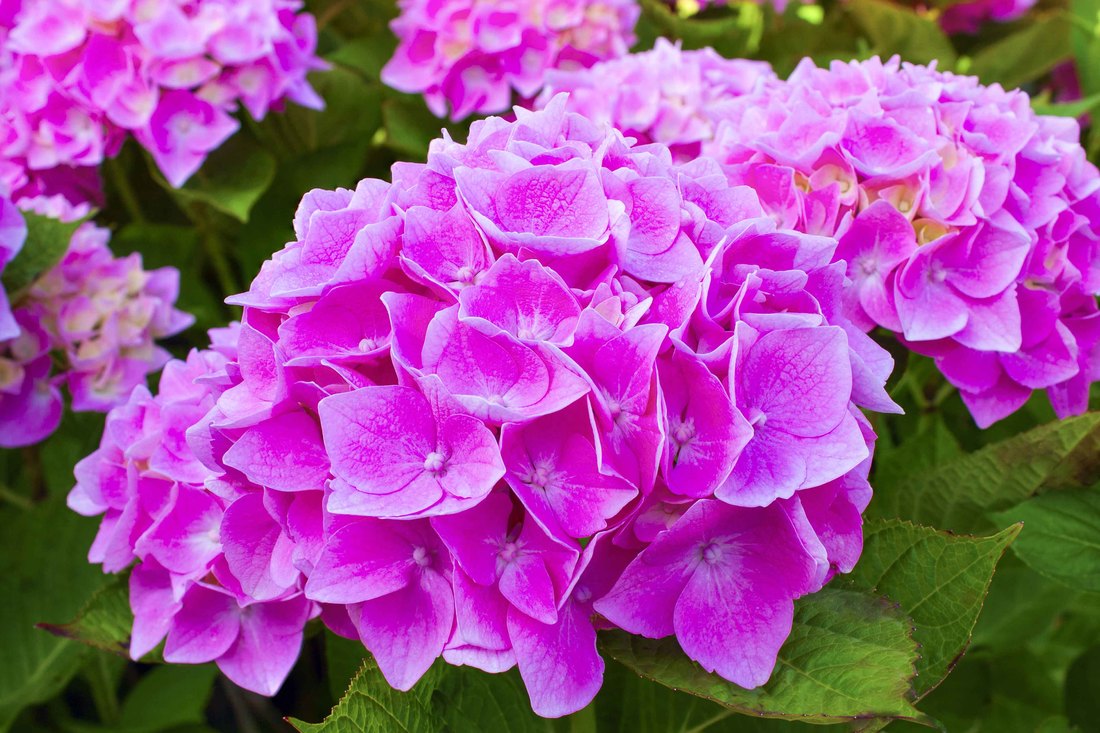
Culturally, of the several important issues for the home gardener to understand and practice, pruning is quite possibly the most critical and the least well understood. It also remains the most frequently questioned topic in my many lectures on hydrangeas.
The Massachusetts Horticultural Society shared the details of ‘Pruning Best Practices’ for many years, always trying to include the new understandings we continue to acquire over time. Over the past 2 years we’ve begun to more completely explore and explain ‘The Seasonal Step Approach’ to pruning – covering all species relative to practice and time of the year. Results have been excellent and we will urge you to adopt this approach as well.
This April 25 lecture from 10 – 12 will be digitally presented featuring detailed graphics relevant to all topics. Mal Condon strives to create a ‘class-room’ atmosphere encouraging active audience participation during the presentation portion of this event. For the balance of our time together – and if weather permits – we will move outside to do some hands-on pruning of nearby, on site hydrangeas.
A handout – in pdf format, containing all material presented – will be emailed to each attendee after the event.
A lifelong gardener, Mal Condon
has been collecting, propagating, and growing hydrangeas for more than
40 years. An engineer by education and profession, he is strongly
committed to the continuing development of the genus – always searching
for new and better plants, evaluating their landscape performance, and
finding superior ways to produce and grow them.
His Hydrangea Farm Nursery on Nantucket Island, Massachusetts was a well-known specialty nursery featuring one of the largest hydrangea collections in the Northeast. In 2014, he relocated to Cape Cod, where he continues his passion establishing a significant new garden. Mal frequently shares his many hydrangea learnings with garden clubs, horticultural associations, and plant societies – in the USA and other hydrangea-centric locations world-wide. $35 for Mass Hort members, $50 for nonmembers. Register at www.masshort.org.
Put down the hedge shears! Through both classroom instruction and hands-on field training, this Arnold Arboretum class on December 14 from 9:30 – noon will include whats, whys, and hows of proper pruning approaches and techniques.
Instructor Andrew Gapinski will focus on small ornamental trees, young shade trees, and shrubs with general approaches towards maintaining a plant’s natural form and encouraging health and vigor. Note: Pruning for fruit production will not be covered in this offering. Dress for indoor and outdoor learning. The class will begin in the Hunnewell Building, 125 Arborway, and is $38. Register at www.my.arboretum.harvard.edu
Spring is a great time to assess woody shrubs for shape, structure, and winter damage. This April 6 Berkshire Botanical Garden workshop will focus on learning by doing. Ron Yaple, owner of Race Mountain Tree Services in Sheffield, MA, will demonstrate how to renovate, rejuvenate, and shape shrubs and small ornamental trees for structure, health, and optimal growth. Plants covered will include viburnums, lilacs, witch hazels, deciduous azaleas, sweetshrubs, crab apples, and ornamental cherries. Participants should dress for the weather, bring pruners, work gloves, and a bag lunch. $25 for BBG members, $35 for nonmembers. Register at https://www.berkshirebotanical.org/events/spring-pruning-woody-ornamental-plants-0
Ron Yaple, owner of Race Mountain Tree Services in Sheffield, MA, has developed a regional reputation as a premier arborist. He is a dedicated and knowledgeable teacher of arboriculture.
Confused about how to prune your hydrangeas to maximize flowering and increase health? You are not alone! Join Jen Kettell on March 23 at 10 am at the Arnold Arboretum for a lively discussion on the species behind the hot trade names (Hydrangea ‘Pistachio’ reblooming shown below) and how to prune them. In addition, Jen will focus on how to match appropriate plants to your site conditions. She’ll suggest which species are drought-tolerant or benefit pollinators and other essential growing tips. Jen will focus on hydrangeas that are hardy in Zones 5-7. Class includes an indoor lecture and walk to a demonstration in the Leventritt Shrub and Vine Garden. Fee $25 Arboretum member, $35 nonmember. Register at my.arboretum.harvard.edu or call 617-384-5277.