Tag: Rudolf Blaschka

  • Wednesday, March 23, 2:00 pm – Garden Club of the Back Bay Glass Flowers Tour

    Wednesday, March 23, 2:00 pm – Garden Club of the Back Bay Glass Flowers Tour

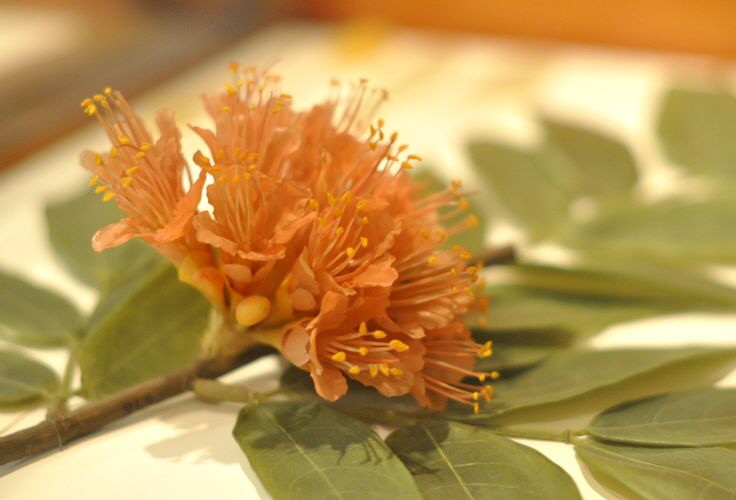
    A docent will lead Garden Club members on a custom tour of the recently restored “Glass Flowers”. The internationally acclaimed Ware Collection of Blaschka Glass Models of Plants is one of Harvard’s most famous treasures and is the only collection of its kind in the world. This unique collection of over 4,300 models, representing more than 780 plant species, was created from 1887 through 1936 by glass artisans Leopold and Rudolf Blaschka, a father and son team of Czech glass artists.  The Glass Flowers gallery was renovated in Spring 2016, introducing rebuilt, original historic wood and glass display cases, new state-of-the-art lighting, humidity, and vibration control systems.  The new space design and interpretation showcases the ongoing scientific relevance of the gallery and enhances the visitors’ experience of the models. In this exhibit one can see examples of the flora of the world in bloom all at once.

    This long awaited tour, twice postponed due to Covid, will take place March 23 at 2 pm at the Harvard Museum of Natural History.

    This program is for Garden Club of the Back Bay members only. The Club is charged by the person and we are required to give the Museum an accurate number of attendees.  If you rsvp and can not attend, please let us know! If you’d like to add your name, rsvp by March 14 to Christine Hirshland :
    chirshland@aol.com 

    • Enter The Harvard Museum of Natural History through the 26 Oxford Street entrance.
    • We will meet at 2:00 on the third floor, just outside the gift shop, near the glass flowers exhibit area. You will be asked for proof of full vaccination plus a government issued id to enter the museum.
  • Thursday, May 21, 6:00 pm – From the Hands of the Makers – Cancelled

    From 1886 to 1936, Leopold and Rudolf Blaschka applied their artistic talents and knowledge of natural history to create an exquisite collection of glass models of plants to support the botanical education of Harvard students and the public. This May 21 Harvard Museum of Natural History program will explore the history, conservation, and relevance of the Glass Flowers in the twenty-first century, and introduce the publication The Glass Flowers: Marvels of Art and Science at Harvard, a compendium of new photographs that captures the beauty and magnificent detail of the models. Featured speakers are Jennifer Brown, Collection Manager, Ware Collection of Blaschka Glass Models of Plants, Natalja Kent, Photographer, Scott E. Fulton, Head Conservator, Ware Collection, and Donald H. Pfister, Asa Gray Professor of Systemic Botany and Curator of the Farlow Library and Herbarium of Cryptogamic Botany. The program is free and open to the public, with a book signing and exhibit preview to follow.

  • Opening August 31 – Fruits in Decay

    Imagine an orchard, lush and bursting with ripe fruit in the sweltering summer sun. Not all of the fruit weighing down the branches and vines will be fit to consume. Some strawberries will dampen and shrivel with mold, some peaches will be blighted in the shade, and some pears will become pockmarked with age.

    However, there is a beauty in this natural decaying process that repeats with each season. Perhaps the rot will be cut away and the fruit will be preserved as jam, jellies, pie, or compote. Maybe a hungry child or traveler will wander through the orchard rows and choose a less-than- perfect specimen for their late afternoon snack. Right now, in orchards in New England and beyond, microscopic agents are at work consuming the fruit to its core in a world beyond our sight.

    The Harvard Museum of Natural History is pleased to present Fruits in Decay, a special new exhibit in the Glass Flowers Gallery that explores blight, rot, and other diseases on summer fruits. It features exquisitely detailed glass botanical models of strawberries, peaches, apricots, plums, and pears made by famed glass artist Rudolf Blaschka between the years 1924-1932. On display for the first time in nearly two decades, these models capture—with astonishing realism—the intricacies and strange beauty of fruits in various stages of decay.

    Donald H. Pfister, Curator of the Farlow Library and Herbarium of Cryptogamic Botany and Asa Gray Professor of Systematic Botany, praises the work of Blaschka, “Rudolf Blaschka’s last work centered on the creation of these models of diseased fruits. They are the culmination of his lifelong attention to accuracy and innovation. They illustrate the effects of fungi as agents of disease in plants and point to their importance in agricultural systems.”

    Fruits in Decay includes more than twenty glass specimens depicting common agricultural diseases and the effects of fungus such as peach leaf curl, gray mold, brown rot, soft rot, blue mold, shot-hole disease, stony pear, pear scab, fire blight, and leaf spot.

    Visitors will be able to see the delicate artistry of these celebrated Blaschka specimens August 31, 2019 through March 1, 2020. Fruits in Decay will replace the collection’s Rotten Apples exhibit, which will remain open until August 25, 2019.

  • Through Thursday, August 30 – Rotten Apples: Botanical Models of Diversity and Disease

    Carried to our shores by the earliest European colonists and first planted in Boston in 1625, the apple, Malus pumilla, is a New England dietary icon. One of the oldest fruit trees to be domesticated, this single species now encompasses thousands of distinct varieties worldwide. Not only do these apple varieties differ in look and taste, they also vary greatly in how they respond to pests and disease.

    Combining historic wax models with a series of exquisitely crafted glass models made by Rudolf Blaschka, this Harvard Museum of Natural History small, special exhibit, located in the Glass Flowers gallery, reveals the astonishing diversity of apples and the surprising beauty of the fungal and bacterial infections that afflict these and other fruits. The exhibit will be mounted through August 30, 2018. The museum is located at 26 Oxford Street in Cambridge, and the gallery is open from 9 – 5. Free with admission Visit https://hmnh.harvard.edu/glass-glowers