Tag: University of Massachusetts

  • Tuesdays, March 3 – April 14, 5:30 pm – 8:00 pm – Landscape Design I

    This seven-part in-person Berkshire Botanical Garden course will introduce students to the design process—the systematic way designers approach a site and client. Taught by Tyler Horsley, this course will include a series of simple projects, ending with a garden designed by the students. Learn design principles such as form, balance, repetition, line, texture, color and spatial relationships. Additionally, students will be introduced to history and how it helps the designer resolve and inspire garden design. As the adage goes, we cannot escape our history, so we have to understand where we came from. Classes start March 3 and continue through April 14, from 5:30 – 8.

    A New York City resident for 30 years, Tyler Horsley was a member of the Green Guerrillas and the 6th Street and Avenue B Community Garden in the East Village. He holds a Master of Architecture degree from the University of Virginia and a Certificate in Horticulture from the Brooklyn Botanic Garden. He created Tyler Horsley Garden Design, LLC in 2005 and has since moved to Hudson, NY, where he joined Wagner Hodgson Landscape Architecture. $215 for BBG members, $240 for nonmembers. Register at https://www.berkshirebotanical.org/events/landscape-design-i

  • Tuesdays, October 29 – November 19, 5:30 pm – 8:30 pm Eastern – Soil and Soil Amendments, Online

    This Berkshire Botanical Garden online course on Soil and Soil Amendments will explain how plant growth is affected by soils, from drainage to pH and nutrients. Learn how to evaluate soils, improve those that are less than ideal, and amend soils for specific garden uses. Fertilizers, soil amendments, making and using compost, moisture management, and the pros and cons of mulching will be covered. Students need to get a soil sample before class and bring the results to the first class. This course meets for 4 weeks on Tuesdays, October 29 – November 19, 5:30 – 8:30 pm Eastern.

    Taught by Monique Bosch, trained in landscape design, horticulture and soil biology, who is a community leader focused on healthy soil/healthy food. In the last 15 years she has worked with volunteers and students to build over 40 edible school and community gardens, and a two-acre urban farm in Bridgeport CT. These days she works as a Soil Health Program Manager for CT NOFA, and runs a worm composting business with her son Justin. She also teaches Soil Management for Brooklyn Botanic Garden. In 2023 Monique worked with staff and students at Bard College at Simon’s Rock, to launch a Food and Resilience center. She studied ‘The Soil Food Web’ under Dr. Elaine Ingham, and teaches microscopy, soil health and composting to farmers and organizations. Through microscopy and test trials, Monique explores the relationship between living soil and healthy, nutritious food.

    BBG Members: $215, Non-Members: $240. Register online at www.berkshirebotanical.org

  • Tuesdays, November 1 – November 22, 5:30 pm – 8:30 pm – Understanding Soil Health and Structure

    Taught by John Howell, this four-session Berkshire Botanical Garden course will explain how plant growth is affected by soils, from drainage to pH and nutrients. Learn how to evaluate soils, improve those that are less than ideal and amend soils for specific garden uses. Fertilizers, soil amendments, making and using compost, moisture management and the pros and cons of mulching will be covered. Students need to get a soil sample before class and bring the results to the first class. The dates are Tuesdays, November 1 – 22, from 5:30 – 8:30. $185 for BBG members, $210 for nonmembers. Register at https://www.berkshirebotanical.org/events/understanding-soil-health-and-structure-0

    We recommend all students take and submit a routine soil analysis for home grounds and gardening to UMass Amherst. Request an additional soil organic matter test. Please do so as soon as possible. Further information can be found here and here and order forms can be found here. Please have a copy of your results sent to howell@umass.edu

    John Howell MS is the former Extension Vegetable Specialist for the University of Massachusetts and currently lectures on vegetables, fruits and soil management. Author of numerous newsletters for growers, he is currently the editor for New England Vegetable Management Guide, published biennially by the University of Massachusetts.

  • Thursday, March 18, 7:00 pm – 8:30 pm – Small Plants, Big Bang, Online

    Spring is an ideal time to be transplanting woody plants, and this Massachusetts Horticultural Society online lecture on March 18 at 7 pm will introduce you to new and old favorites that make the most of small spaces.  In the excitement to create a beautiful outdoor living space, many gardeners overplant (in number or size). Learn about the long-term consequences of overplanting, and how to avoid it by introducing the smaller gems of the plant world into your garden. Design your next garden bed with some unique native groundcovers, dwarf conifers, and more!

    Jen Kettel is an arborist and horticulturist serving the New England area. She is a recent graduate of the American Society for Consulting Arborists (ASCA) Academy, an advanced professional training for experienced arborists. As the owner of Radiant Leaf Consulting, she shares her passion for horticulture through the training she provides to both homeowners and green industry professionals.

    Currently, she is a consultant for The Trustees’ public gardens, and a guest lecturer and trainer at the University of Massachusetts, the Arnold Arboretum, and the International Society of Arboriculture (ISA). In addition, she collaborates with other professionals through volunteer appointments on the Landscape Advisory Committee for the Wakefield Estate and Arboretum and the Board of Directors at Stearns Organic Farm.

    Prior to starting Radiant Leaf Consulting in 2013, she worked as a staff horticulturist at Harvard University’s Arnold Arboretum for more than ten years, and served on the board of directors for the International Society of Arboriculture’s local chapter for five years.

    $26 for Mass Hort members, $32 general admission. Register online at www.masshort.org.

  • Native Plant Trust Announces Yard Futures Project

    Native Plant Trust, the nation’s first plant conservation organization and the only one solely focused on New England’s native plants, has partnered with the renowned Woodwell Climate Research Center to share ground-breaking research about how American homeowners in six major metropolitan areas currently shape their yards and what can be done to create spaces that work better for both people and the environment. This research and best practices that come out of the Yard Futures Project are now available to the public in brief articles on the Native Plant Trust website, www.NativePlantTrust.org, which will be regularly updated.

    The Yard Futures Project is a collaboration of scientists affiliated with institutions from across the U.S., including Woodwell Climate Research Center, Duke University, City University of New York, University of Massachusetts, Johns Hopkins University, University of Minnesota, Arizona State University, U.S. Forest Service, University of Utah, University of Delaware, Portland State University, Davidson College, Clark University, Masaryk University, University of Vermont and Virginia Tech. The research focuses on homeowners and their yards in the metropolitan areas of Boston, Baltimore, Los Angeles, Miami, Minneapolis-St. Paul, and Phoenix and includes on-site field studies, extensive surveys, and interviews.

    The project studies the impact of homeowners’ choices and examines not only how homeowners shape their yards, but also importantly why they make particular choices about lawns, gardens, and maintenance regimes. The project measures how yards influence attributes of residential ecosystems such as plant and insect biodiversity, microclimates, soil carbon and the potential for nitrogen runoff.

    The team is publishing most of the project findings in peer-reviewed scientific journals and other professional outlets; the brief articles at www.NativePlantTrust.org present the results in an accessible, engaging way that can immediately be put to use by the public. Christopher Neill, Ph.D., Senior Scientist at the Woodwell Climate Research Center, is editorial director and lead author for the series.

    “Urban and suburban yards now cover huge areas across the US. And more and more people care deeply about making their yards better habitat for wildlife and better providers of some of the services more natural areas provide, like carbon storage and shade that lowers air temperatures,” said Chris Neill. “This project aims to take what we’ve learned from studying yards across the country and put it in a form that homeowners can both understand and translate into things that they can do in their own yards.”

    The project receives funding from the National Science Foundation’s Macro Systems Biology Program, which is investigating the causes and consequences of large-scale ecological patterns.

  • Tuesdays, July 28, August 4, 11, & 18 – Planting Design Part 2 Webinar (Wait List Only)

    Under the guidance of landscape architect David Dew Bruner, learn basic color theories outlined in Josef Albers’s classic text, Interaction of Color and how they can be applied to the landscape. Examine how the feel and impact of color can change a space. In the project for this four-week class, students will design the same garden space twice, using a different color scheme each time andl exploring how the change in the color scheme changes the mood and feel of a space as well as people’s reactions to it. Through this exercise, students will come to understand their own preferences for color. Each class will feature examples of color renderings and small exercises to increase familiarity with various techniques. Purchase of the text is not required for participation in the online class, sponsored by Berkshire Botanical Garden. The class meets July 28, August 4, 11 and 18. If you’d like to be placed on a waitlist, please fill out this form: https://forms.gle/dWC7yT8kcJZF1jrN7.

    David Dew Bruner, A.S.L.A., is an award-winning landscape architect and fine artist with over 35 years of experience in the field. In addition to serving as Deputy Administrator of Riverside Park in New York City, his diverse background includes amusement park design, historic restoration, and all scales of residential design. Originally from New Orleans, David holds a B.L.A. and a B.F.A. from LSU as well as an M.L.A. from the University of Massachusetts.

  • Thursday, May 14, 4:30 pm – – Gibson House Museum Virtual Benefit

    The Gibson House Museum is sponsoring on online raffle whose proceeds will go a long way towards replacing lost support form the Museum’s closure and cancellation of its annual benefit due to the corona virus crisis. As you may recall, NABB was to be honored at the cancelled benefit.
     
    There will be an Instagram live-streamed raffle drawing on Thursday, May 14, 2020 at 4:30 pm. Please visit www.thegibsonhouse.org for details and to purchase tickets. Tickets may be purchased through Tuesday, May 12. The drawing will be live streamed on the museum’s Instagram page: @gibsonhousemuseum.


  • Saturday, February 9, 10:30 am – 12:30 pm – Small Plants, Big Bang

    The North Andover Garden Club presents Small Plants, Big Bang with Jen Kettell on Saturday, February 8 from 10:30 – 12:30 at the Stevens Memorial Library, 345 Main Street in North Andover.

    Spring is the ideal time to be transplanting woody plants. Jen will introduce you to new and old favorites for small spaces. In the excitement to create a beautiful outdoor living space, many gardeners overplant (in number or size.) Learn how to avoid this by introducing the smaller gems of the plant world into your garden, such as native groundcovers, dwarf conifers, and more.

    $5 suggested donation for the public.  Jen Kettell is a certified arborist, horticulturist, and lecturer and trainer at the University of Massachusetts and at the Arnold Arboretum at Harvard University. She also consults with the International Society of Arboriculture, as well as The Trustees of Reservations. This program is co-hosted with the Library. For more information visit http://www.northandovergardenclub.com/

    Image result for dwarf conifers

  • Friday, February 1, 6:45 pm – The Ecology and Impacts of Garlic Mustard

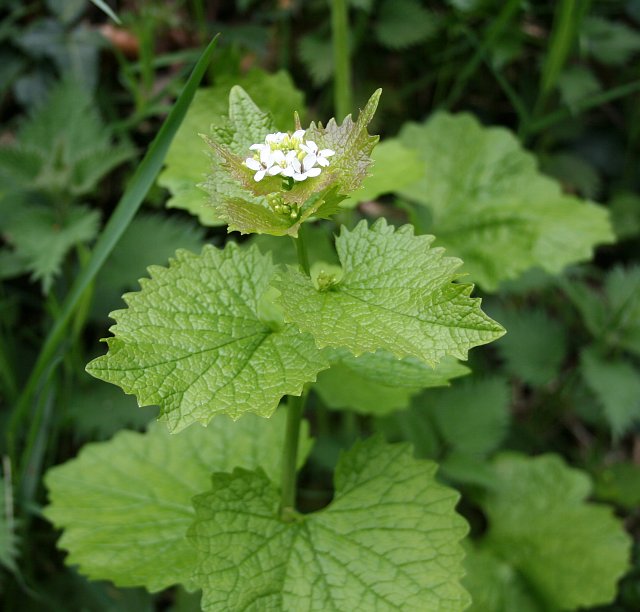
    The February meeting of the New England Botanical Club will take place Friday, February 1 at 6:45 in the Haller Lecture Hall (Room 102) of the Geological Museum, 24 Oxford Street in Cambridge. The speaker will be Dr. Kristina Stinson, Assistant Professor, Department of Environmental Conservation at University of Massachusetts/Amherst. Her topic is The Ecology and Impacts of Garlic Mustard (Alliaria petiolata). Her research is focused on plant species’ responses to biophysical stress and climate variation in forests, cities, and alpine ecosystems. This work is driven by theoretical questions about plant life histories, and how local processes within and among plant populations can help explain broader geographic distributions. The unifying goals of this work are: 1) to advance fundamental research in experimental plant population dynamics and ecology; and 2) to provide scientific guidance for restoration, management, and species conservation.  For complete information visit http://rhodora.org. Free and open to the public.

    Image result for garlic mustard (alliaria petiolata)

  • Wednesdays, January 16 – March 6, 5:30 pm – 8:30 pm – Planting Plan Design Studio

    Learn how to design a planting plan for private and public garden spaces in this five week Berkshire Botanical Garden Course, in conjunction with Berkshire Community College. Explore the manipulation of space by using plant material through a series of exercises dealing with form, color, and texture. Students will consider the nature of plant characteristics in specific design settings. Style of house will be used for a source of inspiration while honoring the horticultural needs of each plant. Students will make presentations for each project, and class critiques will be positive, instructive, and essential to the learning process. This is a participatory class. Required text: Professional Planting Design by Scott Scarfone. Prerequisites: Herbaceous Plants, Ornamental Woody Plants, Drafting for Garden Design. Classes will take place in the Education Center at Berkshire Botanical Garden from January 16 through March 6, from 5:30 – 8:30.

    Instructor: David Dew Bruner, A.S.L.A., is an award-winning landscape architect and fine artist with over 35 years of experience ranging from Deputy Administrator of Riverside Park, NYC, to amusement park design, historical restoration and all scales of residential design. Originally from New Orleans, he has a B.L.A. and a B.F.A. from LSU as well as an M.L.A. from the University of Massachusetts.  BBG Members: $350, Non-Members: $385. Registration information may be found at https://www.berkshirebotanical.org/events/planting-plan-design-studio

    Image result for Professional Plant Design Scott Scarfone