Tag: University of Vermont

  • Saturday and Sunday, January 4 & 5, 9:00 am – 4:00 pm – The Science of Plant Propagation

    In this two day Berkshire Botanical Garden in person course on January 4 and 5 from 9 – 4, learn the art and science of plant propagation with a focus on the basic botany needed to understand and successfully propagate plants. Sexual and asexual propagation methods including sowing seeds, cuttings, grafting, layering, and division will be covered. Students will learn the fascinating science behind propagation along with the various techniques used to create new plants.

    Adam Wheeler started working and playing with plants at Broken Arrow Nursery in 2004 after completing his BS degree in Urban Forestry and Landscape Horticulture at the University of Vermont. His favorite role at Broken Arrow Nursery is plant propagation and the acquisition and development of new plants. Adam is a past recipient of the Young Nursery Professional Award from the New England Nursery Association and is the current Vice President of the North American Maple Society. He loves to share his passion for plants through photography and educational outreach. As a result, he lectures widely on a variety of subjects and is also an adjunct lecturer at Naugatuck Valley Community College and the Berkshire Botanical Garden. With his spare time he enjoys cultivating his eclectic collection of rare and unusual plants, rock climbing and competitive giant pumpkin growing!

    $215 for BBG members, $240 for nonmembers. Register at www.berkshirebotanical.org.

  • Saturday, May 1, 10:00 am – 11:30 am – Thinking Outside the Box: Using Excellent Plants in Creative Ways

    On Saturday, May 1 at Hollister House & Gardens in Washington, Connecticut, Adam Wheeler of Broken Arrow Nursery in Hamden, Connecticut will share knowledge of  trees, shrubs and conifers that are often overlooked by gardeners and landscape designers when planning gardens.  This expert plantsman will present creative and unique approaches to using these plants. Gain insight into the development of unusual plants, the value and use of foliage color and texture, and creating unexpected accents though and assortment of pruning and training techniques.   Using a strong theme of diversity, Adam will showcase some of the unique varieties and cultivars available to gardeners….many of which should be new to the audience.   In addition, he will emphasize creative ways to utilize more familiar species.  Learn to develop a thought process around the plants we choose to build our gardens with and to reinforce an attitude that gardening is fun and should be as much about the process as the end result.

    Adam will bring a selection of plants from Broken Arrow available for purchase after his talk.

    Adam started playing with plants at Broken Arrow in 2004 after completing his BS degree in Urban Forestry and Landscape Horticulture at the University of Vermont. His favorite responsibilities at the nursery include plant propagation and the acquisition and development of new plants. He is a past recipient of the Young Nursery Professional Award from the New England Nursery Association and is the current Vice President of the North American Maple Society. He loves to share his passion for plants through photography and educational outreach.

    Limited seating. Reservations are required for all Barn Talks. Masks mandatory in the Barn.

    HHG Members $25, Non-members $35. Register at https://hollisterhousegarden.org/ or call 860-868-2200

  • Monday, October 19, 1:00 pm – 2:00 pm – University of Vermont Pringle Herbarium, Online

    Native Plant Trust has partnered with staff at university herbaria throughout New England to offer a special inside look at the region’s most impressive plant specimen collections. All programs will be conducted virtually. On Monday, October 19 from 1 – 2, virtually visit the University of Vermont’s Pringle Herbarium, led by David Barrington. $12 for NPT members, $15 for nonmembers. Register at http://www.nativeplanttrust.org/events/university-vermont-pringle-herbarium/

  • Sundays, March 8 – April 5, 1:30 pm – 3:30 pm – Cannabis Lecture Series

    Learn more about the plant that has been making news and sparking change across the country. In each lecture, experts will cover a different topic related to cannabis, as well as its connection to people throughout history. Topics include ethnobotany, evolution, horticulture, taxonomy and genetics, and hemp. Join us for one lecture or all. 

    March 8 will feature Peter Apicella, University of Connecticut, on Genetics and Taxonomy. March 15 lecture is on Horticulture with Maggie Kinsella of Coyote Cannabis Corporation. On March 29, John de la Parra of Harvard University’s Herbaria teams with Ernest Anemone of the Arnold Arboretum to talk about Ethnobotany, and finally, on April 5, Monique McHenry of University of Vermont speaks on Evolution. $20 per lecture for Tower Hill members, $25 for nonmembers. Register at www.towerhillbg.org.


  • Sunday, March 3, 1:00 pm – 4:00 pm – Heirloom Apple Grafting

    Come join Broken Arrow Nurseries grafting guru, Adam Wheeler, on Sunday, March 3 from 1 – 4 at Berkshire Botanical Garden for this hands-on workshop that explores the world of grafting heirloom apples. Participants will be given a brief lecture that explores the methods and intricacies of this time-tested craft. Following the lecture, participants will put this newfound knowledge to work by grafting a few specimen apples of their own to take home.

    Adam Wheeler started playing with plants at Broken Arrow in 2004 after completing his B.S. degree in Urban Forestry and Landscape Horticulture at the University of Vermont. His favorite responsibilities at Broken Arrow Nursery include plant propagation and the acquisition and development of new plants. He is a past recipient of the Young Nursery Professional Award from the New England Nursery Association and is the current Vice President of the North American Maple Society. He loves to share his passion for plants through photography and educational outreach. As a result, he lectures widely on a variety of subjects and is also an adjunct lecturer at Naugatuck Valley Community College and the Berkshire Botanical Garden. With his spare time he enjoys cultivating his eclectic collection of rare and unusual plants, rock climbing and competitive giant pumpkin growing! $35 for BBG members, $45 for nonmembers. Register at https://www.berkshirebotanical.org/events/heirloom-apple-grafting

    Related image

  • Wednesday, July 11, 1:00 pm – 4:00 pm – Pollinate New England Garden Installation Workshop

    Pollinate New England is an initiative to raise awareness of the steep decline in the insects, birds, and other animals that pollinate our plants and crops, and to encourage people to use native plants in their gardens to create habitat for these critical species. Attend a local, hands-on gardening installation workshop on Wednesday, July 11 from 1 – 4 with Mark Richardson, Director of the New England Wild Flower Society, and Annie White, horticultural research at University of Vermont and owner of NECTAR Landscape Design Studio, to learn about the plight of pollinators and the great garden plants native to your eco-region that best support them. Free. The workshop will take place at the South Shore Natural Science Center, 48 Jacobs Lane in Norwell, Massachusetts, which is a co-sponsor of the event. Register at http://www.newenglandwild.org/learn/our-programs/pollinate-new-england-garden-installation-workshop-ssymca-south-shore-natural-science-center

    Image result for pollinate new England

  • Saturday, April 7, 11:00 am – 1:00 pm – Ecology of Spring

    As soils, air, and water temperatures warm, wondrous developments take place in the landscape. In this season of mud, life previously dormant activates, hatches, expands, emerges. On Saturday, April 7 at 11 am, biologist Bryan Connolly will speak about natural developments and interconnections taking place at this time of year in New England and then will lead a walk of discovery through various environments found at the Arnold Arboretum. Dress appropriately for outdoor exploration. Fee $10 Arboretum member, $20 nonmember

    Register at http://my.arboretum.harvard.edu or call 617-384-5277.

    Image result for bryan connolly biologist
  • Saturday, April 21 – The 14th Annual Great Gardens & Landscaping Symposium

    Saturday, April 21 – The 14th Annual Great Gardens & Landscaping Symposium

    The 14th Annual Great Gardens & Landscaping Symposium will take place Saturday, April 21 at The Woodstock Inn & Resort in Woodstock, Vermont. The symposium features:

    Five info-packed lectures led by nationally and regionally renowned professionals in their fields. Dr. Leonard Perry, Horticulture Professor Emeritus from the University of Vermont will speak on Top Flowers and Vegetables for Northern Gardens, and Gardening in a Changing Climate. Katherine Tracey of Avant Gardens will present Succulent Love. Valerie Rollins of Four Star Greenhouse will Discover the Magic Behind Growing Great Herbs, and Kerry Ann Mendez of Perennially Yours will speak on New and Unusual Perennials, Flowering Shrubs, and Annuals.

    A Gardeners Marketplace runs all day with plant vendors, artisans, gardening gifts and products. Terrific handouts, door prizes and garden gifts for everyone!

    Special overnight room rates for symposium attendees at The Woodstock Inn and Resort. This is an opportunity to connect with hundreds of gardeners from around the Northeast and beyond. Register online ($98) at https://pyours.com/symposium/

    Image result for Dr. Leonard Perry book
  • In Memoriam – Elizabeth Farnsworth

    On October 27, Dr. Elizabeth Farnsworth, the New England Wild Flower Society’s senior research ecologist, died unexpectedly at her home in Amherst, Massachusetts. She was 54. For those who knew and worked with her, who played music, paddled, or hiked with her, who cleaned seeds beside her while swapping stories at the long tables at Garden in the Woods and Nasami Farm, who took her online courses or heard her lectures, “unexpectedly” is a vast understatement. The words “Elizabeth” and “died” do not belong on the same page. That she was in her prime, radiating warmth and vitality, a vivid picture of apple-cheeked, wild-maned health, makes this notion profoundly hard to accept, and bitterly unacceptable.

    After all, as one can imagine her shouting in the face of whatever stopped her heart that day, she still had so much to do.

    She already had packed a lot of achievement into her foreshortened life, as at least one grieving colleague observed. She was an accomplished botanist, educator, and scientific illustrator. At the time of her death, Elizabeth was co-leading the Society’s effort to conserve seeds of hundreds of rare plant species throughout New England. But Elizabeth’s many contributions to the Society started more than two decades ago. Recent members might know that she wrote, constructed, and taught the Society’s first set of online botany courses and wrote the ground-breaking “State of the Plants” report. A few years earlier, she co-led the National Science Foundation grant for developing Go Botany, our interactive online guide to the entire New England flora, and then won an additional grant from the same source to support student research in conservation biology. She coordinated planning for the conservation and management of more than 100 species of rare plants. She illustrated dozens of entries in Flora Novae Angliae by Arthur Haines, the Society’s research botanist. And with a grant from the Institute of Museum and Library Services, she conducted an assessment of seed banking and collections practices at the Society and published a model protocol by which to prioritize target populations for seed collection. A natural and passionate teacher, Elizabeth jumped in to serve as interim education director in 2013, arranging all the courses the Society offered.

    The Society is not the only institution that will miss her and her scholarly contributions. When she died, Elizabeth was serving as senior editor of the botanical journal Rhodora and on the graduate faculties of the University of Massachusetts Amherst and the University of Rhode Island. Before that, she also had taught at Smith, Mount Holyoke, and Hampshire colleges and the Conway School of Landscape Design. As a writer, she displayed the rare ability to address both academic peers and novice botanists with equal clarity—and not a whit of condescension for the latter. To date, she had published 54 peer-reviewed scientific journal articles and 61 invited publications for public media. She also co-authored the award-winning A Field Guide to the Ants of New England, which she also illustrated; the Connecticut River Boating Guide: Source to Sea; and the Peterson Field Guide to the Ferns. Her delicate, precisely rendered illustrations also grace the pages of Natural Communities of New Hampshire and three other books.

    How, then, did she find time to deliver more than 230 invited presentations throughout the world, much less to sing and play guitar semi-professionally and paddle her prized hand-built kayak? Alas, it is too late to ask. She loved to travel, preferably in further exploration of the natural world, and, at various times in her career, she conducted research on ecosystems all over the globe, focusing on conservation, plant physiology, mangroves, and climate change. She served as a scientific consultant to the United Nations, the National Park Service, The Trustees of Reservations, the U.S. Forest Service, the Massachusetts and Connecticut Natural Heritage programs, and the Mount Grace Land Conservation Trust.

    Brilliance marked her early: At Brown University, Elizabeth earned her B.A. in environmental studies in seven semesters, graduating with honors. She went on to study at University of Vermont, receiving her M.S. in field botany. While earning her Ph.D. at Harvard University, she was awarded a Bullard Research Fellowship and a National Science Foundation Postdoctoral Fellowship. Her dissertation on mangrove seedlings launched a journey to 17 countries as a Harvard Traveling Scholar, to conduct a comparative survey of mangroves. She was honored to be chosen as a teaching assistant to E. O. Wilson, with whom she shared a passion for ants.

    Elizabeth, a gifted storyteller, enjoyed sharing tales of her travels and other adventures—about the time all the members of the Grateful Dead crashed at the house she shared with roommates in college, about sitting around camp with David Attenborough in a South American rainforest, about leeches invading unmentionable places (which, of course, she mentioned). Now her friends, colleagues, and students are seeking solace by sharing our memories and stories about her.

    “She was that rare human being who was talented in both the sciences and the arts, who excelled in everything she did,” said Director of Conservation Bill Brumback, the person at the Society who has worked most closely with Elizabeth over the years. “And she made the world a little better for those who knew and worked with her.”

    For those who would like to honor Elizabeth’s legacy with a donation, her family suggests sending donations to New England Wild Flower Society, Hitchcock Center for the Environment, or any other conservation organization of the donor’s choice.

    Friends and family members are planning a memorial celebration in western Massachusetts, probably after Thanksgiving. For further information on developments, check http://newfs.org periodically.

  • Saturday, August 26, 10:00 am – 4:00 pm – Hops, Ales and Brewing, Oh My!

    Saturday, August 26, 10:00 am – 4:00 pm – Hops, Ales and Brewing, Oh My!

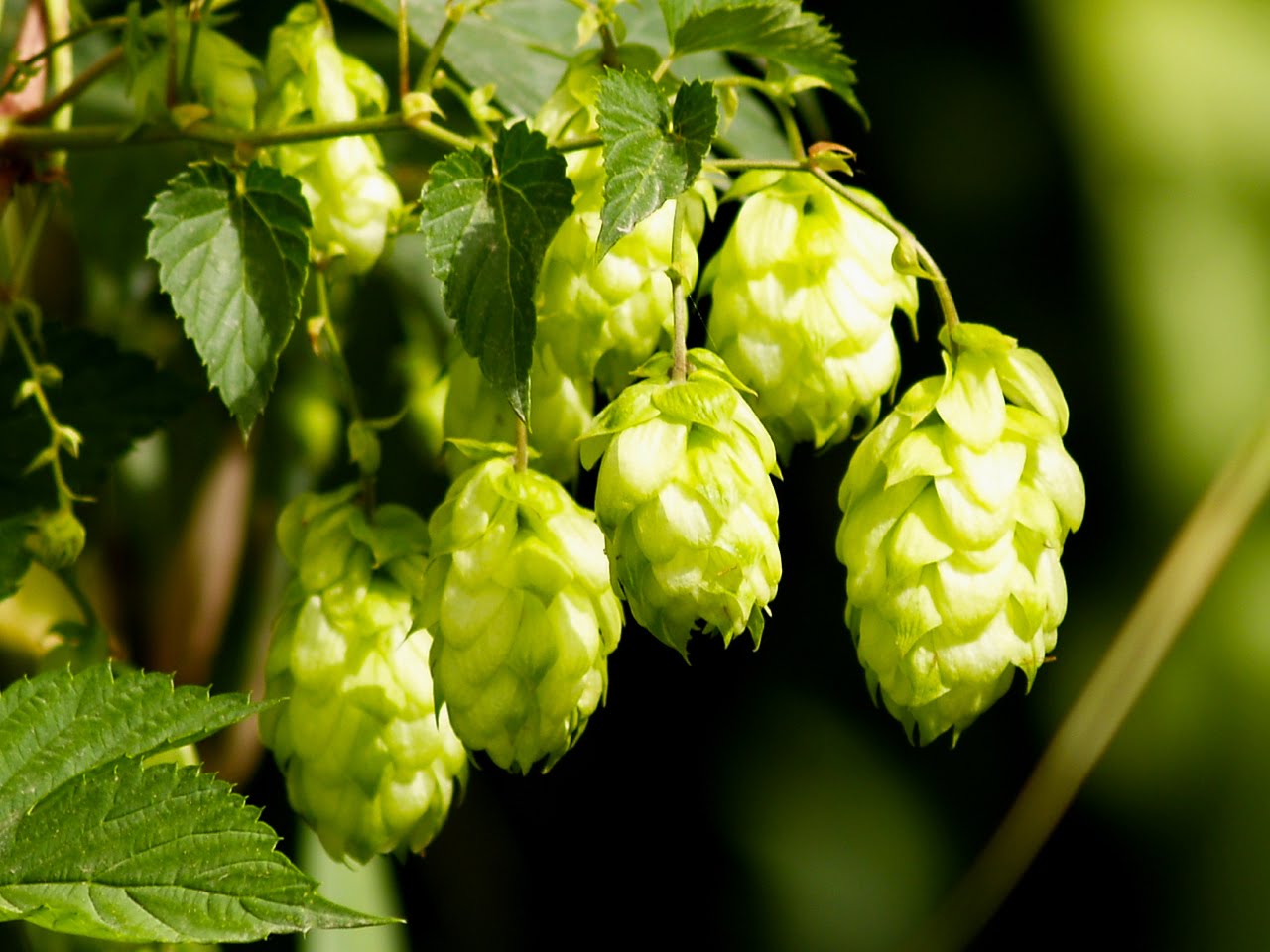
    The Gardens at Elm Bank, and Barleycorn’s in Natick, present a full day on hops and their use in brewing on Saturday, August 26 from 10 – 4. Dr. Heather Darby, Agronomist and Soils Specialist with the University of Vermont will cover the basics for growing hops in the Northeast, including information on site selection, variety selection, fertility management, irrigation systems, and pest management. Protocols to determine harvest times, harvest equipment, drying requirements, and storage will also be covered. Come and learn from UVM’s vast experience in growing hops in our region.

    After, we will harvest hops from our Seed to Table Garden at Elm Bank and rejoin at Barleycorns in Natick, where we will use those hops to brew our own 3 Goddess Pale Ale. $60 Mass Hort members; $85 general admission. *Add $50 to bring home a case of the brew. Sign up at www.masshort.org.