Tag: Weld Hill Research Building

  • Thursday, July 19, 9:00 am – 12:30 pm – Tree Load in Risk Assessment

    This half-day Arnold Arboretum course on July 19 with Jerry Bond, Urban Forestry Consultant at Urban Forest Analytics LLC will demonstrate how to incorporate estimates of tree load into ordinary tree risk assessment. Jerry Bond will present the concept and complexity of tree load and provide an overview of the research about load factors. He will then move on to solving the problem of including tree load, the most important development in the field over the last two decades, into the daily work of an arborist. In an outdoor session, participants will apply what has been learned to develop a load profile. The program concludes by considering the utility of this approach across the tree industry. This program takes place at the Arboretum’s Weld Hill Research Building, located at 1300 Centre Street, Roslindale. $75. Register at http://my.arboretum.harvard.edu or call 617-384-5277.

    Image result for tree load in risk assessment

  • Friday, June 1, 2:00 pm – 5:00 pm – Identifying Ferns of the Arnold Arboretum

    Considering its size and location New England has a relatively rich flora of ferns and fern allies (clubmosses, spikemosses, and quillworts). While it is possible to see almost all these species somewhere in the state of Massachusetts, several can be found at the Arnold Arboretum. Fern specialist Jacob Suissa will teach the anatomy, reproduction, and key identifying characters that will help you to identify the ferns and fern allies of the Arboretum and New England. Participants will begin indoors at the Arboretum’s Weld Hill Research Building with a lecture and then move outdoors to Hemlock Hill and Bussey Brook for a fern foray. Dress for indoor and outdoor learning. The class will take place Friday, June 1, from 2 – 5 (originally scheduled for June 3, so take note.) Fee $40 Arboretum member, $50 nonmember. Register at http://my.arboretum.harvard.edu or call 617-384-5277.

    Image result for arboretum ferns

  • Thursday, July 20 – Saturday, August 12, 9:00 am – 8:00 pm (weekdays) – Plant Anatomy: Development, Function, and Evolution

    This two-week summer short course, July 20 – August 12, will be taught by experts from around the world as an intense lecture, laboratory, and living collections learning experience. The course will be based at the Weld Hill Research Building at the Arnold Arboretum, which offers a state-of-the-art microscopy laboratory for teaching and sits amid the 15,000+ living specimens of more than 2,200 species at the Arnold Arboretum.

    With the opportunity to bring molecular genetic and genomic tools to almost any clade of plants, it is essential to understand the biology of the organisms in question. A key challenge will be to link comparative developmental genetics to existing bodies of knowledge; notably the over two hundred year legacy of plant anatomy. This integration is critical as the phylogenetic, structural, and ecological breadth of plant taxa open to study expands, and potential questions become increasingly sophisticated. This course will provide a working knowledge of tools and concepts that are central to understanding the anatomical basis for structural and functional diversity.

    Instructors:

    Pieter Baas (Naturalis Biodiversity Center)
    Pamela Diggle (University of Connecticut)
    William (Ned) Friedman (Harvard University)
    Peter Gasson (Royal Botanic Gardens, Kew)
    Cynthia Jones (University of Connecticut)
    Elisabeth Wheeler (North Carolina State University)

    Deadline for applications: April 15. For complete information and syllabus visit https://www.arboretum.harvard.edu/education/aa-summer-course/

  • Thursday, October 20, 7:00 pm – 8:30 pm – Wild By Design

    Can nature—in all its unruly wildness—be an integral part of creative landscape design? With beautiful images, award-winning designer Margie Ruddick urges us to look beyond the rules often imposed by both landscaping convention and sustainability checklists. Instead, she offers a set of principles for a more creative and intuitive approach that challenges the entrenched belief that natural processes cannot complement high-level landscape design.

    On Thursday, October 20 at 7 pm in the Weld Hill Research Building, 1300 Centre Street in Roslindale, Ruddick will explain the five fundamental strategies she employs, often in combination, to give life, beauty, and meaning to landscapes. Drawing on her own projects—from New York City’s Queens Plaza, formerly a concrete jungle of traffic, to a desertscape backyard in Baja, California, to the Living Water Park in Chengdu, China—she offers guidance on creating beautiful, healthy landscapes that successfully reconnect people with larger natural systems. Ruddick stretches the boundaries of landscape design, offering a set of broader, more flexible strategies and practical examples that allow for the unexpected exuberance of nature to be a welcome part of our gardens, parks, backyards, and cities.

    Fee: Free Arboretum members and students; $10 nonmember. Register at my.arboretum.harvard.edu or call 617-384-5277.

  • Monday, December 2, 6:30 pm – 8:00 pm – The Papers of Frederick Law Olmsted Volume VIII: The Early Boston Years, 1882 – 1890

    Frederick Law Olmsted relocated from New York to Boston in the early 1880s. With the help of his stepson and partner, John Charles Olmsted, his professional office grew to become the first of its kind: a modern landscape architecture practice with projects throughout the country. During the period covered in Volume VIII of the Olmsted Papers, Olmsted and his partners designed the park system of Boston and Brookline—including the Back Bay Fens, Franklin Park, and the Muddy River Improvement.

    Though Olmsted would never provide a definitive treatise on landscape architecture, this volume contains some of his most mature and powerful statements on the practice of landscape architecture. Join The Arnold Arboretum and the sponsors below on Monday, December 2 at the Weld Hill Research Building for a lecture, panel discussion and celebration of this newly published landscape design resource.  Fee: $10 (Students: Call 617.384.5277 to register for free.)

    Doors open at 6:00pm. Light refreshments served.  Books available for purchase and signing.  Weld Hill Research Building is located at 1300 Centre Street, Roslindale, MA.

    Sponsored by the Arnold Arboretum of Harvard University, Emerald Necklace Conservancy, Friends of Fairsted, and National Association for Olmsted Parks in collaboration with the City of Boston, Parks and Recreation Department, Frederick Law Olmsted National Historic Site, Massachusetts Department of Conservation and Recreation, and Town of Brookline, Parks and Open Space Division.

    http://www.olmsted.org/storage/images/00_Home_Page/volume_8_cover.jpg

  • Tuesday, March 26, 12:15 pm – 1:15 pm – Japanese Flowering Cherries: A 100 Year-long Love Affair

    Last year marked the 100th anniversary of the planting of the famous flowering cherries surrounding the Tidal Basin in Washington, DC.  Flowering cherries have long been a captivating presence in Japan and throughout the U.S. since their introduction 100 years ago. Although the Tidal Basin plantings seem like a single instance in time, the interest in flowering cherries in the early 1900s was widespread and these plants came into America through a number of different sources. Along with the famous plantings in Washington, there is a long history of growing flowering cherries in Philadelphia. In this Tuesday March 26 lecture in the Weld Hill Research Building at the Arnold Arboretum, Tony Aiello will discuss the introduction of flowering cherries into the U.S. and will focus on their history in Philadelphia. Along with his interest in the history of cultivation of flowering cherries, Mr. Aiello has been using the Arboretum’s cherry collection as a model for preserving our horticultural heritage and at the same time providing best practices of veteran tree care. He has been working with other botanic gardens in the Northeast to identify, propagate, and share rare varieties of flowering cherries.  Free, but registration requested at www.arboretum.harvard.edu.  The speaker is the Gayle E. Maloney Director of Horticulture and Curator, Morris Arboretum, University of Pennsylvania.  Beautiful photo from the Brooklyn Botanic Garden.

    http://farm3.staticflickr.com/2798/4519121364_8ed29ba5e9.jpg

  • Monday, October 29, 9:30 am or 7:00 pm – Gardens for a Beautiful America

    Monday, October 29, 9:30 am or 7:00 pm – Gardens for a Beautiful America

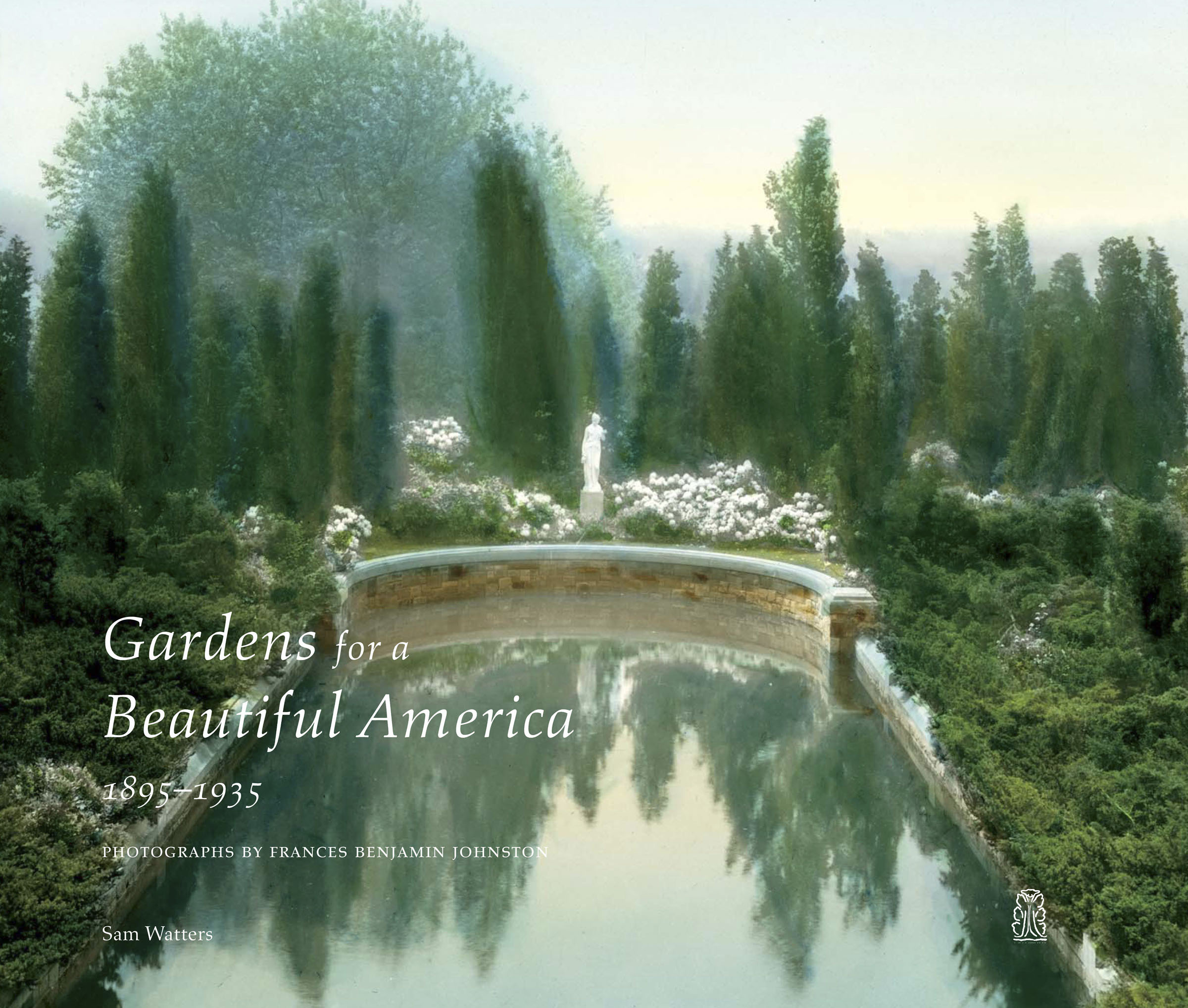
    At the opening of the 20th century, pioneering photographer Frances Benjamin Johnston (1864 – 1952) was front and center in the movement to beautify America. Gilded age industrialism had brought a new prosperity to life in the United States, but at the price of once pristine forests, rivers, and clear air. In response, the Garden Beautiful movement began. Johnston, a progressive and perhaps one of America’s first “house and garden” photojournalists, was enlisted to photograph gardens from coast to coast. Historian Sam Watters will reveal a sampling of Johnston’s images for lectures delivered across America to advance the Garden Beautiful movement. He will speak about her as an artist and the relevance of her work as a cultural history collection. Over the course of 5 years, historian Sam Watters scanned through millions of books and magazines to match Johnston’s unlabeled hand painted glass garden slides (now in the collection of the Library of Congress) to the sites they depicted, bringing them to light again after more than 70 years, and showing them as a collection of significance in his new book Gardens for a Beautiful America.

    The morning lecture will take place at the new Weld Hill Research Building, 1300 Centre Street in Roslindale, and optional tours of the building will be available at 9:30 am for those registered for the morning lecture. For those unable to attend in the morning, an evening session will be held in the Hunnewell Building, 125 Arborway in Jamaica Plain. Due to space considerations, limited spaces are available for both lectures, and early registration will be encouraged. Co-sponsored by The Garden Club of the Back Bay with Arnold Arboretum of Harvard University, Friends of Wellesley College Botanic Gardens, Photographic Resource Center at Boston University, and The Garden Conservancy.  Garden Club of the Back Bay members will receive written notification in the mail.  All others may register at www.arboretum.harvard.edu.  Fee to the public  is $20 through October 15, and $25 thereafter.

  • Friday, March 2, 5:30 pm – 7:00 pm – Conifers Around the World

    In 1975, dendrologist Zsolt Debreczy and nature photographer István Rácz (then still a university student) set themselves a goal: to search out and document all the conifers in the world’s temperate zones and their adjacent regions — if possible in their most pristine natural habitats. Over the next thirty years, and with the eventual assistance of over a hundred nature-loving volunteers, generous financial supporters, and field associates from hundreds of regional and local institutes and organizations, Debreczy and Rácz spent almost 2,000 days (over five continuous years) in the field on the trail of conifers. They were able to visit and document the world’s most inaccessible conifer taxa and to include the accompanying flora and vegetation in their documentation. They compiled a collection of 340,000 photographs representing thousands of taxa and backed with precise documentation. This collaborative effort produced Conifers around the World in which they present 500 species of conifers of 52 genera, including several that were new to science. Join the Arnold Arboretum on Friday, March 2, from 5:30 – 7 at the Weld Hill Research Building in celebrating this accomplishment, seeing some of these exquisite images, and hearing about this grand search for conifers.  Free, but registration requested at www.arboretum.harvard.edu.

  • Wednesday, November 16, 7:00 pm – 8:30 pm – Botany of Thanksgiving

    Pumpkins, squash, peas, beans, turnips, carrots, potatoes, parsnip, spinach, corn, apples, pecans, cabbage, and more are common components of a Thanksgiving feast. But have you considered these fruits, tubers, nuts, and vegetables from a botanical perspective? In a novel analysis of this traditional meal, Professor Pamela Diggle, Evolutionary Biologist at University of Colorado and Harvard University, will open your eyes to the plant anatomy and physiology that preceded the creation of, say, your grandmother’s sweet potato-marshmallow casserole or your uncle’s savory succotash.  This Arnold Arboretum class will be held Wednesday, November 16, from 7 – 8:30 in the Weld Hill Research Building at the Arboretum.  Free, but registration requested.  Visit www.arboretum.harvard.edu for registration and more information.