Tag: Arnold Arboretum

  • Saturday, April 30, 9:00 am – 12:30 pm – Nature Photography Workshop

    On Saturday, April 30 from 9 – 12:30 at the Arnold Arboretum, improve your photographs of nature in this half-day workshop, a talk followed by hands-on experience in the Arnold Arboretum at one of the most beautiful times of year. Learn about composition, color, light, depth of field, and focus. Bring your camera and manual and familiarize yourself with the operation of your camera prior to the workshop. Workshop limited to ten participants, beginners to advanced. $60. Photo courtesy of www.eliotschool.org. Register at www.arboretum.harvard.edu.

  • Thursday, April 21, 2:30 pm – 4:00 pm – A Hidden Treasure: Arnold Arboretum Herbarium of Cultivated Plants

    Participants in this special tour on Thursday, April 21 from 2:30 – 4 will take a look at the historic Arnold Arboretum collection and find out how and why an herbarium is assembled.

    Irina Kadis, Curatorial Assistant at the Arboretum, will be your guide. Free, but registration is limited and required. Call 617-384-5251, or email adulted@arnarb.harvard.edu.

  • Monday, April 18, 7:00 pm – 8:30 pm – Plant Diversity: The Leitmotif of Botanical Gardens

    Plant diversity, whether for conservational or aesthetic value, is the recurring theme in botanical gardens that connects our displays, research, and visitor experiences to our missions. While the domestication of crop species has significantly altered their genomes from that of their wild crop relatives, the majority of horticultural crops are not that far removed from their wild relatives. Thus, we still explore, document, and cultivate the untapped diversity in the world’s temperate floras to enrich our gardens.

    Join Richard Olsen, Director of the US National Arboretum, on Monday April 18 at 7 pm in the Hunnewell Building, 125 Arborway, as he considers what legacies remain from early plant explorations, how do we document and capture diversity, and where do we go from here, in a century that will see so much lost to globalization?

  • Saturday, April 16, 3:00 pm – 3:45 pm – Images of America: Arnold Arboretum

    Join Lisa Pearson, Head of the Arnold Arboretum Horticultural Library, at the Arboretum on Saturday April 16 at 3 pm as she discusses her new book Images of America – Arnold Arboretum. She will speak about the extensive photograph collections of the Arboretum and how she used them to tell the institution’s story. Copies of the book will be available for sale and signing. Free, but registration requested at 617-384-5277.

  • Sunday, April 10, 1:00 pm – 2:30 pm – The Arnold Arboretum Before It Was An Arboretum

    Join Arnold Arboretum docent Brian Karlsson-Barnes at 1 pm on Sunday, April 10 in the Hunnewell Building, 125 Arborway, and step back in time to the early 19th century. Imagine the Arboretum before it was an Arboretum. Most of the land was treeless, cleared to grow crops and hay, graze animals, and supply firewood for Boston and nearby Third Parish of Roxbury, now Jamaica Plain. Hear how gentleman farmer, Benjamin Bussey, consolidated a number of small farms into a large estate, and how he safe-guarded and valued this land that would become the Arnold Arboretum. Free.

    In case of inclement weather, contact 617.384.5209.

  • Tuesday, March 29, 7:00 pm – 8:30 pm – Maria Sibylla Merian: The First Ecologist?

    Tuesday, March 29, 7:00 pm – 8:30 pm – Maria Sibylla Merian: The First Ecologist?

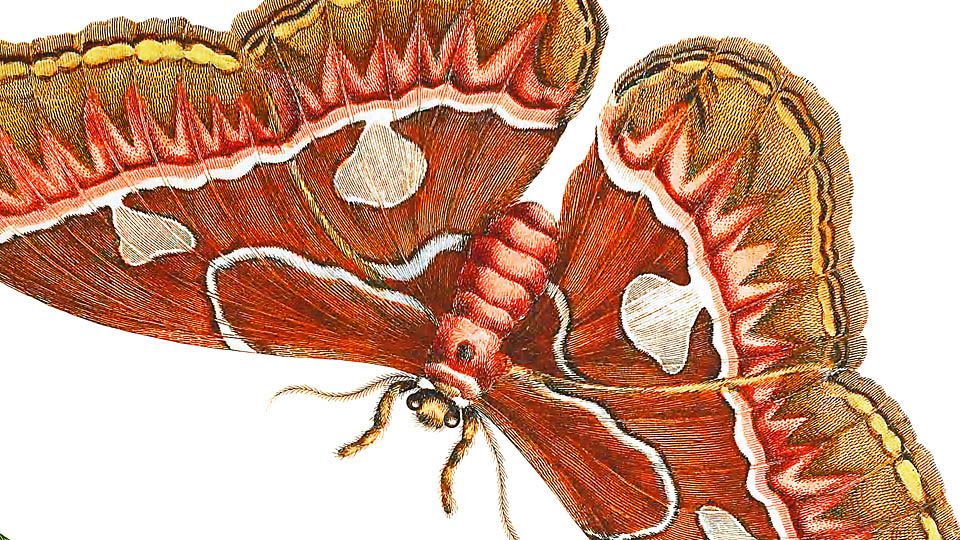
    Maria Sibylla Merian’s (1647 – 1717) illustrations were not only the first to depict the life cycles of insects along with their plant hosts, they were also the first to emphasize interactions among the species portrayed – the very foundation of the study of ecology.  Kay Etheridge, Professor of Biology at Gettysburg College, provides an overview of Merian’s contributions to natural history.  Co-sponsored by The Friends of Wellesley College Botanic Garden and by the Arnold Arboretum of Harvard University, the program will be held Tuesday, March 29 beginning at 7 pm in the Arnold Arboretum’s Hunnewell Building, 125 Arborway in Boston.  Members of sponsoring organizations – $5; non-members $10.  Register by calling 781-283-3094.

    images

  • Saturday, March 12, 10:00 am – 12:00 noon – Can I Grow It Here, Now, and How?

    Today’s horticultural climate offers a vast selection of native and exotic plants, soil amendments, watering systems, fertilizers, and methods of pest management. And today’s changing gardening climate offers a vast array of shifting seasons, unexpected storms, early-season heat spikes, late frosts, floods, and droughts, as well as a host of new diseases and insects. What’s a New England gardener to do in the face of all these challenges and choices? On Saturday, March 12 from 10 – noon at the Berkshire Botanical Garden, Dr. Kim Tripp, former Director of the Botanic Garden of Smith College and of the New York Botanical Garden, will identify immediate and pressing climate-change problems while sharing specific solutions for planning, planting, and keeping gardens and gardeners vital. Drawing on her extensive experience with growing thousands of different plants from around the world in stressful native and non-native environments, she will discuss how to design, plan, plant, and maintain diverse garden styles and plants in the northeastern U.S. in the face of increasing environmental change and unpredictability.

    Kim Tripp, D.O., Ph.D. After an extensive career dedicated to plants and botanical gardens, Dr. Tripp is now also a fully licensed osteopathic physician in practice at Goldman/Tripp Osteopathic Healthcare in Sharon, CT. She completed her post-doctoral work in plant science at the Arnold Arboretum of Harvard University and has taught and lectured on a broad range of horticultural and botanical subjects. $35. Register online at www.berkshirebotanical.org.

  • Wednesday, January 13, 8:30 am – 4:30 pm – Large-Scale Landscapes Symposium

    On January 13, 2016 (Snow Date January 14), join ELA and Wellesley College for a symposium on the development and maintenance of large-scale landscapes that utilize fewer inputs, are designed and maintained with the environment in mind, and become more sustainable over time. Experts who work daily in successful, sustainable large-scale landscapes will lead four presentations and one panel discussion. If you are a landscape professional responsible for planning and maintaining the landscapes of college campuses, municipal parks, cemeteries, public gardens, land trusts, private estates, or other large landscapes, join ELA as we explore ecological options for large-scale landscapes with a distinguished lineup of presenters. Included in the program are Ronnit Bendavid-Val of the Brooklyn Botanic Garden on Addressing Wear and Tear in High Use Areas, a panel discussion on Maintaining the Maturing Landscape with Mark Richardson, Horticulture Director of the New England Wild Flower Society, Ray Oladapo-Johnson, Director of Park Operations at the Emerald Necklace Conservancy, Sue Pfeiffer, an arborist at the Arnold Arboretum of Harvard University, and John Olmstead, Wellesley College Landscape Manager. Also featured is a talk on Designing Rain Gardens for Long-lasting Success with Clay Larsen, Healthier and Lower-Cost Lawns with Chip Osborne, and Reawakening Large Landscapes: Activating the Space with Sandy Vorce of Audubon’s Habitat Education Center and Wildlife Sanctuary. Fees $85 – $110. For complete information and registration visit http://www.ecolandscaping.org/event/large-scale-landscapes-symposium/

  • Friday, December 4, 6:45 pm – Red Needles in Green Haystacks: On the Trail of the Wild Paperbark Maple

    Dr. Michael S. Dosmann, Curator of Living Collections, Arnold Arboretum of Harvard University, will address the New England Botanical Club on Friday, December 4 beginning at 6:45 in Haller Hall on the Harvard University campus.  His lecture, open to the public, will be on Red Needles in Green Haystacks: On the Trail of the Wild Paperbark Maple. Since its initial introduction from China to the West by Ernest Henry Wilson in 1901, the paperbark maple (Acer griseum) has become rather common in cultivation, particularly in gardens, arboreta, and other managed ornamental landscapes. And yet, this species’ status is anything but common in the wild in central and western China. As part of a collaborative conservation initiative, the Arnold Arboretum is surveying wild populations, and comparing these with lineages introduced from the wild to get a global perspective of genetic diversity in this species. Photo courtesy of Cornell University. For further info see: http://www.rhodora.org/meetings/upcomingmeetings.html.

  • Arnold Arboretum Membership: The Gift That Grows

    Spread some joy over the holidays by sharing a unique gift that also sustains the Arnold Arboretum as a beloved landscape, important research collection, and community resource for education. Give friends and family a membership in the Friends of the Arnold Arboretum and share access to a world of plants, science, and exploration. As an Arboretum member, your gift recipient will receive a year of exclusive benefits, from our informative and award-winning publications to free plant(s) at our annual Plant Giveaway. For holiday giving, please respond by December 13 to enable processing and delivery before Christmas.  Order online at http://www.arboretum.harvard.edu/support/ways-to-give/