Tag: Arnold Arboretum

  • Through Tuesday, December 15 – Lilac Sunday T-shirt Competition

    Create a piece of Arnold Arboretum history & enter the contest to design the 2016 Lilac Sunday T-shirt!  The Arnold Arboretum of Harvard University invites artists of all ages to submit their designs for Lilac Sunday 2016.  The winning 2015 design is shown below.

    Lilac-themed t-shirts have been a tradition at Lilac Sunday for many years, and continue to be a highly anticipated and popular memento of this event. Entry is free, but entries must be received by Tuesday, December 15. For complete details visit http://www.arboretum.harvard.edu/news-events/lilac-t-shirt-contest/

  • Tuesday, December 8, 7:00 pm – 8:30 pm – A Beautiful Question: Finding Nature’s Deep Design

    Does the universe embody beautiful ideas? Artists as well as scientists throughout human history have pondered this “beautiful question.” Quantum physicist and Nobel laureate Frank Wilczek, PhD, Herman Feshbach Professor of Physics, Massachusetts Institute of Technology, and 2004 Nobel Laureate, has been inspired throughout his career by his intuition to look for a deeper order of beauty in nature, to assume that the universe embodies beautiful forms, whose hallmarks are symmetry—harmony, balance, proportion—and economy. In this December 8 lecture in the Hunnewell Building of the Arnold Arboretum, Professor Wilczek will share examples from Pythagoras, Galileo, Newton, Maxwell, Einstein, from twentieth century physics to the edge of knowledge today to demonstrate how our ideas about beauty and art are intertwined with our scientific understanding of the cosmos. Fee: Free Arboretum members and students, $5 nonmember.  Register at my.arboretum.harvard.edu or call 617-384-5277.

  • Through December 30 – Heritage Trees and Scenic Vistas of the Emerald Necklace

    You are invited to a photography exhibit by Erik Gehring entitled Heritage Trees and Scenic Vistas of the Emerald Necklace, which will be on view in Gallery 93 at the Brookline Senior Center, 93 Winchester Street in Brookline, now through Wednesday, December 30.  Erik is president of the Boston Camera Club, a professional and fine art photographer, and an environmental advocate.  He has shown extensively at galleries and juried exhibitions throughout Massachusetts and New Hampshire, and teaches photography for the Arnold Arboretum, the Eliot School, the Concord Art Association, and the Hyde Park Art Association. Photograph below copyright Erik Gehring.

  • Saturday, November 21, 1:00 pm – 2:30 pm – Fall into Health

    Enjoy the crisp fall air at the Arnold Arboretum as we round the corner to winter! This November 21, from 1 – 2:30, explore the less-traveled paths of the Arboretum on a brisk walk designed for getting fit. Pause to hear about interesting plants while you catch your breath. Please dress appropriately and bring water if needed. The walk will be lead by docent Rhoda Kubrick. In case of inclement weather, contact 617.384.5209.  Image below from www.orbitz.com. Free, registration requested at https://my.arboretum.harvard.edu/Info.aspx?DayPlanner=1463&DayPlannerDate=11/21/2015

  • Through February 14, 2016 – Drawing Trees, Painting the Landscape: Frank M. Rines (1892-1962)

    Draftsman, landscape painter, teacher, and writer, Frank M. Rines had an intense interest in, and skill for, drawing trees. He produced five books on drawing, which were mid- 20th century guides for instruction in landscape and tree drawing techniques. In Design and Construction in Tree Drawing, he concentrated on the form and structure of trees. Rines was skilled in the art of observation, taught and was committed to students and communities of artists throughout Boston and New England. As a draftsman and painter, he worked in pencil, watercolor, oil, and charcoal. Rines’s work is included in a number of museum collections including Harvard’s Fogg Art Museum, the Museum of Fine Arts in Boston, and Dartmouth’s Hood Museum in New Hampshire. The Arnold Arboretum of Harvard University will mount an exhibit of Frank M. Rines in the Hunnewell Building through February 14, 2016.

    Note: The Hunnewell Building lecture hall is often used for meetings and classes. Please call 617.384.5209 for exhibition availability, and refer to Hunnewell Visitor Center hours at  http://www.arboretum.harvard.edu/visit/hours-services-and-policies/.

  • Tuesday, November 17, 7:00 pm – 8:00 pm – Rocks, Resilience, and Conservation

    Tuesday, November 17, 7:00 pm – 8:00 pm – Rocks, Resilience, and Conservation

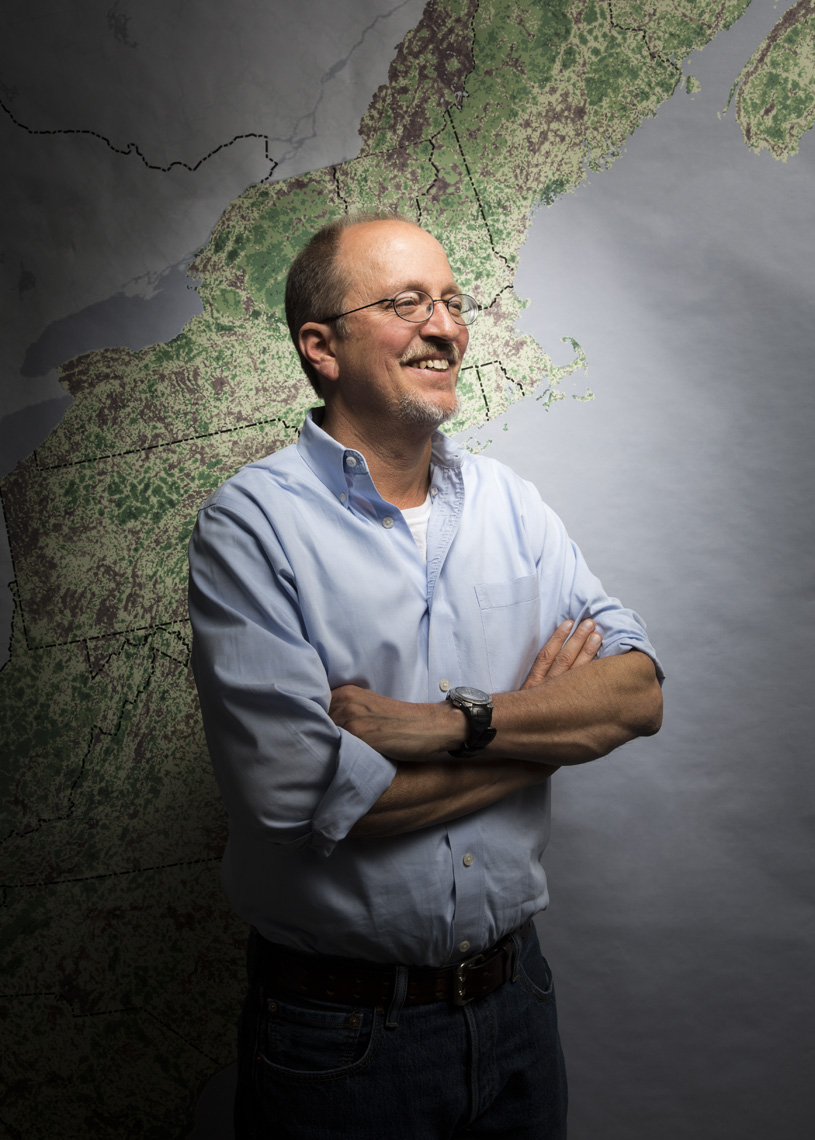
    Will species move in response to climate change? Yes, but where will they go and will they like it when they get there? Ecologist Mark Anderson, PhD, Director of Conservation Science, The Nature Conservancy’s Eastern U.S. Region, proposes that we step back from the individual species to examine the geology of places, looking at bedrock, sediment, and elevation, to correlate areas of species richness to future conservation strategies. His research suggests that these abiotic factors are better predictors of success than species-level climate change models. Come hear about his work in mapping the geophysical regions of New England with an eye towards conserving those that will support the greatest array of species into the future. The thinking is that the areas of most resilient will continue to support the greatest diversity of life, no matter the environmental challenges and changes. His assessment, done at an evolutionary timescale, provides critical data for scientists and conservationists considering how best to conserve landscapes and preserve biodiversity. The lecture takes place Tuesday, November 17 from 7 – 8 in the Hunnewell Building of the Arnold Arboretum. Fee: Free for Arboretum members and students, $5 nonmembers. Register at my.arboretum.harvard.edu or call 617-384-5277.  Photo by Ken Richardson.

    Mark

  • Thursday, November 5, 7:00 pm – 8:15 pm – Native Shrubs for Challenging Sites

    Jessica Lubell-Brand, PhD, Assistant Professor, Department of Plant Sciences, University of Connecticut, will speak at the Arnold Arboretum on Thursday, November 5 beginning at 7 pm on Native Shrubs for Challenging Sites.

    Native plants are popular for creating sustainable landscapes. Natives are also a desirable solution to the invasive plant problem, but they must be able to perform well in difficult landscape situations, like foundation plantings, and dry, shaded locations.

    Jessica will touch on readily available native shrubs, which can handle tough conditions as well as lesser-known native shrub taxa, suitable for challenging sites. $10. For more information call 617-384-5277, or email adulted@arnarb.harvard.edu.

  • Monday, November 2, 7:00 pm – 8:15 pm – Floral Rewards and Bee-havior

    How does learning shape behavior in bees? What roles do flowers play in influencing bee activity? Researcher Daniel Papaj, PhD, Professor and Associate Head, Ecology and Evolutionary Biology, University of Arizona, will speak at the Hunnewell Building in the Arnold Arboretum on Monday, November 2 beginning at 7 pm about floral rewards and discuss nectar guides, buzz pollination, and bee decision-making in that context. He will also share some great video of bees in action. Fee Free, but registration requested. Register at my.arboretum.harvard.edu or call 617-384-5277.

  • Saturday, November 7, 10:00 am – 12:00 noon – The Radicle Underground

    Saturday, November 7, 10:00 am – 12:00 noon – The Radicle Underground

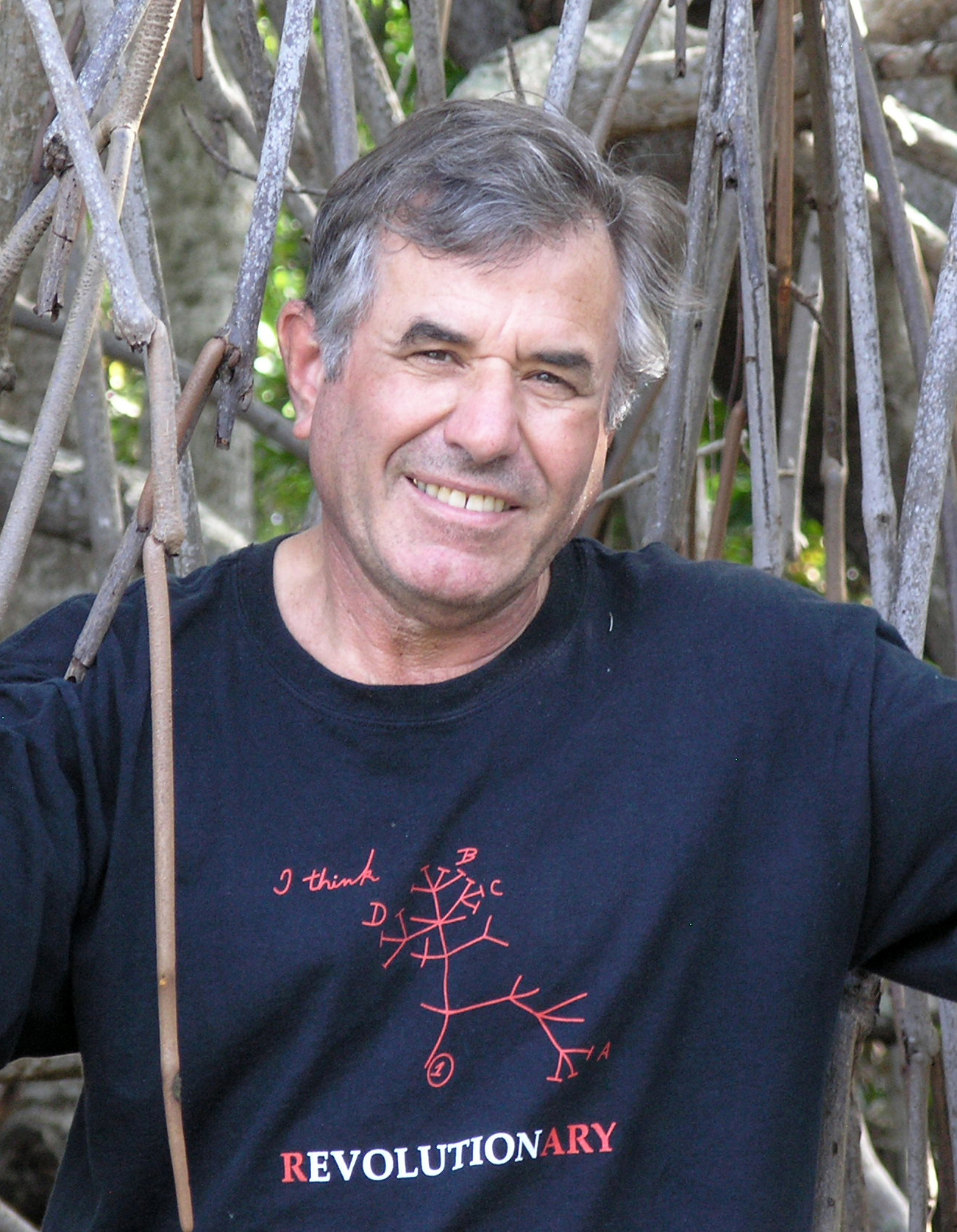
    Join Dr. Peter Del Tredici of Harvard University’s Arnold Arboretum on Saturday, November 7 from 10 – noon at Berkshire Botanical Garden for an exploration of the important relationship between plants and soil. Developing a clear understanding of what goes on below the ground will help make you a better gardener. Learn about the structure and function of woody- plant root systems as well as the practical aspects of when and how best to water and fertilize trees and shrubs. Dr. Del Tredici will also examine the all-important contribution that soil microorganisms make to the nutrition and survival of plants, both in nature and in cultivation. The lecture will also cover the pros and cons of various methods for “packaging” root systems in commercial nurseries and basic planting techniques. This lecture is a must for anyone who cares about their garden plants both large and small.

    Dr. Peter Del Tredici retired from the Arnold Arboretum of Harvard University in 2014 after working there for 35 years as Plant Propagator, Curator of the Larz Anderson Bonsai Collection, Editor of Arnoldia, Director of Living Collections and Senior Research Scientist. Dr. Del Tredici is an Associate Professor in Practice at the Harvard Graduate School of Design, where he has been teaching in the Landscape Architecture Department since 1992. He is the winner of the Arthur Hoyt Scott Medal and Award for 1999 presented by the Scott Arboretum of Swarthmore College, and in 2013 he was awarded the Veitch Gold Medal by The Royal Horticultural Society (England) “in recognition of services given in the advancement of the science and practice of horticulture.”

    You may register online ($25) at http://www.berkshirebotanical.org/event/peter-del-tredici-the-radicle-underground/?instance_id=3528 or call 413-298-3926, ext 15.

    OLYMPUS DIGITAL CAMERA

  • Sunday, November 1, 2:00 pm – 3:15 pm – Second Nature: An Environmental History of New England

    On Sunday, November 1 at 2 pm at the Arnold Arboretum, 125 Arborway, Boston, Richard W. Judd, PhD, Adelaide & Alan Bird Professor of History, University of Maine, will explore the mix of ecological process and human activity that shaped that history over the past 12,000 years. He traces a succession of cultures through New England’s changing postglacial environment down to the 1600s, when the arrival of Europeans interrupted this coevolution of nature and culture. A long period of tension and warfare, inflected by a variety of environmental problems, opened the way for frontier expansion. This in turn culminated in a unique landscape of forest, farm, and village that has become the embodiment of what Judd calls second nature, culturally modified landscapes that have superseded a more pristine first nature. Judd will relate significant cultural and ecological changes that have influenced the evolution of the New England landscape over time. $10 fee. Call 617-384-5277 for more information.