Tag: eventBrite

  • Tuesday, March 28, 1:00 pm – Texture in Floral Design Workshop

    Join Carolyn Ellis on Tuesday, March 28 at 1 pm at The First Lutheran Church of Boston, 299 Berkeley Street, to explore the role of texture in floral design. Create your own arrangement, following Carolyn’s step-by-step demonstration, or use workshop materials to create your own design. All materials, including container, flowers and tools will be provided but if you have favorite flower snips, feel free to bring them. There is a $65.00 non-refundable materials fee for this program.
     

    Carolyn has been designing flowers at the Museum of Fine Arts as an MFA Associate for more than ten years. Her work includes flower arrangements for the visitor center and for special events, holiday demonstrations for museum members, and training for incoming floral designers. She has done many Art in Bloom Roadshow demonstrations. Carolyn loves to share the basics of floral design with flower lovers, and one of her teaching videos for LexMedia cable television received an award for excellence in 2021.

    This program is for Garden Club of the Back Bay Members Only. For information on joining the Club to entitle you to participate, visit https://bostonflora.com/ Even counting the annual dues into the calculation, this class is good value. Plus, you are contributing to the beautification of the Back Bay and the Club’s commitment to urban tree care. Please rsvp by March 15 and pay the materials fee on Eventbrite by clicking HERE

    For questions about this program contact Nancy Cyr by clicking HERE. Nancy will keep a waiting list should spaces fill up. Out of respect for our fellow club members, please be sure to let her know if you cannot attend and need to cancel. 

    Tickets are non-refundable. If you cannot attend, we will consider your payment a contribution and you will receive an 
    acknowledgment. 

  • Tuesday, February 28, 5:00 am – 6:30 am Eastern (but recorded) – Garden Technology: Plant Breeding, A Short History, Online

    This is the second lecture in a six-week series of lectures which will look at the history and development of garden technology from Medieval times right up to the present day. The ‘technology’ of gardening has developed enormously over the past centuries due to mechanization, automation, advances in science – and we can now grow plants without soil, we have automated watering systems for our greenhouses and we can watch while the robot mower, controlled from our smartphones, trims our lawns to perfection. But although we may approach them differently, the tasks and challenges that face gardeners today are much the same as they were back in Tudor times and earlier: preparing the soil, planting, protecting, composting, propagating and so on and so on. The rise in the organic movement over the past few decades has reminded us that the gardeners of old knew at least as much about gardening and working in harmony with nature as we do now, so how have new technologies developed and progressed our gardening knowledge, practice, and techniques?

    The Gardens Trust has engaged a series of expert speakers to examine this question, including the renowned garden writer and designer, Noel Kingsbury, National Trust curator James Rothwell, expert on lawnmowers through the ages Keith Wootton, as well as regular Gardens Trust lecturers Jill Francis and our very own David Marsh; who will take a different technology in turn – tools, fertilizers, pest control, glasshouses, lawnmowers and plant breeding – and explore their history and development in relation to gardening.

    Speaker Noel Kingsbury will cover Plant Breeding on February 28. We owe our survival to plant breeding, the ability to produce productive, disease-resistant and resilient crops. This presentation outlines the basics of how we learnt the basics of plant genetics and applied them to the crops that feed us, along the way producing vast numbers of new varieties for our gardens. Although focused on edible crops, we’ll be introduced to some of the key breeders of ornamental garden plants: their plants and their methods. Attendees will be sent a Zoom link 2 days prior to the start of the talk, and again a few hours before the talk (If you do not receive this link please contact us). A link to the recorded session will be sent shortly after each session and will be available for 1 week. Tickets £24 or £5 each through Eventbrite. Register HERE.

    Noel Kingsbury is best-known as a writer on gardens, plants and especially as a promotor of ecological planting design. Along the way he has written about garden plant history and developed unfashionable thoughts about how we feed ourselves, including Hybrid: The History and Science of Plant Breeding (University of Chicago Press, 2009).

  • Thursday, November 17 – The 19th Century Garden: The Talented Miss Jekyll (1843-1932), Online

    Now known mainly as a garden designer and plantswoman, Gertrude Jekyll combined creativity and mastery of many crafts. She was described as a ‘pioneer spirit’. Jekyll trained at the School of Art in South Kensington, where she showed talent in painting, metalwork and embroidery. As a true Arts and Crafts practitioner, she studied and mastered every craft thoroughly.

    In 1884 she acquired 15 acres of land in Munstead, Surrey where she would build her home and used the garden as a trial ground, experimenting, extending her knowledge of plants and breeding her own improved varieties. The plant nursery followed, from which she was able to supply plants for her clients.

    Jekyll was a keen photographer and wrote many books and articles for Country Life and other gardening magazines. She was involved with some 400 garden commissions for clients in America, Europe and the UK. Her legacy continues to this day.

    Cherrill Sands is a garden historian with an MA in the Conservation of Gardens, Landscapes & Parks from the Architectural Association, London. She is the Historical Consultant for Painshill in Surrey and is currently acting curator of the archives. Cherrill is a former Chair of Surrey Gardens Trust and is on the Research and Recording team. As a freelance speaker Cherrill presents talks throughout the UK and abroad on garden history and theatre.

    This ticket is for this individual session and costs £5 – register on Eventbrite HERE. Attendees will be sent a Zoom link 2 days prior to the start of the talk, and again a few hours before the talk. A link to the recorded session (available for 1 week) will be sent shortly afterwards.

  • Thursday, September 15 – The Challenges of the Victorian Working-class Garden, Online

    The Gardens Trust’s third set of lectures on the C19th garden takes us towards its heyday. As Britain’s empire expanded plant hunters scoured the world to bring home plants to fill the gardens and greenhouses not just of the rich but an ever-growing middle class. Gardening became a hobby, and indeed a passion for many in the working class too. As a result, gardening books and magazines flourished, and horticulture became big business. Garden design, like architecture became more and more eclectic. Labor was cheap so extravagance and display became commonplace in the private realm while public parks, often on a grand scale, were created all over the country, but especially in urban areas. Inevitably however there was a reaction against such artifice and excess, with a call for the return to more natural styles, and by the end of the century the cottage garden was vying with the lush herbaceous border to be the defining feature of the late Victorian garden. On Thursday, September 15 at 5 am Eastern time (a recording link will be sent, good for seven days, to watch at your leisure), Margaret Willes will start things off with The Challenges of the Victorian Working-class Garden.

    Margaret Willes spent her career in book publishing, latterly as the Publisher at the National Trust. On retirement, she took up writing on various aspects of cultural history. Her gardening books include The Making of the English Gardener: Plants, Books and Inspiration, 1560-1660 (Yale University Press, 2011), A Shakespearean Botanical (Bodleian Publishing, 2015), and The Gardens of the British Working Class (Yale University Press, 2014). She cultivates her own garden in Hackney.

    Her title is deliberately double edged. Gardening was indeed often a challenge to working-class men and women, who lacked spare time, money and access to sources of information, often denied them through lack of literacy. When asked to write a history of British working-class gardens, Ms. Willes also faced a challenge, though finding out about the 19th century was easier than for earlier times. She shall consider the sources that she found both useful and illuminating, from recreations of historic gardens to literature, photographs and oral history. She shall look at a wide range of what might be considered gardens, across Britain and Ireland, town and country, including shared spaces such as allotments. £5 each or all 6 for £30. To see the full schedule, and to register through Eventbrite, visit HERE

  • Thursday, August 18, 7:00 pm – 8:00 pm – Introduction to the Japanese Garden, Online

    Learn about the aesthetics of Japanese gardens in a one hour online presentation by Yvonne Wolf, Intercultural Consultant & Founder of Chinese Intercultural, LLD, on Thursday, August 18. The talk is free and sponsored on Zoom by The Japan America Society of Chicago. Yvonne Wolf will give a short background on the aesthetics of the Japanese gardens. Discover Confucian symbolism expressed in gardens and how they are used to relieve stress and cultivate inner peace. Learn the meanings behind paths, ponds, and pavilions. Yvonne will use examples from the Japanese Garden at the Chicago Botanic Garden, Garden of the Phoenix in Chicago, and more. After attending this presentation, you will have a greater understanding and appreciation of Japanese gardens.

    Yvonne Wolf, is an intercultural consultant and founder of Chinese Intercultural, LLC. She speaks on a variety of topics that help to clarify elements of Chinese and East Asian cultures in an accessible and relatable context. Yvonne shares the knowledge and skills she has acquired having lived in four different countries where she became fluent in three languages: (Chinese- Mandarin, English, and Danish.) She has also studied Japanese, Greek and Spanish. She has worked with organizations and business executives focusing on communication strategies working with Chinese and East Asian partners. Among her many skills is mediating across cultural misunderstandings.

    Register through Eventbrite at https://www.eventbrite.com/e/an-introduction-to-the-japanese-garden-tickets-337429429507?aff=ebdssbonlinesearch

  • Friday, February 18, 11:30 am – Herbs, Herbals, and Herbalists, Live and Online

    The Springfield Garden Club will host “Herbs, Herbals and Herbalists” presented by Judith Sumner on Friday, February 18 at 11:30 AM. The event will be in person at the Barney Carriage House at Forest Park as well as virtually via Zoom.

    Speaker Judith Sumner specializes in ethnobotany, flowering plants, plant adaptations, and garden history. She has taught extensively both at the college level and at botanical gardens, including the Arnold Arboretum of Harvard University and Garden in the Woods.  Judith graduated from Vassar College and completed graduate studies in botany at the University of Massachusetts at Amherst.  She studied at the Royal Botanic Gardens, Kew, and at the British Museum (Natural History) and did extensive field work in the Pacific region on the genus Pittosporum and is widely published. She will talk on early herbals and plant life, including the Doctrine of Signatures, an ancient practice of using plants for their beneficial capacities through observation.

    The meeting will be held at the Carriage House at the Barney Estate, Forest Park, Springfield, MA 01108. Directions to Carriage house at: www.barneycarriagehouse.com

    The presentation is open to the public as well as club members via Zoom.  Social hour begins at 11:30, the club business meeting is at noon and the presentation will begin at 12:30. Tickets for guests are $5 and are available at EventBrite.com.

    For more information on this and other Springfield Garden Club events go to www.springfieldgardenclubma.org

  • Tuesdays, September 7 – March 29, 1:00 pm Eastern Time – Why So Special? Iconic 20th Century Landscapes, Online

    FOLAR and The Gardens Trust are delighted to present a series of weekly online talks reviewing the 21 recently registered Historic England post war landscapes and gardens and their designers.

    The purpose of the series is to focus attention on the ideas, ingenuity and quality of each of these C20 designs. With a brilliant array of speakers including the original designers, academics, landscape architects, historians and researchers plus further insights from head gardeners, residents, site managers and users, we aim to reveal more detail about the design, the designer, how the landscape/garden works, how it has endured over the years, and what its future is like even with Historic England (HE) listing. We also want to discuss availability and access to drawings and papers related to the projects.

    These landscapes and gardens range from private gardens to vast reclamation projects. Throughout the UK many C20 designed gardens and landscapes are at great risk from being unnoticed or under-valued, or they are maintained without any awareness of the original concept, such that sites get swept away, ‘improved’ or built over. We hope that this series of talks will help to change this.

    The series runs from 7 September 2021 to 29 March 2022, grouped by subject and with a week’s break between topics. [and nothing in December] All talks are on Tuesdays from 18.00-19.15 GMT (1 pm in Boston)

    This ticket costs £84 for the entire series of 21 talks or you may purchase a ticket through Eventbrite for individual talks, costing £5 via the links found HERE By clicking through you will also see the complete list of gardens and speakers. The broad groupings are New Town Parks, Commercial Landscapes (including the Cadbury Factory), Public Housing, Semi-Public Gardens, Private Housing, and Private Gardens (Beth Chatto’s Garden is one). A recording link will be sent following each session so you may listen at your convenience for one week after the live talk.

  • Tuesday, July 20, 3:00 pm – 4:30 pm – Conversations with Olmsted: Creating Parks for the Ages, Online

    Tuesday, July 20, 3:00 pm – 4:30 pm – Conversations with Olmsted: Creating Parks for the Ages, Online

    Olmsted 200 invites you to join a July 20 webinar at 3 pm Eastern time in our Conversations with Olmsted series as we explore different aspects of Olmsted’s far-reaching influence on America’s physical landscape and social fabric. Frederick Law Olmsted and the Olmsted firm believed that thoughtfully-designed public parks could bring communities together and provide residents and visitors with a host of health, economic and environmental benefits. Over a century after their creation, parks in New York, Louisville and Seattle face new opportunities and challenges.

    Moderated by Karen Phillips, FASLA and 2021 LAF Medal Honoree in conversation with three innovative leaders of historic Olmsted parks, this program will examine the importance of public parks in addressing today’s ecological, social, and cultural changes as well as the need to sustain them for future generations. Panelists include:

    • Susan Donoghue, President and Park Administrator, Prospect Park Alliance and NYC Parks
    • Layla George, President/CEO of Olmsted Parks Conservancy in Louisville, KY
    • Jennifer Ott, Assistant Director of HistoryLink and Steering Committee Chair of Volunteer Park Trust in Seattle, WA

    Share your thoughts and questions about the event using #ConvoswithFLO and #ParksfortheAges. Don’t forget to follow us and tag us @Olmsted200.

    To learn more about the Olmsted 200 bicentennial celebration and find nationwide events honoring the life and legacy of Frederick Law Olmsted, please visit olmsted200.org.

    By registering for this free event, you agree to receive communication from The National Association for Olmsted Parks and Olmsted 200. You will receive the Zoom link via email 24 hours before the event. Register through Eventbrite HERE

  • Thursday, July 15, 1:30 pm – 3:30 pm – A Feminist’s Guide to Botany: Online Botanical Painting Session

    Join London Drawing Group on July 15 at 1:30 Eastern time as we step inside the magical world of BOTANY for a summer-term special exploring the history of the heroic women artists, explorers and scientists that helped forge the way that we see the world around us!

    Drawing from both the rich history of female presence Botanical Art, as well as the inspiring stories of women botanical explorers through the ages, this class will be an incredible opportunity to immerse yourself in the work of artists such as Maria Sybilla Merian, Marianne North, Rachel Ruysch (painting pictured below) and others!

    The session will comprise a short visual lecture during which you will be able to make quick sketches if you choose from your own collections of plants or found leaves and flowers, then students will be led in some basic watercolour techniques and exercises to help you create your own Botanical Paintings!

    This will truly be a totally unique class and we are very excited to get drawing with you all! This lecture and all our classes are now ‘pay what you can’ so that we can reach those of you who are financially struggling during CV19. We suggest a donation of £15 but if you can’t afford that, we get it! Register HERE through Eventbrite. (Eventbrite will do the dollar conversion.)

    YOU WILL NEED A variety of plants, flowers, leaves or dried flowers to work from! You don’t need too many, just enough to make an interesting arrangement, but if you’re really caught short, just one or two houseplants or whatever you can collect from outside will be absolutely fine.

    WATERCOLORS OR GOUACHE, A VARIETY OF BRUSHES, FROM MOP HEADED TO THIN DETAIL BRUSHES, and WATERCOLOR PAPER

  • The Garden Club of the Back Bay Self-Guided Magnolia Tour

    The Garden Club of the Back Bay Self-Guided Magnolia Tour

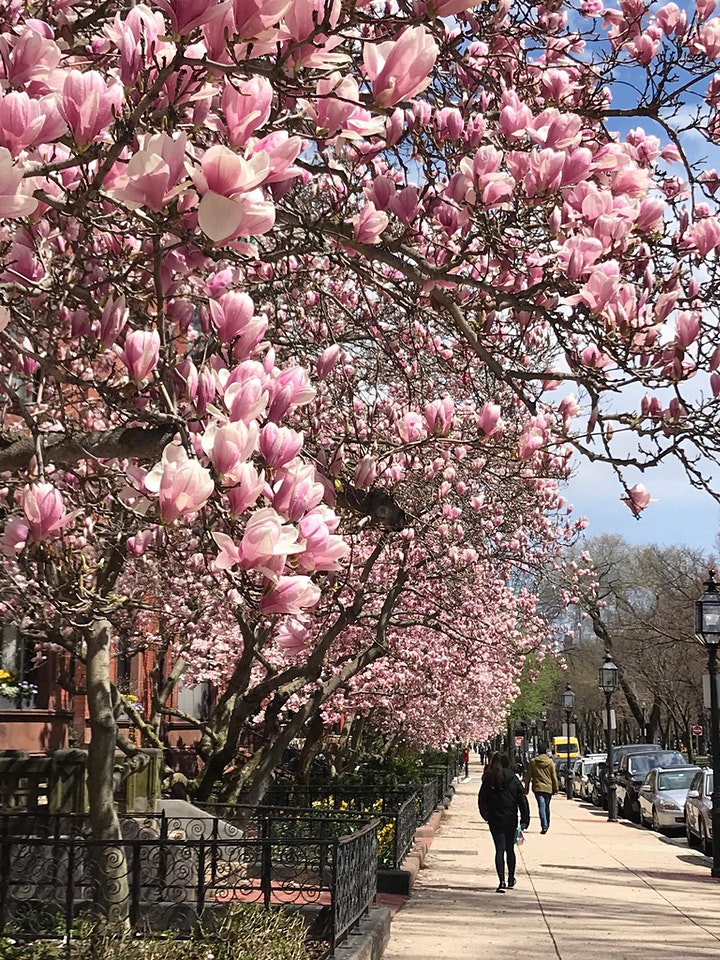
    On this self-guided Magnolia Tree Tour, created by The Garden Club of the Back Bay Tree Committee, you’ll walk the length of Commonwealth Avenue, starting at Arlington Street spanning up to Massachusetts Avenue and beyond. Along the way, you’ll learn interesting facts ranging from history, to tree-specific facts, to what our Club’s Tree Committee is currently working on as it relates to these beloved historical trees.

    A PDF of the tour may be downloaded free of charge by registering on Eventbrite at https://www.eventbrite.com/e/back-bay-magnolias-self-guided-tour-tickets-148494706665 Your confirmation email from Eventbrite will contain the link There is also the option of adding a tax deductible donation to help finance the tree canopy work of the Garden Club of the Back Bay, but it’s not a requirement.