Tag: Harvard University

  • Saturday, January 19, 1:00 pm – 3:30 pm – Drawn to the Woods Opening Reception

    Sketchbook in hand, Paul Olson walks the Arboretum’s less traveled paths observing and reflecting on the diversity of life and the passing of time. A teacher in the Illustration Departments of both MassArt and Rhode Island School of Design, Olson has created illustrations and paintings in varied subjects over the years. All the work in this new exhibition—from quick sketches to larger drawings and paintings—were completed in the landscape of the Arnold Arboretum. The opening reception will take place Saturday, January 19, from 1 – 3:30. The exhibit will run through March 24, and an artist’s talk will be given on February 21 from 7 – 8:30 pm. For more information visit www.arboretum.harvard.edu.

  • Tuesday, January 22, 6:00 pm – Collecting Vines in Australia

    Last fall, visiting Arnold Arboretum researcher Juan Losada and Head Arborist John Del Rosso traveled to Australia to make collections of Austrobaileya, an evergreen vine found only in the rainforest of Queensland. Although the Arboretum has a century-long history of plant collecting in Asia, this trip marked only the second expedition by Arboretum representatives to the Australian subcontinent. Join us for a special presentation for Arboretum members on January 22 in the Hunnewell Building; refreshments at 6:00pm, presentation at 6:30pm. Juan and John will talk about their experiences and share pictures and videos from the tropical rainforest.  Register on line at www.my.arboretum.harvard.edu.

  • Wednesday, November 28, 1:00 pm – Coffee Life in Japan

    Boston University Professor Dr. Merry White (below) traces Japan’s vibrant cafe society over one hundred and thirty years, from Japan’s coffee craze at the turn of the twentieth century, when Japan helped to launch the Brazilian coffee industry, to the present day.  Her talk takes up themes as diverse as gender, privacy, perfectionism and urbanism.  Merry’s book, Coffee Life in Japan, will be available for purchase from and signing by the author.  Coffee will be served, naturally.  Co-sponsored by the Arnold Arboretum of Harvard University and Friends of Wellesley Botanic Gardens.  Members $10, non-members $15.  Register by calling 781-283-3094, or visit www.wellesley.edu/wcbgfriends.

  • Friday, October 26, 6:00 pm – Beautiful Minds: The Parallel Lives of Great Apes and Dolphins

    In her new book Beautiful Minds: The Parallel Lives of Great Apes and Dolphins (co-written with Craig Stanford), biologist Maddalena Bearzi examines how apes and dolphins, although distantly related, share a remarkably parallel evolution toward complex intelligence and behavior – and what this may reveal about the cognitive development of homo sapiens. Cosponsored by The Harvard Museum of Natural History and Harvard University Press. Free and open to the public, Geological Lecture Hall, 24 Oxford Street. Free parking in the 52 Oxford Street garage.

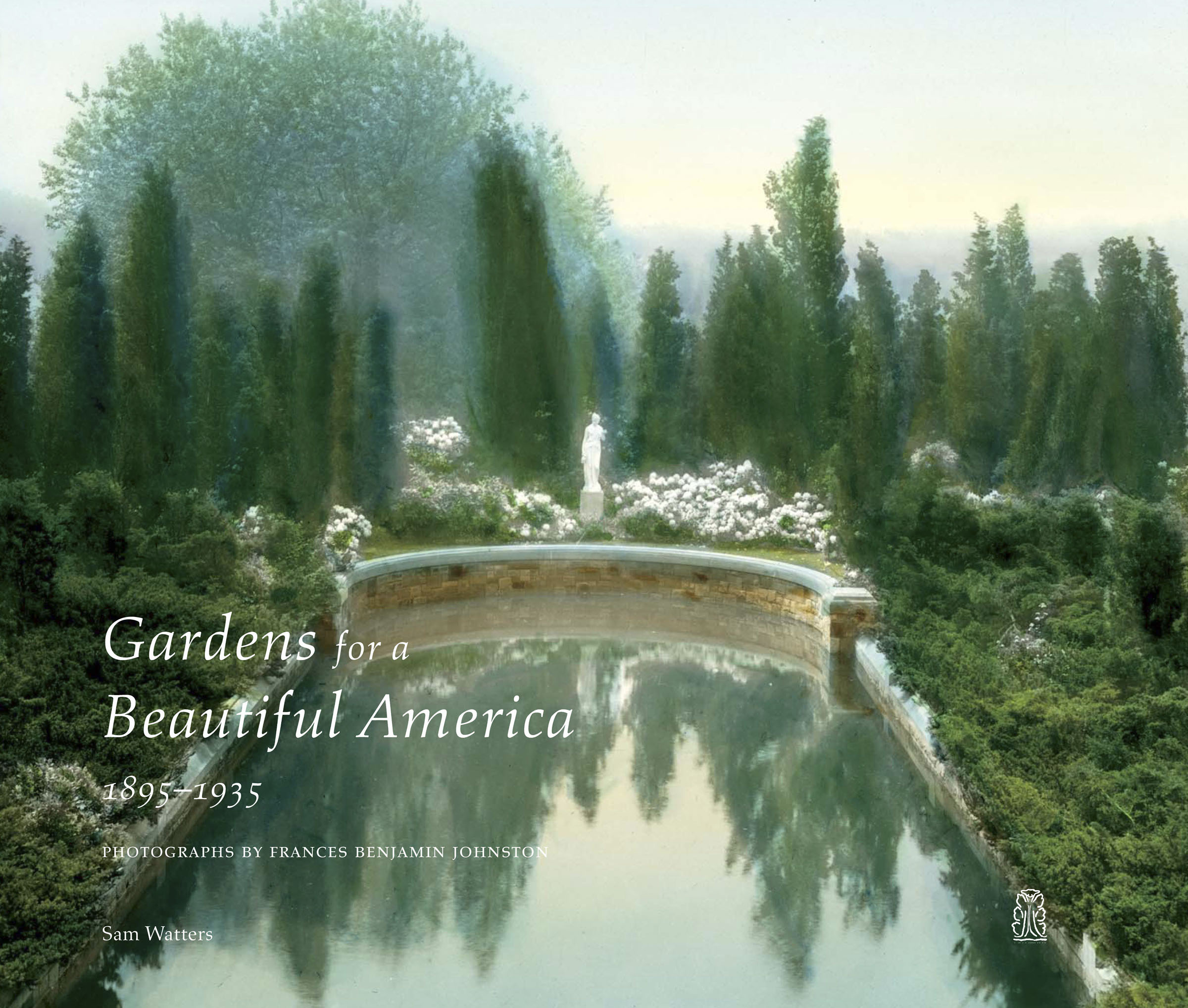
  • Monday, October 29, 9:30 am or 7:00 pm – Gardens for a Beautiful America

    Monday, October 29, 9:30 am or 7:00 pm – Gardens for a Beautiful America

    At the opening of the 20th century, pioneering photographer Frances Benjamin Johnston (1864 – 1952) was front and center in the movement to beautify America. Gilded age industrialism had brought a new prosperity to life in the United States, but at the price of once pristine forests, rivers, and clear air. In response, the Garden Beautiful movement began. Johnston, a progressive and perhaps one of America’s first “house and garden” photojournalists, was enlisted to photograph gardens from coast to coast. Historian Sam Watters will reveal a sampling of Johnston’s images for lectures delivered across America to advance the Garden Beautiful movement. He will speak about her as an artist and the relevance of her work as a cultural history collection. Over the course of 5 years, historian Sam Watters scanned through millions of books and magazines to match Johnston’s unlabeled hand painted glass garden slides (now in the collection of the Library of Congress) to the sites they depicted, bringing them to light again after more than 70 years, and showing them as a collection of significance in his new book Gardens for a Beautiful America.

    The morning lecture will take place at the new Weld Hill Research Building, 1300 Centre Street in Roslindale, and optional tours of the building will be available at 9:30 am for those registered for the morning lecture. For those unable to attend in the morning, an evening session will be held in the Hunnewell Building, 125 Arborway in Jamaica Plain. Due to space considerations, limited spaces are available for both lectures, and early registration will be encouraged. Co-sponsored by The Garden Club of the Back Bay with Arnold Arboretum of Harvard University, Friends of Wellesley College Botanic Gardens, Photographic Resource Center at Boston University, and The Garden Conservancy.  Garden Club of the Back Bay members will receive written notification in the mail.  All others may register at www.arboretum.harvard.edu.  Fee to the public  is $20 through October 15, and $25 thereafter.

  • Thursday, October 25, 6:00 pm – The Brookline Troika: Olmsted, Richardson, and the Planning of the Model Suburb

    Join The Arnold Arboretum for a glimpse into Brookline’s past — the shaping of its public parks and parkways, private estates, and planned housing developments, as influenced by the Olmsted Office. On Thursday, October 25, beginning at 6 pm, architectural historian Keith Morgan, one of three co-authors of the newly published Community by Design: The Role of the Frederick Law Olmsted Office in the Suburbanization of Brookline, Massachusetts, 1880–1936, will present a selection of the firm’s approximately 150 Brookline commissions that were created over the course of a half century. He will discuss the networks of individuals, institutions, and municipal authorities that worked with the firm on the boulevards, subdivisions, institutional grounds, and private estates that define the character and qualities of Brookline, with particular attention given to the planning theories of Olmsted, Jr. Reception to follow. The event will take place in the Hunnewell Building of the Arnold Arboretum.
    Free, but registration requested at www.my.arboretum.harvard.edu.  Co-sponsored by the Arnold Arboretum of Harvard University, the Friends of Fairsted, and the Library of American Landscape History.

  • Friday, October 19, 6:00 pm – Spillover: Animal Infections and the Next Human Pandemic

    If you were riveted by The Hot Zone, this Harvard Museum of Natural History program is for you.  Science author David Quammen explores how a litany of pandemic diseases like Ebola, SARS, and Hendra share a single pattern: they are transmitted to humans by bugs that originate in wild animals. He will speak on Friday, October 19 beginning at 6 pm, and a book signing will follow. Free and open to the public, Geological Lecture Hall, 24 Oxford Street. Free parking in the 52 Oxford Street garage.

  • Saturdays, October 20 and November 3, 9:00 am – 4:00 pm – Propagating Trees and Shrubs from Cuttings and Seeds

    Need to nurture? Then join longtime Arboretum propagator Jack Alexander at the Dana Greenhouse at the Arnold Arboretum on two Saturdays, October 20 and November 3, from 9 – 4, to learn basic information and techniques for propagating most woody plants. Session One includes a lecture and workshop on seed propagation and construction of a propagation case. Session Two will be a lecture and workshop on hardwood cuttings. You will leave class with numerous cuttings and seeds to care for. To participate, you must sign an Assumption of Risk and Release in order to practice the techniques taught in class. Bring a lunch and beverage. If you own hand pruners, bring them to class. A sharp knife and an apron may also be helpful. You will be collecting propagules from the Arboretum grounds on both afternoons regardless of weather, so dress accordingly and wear comfortable shoes.  Fee $180 Arboretum member, $240 nonmember.  Register on line at www.arboretum.harvard.edu.

  • Wednesday, October 10, 7:00 pm – 8:30 pm – What a Plant Knows

    Join The Arnold Arboretum for a captivating journey into the lives of plants—from the colors they see to the schedules they keep—with renowned biologist Daniel Chamovitz. Director, Manna Center for Plant Biosciences, Department of Molecular Biology and Ecology of Plants at Tel Aviv University. Highlighting the latest research in plant science, he will take us into the lives of different types of plants, and draw parallels with the human senses to reveal that we have much more in common with sunflowers and oak trees than we may realize. Covering touch, sound, smell, sight, and even memory, Chamovitz considers whether it’s too much to ask if plants are aware. His book, What a Plant Knows, is a true field guide to the senses for science buffs and green thumbs, and for anyone who seeks a greater understanding of our place in nature. Books will be available for purchase and signing. Fee $5 member, $20 nonmember.  Register on line at www.arboretum.harvard.edu.

  • Tuesday, October 2, 6:30 pm – 8:00 pm – Birch: More than Meets the Eye

    White-barked birches hybridize freely, suggesting that current species are too narrowly defined. Even the well-known common native North American paper-bark or canoe birch (Betula papyrifera) causes consternation. Birch expert Hugh McAllister of University of Liverpool and Ness Botanic Garden will explain a bit about the white-barked birches’ propensity to cross-pollinate and thus confound taxonomists, on Tuesday, October 2, from 6:30 – 8 at the Hunnewell Building of the Arnold Arboretum. He will discuss birch distribution around the world while showing images of his research travels and herbarium specimens and posing some as-of-yet unanswered questions that keep this botanist awake at night. Free, but registration requested at www.arboretum.harvard.edu.