Tag: Harvard University

  • Friday, July 26 – Sunday, October 13 – Between the Leaves: The Unique Prints of Sarah Cross

    The Arnold Arboretum of Harvard University will be the site of an exhibit running July 26 – October 13, entitled Between the Leaves: The Unique Prints of Sarah Cross. There will be a free opening reception on Saturday, July 27 from 1 – 3, and a cyanotype workshop on Sunday, July 28 from 10 – noon (registration required.)

    Between the Leaves focuses on the ephemeral quality of light.  Behind each photograph is Sarah Cross’s hand in the physical construction of what is set up in front of the camera, or through a cathartic printing process. The artist works with a range of photographic media, including 4″ x 5″ color negatives, and gum bichromate printing to create photographs. After a strong degree of photoshop manipulation, the prints are made through the historic gum bichromate process. With this lengthy process, each color is printed as a single layer, resulting in fragile, painterly, and unique prints. Although large in physical presence, these prints are meant to express small invitations to reverie. 

  • Saturday, July 13, 1:00 pm – 3:00 pm – Art Workshop: Making Art in the Landscape

    Join Paul Olson, the Arnold Arboretum’s exhibiting artist of Drawn to Paint, for a sketching workshop “en plein air” (outside, in the landscape), on Saturday, July 13 from 1 – 3, beginning in the Hunnewell Building of the Arnold Arboretum. Olson, an instructor at Mass College of Art and RISD, will focus on teaching you to sketch trees from direct observation outdoors. He will encourage you to think about simplifying your design with just the essential shapes to make a good composition in light pencil. Then, you can use ink and water for an expressive tonal image. Bring pencils and sketchbooks. Some supplies will be available. Fee $10 member, $20 nonmember

    Register at my.arboretum.harvard.edu or call 617-384-5277.

  • Wednesday, June 25, 5:30 pm – 6:30 pm – Bonsai Behind the Curtain: Uncovering Their Care and Cultivation

    Join Arnold Arboretum of Harvard University Manager of Plant Production, Tiffany Enzenbacher, for an evening exploration into the oldest dwarfed plant collection in the United States. As one of the caretakers of the Arboretum’s bonsai collection, Tiffany will highlight many of the procedures used by staff to maintain the health of these captivating specimens. The event takes place June 25 at 5:30 in the Larz Anderson Bonsai Collection at the Arboretum.

    For cancellations due to weather, call 617 384-5209. Free, registration is requested and limited at my.arboretum.harvard.edu

  • Thursday, June 6, 6:00 pm – 8:00 pm – Compost Compendium

    Horticulturist Conor Guidarelli manages the Arnold Arboretum’s organic materials recycling area and has recently improved the production and quality of the resulting compost.

    On June 6 at 6 – 8 at the Arnold Arboretum, 125 Arborway, Conor will discuss the components of compost and the nutrients that can be returned to a site when compost is applied. He will explain the mix of brown to green materials, moisture, and aeration.

    Class participants will start in the classroom and then travel to the Arboretum’s materials yard to see compost in various stages of development.

    Fee $20 Arboretum member, $30 nonmember.

    Register at http://my.arboretum.harvard.edu or call 617-384-5277.

  • Saturday, June 1, 9:30 am – 12:30 pm – Identifying Ferns at the Arnold Arboretum

    Saturday, June 1, 9:30 am – 12:30 pm – Identifying Ferns at the Arnold Arboretum

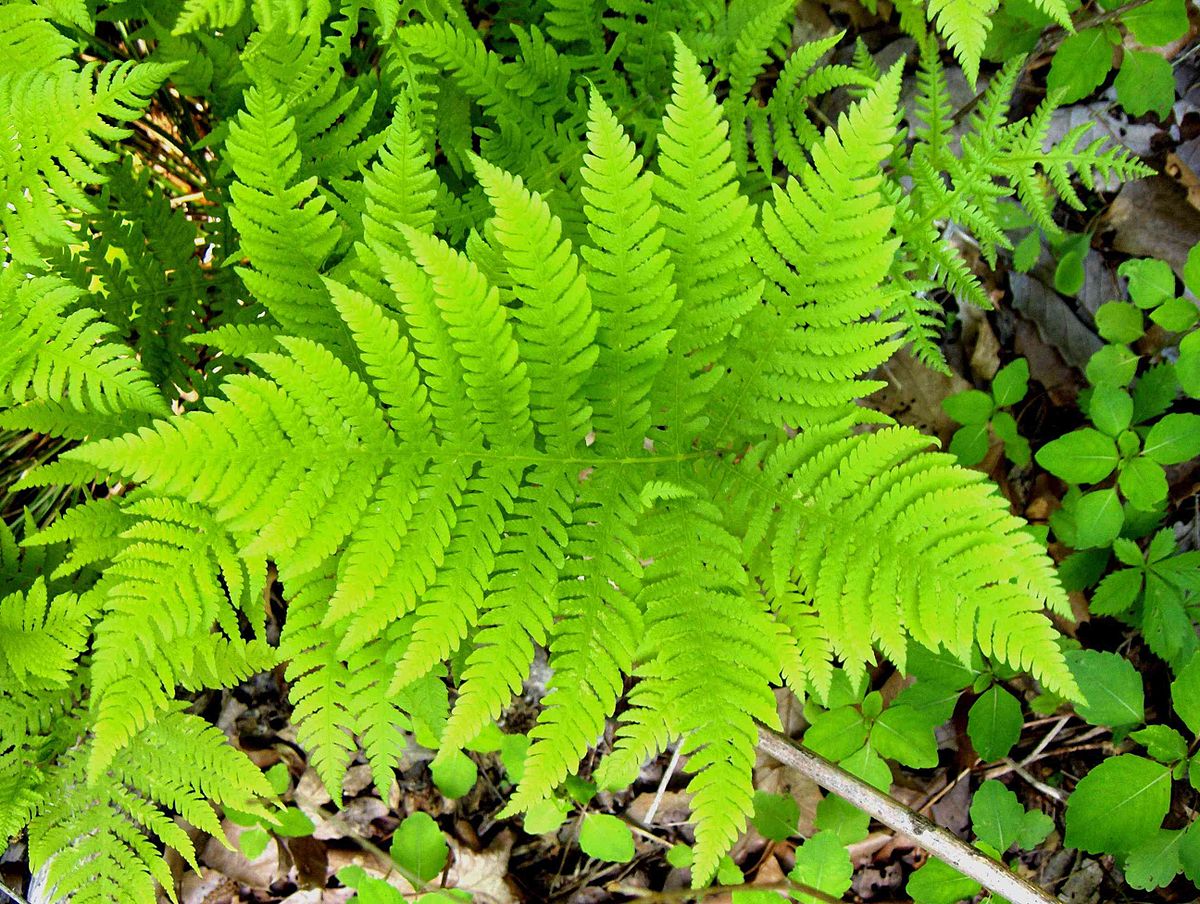
    Considering its size and location New England has a relatively rich flora of ferns and fern allies (clubmosses, spikemosses, and quillworts). While it is possible to see almost all these species somewhere in the state of Massachusetts, several can be found at the Arnold Arboretum. Fern specialist Jacob Suissa will teach the anatomy, reproduction, and key identifying characters that will help you to identify the ferns and fern allies of the Arboretum and New England. Participants will begin indoors at the Arboretum’s Weld Hill Research Building with a lecture and then move outdoors to Hemlock Hill and Bussey Brook for a fern foray. Dress for indoor and outdoor learning. The class will be held June 1 beginning at 9:30 am. Meet at the Weld Hill Research Building.
    Fee $40 Arboretum member, $50 nonmember Register at http://my.arboretum.harvard.edu or call 617-384-5277.

  • Solar Power at the Arnold Arboretum

    In 2016. the Arboretum launched a major initiative to reduce emissions and cut energy costs with the installation of two solar arrays to help power the Hunnewell Building and Dana Greenhouses. In 2019, the Arboretum broke ground on the Weld Hill Solar Project, which contains 1,297 solar panels, generates more than 25% of the energy required annually to support research and education at the Weld Hill Research Building, contains a unique battery storage array to reduce peak demand on the local electrical grid, and keeps the equivalent of 401 metric tons of carbon out of the atmosphere each year.

    To support local insect biodiversity in the face of global insect decline, the project design incorporates a native-focused pollinator meadow beneath the panel arrays, with wild-collected plant material sourced and propagated by the Arboretum staff. Together, the Weld Hill solar/battery array and pollinator meadow will serve ongoing education programs focused on climate change, renewable energy, and sustainable design.

    Help power world-class research, and be a part of the Arnold Arboretum’s legacy of environmental stewardship. Sponsor a panel for $1,000. For more information, email Janetta Stringfellow, Director of Development, at 617-384-5043, or email her at janetta_stringfellow@harvard.edu.

  • Sunday, May 12, 10:00 am – 3:00 pm – Lilac Sunday

    Of the thousands of flowering plants in the Arboretum, only one, the lilac, is singled out each year for a daylong celebration. Mainly located on the edge of Bussey Hill Road in the heart of the landscape, the lilac collection at the Arnold Arboretum is among the premier collections of these plants in North America. Lilac Sunday has been celebrated at the Arnold Arboretum since 1908. Tours of the lilacs and family activities are available from 10 – 3 on Sunday, May 12. Picnicking is permitted on this day only, but food must be brought into the Arboretum – no food vendors will be allowed on site. The landscape is open from dawn to dusk. For more information visit http://arboretum.harvard.edu.

  • Thursday, April 18, 12:00 noon – 1:30 pm – The Green Ideal: Botanical Practices and the Creation of Santiago’s Civic Landscape

    The Harvard Graduate School of Design presents a free lecture by Romy Hecht on April 18 at 12 noon at 48 Quincy Street in Cambridge entitled The Green Ideal: Botanical Practices and the Creation of Santiago’s Civic Landscape.

    Romy Hecht is a Professor at the School of Architecture, Pontificia Universidad Católica de Chile (PUC), where she gives courses and research seminars on historical narratives and design theories of nineteenth- and twentieth-century landscapes. She holds a Ph.D. in History and Theory of Architecture from Princeton University and an M. Arch and professional degree in architecture from the PUC. She has been a Visiting Professor in the Department of Landscape Architecture at the GSD (2012), in the Ph.D in Architecture program at the Universidad Nacional de Rosario in Argentina (2016) and in the Master in Architecture program at the Pontificia Universidad Católica de Lima (2017). She is also a former fellow at Dumbarton Oaks Research Library and Collection, Washington, D.C. (2015, 2017–2018).

    As an author and recipient of National Grants and research fellowships, Hecht has developed a fundamental task in the studies of landscape architecture in Latin America. She has focused on constructing a comprehensive history of Chile’s landscape projects, particularly in post-independence Santiago, describing how landscape strategies have been shaped by a dynamic relationship between botanical practices, political decisions and economic circumstances giving form to an arboreal culture that has transformed the city.

    Anyone requiring accessibility accommodations should contact the events office at (617) 496-2414 or events@gsd.harvard.edu.

  • Saturday, March 30, 9:00 am – 12:30 pm – The American Chestnut: When Will It Flourish Again?

    The American chestnut could be the first tree ever restored to its native forest after suffering from a devastating airborne blight in the early 1900s that killed billions of trees.

    Join The Arnold Arboretum of Harvard University on Ssturday, March 30 from 9 – 12:30 for a thought-provoking gathering as experts share perspectives on the history of American chestnut (Castanea dentata), its significance as a forest species, and subsequent decimation by an invasive blight pathogen, Cryphonectria parasitica. Ongoing research in blight tolerance and the addition of blight-tolerant genes are the prognosis for this tree’s future.

    Special speakers include:

    • Dr. David Foster, Director of the Harvard Forest

    • Ms. Sara Fitzsimmons, Director of Restoration at The American Chestnut Foundation

    • Dr. William Powell, Professor and Director of Council on Biotechnology and Forestry at State University of New York College of Environmental Science and Forestry

    • Dr. Jared Westbrook, Director of Science at The American Chestnut Foundation

    A panel discussion will follow the lectures:

    Introduction by Ms. Lisa Thomson, President and CEO of The American Chestnut Foundation

    Panel participants will include each speaker as well as Edward Faison, Senior Ecologist at Highstead Arboretum

    Fee $20 per person (Free for students).Event takes place at the Arnold Arboretum’s WELD HILL RESEARCH BUILDING, 1300 Centre Street, Roslindale, MA

    Register at my.arboretum.harvard.edu or call 617-384-5277.

    Image result for american chestnut tree

  • Wednesday, March 27, 6:00 pm – 7:30 pm – Copley Square: History Through Architecture

    Copley Square is one of Boston’s most architecturally significant and instantly recognizable public locations. This urban square is home to Trinity Church, the Boston Public Library, Old South Church and the Hancock Tower, among other important landmarks. The square defines the city, as well as the evolution of American architecture and urban design, from colony toward the sophistication of global European squares, moving creatively from Beaux-Arts style to International Style and Modernism. On March 27 at 6 pm in the First Floor Commonwealth Salon at the Boston Public Library, architectural historian Leslie Humm Cormier explores this contemporary place from its origins as an estuary to its vital significance as a stylistic link between old-world style and new-world design.

    Leslie Humm Cormier, PhD, writes on the history and theory of art, architecture and urban design in Europe and America. She received her doctorate from Brown University as a Kress Fellow, affording her study in London and Paris. She is the author of a book on the Early Modern era in American architecture, as well as many articles on modern architecture and urban design in architectural encyclopedias. Previously a faculty member of Harvard University Extension and Radcliffe Seminars, Cormier is currently affiliated with the Boston Architectural College. For more information email ask@bpl.org

    Image result for copley square