Fly to the Galápagos Islands for a 7-night cruise aboard a 20-passenger premium-class Relais & Chateaux yacht, the 142-foot M/V Theory. Accompanied by an Harvard Alumni Association study leader and superb staff of resident naturalists, observe Giant Galapagos tortoises, flocks of frigate birds and blue-footed boobies, Darwin’s finches, and Galapagos penguins, colonies of marine iguanas and sea lions, along with other fascinating sea life. Conclude with a tour of Guayaquil, Ecuador’s largest city, and its lovely riverfront. An optional pre-trip to Guayaquil offers a visit to a charming hacienda and cacao plantation and New Years’ Eve dinner in the city. An optional post-trip extension to Machu Picchu offers an excellent introduction to the rich cultural and archaeological wonders of Peru. The itinerary and pricing (not for the faint hearted) may be found HERE. But we only live once.
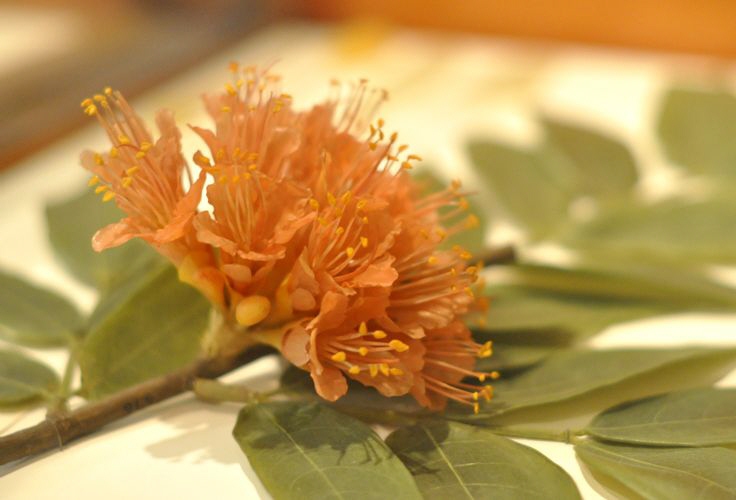
A docent will lead Garden Club members on a custom tour of the recently restored “Glass Flowers”. The internationally acclaimed Ware Collection of Blaschka Glass Models of Plants is one of Harvard’s most famous treasures and is the only collection of its kind in the world. This unique collection of over 4,300 models, representing more than 780 plant species, was created from 1887 through 1936 by glass artisans Leopold and Rudolf Blaschka, a father and son team of Czech glass artists. The Glass Flowers gallery was renovated in Spring 2016, introducing rebuilt, original historic wood and glass display cases, new state-of-the-art lighting, humidity, and vibration control systems. The new space design and interpretation showcases the ongoing scientific relevance of the gallery and enhances the visitors’ experience of the models. In this exhibit one can see examples of the flora of the world in bloom all at once.
This long awaited tour, twice postponed due to Covid, will take place March 23 at 2 pm at the Harvard Museum of Natural History.
This program is for Garden Club of the Back Bay members only. The Club is charged by the person and we are required to give the Museum an accurate number of attendees. If you rsvp and can not attend, please let us know! If you’d like to add your name, rsvpby March 14 to Christine Hirshland : chirshland@aol.com
Enter The Harvard Museum of Natural History through the 26 Oxford Street entrance.
We will meet at 2:00 on the third floor, just outside the gift shop, near the glass flowers exhibit area. You will be asked for proof of full vaccination plus a government issued id to enter the museum.
Out of the 1860s, as the United States engaged in a civil war, abolished slavery, and remade the government, the public park emerged as a product of these dramatic changes. New York’s Central Park and Yosemite in California both embodied the “new birth of freedom” that emphasized the duty of republican government to enhance the lives and well-being of all its new citizens. A central figure directly connected with abolition, the Civil War, and the dawn of urban and national parks is Frederick Law Olmsted, whose pre-war journalism about the South, design work on Central Park, and ground-breaking Yosemite Report created an intellectual framework for the “park idea.” Marking the bicentennial of Olmsted’s birth, a new book by Rolf Diamant, former superintendent of Frederick Law Olmsted National Historic Site and Ethan Carr, Professor of Landscape Architecture at the University of Massachusetts, Amherst, offers a new interpretation of how the American park—urban and national—came to figure so prominently in our cultural identity, and why this more complex and inclusive story deserves to be told.
The Arnold Arboretum will present Rolf Diamant and Ethan Carr on March 12 from 2:30 – 4, and will also be presented in-person at the Arboretum’s Weld Hill Research Building at 1300 Centre Street, Boston, MA 02131. To sign up for the in-person event, click here. Presented in collaboration with Friends of Fairsted, the Frederick Law Olmsted National Historic Site, and the Library of American Landscape History. Register HERE.
This 14 day Harvard Alumni itinerary is a fantastic tribute to the savannahs and primates of Uganda. It is an incredible journey into the Pearl of Africa, exploring the rich mosaic of different floras and faunas. Start with game drives and bush walks in the rich savannah plains of Kidepo Valley National Park. Then onto Murchison Falls National Park where you cruise the White Nile, view the magnificent Murchison Falls and explore the wilderness in your safari vehicle. The itinerary also includes memorable trekking experiences for both our closest relative, the chimpanzee and the mighty mountain gorilla and the thrilling chance to search the Ishasha wilderness for tree-climbing lions, hyena and other wildlife. A luxury, private guided safari portraying some of the best bits that Uganda has to offer. The trip begins June 2, 2022.
As the global situation regarding COVID-19 continues to develop, so do University precautions and protocols. Harvard is currently allowing fully vaccinated faculty and staff to travel within the United States and to international destinations rated Level 1, Level 2, or Level 3 for COVID-19 by the U.S. (CDC). While many scheduled trip destinations currently may be Level 4, the CDC ratings remain in flux, changing daily. Since group travel is planned far in advance, we cannot guarantee that we will be able to confirm your study leader’s participation before cancellation fees begin for your program, but we remain hopeful the destinations offered will fall within the bounds of University protocols to send faculty. For pricing and complete details on itinerary and lodging, visit www.alumni.harvard.edu You do not need to be a Harvard alumnus to participate, to be clear. This trip is rated Activity Level 4, requiring that you be in good overall health and able to hike for 4 or more hours in relatively high altitude conditions.
For many artists who are invited to exhibit work at the Arnold Arboretum, the collections and landscape become a focus and rich cornucopia of form and even fancy. For some, like Madge Evers, it is much more. The Arboretum becomes a laboratory, even a studio, a repository brimming with the media she incorporates into her awe-inspiring prints—the fungi and their subsequent spores.
Working not only with exhibitions, but with the Arboretum’s curation department, Evers submitted a proposal in March 2020 to begin collecting. March 2020 being the beginning of COVID-19 restrictions, our curatorial assistant, Kathryn Richardson, was being very selective about issuing collecting permits. Evers, however, was given the go ahead for her well conceived proposal. Richardson herself has a special interest in fungi, which she wrote about in her 2009 Arnoldia article “A Closer Look at Fungi”.
Over the course of the next year, Evers was able to visit the Arboretum, collecting an assortment of mushrooms and adding their countless spores to her art. Along with the mushrooms, she collected other Arboretum plant materials. The resulting exhibition is lush with otherworldly light and shape. There is almost the sense of a kaleidoscope opening up with limited hues, but unlimited iterations of the nuanced disbursement of those spores upon a field of leaves and flowers.
She has indeed planted her own stories in a rarefied environment where the almost hidden become the abiding mystery, delight, and revelation of this new herbarium. To view the virtual exhibition, available through February 6, visit https://arboretum.harvard.edu/art_shows/hidden-worlds-a-new-herbarium/
For a detailed list of the plants incorporated into the prints, visit here: Hidden World Spore Prints.
All artworks are mushroom spores on paper. Evers is an educator, gardener, and visual artist. She uses foraged mushrooms and plants to make works on paper that focus on regeneration. Her work has been shown in New England and New York. In June of 2020, she began to work full-time as an artist after teaching for 25 years in Rhode Island and Massachusetts public schools. She now conducts art-making workshops for people of all ages.
All rights of the images reside with the artist. For more information on making a copy, or reusing an image, please send your request to arbweb@arnarb.harvard.edu. For information on the work itself, or to inquire about purchasing art, please also send your request to arbweb@arnarb@harvard.edu. We will put you in touch with the artist.
Kousa Dogwood, 20″ x 28″ copyright 2020 Madge Evers
Rus Hoelzel, Professor of Molecular Ecology, Department of Biosciences, Durham University, U.K.; 2020–2021 Sarah and Daniel Hrdy Visiting Fellow in Conservation Biology, Department of Organismic and Evolutionary Biology, Harvard University, will speak online on December 2 at 6 pm. Free, but Advance Registration Required.
The deep sea is a dark, cold habitat, once thought to be inhospitable to life and uniform across its vast expanses. Technologies such as remotely operated vehicles have shown scientists that it is, in fact, home to highly diverse organisms uniquely adapted to its harsh conditions. We still have much to learn, however, about how species and populations evolved in the deep sea. This has important conservation implications because the depletion of nearshore and shallow water species has moved fisheries increasingly into deeper waters. Rus Hoelzel will discuss some of the key environmental drivers and adaptations promoting the evolution of diversity in the deep sea, with a focus on those associated with depth itself.
Presented in collaboration with the Department of Organismic and Evolutionary Biology. Rus Hoelzel studied biology as an undergraduate at Reed College in Portland, Oregon, evolutionary biology for a MA at the University of Sussex, Brighton, U.K., and earned his PhD in genetics at the University of Cambridge, U.K. He has held postdoctoral positions at Silwood Park, Imperial College, U.K., and the National Cancer Institute in Frederick, Maryland, U.S. He is currently professor of molecular ecology at the University of Durham, U.K. He has published extensively on evolutionary process and conservation genetics, and has been editor in chief of the Springer-Nature journal Conservation Genetics since 2000. He and his group currently focus their work on understanding the relative roles of genetic drift and natural selection on the evolution of biodiversity in natural systems, both aquatic and terrestrial.
Gonzalo Giribet, Professor of Organismic and Evolutionary Biology; Curator of Invertebrate Zoology, Alexander Agassiz Professor of Zoology, and Director, Museum of Comparative Zoology, Harvard University, will speak online on November 10 at 6 pm as part of Harvard’s Evolution Matters Lecture Series, supported by a generous gift from Drs. Herman and Joan Suit. Free, but advance registration required at https://harvard.zoom.us/webinar/register/WN_Nu9A1HZZQvKx8IgISFXtyw
The major continents of the Southern Hemisphere—Africa, South America, Australia, Antarctica—as well as India and islands in the Pacific, were once part of Gondwana, an ancient supercontinent that began to break up about 180 million years ago. How did this breakup influence the evolution of ecosystems and organisms found on modern continents and islands? This is one of the questions that biogeography, the study of how organisms are distributed across space and time, seeks to answer. Gonzalo Giribet will discuss how he uses biogeography and tiny invertebrate species to understand the biological and geological history of New Zealand and New Caledonia, two islands that were once part of Gondwana.
As gardeners, our role is to provide our plants with the correct conditions to meet their specific needs. Knowing those conditions is essential before we head off to the nursery. In this Tower Hill webinar on November 4 at 6:30 pm with Cheryl Salatino, we’ll explore the fundamentals of sun and shade patterns, water availability, soil considerations, climate and problem potential, diversity, and site preparation and planting techniques for both new and existing planting beds. Like people, plants don’t perform well under stress. We’ll take a look at some of our favorite shrubs and perennials to better understand how to match the right plant with the right place.
Cheryl is the principal designer and owner of Dancing Shadows Garden Design, a residential landscape design and services firm. She has been designing gardens across Massachusetts since 2002. Cheryl is a Certified Landscape Designer and a Massachusetts Certified Horticulturist (MCH). She received her certificate in landscape design from the Radcliffe Seminars Landscape Design Program of Harvard University. She was awarded the status of Massachusetts Certified Horticulturist by the Massachusetts Nursery & Landscape Association (MNLA) as evidence of achieving the industry’s highest standards in nursery and landscape professionalism. Cheryl has also earned an Advanced Certificate in Horticulture and Design as part of the New England Wildflower Society’s Native Plant Studies Program.
Daniela Bleichmar is Professor of Art History and History at the University of Southern California, where she also serves as the founding director of the Levan Institute for the Humanities and director of the USC Society of Fellows in the Humanities. Her research and teaching address the history of images, objects, and texts in colonial Latin America and early modern Europe, focusing on the histories of science and knowledge production, cultural encounters and exchanges, collecting, and books. Her research has been supported by the Mellon Foundation, the Getty Foundation, the Getty Research Institute, and the ACLS. Her publications include the books Visible Empire: Botanical Expeditions and Visual Culture in the Hispanic Enlightenment(University of Chicago Press, 2012) and Visual Voyages: Images of Latin American Nature from Columbus to Darwin(Yale University Press, 2017). She is currently writing a cultural biography of the Codex Mendoza, an Indigenous illustrated manuscript produced in early colonial Mexico, which traces the extraordinary life of this transcultural object from Mexico City in the 1540s to London in the 1830s.
Daniela will speak on October 26 at 6:30 pm in a Harvard Graduate School of Design virtual lecture.
Jamaica Kincaid is a widely acclaimed and fiercely original writer known for her novels, short stories, and essays, including writings on her life as a gardener. She was also staff writer for the New Yorker from 1973 to 1996 and has been a contributor for the Village Voice.
She is beloved by generations of readers who discovered her fiction, including Annie John and “Girl,” in high school and is admired by critics for her daring and unorthodox body of work. Answering claims that her fiction and essays are characterized by anger, Kincaid says, “The important thing isn’t whether I’m angry. The more important thing is, is it true? Do these things really happen? I think I’m saying something true. I’m not angry … The way I think of it is that I’m telling the truth.”
In the New York Review of Books, Darryl Pinckney wrote, “Kincaid’s rhythms and the circularity of her thought patterns in language bring Gertrude Stein to mind. She is an eccentric and altogether impressive descendant.”
Kincaid is the recipient of a Guggenheim grant and has been nominated for the National Book Award. She was elected to the American Academy of Arts and Letters in 2004 and the American Academy of Arts and Sciences in 2009.
Kincaid was born in Antigua, British West Indies, in 1949, and arrived in the United States in 1965 to work as an au pair. In 1973, she changed her name from Elaine Cynthia Potter Richardson to Jamaica Kincaid, mostly to prevent her parents from finding out that she was writing. She’s now the mother of two grown children and is a professor in the African and African American Studies department at Harvard University.
This year’s Harvard Graduate School of Design Frederick Law Olmsted Lecture will take place October 14, online.